“Three Hundred Years” – Part 1 of 5

April 5, 2010

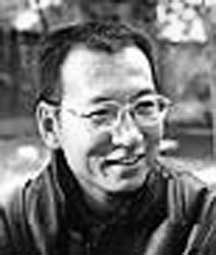
Liu Xiaobo is a Chinese human rights activist. He has been detained, arrested, and sentenced repeatedly for political activities, including participation in the Tiananmen Square protests of 1989.

In a 1988 interview with Hong Kong’s Liberation Monthly (now known as Open Magazine), Liu replied to a question on what it would take for China to realize a true historical transformation: “(It would take) 300 years of colonialism. In 100 years of colonialism, Hong Kong has changed to what we see today. With China being so big, of course it would take 300 years of colonialism for it to be able to change to how Hong Kong is today. I have my doubts as to whether 300 years would be enough.”

Liu Xiaobo - Chinese activist

Later, after being arrested and sentenced to eleven years in prison, Liu said this quote was taken out of context. To understand why the Chinese government would react so harshly to such a statement, knowing China’s history helps.

What Liu said could be taken to mean that to change China into a Western style culture would require a return to the 19th century when Western powers dominated China with their military—similar to what American neo-conservatives advocate for any country that does not have a Western style democracy or republic.

See Wearing China’s Shoes http://wp.me/pN4pY-1p


Human Rights the Chinese Way

April 5, 2010

In the West, the individual is more important than the whole. In China, the whole is more important than the individual.

Just like China created capitalism Chinese style, the Chinese are building a bridge to human rights the same way. However, they see things different from Western democracies that are burdened with debt, crime, serious drug problems and swelling prison populations. To allow the freedoms that led to these problems in the West would be a loss of face for China’s leaders.

Due to Confucius’s teachings twenty-five hundred years ago, most Chinese value family and piety first—something that has all but vanished in the West.

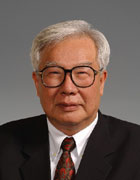
Luo Haocai

“China believes that human rights, like other rights, are not ‘absolute’ and the rights enjoyed should conform to obligations fulfilled. China opposes separating rights from obligations,” said Luo Haocai at the Beijing forum on human rights.

Many Chinese know what Western freedom is like. After all, many Chinese have attended universities in Western countries. Most of these individuals have experienced freedom Western style and learned that the Western concept of freedom doesn’t match Chinese values. Family obligations come first in China.

To understand the Chinese better, learn about The First of All Virtues

______________

Lloyd Lofthouse is the award-winning author of the concubine saga, My Splendid Concubine & Our Hart. When you love a Chinese woman, you marry her family and culture too. 

If you want to subscribe to iLook China, there is a “Subscribe” button at the top of the screen in the menu bar. 


Noodle Culture

April 4, 2010

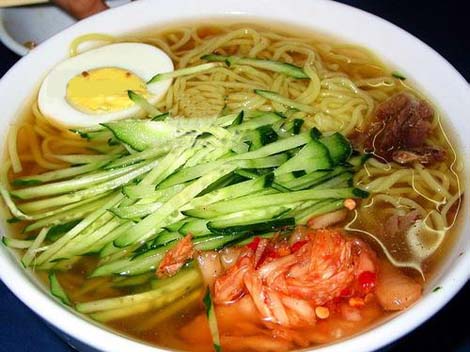
China has a unique food culture. My wife loves noodles. I’ve followed her down narrow Shanghai streets to a famous won-ton and noodle shop on the corner of Chang-le and Shang-yang Road. The front is open and the ceiling low with each narrow table crowded with Chinese sitting on small chairs shoveling noodles in with chopsticks.

My wife orders a small bowl of noodles with peanut sauce for me and a bowl of blood soup and another bowl of noodles with spicy hot Sichuan peppercorn sauce for her.  As she eats, sweat beads her face but there is not one word of complaint—not one sign that she suffers. Instead, this seriously satisfied look spreads across her face as if she has entered a Chinese noodle heaven.

When we are visiting Nanjing Road in Shanghai between People Square and the Bund, we always stop at the same food shop where my wife orders steaming hot noodles with the same peppercorn sauce, and I order deep fried, fresh chou dofu (stinky tofu) with the same sauce that makes me sweat.

At celebration feasts, a wider variety of food will be served from whole fish, crab, a variety of vegetable dishes and tofu.

See how Western culture has created An Invasion of Fat http://wp.me/pN4pY-hb


One Party Advantage

April 4, 2010

The West’s loudest criticisms of China are a one party system, limited religious freedom and government censorship. Is it possible that these same things are also China’s strengths?

President of China, Hu Jintao

Clean water, air and plentiful, healthy food are precious. China’s one-party system ruled by scientists and engineers excels at solving these challenges. Instead of becoming embroiled in partisanship battles over political and religious differences, as in the United States, China is moving ahead to clean up their environment with no “Tea Bag People” or opposition claiming global warming is not caused by carbon emissions.

China has already become the leader in solar power and wind turbine technology. Now, in the last few years, China has emerged as an early leader in adopting “clean coal” technologies. The next industry China is poised to dominate is high-speed rail with plans to add more at home while considering a line from Beijing to London.

The motivation behind this sudden awareness to the dangers of pollution is because China’s government, with a cultural foundation in Confucianism, must meet the needs of the people or be swept from power. Even if a few complain and suffer, the needs of the many must come first.

Discover Hitting Endless Homeruns


______________

Lloyd Lofthouse is the award-winning author of the concubine saga, My Splendid Concubine & Our Hart. When you love a Chinese woman, you marry her family and culture too.

If you want to subscribe to iLook China, there is a “Subscribe” button at the top of the screen in the menu bar.


The Double Menu Caper

April 3, 2010

Our hotel was outside Xian’s city walls.  We had a view of the battlements that were centuries old. At night, the walls and towers were outlined with white Christmas lights.  I ached to get up there and walk those walls.  It was 1999, and I’d wait more than nine years before that happened.

Our second day in the city, we walked from the hotel into the city to a Xian restaurant. I went in first and the hostess, who didn’t speak a word of English, handed me a menu written in English.

This is a different restaurant from the one I mention.

My wife, dressed more like a Chinese peasant than an American, came in after me and she was handed a menu in Chinese. My wife glanced at my menu. She took it out of my hands and gave it back to the hostess.

“We’ll use the Chinese menu,” she said. The prices in Mandarin were less than half the English version.  A stunned look appeared on the hostesses face.  It was a Candid Camera moment, and it was all I could do to avoid laughing.

See I ate no Dog, I Ate no Cat, Guest post by Bob Grant http://wp.me/pN4pY-8y