American Grasshoppers and Chinese Ants

May 26, 2010

In The Ant and the Grasshopper, as retold from Aesop’s fable and illustrated by Amy Lowry Poole, the grasshopper plays, while the ants work and save diligently gathering grain for winter. The ants urge the grasshopper to prepare for hard times, but the grasshopper will not be bothered.

After all, under Confucianism, absolute obedience to authority, a strict family structure and hard work have been valued for more than two millennia so the ants keep working while grasshoppers play.
In Time to Defriend China, Elizabeth Economy (Is that really Liz’s last name—Economy?) and Adam Segal say we should stop negotiating with China. This post at the “Foreign Policy” Blog, like the grasshopper in Aesop’s fable, is self-centered and out of touch.

Liz and Adam say China isn’t cooperating globally as if China has an obligation. They say, “The sticking points in U.S.-China relations are mirrored in China’s relations with much of the rest world. The European Union and Japan, for example, find it no easier to negotiate with China on issues such as trade, climate change, cyber conflict and the Dalai Lama.”

Really— climate change and cyber conflict? Didn’t China recently announce they were going to cut carbon emissions by 40% or more in the next few years while President Obama thought the US might reach 17%? As for cyber conflict, that’s a two-way street, and the Dalai Lama’s claims are a mix of big lies and small truth.

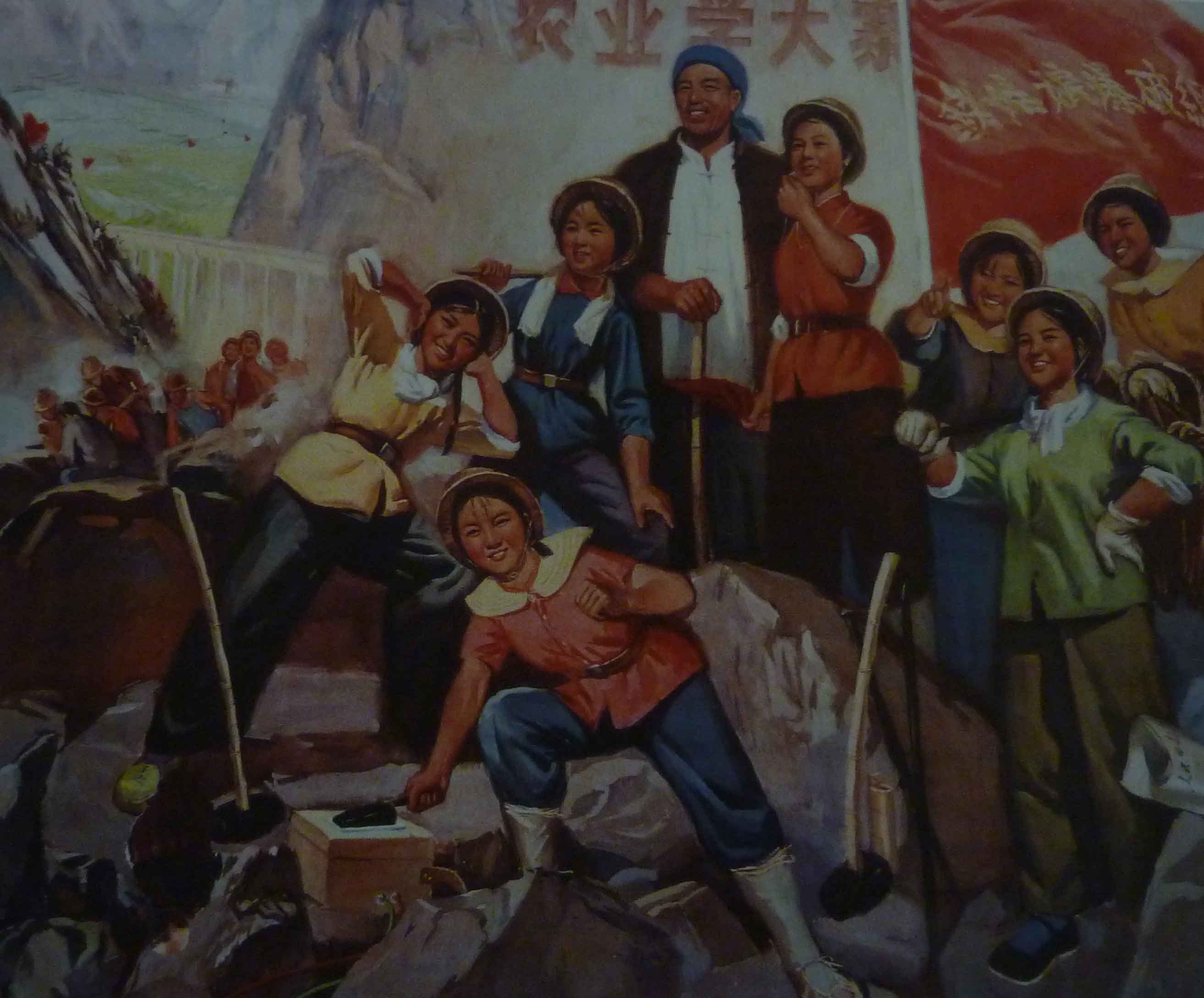
Meanwhile, China has its hands full with a greater challenge—the 1.2 billion Chinese outside the Communist Party who expect a better life.

In 1950, China was generating 0.005 kilowatts of electricity and much of the country was without.  Under Mao, there was the tragedy of The Great Leap Forward and The Cultural Revolution costing tens of millions of lives. It wasn’t until Mao was gone that China started modernizing and improving the lifestyles of hundreds of millions of people.

Today, China is breaking records building modern cities and growing the second largest economy in the world and with a savings account. However, China still has 750 million people without proper medical care, electricity or modern connivances. In addition, they have problems with Tibet and with the Uyghurs in Xinjiang Province, who want to break free with support from Hollywood and maybe the CIA.

Then there is the Taiwan issue. If the US had not interfered in 1949, that issue would not exist. Taiwan would be part of China today and America would have a larger Chinese population.  Don’t forget that the Kuomintang until the 1980s, was a dictatorship that America supported and the Taiwanese were burdened with martial law for more than thirty years.

When China meets its goals at home, then “maybe,” China will be willing to help the West.
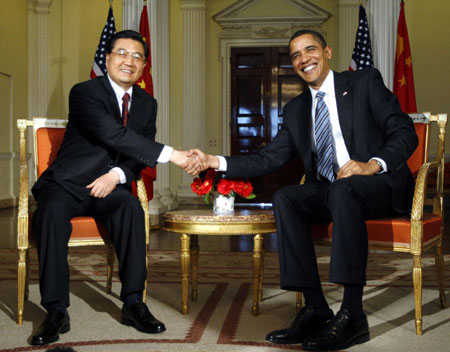
Hu Jintao and Obama shaking hands

Instead of walking away from negotiations as Liz and Adam suggest, the US and the rest of the developed world should find ways to offer a win-win situation that helps China meet its internal goals. How will China do that if they allow the global exchange rate for their currency to fluctuate putting millions of Chinese out of work? If America wants to grow jobs, the US must find ways to do so without hurting the Chinese worker any more than these people have already been hurt. Since the 2008 global economic crises caused by American greed, more than 20 million Chinese workers lost their jobs and 70,000 factories went out of business.

Like those ants in the fable, don’t expect the Chinese to come running to rescue nations that squandered their future while China is still building one. A better opinion on this topic might be this one from Martin Wolf in the Financial Times.

____________________________

Lloyd Lofthouse is the author of the award winning novels My Splendid Concubine and Our Hart. He also Blogs at The Soulful Veteran and Crazy Normal.

Sign up for an RSS Feed for iLook China


Gold from Dead Tibetan Caterpillars

May 26, 2010

In the May 2010 National Geographic, Mark Jenkins writes about Tibetan cowboys and Chinese-made motorcycles in his Tea Horse Road piece unwittingly revealing more about Tibetan life under Chinese rule.

The Tibetan cowboys, who once used horses, now use motorcycles to tend their flocks. On the way to 17,756-foot Nubgang Pass, Jenkins passes the black yak-hair tents of Tibetan nomads, and sees big Chinese trucks or Land Cruisers parked outside. He wonders how poor Tibetans can afford such luxuries. Aren’t they supposed to be suffering?

I think, “Maybe they are smuggling drugs into China from India”.  As I read on, I learn I’m wrong.

Photo by Tom Carter, author of China: Portrait of a People

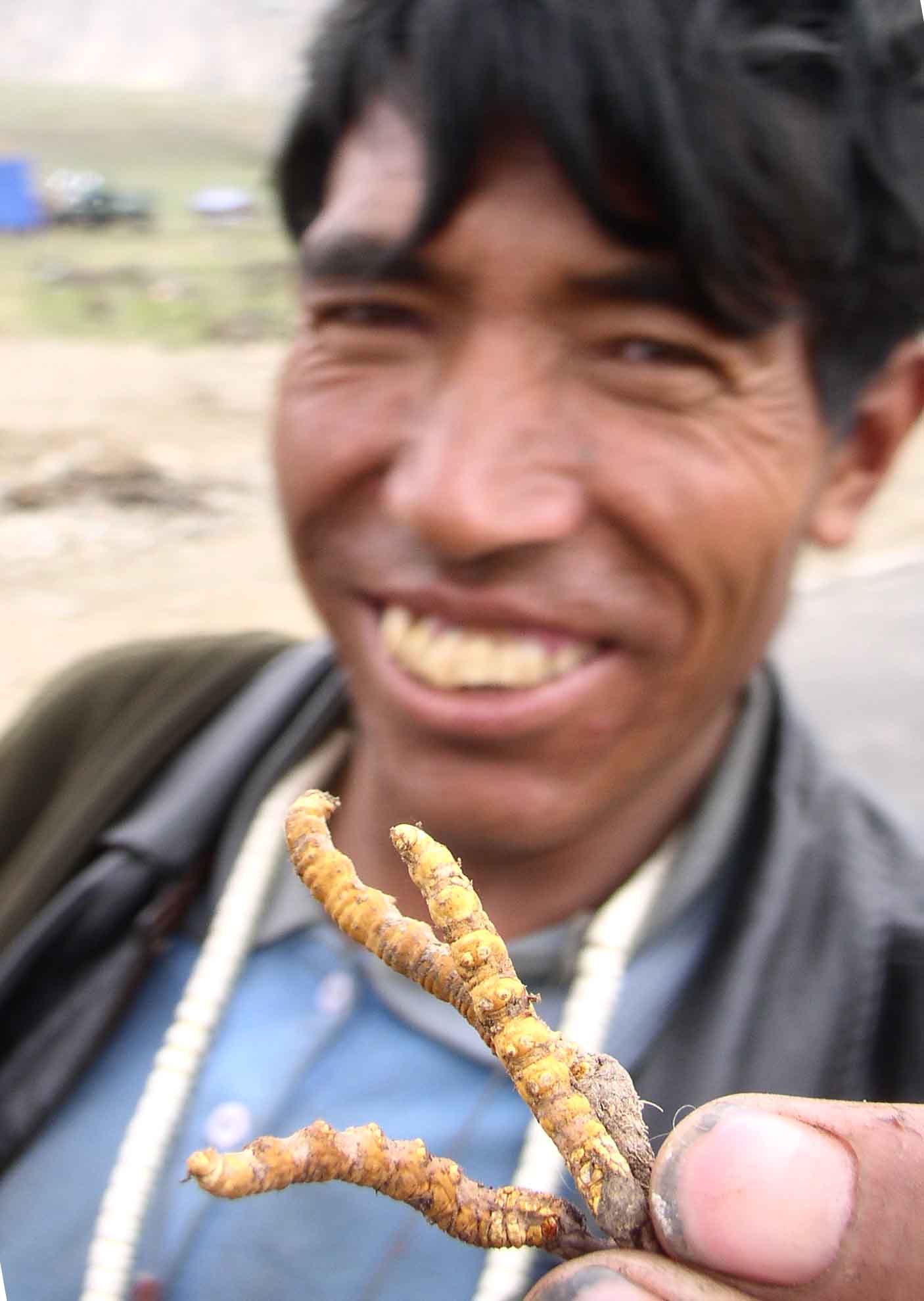
On his way back from the pass, Jenkins discovers these Tibetan cowboys have found wealth in their high grasslands from parasite infected caterpillars called “Yartsa Gompo” in Tibet and “Chong Cao” in China.  These dead caterpillars sell to Chinese medicine shops throughout Asia for as much as 80 dollars a gram—more than the price for a gram of gold.

Why? The Chinese and Tibetans believe these dead caterpillars are a cure-all medicine that also acts as an aphrodisiac.

Discover more about Tibet on The Tea Horse Road

______________

Lloyd Lofthouse is the award-winning author of the concubine saga, My Splendid Concubine & Our Hart. When you love a Chinese woman, you marry her family and culture too. 

If you want to subscribe to iLook China, there is a “Subscribe” button at the top of the screen in the menu bar.


Buddhism in China

May 24, 2010

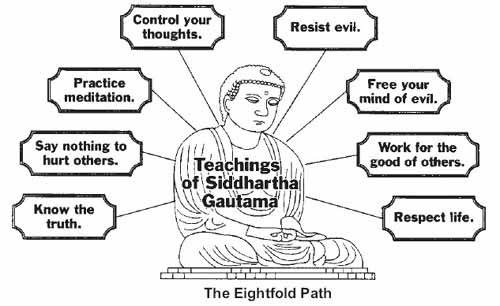
During the Han Dynasty in the first century B.C., trade with Central Asia introduced Buddhism to China.  Over the centuries, interest in Buddhism grew.  However, due to Confucianism and Taoism, the Chinese adapted Buddhist scripture to fit the Chinese culture creating the Mahayana sect, which spread to Korea and Japan.

Like most major religions, there are subdivisions within Buddhism but most may be classified into three. This is why Southeast Asian Buddhists differ from the Chinese.  The Theravada  form of Buddhism is found in Southeast Asia in countries like Burma, Thailand, Cambodia and Laos.

Tibetan Buddhism incorporates other beliefs, and there are four principal schools or types of Tibetan Buddhism. The Dalai Lama is the spiritual leader of one of the four, the Yellow Hat sect.

Buddhism in China reached its high point during the Tang Dynasty, 618 to 907. However, in 845 AD, the Tang emperor suppressed Buddhism and destroyed thousands of monasteries, temples and shrines.

Soon after Mao and the Communists won China, Buddhism flourished for a time but was repressed during the Cultural Revolution along with all other religions. Many monasteries and Buddhist texts were destroyed. After Mao, many of the major monasteries were rebuilt. Today, Buddhists represent the largest religious group in China between 100 to 200 million. Source: PEW Forum

Discover The First of all Virtues

_______________

Lloyd Lofthouse is the award-winning author of My Splendid Concubine [3rd edition]. When you love a Chinese woman, you marry her family and culture too. This is the love story Sir Robert Hart did not want the world to discover.

His third book is Crazy is Normal, a classroom exposé, a memoir. “Lofthouse presents us with grungy classrooms, kids who don’t want to be in school, and the consequences of growing up in a hardscrabble world. While some parents support his efforts, many sabotage them—and isolated administrators make the work of Lofthouse and his peers even more difficult.” – Bruce Reeves.

lloydlofthouse_crazyisnormal_web2_5

Subscribe to “iLook China”!
Sign up for an E-mail Subscription at the top of this page, or click on the “Following” tab in the WordPress toolbar at the top of the screen.

About iLook China

China’s Holistic Historical Timeline


The Home Song Stories

May 22, 2010

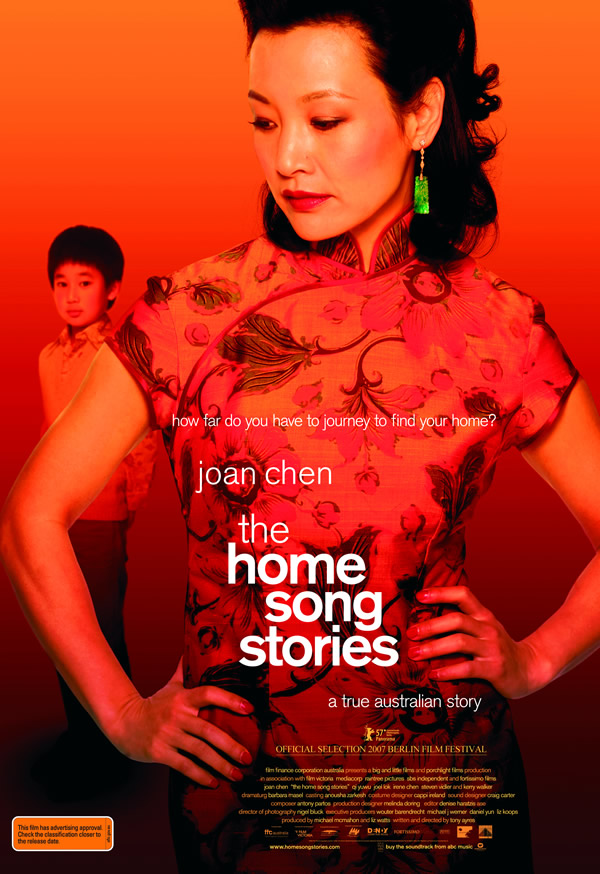
The Home Song Stories, based on a true story, stars Joan Chen as Rose. Joan Chen was born into a family of doctors and educated in China during Mao’s era. Chen is considered the Elizabeth Taylor of China and delivers a powerful performance in this movie, which won a slew of foreign awards.  Rose is a lost soul with two children who moves to Australia after marrying an Australian sailor she meets in Hong Kong.

It is late in the 1960s and the Australian sailor turns out to be an admirable character. You would have to see the movie to discover why.

Later in the movie, it is revealed that at sixteen Rose was sold to become a concubine for an older man.  Rose fell in love with her master’s younger brother, an artist, and they run off.  A few years later, the love of Rose’s life dies from  tuberculosis. To survive, Rose becomes a night-club singer who takes a string of lovers.  The story is told from the son’s point of few, who is a child.  Rose’s daughter is a teen for most of the movie.

I couldn’t find copies of The Home Song Stories in the US but did find copies on ebay from Australia. It’s too bad this movie did not gain wider attention in the US.

Discover more Chinese movies, Not One Less

____________________________

Lloyd Lofthouse is the author of the award winning novels My Splendid Concubine and Our Hart. He also Blogs at The Soulful Veteran and Crazy Normal.

Sign up for an RSS Feed for iLook China


Cultural Differences, the Ignorant American and Suicide by Railroad

May 21, 2010

There is always a spat of suicides in China when public school students don’t get into college. Recently, near Stanford, California, there were suicides by Asian students who weren’t doing well in high school and it didn’t look like they were going to make the grades needed to get into the US university they wanted to attend.

An example of Western religious intolerance may be seen in this post about the Gunn High suicides.

The students would lay on the train tracks and wait for a train to end their misery. As the suicides mounted, the city did what it could to make it difficult for more kids to do the same. The high school shut down and testing was cancelled to remove the pressure. Gunn High is one of the highest ranked public high schools in the country. The Asian student population is about 80%.

Behavior like this is shocking but it is part of Asian culture.  As a Christian nation, is it the responsibly of American citizens to change this behavior even if we have to use violence and war like we are doing in Iraq and what we did to the American Indians in the 19th century?

Learn about the important of an Education to the Chinese

____________________________

Lloyd Lofthouse is the author of the award winning novels My Splendid Concubine and Our Hart. He also Blogs at The Soulful Veteran and Crazy Normal.

Sign up for an RSS Feed for iLook China