Learning from Sherlock Holmes

June 26, 2010

I was shopping at Costco and saw a piece in The (June 19) Economist about China’s secret media.  I bought a copy and read it when I got home. One of the major reasons that the Qing Dynasty collapsed in 1911 was because the Manchu leaders were out of touch with what was going on. The royal princes lived behind high walls in a fantasy world of opulent gardens. The young Emperor and the Empress Dowager lived inside the Forbidden City or The Summer Palace—surrounded by ministers who filtered the news.

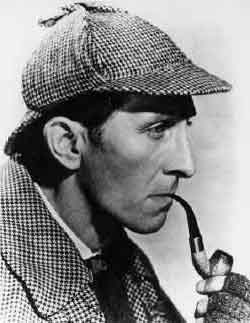
Sherlock Holmes

In Chinese whispers, The Economist reveals the different layers of news in today’s China. One layer is the cleansed version for the people then there are other layers depending on how high one is in the government. Each layer appears to have less censorship. What this piece reveals is that China’s top leaders wants to know what’s going on before anyone else does.

One example would be the SARS outbreak in 2003. According to the Economist, by the time China’s leaders learned about SARS, there had already been 300 cases and 5 deaths. Two days after learning about SARS, China’s leaders told the World Health Organization. Since Xinhua’s reporters and editors do such a great job filtering the news for mass consumption, it seems that China’s top leaders have to become sleuths to discover the missing facts.

See The Collective Will

________________________

Lloyd Lofthouse is the author of the award winning concubine saga. When you love a Chinese woman, you also marry her family and culture.

Sign up for an RSS Feed for iLook China


Reading Barry Ritholtz

June 23, 2010

In “China The Black Box“, Barry Ritholtz demonstrates a better understanding of China than most I’ve read—at least in this piece.  If you are willing to sit for a long read, I suggest clicking on the link. He does a good job explaining how China’s economy works and why it may survive for some time without an economic collapse like the 2008 US meltdown.

Barry Ritholtz

In summary, Ritholtz mentions how several prominent hedge fund managers in the West have said China is making mistakes economically. Then Ritholtz says there is no way these managers know what’s going on in the Middle Kingdom since China is half capitalist and half socialist and doesn’t fit any Western economic norms.

He says China is a unique civilization state, which gives it a tremendous advantage at this stage of its economic development, because China’s citizens have a singular desire to work hard and improve their material lot. It helps that the Chinese prefer to pay cash for things instead of using credit cards as in the US.

Chinese civilization has periods of order followed by periods of disorder and since China recently emerged from two centuries of disorder, the Communist government has a long way to go before it is their turn to leave the leadership stage.

Read how others get it wrong in Belching About China

________________________

Lloyd Lofthouse is the author of the award winning My Splendid Concubine and writes The Soulful Veteran and Crazy Normal.

Sign up for an RSS Feed for iLook China


Betting Against China’s Housing Market

June 21, 2010

You may have seen stories or headlines predicting a housing bubble bursting in China as it did in the US. China bashers are probably praying this will happen, but don’t count on it.  Placing a bet that China is going to stop growing its economy soon is throwing money away.

The Market Oracle talks about this in “Will China Housing Market Follow the U.S. In a Mortgage Bust?” Although the Bank of China held $10 billion in US subprime assets when the  US bubble burst, Chinese banks don’t make those loans in China—the risky subprime loans to poor people with bad credit was in US. The only reason the Bank of China held those assets was that they trusted America—then.

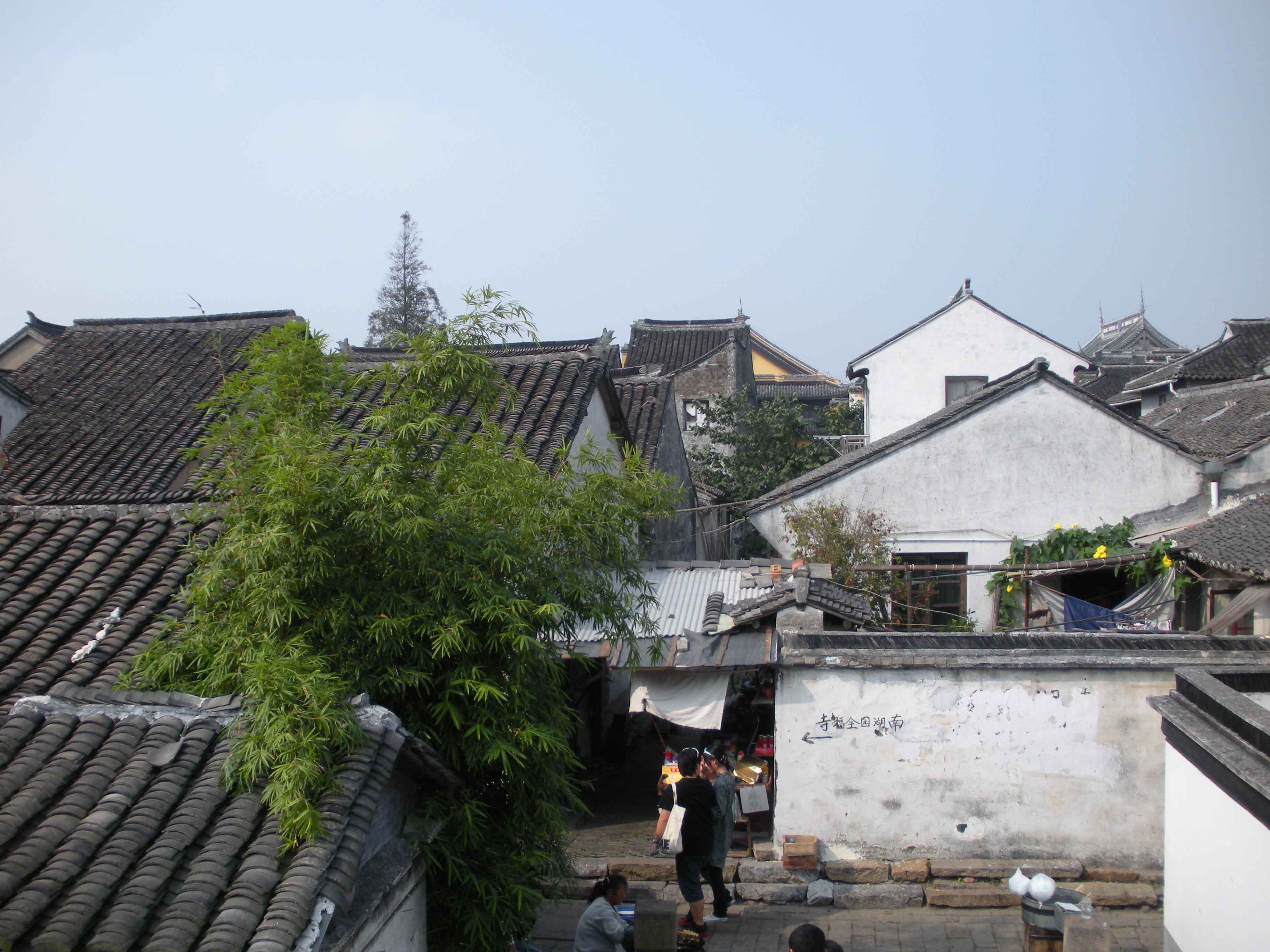
Older Housing in China

The real estate market in China is different. Chinese families contribute and buyers often pay 30 to 50% down. Also, when the bubble burst in the US, housing loans to GDP were 79% but in China that number was 15.3%.

In fact, according to the May 29 – June 4, 2010 The Economist, about 20 – 30% of urban housing is owned by the top income earners. The rest live in free housing provided by employers or in  state owned housing with low or no rent. It also helps that most Chinese save and avoid using credit cards. Then there is rural China where 750 million live and all the housing belongs to collectives and there are no mortgages or rent.

See Greedy Buyers Beware

______________

Lloyd Lofthouse is the award-winning author of The Concubine Saga. When you love a Chinese woman, you marry her family and culture too. This is the love story Sir Robert Hart did not want the world to discover.

To subscribe to “iLook China”, look for the “Subscribe” button at the top of the screen in the menu bar, click on it then follow directions.


China’s Great Leap Forward (1958 to 1961) – Part 1 of 6

June 21, 2010

Before reading this series about Mao’s Great Leap Forward, I recommend you first read China, The Roots of Madness to understand what led to Mao’s era as the leader of Communist China (1949 – 1976). This link will take you to that post.  When you finish, return to China’s Great Leap Forward.

_____________________________

Mao’s era begins in October 1949 with victory celebrations in Beijing, as the country with the largest population in the world sees a Communist government come to power.

(when the advertisement appears, advance the video scroll bar to 2:00 minutes to avoid it)


Mao says, “The People’s Republic of China is founded today. China will be free of inequality, poverty and foreign domination.”  In 1950, most Chinese live as they have for centuries. The video shows what this life was like.  Before Mao, most lived in poverty and were in debt to landowners.

Hu Benxu, a peasant farmer in Sichuan says that in the past, there was justice for the rich but nothing for the poor.

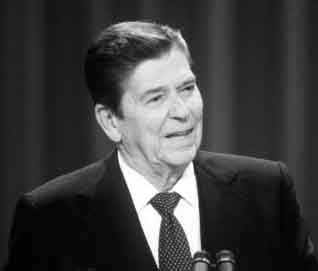
President Ronald Reagan

Chiang Kai-shek believed that improvements would spread through the country (sort of like President Reagan’s trickledown theory, which didn’t work) as foreign investments poured into China. But the opposite happened. As the country industrialized, the gap between the rich and the poor grew wider. The rich held on to money and wanted more. Protests about working condition in the factories were met with death from Chiang Kai-shek’s troops.

Meanwhile, Mao promised land reforms, and his troops treated the peasants with respect. When Mao won China, he said, “We Chinese should work hard. The country is poor. Our people are uneducated.  We must make China a modern industrialized state.”

However, there would be many mistakes and much suffering during the next 27 years. After two thousand years of an Imperial system of government, China was embarking on a journey of reinventing a country and a culture without any foreign influence.

Go to Part 2, China’s Great Leap Forward

______________

Lloyd Lofthouse is the award-winning author of the concubine saga, My Splendid Concubine & Our Hart. When you love a Chinese woman, you marry her family and culture too.

If you want to subscribe to iLook China, there is a “Subscribe” button at the top of the screen in the menu bar.


Belching about China

June 20, 2010

I sometimes read opinions about China from individuals who should stay quiet.  Leo Hindery wrote one for The Huffington Post, which  is an example of an American castigating China from a Western cultural point-of-view.

These biased voices bother me and probably bother many Chinese too. Of course, Hindery has a right to voice his opinions, but most Chinese don’t understand that the American government has no control (at least we like to think so) of what appears in the American media.

Xu Xiao-dong, in Zhouzhuang, China, an artist in his shop earning a living without help from the American labor movement.

Since the media in China is the official voice of the government, many in China see the Western media the same way. Hindery says he is eager to see the “American labor movement smartly and creatively provide all the help to China’s workers that it can responsibly offer” to help Chinese workers earn more money along with better benefits. Considering what the American labor movement did for the US auto industry, that is a bad idea.

Due to Western meddling in China  during the 19th century, there were two Opium Wars  forcing British, French and American opium into the country along with Christian missionaries, which led to the Taiping Rebellion started by a Christian convert ending in 20 to 100 million killed. Then there was the Boxer Rebellion, a peasant uprising caused by meddling Christian missionaries, greedy Western businessmen and pompous politicians.

In fact, due to the West forcing China to open its doors, more than two-thousand years of Imperial rule ended leading to four decades of chaos and anarchy between 1913 and 1950 where millions more were killed.

My opinion is to let the Chinese fix China and leave the American labor movement out of it.

See China’s Labor Laws

______________

Lloyd Lofthouse is the award-winning author of the concubine saga, My Splendid Concubine & Our Hart. When you love a Chinese woman, you marry her family and culture too. 

If you want to subscribe to iLook China, there is a “Subscribe” button at the top of the screen in the menu bar.