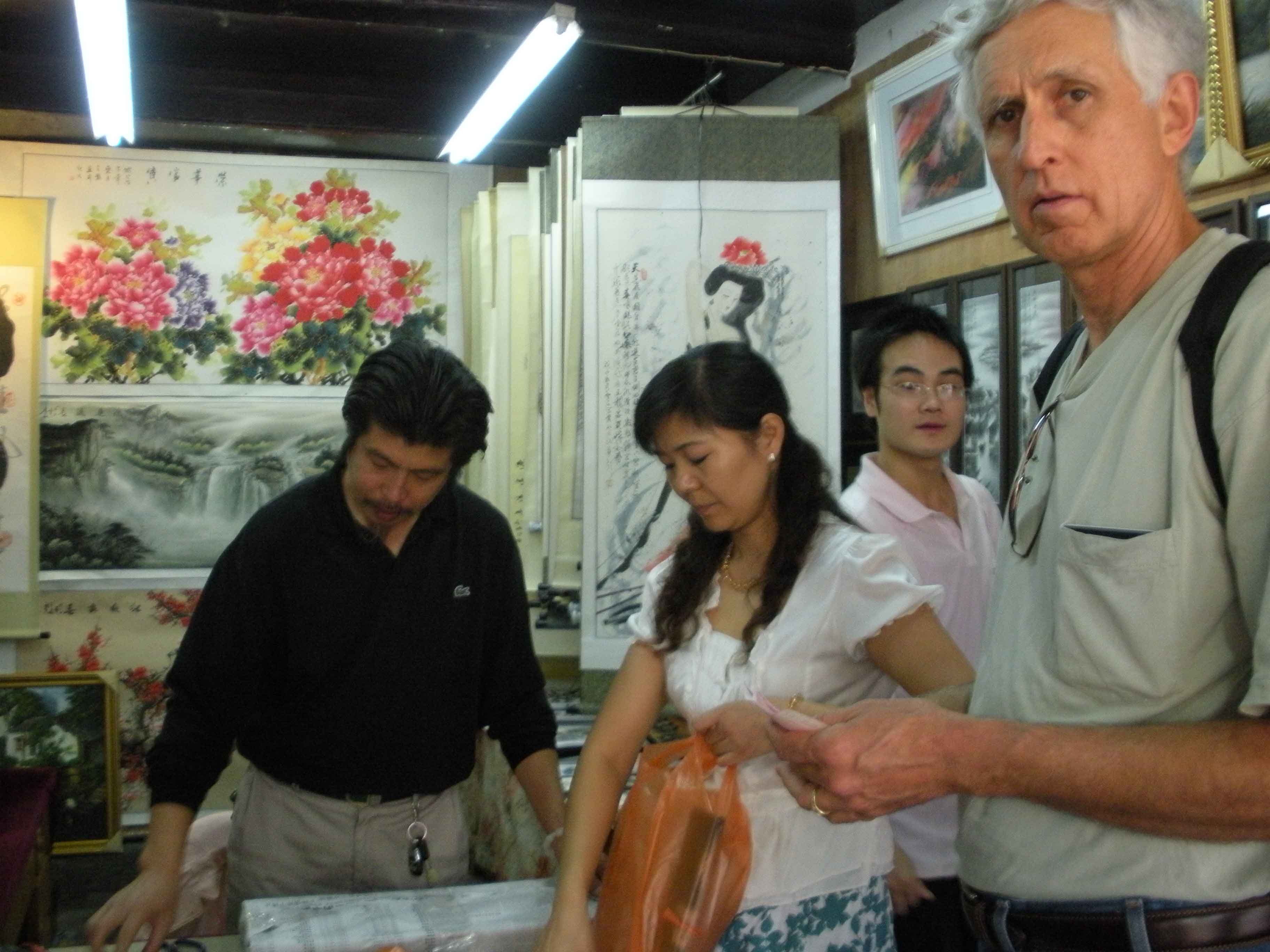
About Duan Wu Jie (Double Fifth Festival)

June 20, 2010

By Hannah, who lives in China and is a Chinese citizen kind enough to explain more about this national May/June holiday.

__________________________

“Duan Wu Jie” is a Chinese traditional festival. It happens on May 5 according to Chinese lunar calendar. In English, it translates into Dragon Boat Festival or Double Fifth Festival. Actually, it has around 20 different names and meanings in Chinese and is celebrated differently according to region.

Photo by Hanna

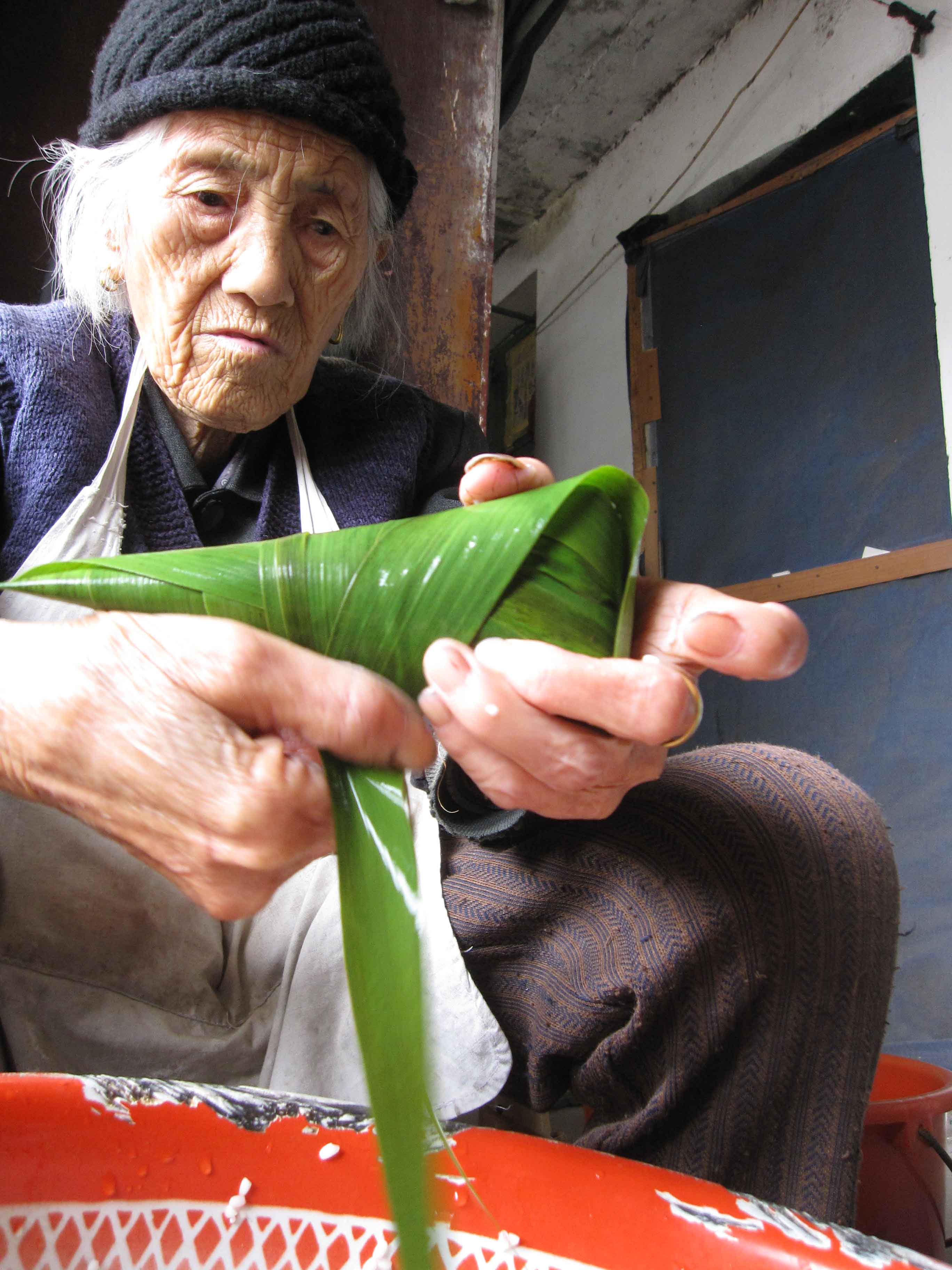
Racing the dragon boat is one well-known way of celebrating “Duan Wu Jie” day, but most common way of the celebration is to eat the rice cake, which is called Zongzi (boiled reed leaves wrapped into pyramid shape over sticky rice that has been mixed with beans or dates, but these modern days even pork and eggs in it).

The most popular saying of “Duan Wu Jie” day is to memorize the great poet and patriot Quyuan, he suicide himself by jumping into the river. The locals heard of it so all coming out by the boats tried to save him. Also, the locals were afraid that the river fish might ate his body because of hungry, so people throw the rice into the river to avoid that. That’s how it comes the dragon boat and the rice cake.

Photo by Hanna

In my hometown, when “Duan Wu Jie” festival is closing, the married daughters of each family have to buy a lot of the Zongzi and Xianyadan (salted duck egg) to bring to their parents home to honor them.

In September 30, 2009, the “Duan Wu Jie” festival was listed on the Human Intangible Cultural Heritage List. Now it’s a legal national holiday. We don’t have to work on this day anymore!

More about the Dragon Boat Festival

________________________

Lloyd Lofthouse is the author of the award winning My Splendid Concubine and writes The Soulful Veteran and Crazy Normal.

Sign up for an RSS Feed for iLook China


China’s New National Holiday, the Rice Cake Festival

June 20, 2010

My wife mentioned that China had a new national holiday, The Rice Cake Festival. When I learned about The Festival of the Hungry Ghost, I wrote about that as I did The Dragon Boat Festival and the Spring Festival – Year of the Tiger.

I decided to discover more about this new holiday—and Google, which rarely disappoints, had nothing specific. I read that diplomats from 26 countries gathered in Taiwan to celebrate the Lantern Festival by making rice cakes, and Korean and Vietnamese sites mentioned Rice Cake Festivals but nothing about China having one.

Zongzi, Chinese sticky-rice cakes

There were videos on YouTube on making rice cakes. The Chinese version of a sticky rice cake video was similar to the process my wife uses. However, besides the essential sticky rice, the other ingredients are optional. My wife has made sticky rice cakes with only rice, raisins and black beans. She also said that for centuries, Silk Road caravans leaving China carried rice cakes as rations since they have a long shelf life.

When I checked a list of China’s Public Holidays, the only one listed for June was the Dragon Boat Festival. Then I read that “Zongzi”, traditional rice cakes wrapped in bamboo leaves, are eaten during the Dragon Boat Festival, a three-day holiday.

______________

Lloyd Lofthouse is the award-winning author of the concubine saga, My Splendid Concubine & Our Hart. When you love a Chinese woman, you marry her family and culture too. 

If you want to subscribe to iLook China, there is a “Subscribe” button at the top of the screen in the menu bar.


See, Hear, Touch No Truth—Just Lies, Please

June 18, 2010

The “Wall Street Journal” published China: Not Intentionally Pursing Trade Surplus With US, and I agree. The American thirst for high wages with benefits and cheap products created this mess.  After all, when you balance global exports and imports for China, they are close to even. China has a small trade surplus with the world—nothing compared with the “HUGE” trade surplus with the US, where far too many people use plastic to live beyond their means. 

However, most Americans don’t know that. Politicians who tell American voters the truth lose elections and the media seldom shows the whole picture—only the American slice. It seems that most Americans are not interested in the truth.

Qin Gang, a Chinese foreign ministry spokesperson, mentioned the problem was with low US savings rates and high levels of borrowing and unemployment.  He should have mentioned Wall Street risk taking too, which caused the current world economic crises and most of the job losses. Even China lost about 20 million jobs thanks to greed in the US.

People who accuse China of taking jobs from US workers don’t take into account that there are about 12 million illegal aliens in the US working low pay jobs most Americans refuse to do. Even Mexico and Canada, because of NATFA, have taken more jobs than China has.

Gang said, “We hope politician in the U.S. will think seriously about how to resolve the structural problems in their own economy, rather than invariably blaming others.”

Right again. Americans and US politicians spend too much time finding scapegoats while disagreeing on how to fix the problems in America. The US Federal deficit is in the trillions, and the average credit card debt per household is $15,519.  Source: CreditCard.com

The personal savings rate in the US as a percent of personal income is about 3%, while in China that rate is more than 30% and the Chinese government saves too—its cultural.  What’s more embarrassing for grumbling Americans is the fact that the Chinese work longer hours for much lower pay and still manage to save.

See Chinese Work Ethic

________________________

Lloyd Lofthouse is the author of the award winning My Splendid Concubine and writes The Soulful Veteran and Crazy Normal.

Sign up for an RSS Feed for iLook China


Working Conditions in China

June 17, 2010

The Editors in Room for Debate express varied opinions about “What Do China’s Workers Want?”

Worker strikes at Honda plants and suicides at a PRC Foxconn facility, a Taiwan owned company, have made splashes in the global media lately. I read what the five editors had to say and sided with Leslie T. Chang, author of Factory Girls. Her experience speaks for itself and lends weight to her opinion. Chang spent three years following the successes, hardships and heartbreaks of two teenage girls, Min and Chunming, migrants working the assembly lines in Dongguan, one of the new factory cities that have sprung up all over China.

Chang says, “It is important not to interpret the recent spate of worker suicides as protests against factory conditions. In my experience, the greatest pressure on workers comes from interpersonal and emotional concerns rather than conditions inside the factory, which workers tend to take for granted.” 

I recommend clicking on the link for “Room for Debate” and reading what Chang and the others editors say. I agree with Chang’s assessment because of the importance of family in a culture heavily influenced by Confucianism.

See Middle Kingdom Wages Rising

________________________

Lloyd Lofthouse is the author of the award winning My Splendid Concubine and writes The Soulful Veteran and Crazy Normal.

Sign up for an RSS Feed for iLook China


The Magic of Ginseng

June 17, 2010

My wife often cooks with ginseng. She slices the ginseng thin and it goes into the wok with what she is cooking—tofu, cabbage, edamame, Bok Choy, etc.  Ginseng is a dried root that the Chinese believed possesses magical powers because it’s shaped sort of like a little person.

ginseng

The Chinese use Ginseng as a powerful herbal medicine too. At one time, modern scientists rejected these claims, but recent research shows it does help the body resist illness and heal damage caused by stress by stimulating the immune system. Since I only eat food my wife cooks with ginseng, I’ve never taken the herb for its healing properties but I love what it does for flavor.

Records in China show that ginseng was used as an herbal medicine over 3,000 years ago and in cooking as far back as 5,000 years. Chinese emperors valued Ginseng enough to pay for the herb with its weight in gold.  In America, ginseng was also used by several North American Indian nations. Source: Ancient Ginseng History

Discover Tofu

_______________________

Lloyd Lofthouse is the author of the award winning My Splendid Concubine and writes The Soulful Veteran and Crazy Normal.

Sign up for an RSS Feed for iLook China