The Evolution of the Three Teachings of China

July 25, 2017

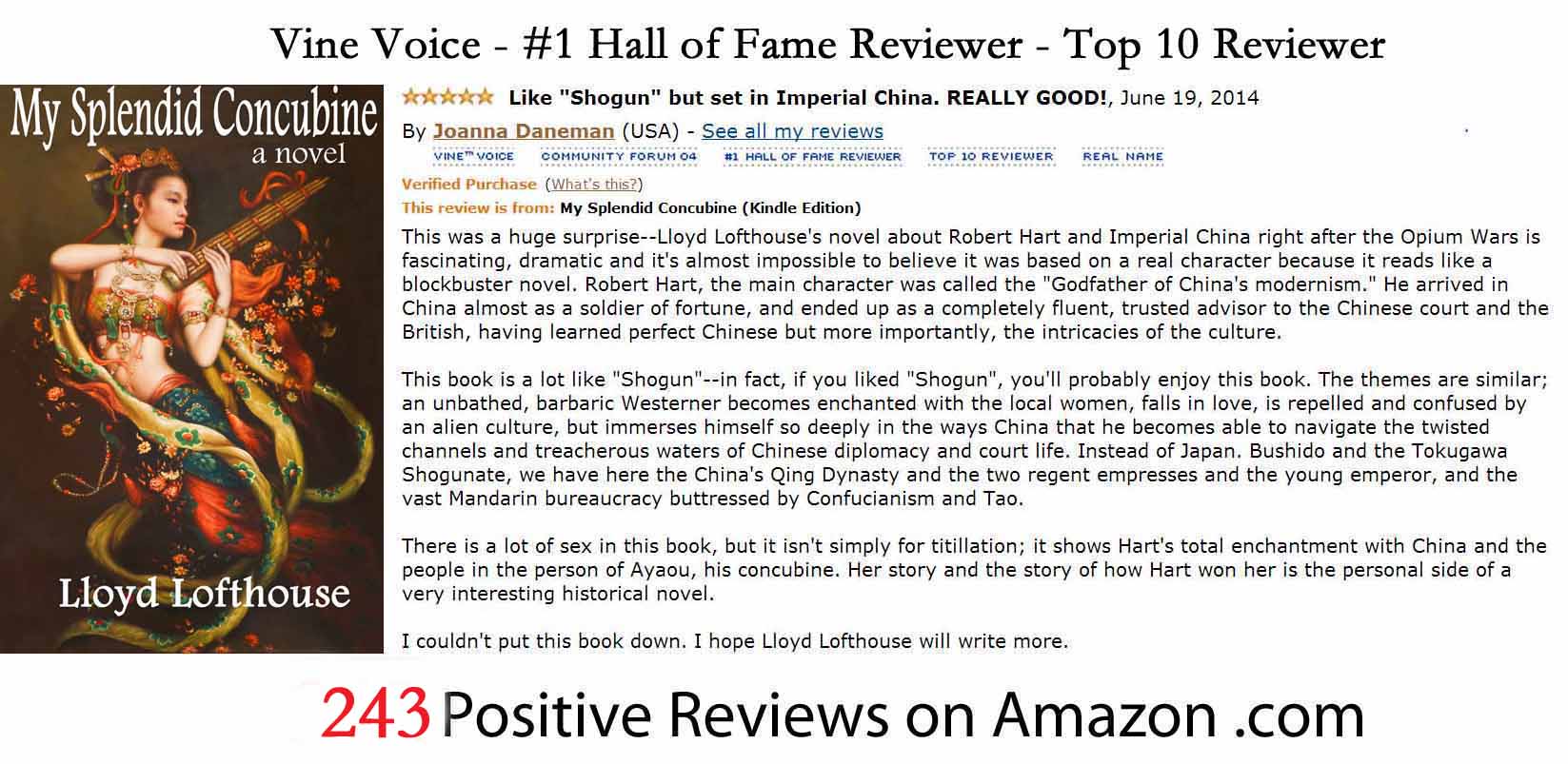
China may be the only ancient culture that survived the spread of Islam and Christianity and managed to keep its unique identity. The following passage comes from My Splendid Concubine, my first published novel was historical fiction based on a real life story and it earned fifteen literary awards. In the novel, Guan-jiah is Robert Hart’s servant.


– the following scene is from CH-4 of My Splendid Concubine

“Guan-jiah,” Robert said, “before I came to China I read The Travels of Marco Polo. Do you know who he was?”

“No, Master,” Guan-jiah replied.

“He came to China from Europe more than six hundred years ago and served Kublai Khan during the Yuan Dynasty. Polo wrote that Hangzhou was the finest and noblest city in the world.”

“Hangzhou was the capital of the Southern Sung Dynasty, Master,” Guan-jiah said. “I’ve heard it is beautiful. Sung philosophy says that we have the power in our minds to overcome our emotions.”

“Marco Polo believed it was God’s will that he came back from China so others in the West might know what he’d seen.” Robert turned to his servant, who was the last in line. “Do you believe in this Sung philosophy, Guan-jiah?”

“The Sung said that if you know yourself and others, you would be able to adjust to the most unfavorable circumstances and prevail over them.”

“That’s admirable, Guan-jiah. You never mentioned you were a scholar. If the Sung Dynasty was that wise, I want to see Hangzhou one day.”

“I am no scholar, Master, but I must believe in the Sung philosophy to survive. I have read and contemplated much literature. However, I am like a peasant and have never mastered calligraphy. It is a skill that has eluded me.”

“How old were you when you studied this philosophy?”

“I was eleven, Master, two years after I was sent to Peking.”

The 3 teachings of Taoism, Buddhism, and Confucianism have been the backbone of Chinese culture since the bronze age, and are still intertwined strongly with today’s China. They are different interpretations to China’s core philosophies of life. Over time, different dynasties favored different ideas, if only to define themselves against their predecessor. Ultimately though, it’s all about the philosophy of combining spirituality with the reality of everyday life.

Discover The Return of Confucious

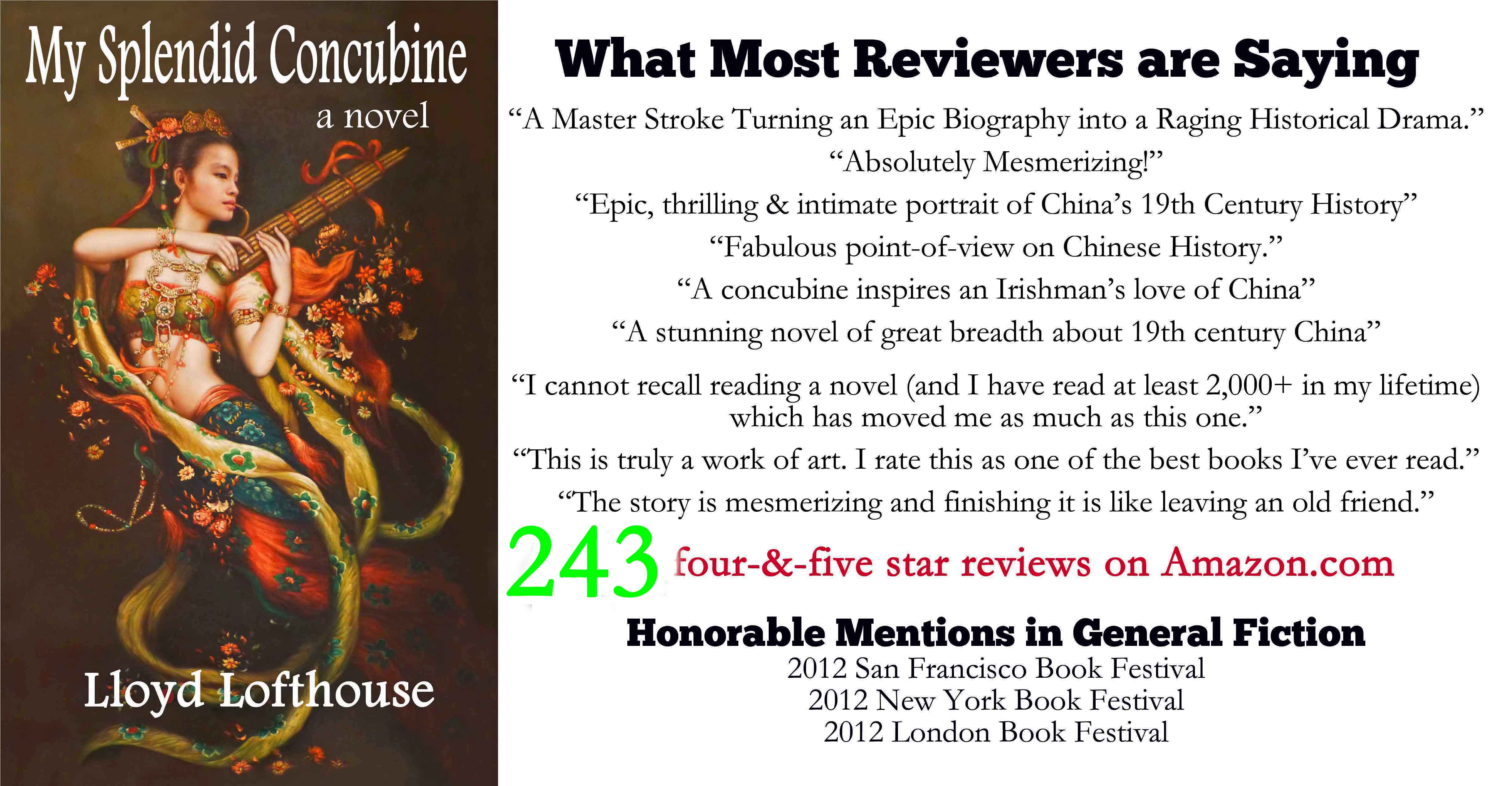
Lloyd Lofthouse is the award-winning author of My Splendid Concubine, Crazy is Normal, Running with the Enemy, and The Redemption of Don Juan Casanova.
Where to Buy

Subscribe to my newsletter to hear about new releases and get a free copy of my award-winning, historical fiction short story “A Night at the Well of Purity”.

About iLook China

China’s Holistic Historical Timeline


Should the Chinese Communist Party be concerned about the Mandate of Heaven?

July 19, 2017

Due to the Mandate of Heaven, many of China’s people see rebellion as a birthright under the right circumstances. The Mandate of Heaven has been traced back to 1753 B.C. or earlier.

With the Mandate of Heaven, the right to rule from divine legitimization to one based on ‘evenhanded’ rule was born. Whenever a dynasty fell, the reason offered by China’s wise men was the loss of the moral right to rule given by Heaven alone, because, for a good government, Heaven sends down all blessings, but on the evildoer, Heaven sends down all miseries.

However, China’s leaders, like leaders all over the world, were free to rule unjustly and could harm the people they ruled but the thinking was that their rule would come to a swift end as Heaven passed its mandate to another family or group. It’s thought that Heaven blessed the authority of a just ruler, but would be displeased with a despotic ruler and would withdraw its mandate. In addition, severe floods or famines might be considered evidence of divine repeal of the Mandate of Heaven.

As long as the ruling family or political party rules fairly and justly, the majority of Chinese people will see no need to call for change or rebel.

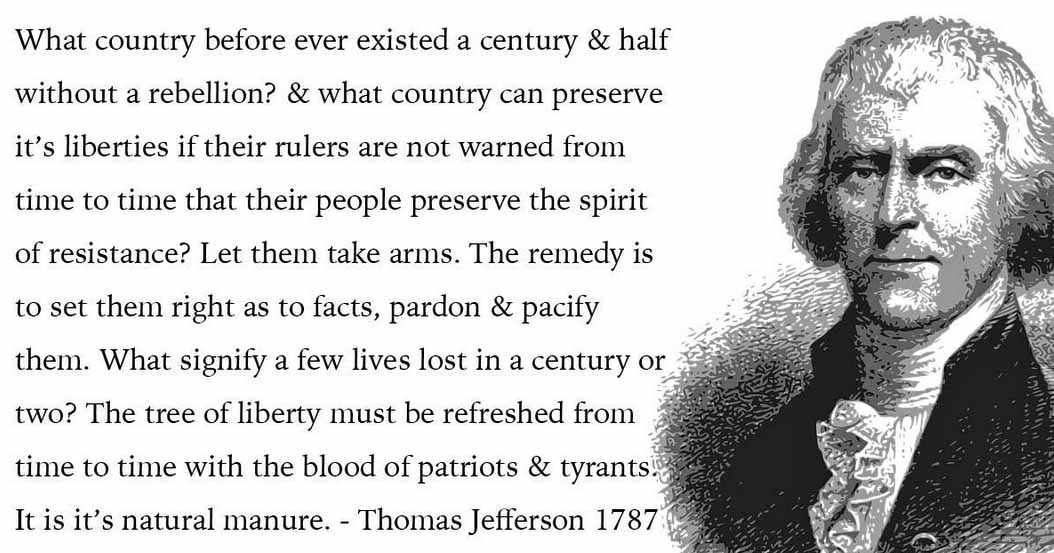
What is the closest thinking to the Mandate of Heaven in the West? Here’s my choice for the United States. Thomas Jefferson, one of the Founding Fathers of the United States, said, “The tree of liberty must be refreshed from time to time with the blood of patriots and tyrants.”?

Since I started this post with a question, I’ll end with one. Should the 45th President of the United States be concerned about the Mandate of Heaven and Thomas Jefferson’s advice? Please let me know what you think in the comment section.

Discover China’s First Emperor Qin Shi Huangdi, the man that unified China more than 2,000 years ago.

Lloyd Lofthouse is the award-winning author of My Splendid Concubine, Crazy is Normal, Running with the Enemy, and The Redemption of Don Juan Casanova.

Where to Buy

Subscribe to my newsletter to hear about new releases and get a free copy of my award-winning, historical fiction short story “A Night at the Well of Purity”.

About iLook China

China’s Holistic Historical Timeline


China’s Transition Years – Discovering History through Film

July 18, 2017

Farewell, My Concubine covers more than 50-years of Chinese history from 1924 – 1977.

In 1924, prostitute Yanhong sees no other alternative than leaving her son Douzi at a training school for Chinese opera where the boys are beaten, and tortured for forgetting their lines. The only escape is suicide. China’s decades long Civil War between the Communists and Nationalist rages on and then Japan invades China in 1937 and the challenges to survive become worse. After World War II, the Chinese Civil War continues and doesn’t end until 1949.

Two of the boys at the training school, Douzi and Shitou, become friends destined to be great actors, and they impress audiences by performing together. Through the years, with the political situation in China ever changing and not always for the good, Shitou and Douzi remain close.

Chen Kaige, self-trained as a filmmaker, was the director for this award-winning 1993 film. Prior to “Farewell, My Concubine”, Chen received modest acclaim for the “Yellow Earth” and “The Big Parade”. With “Farewell, My Concubine,” he won the Palme d-or in Cannes.

Although the film is in Mandarin with English subtitles, the story captured me from the beginning. If you are interested in Chinese history, this film spans several decades beginning soon after the end of the Qing Dynasty. On the surface, it is a story of two boys that happen to become famous, but they have difficulties and challenges like most of us do. However, the film takes us from the Qing Dynasty to a warlord dominated, struggling republic, the Japanese invasion of World War II, and through Mao’s Cultural Revolution.

I saw this movie more than a decade ago and I remember this powerful, dramatic story of one man’s life from the day his mother took a knife and chopped off an extra finger on each hand so he would have five instead of the six he was born with.

Discover Anna May Wong, the American actress who died a thousand times.

Lloyd Lofthouse is the award-winning author of My Splendid Concubine, Crazy is Normal, Running with the Enemy, and The Redemption of Don Juan Casanova.

Where to Buy

Subscribe to my newsletter to hear about new releases and get a free copy of my award-winning, historical fiction short story “A Night at the Well of Purity”.

About iLook China

China’s Holistic Historical Timeline


Discovering Mao’s Cultural Revolution through Books and Film

July 12, 2017

I read Balzac and the Little Chinese Seamstress by Dai Sijie soon after its English translation came out in 2002.  A few years later in 2005, we drove about sixty miles to see the Mandarin language film with English subtitles. Checking Amazon recently, I saw 344 customer reviews with an average of 4.2 out of 5 stars for the novel. The film had a 4.5 average.

This short novel spent twenty-three weeks on the New York Times best-seller list. The author, born in China, moved to France where he learned to read, speak, and write French. The book was originally written in French and translated into English by Ina Rilke.

The story is about two likable, teenage boys and their struggle after being banished to a peasant village for “re-education” during Mao’s Cultural Revolution. Sons of doctors and dentists, the boys work at muscling buckets of excrement up the mountainside and mining coal. Then there is the little seamstress of the title, whom Luo, one of the boys, falls in love with. He dreams of transforming the seamstress from a simple country girl into a sophisticated lover. He succeeds beyond his expectations, but the result is not what he expected.

Discover more about Mao’s Cultural Revolution in China through Joan Chen’s film Xiu Xiu: The Sent Down Girl and Anchee Min’s memoir Red Azalea. Joan Chen’s film earned high marks on Rotten Tomatoes from both critics and the audience.  Min’s Red Azalea was a national bestseller. The Vogue Review said, “”The book sings. It is a small masterpiece. . . [No one] has written more honestly and poignantly than Anchee Min about the desert of solitude and human alienation at the center of the Chinese Communist revolution.”  The New York Times called it “[An] extraordinary story. . . . This memoir of sexual freedom is [both] a powerful political as well as literary statement.” And the Miami Herald said Min’s memoir was “Brave and heartbreaking.”

The best way to learn about the Mao era in Chinese history is to read it from those who were there and lived through it; not from some foreigner that wasn’t there and/or has never been to China.

Discover Wu Zetian, China’s only female emperor

Lloyd Lofthouse is the award-winning author of My Splendid Concubine, Crazy is Normal, Running with the Enemy, and The Redemption of Don Juan Casanova.

Where to Buy

Subscribe to my newsletter to hear about new releases and get a free copy of my award-winning, historical fiction short story “A Night at the Well of Purity”.

About iLook China

China’s Holistic Historical Timeline


The Supreme Art of War is to subdue the Enemy without Fighting

July 11, 2017

Teddy Roosevelt said, “Speak softly and carry a big stick.” Compare what this American President said to China’s Sun Tzu, who wrote the Art of War (recommended reading at West Point) more than 500-years before the birth of Jesus Christ. Sun Tzu said, “The supreme art of war is to subdue the enemy without fighting.”

I’m not sure that America speaks all that softly and that stick has been around the world several times in too many countries and using that stick as a huge club has been costly.  I did a bit of internet sleuthing and the military budgets approved by the Congress from 1946 to 2009 cost the American tax-payer about 23-Trillion dollars, and that’s not counting the years from 2009 – 2017. These figures also do not include the cost of wars since World War II.

In today’s dollars:

  • the Korean War cost the U.S. taxpayer more than $340 billion
  • the Vietnam War cost $740 Billion
  • By 2013, the cost of war in Iraq had cost more than $2 Trillion, and that was four years ago
  • And, also in 2013, Afghanistan has cost between $4 – $6 Trillion

China intervened in the Korean War and sent hundreds-of-thousands of troops to fight with North Korea against the United States and NATO. To understand why the Chinese got involved, Mao said,”Vietnam (and Korea) is the gums to our teeth. What happens when the gums are gone?” At the time, China was surrounded by Communist-hating enemies except for the USSR.

In addition, between 1965 and 1970, over 320,000 Chinese soldiers served in North Vietnam.

The Guardian reports China increased its defense spending by 7-8 percent in 2016 to about $150 billion vs. almost $600 billion for the United States.

Based on Sun Tzu’s “subdue the enemy without fighting”, how is the United States doing compared to
China?

The United States had a stalemate in Korea (and North Korea is a much larger hostile threat today to world peace than it was back in the 1950s), lost in Vietnam, and can’t seem to win or end the wars the U.S. started in Iraq and Afghanistan compared to China that fought a brief war in Vietnam in 1979 a few years after the U.S. left and then pulled out a few weeks later, and fought an earlier war with India in 1962 that also lasted a few weeks, and once China’s objectives were met, that war ended.

Discover China’s First Emperor Qin Shi Huangdi, the man that unified China more than 2,000 years ago.

Lloyd Lofthouse is the award-winning author of My Splendid Concubine, Crazy is Normal, Running with the Enemy, and The Redemption of Don Juan Casanova.

Where to Buy

Subscribe to my newsletter to hear about new releases and get a free copy of my award-winning, historical fiction short story “A Night at the Well of Purity”.

About iLook China

China’s Holistic Historical Timeline