Roughed Up

February 23, 2010

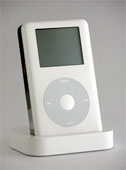
“The police arrived, the guards apologized, and the reporter left without filing charges. Then the policeman told the reporter, ‘You’re free to do what you want, but this is Foxconn and they have a special status here. Please understand.'” So wrote Michael Grothaus for an RSS feed in a piece about “A Reuters employee who was investigating Apple’s legendary secrecy visited Foxconn’s walled city-like facility in Guanlan, China, and was reportedly roughed up by security.”
iPod

Well, yea. The competition is fierce in China for lucrative contracts.  If Foxconn has a contract with Apple and that company loses the contract amounting to millions if not billions of American dollars, it makes sense that their security would be tough on any suspected industrial, high-tech spy. Their jobs even with low pay and long hours are better than no job and poverty. Why put up with a snoop?

If the Foxconn security didn’t take the job seriously, Apple might take their business to another country. How many people would have lost their jobs if that happened?

holding a cup of hot coffee

Consider that China has one lawyer for every 13,000 people compared to the United States, The Litigation Nation, with more lawyers than any other country—one for every two-hundred and sixty-five people and spilling hot coffee on yourself is grounds for going to court.

See Doing Business in China

_________________________

Lloyd Lofthouse is the award-winning author of the concubine saga, My Splendid Concubine & Our Hart. When you love a Chinese woman, you marry her family and culture too. 

Sign up for an RSS Feed for iLook China


Risks on the Road

February 23, 2010

I’ve learned that the Chinese don’t restrict gambling to lotteries, dice or cards.  They also gamble on real estate along with any venture that might turn a profit.

Most Chinese are born entrepreneurs. I’ve read that the Chinese invented paper money and added credit to banking a thousand years ago during the Sung Dynasty. The Chinese are masters at doing business and that’s probably why my wife, who is Chinese, warned me not to do business in China. Do not misread my words—I don’t mean Westerners shouldn’t work with the Chinese. Read my piece on Doing Business in China or what Bob Grant has to say on the topic.

However, it was during a trip to the shores of the Westlake in Hangzhou where I learned how far Chinese drivers are willing to take risks to earn quick dollars. 

Traffic in China. This is mild!

On a drizzly, cold evening, we hired a three-wheeled motorcycle to carry us to the lake where there is a paved walkway along the shore.  It was raining but we had umbrellas. The driver decided traffic was too slow on the right side of the road so he drove onto the walkway where a police officer appeared from the shadows, blew a whistle and waved him off.

Then the driver drove down the wrong side of the street with a wall of traffic headed toward us. We were sitting on a seat behind the driver of a three-wheel motorcycle.

There was a bus in the lane we were in and the bus started to flash its lights.  Our driver did not blink, and the bus swerved out of the way.  All the cars behind the bus went around us too as if our driver were Moses parting the Red Sea.

We reached the lake alive, and the driver went in search of another paying customer.


Flying the Friendlier Skies in China

February 22, 2010

Originally published at Speak Without Interruption on February 10, 2010
By Bob Grant — publisher/editor for Speak Without Interruption

When I first started going to China, I was warned not to fly on Chinese domestic airlines.  I was told they were old, cast-off planes or old military planes, and that people were crammed into each plane with barnyard and other animals.  Before I felt daring and took a domestic flight one day, I was under the influence of yet another case of Chinese stereotyping. 

In all honesty, over the years, I have not had an uncomfortable or unpleasant flight anywhere inside China.  To get to our meetings we had to fly quite a bit.  We went, mainly, to cities up and down the eastern coast; however, we did fly occasionally to inland locations.  Some flights were long—some were short—all were without mishap.

Chinese Stewardess Photo courtesy of Bob Grant

I found the service provided, once inside the plane, to be exceptional.  I was always greeted in English even if I was the only non-Chinese on the flight, which occurred many times.  I was even handed Chinese newspapers in English. The flight attendants were quite efficient. On most flights, we received drinks, a snack, more beverages, a hot Chinese meal (which was always good), and then a last set of beverages.  I never paid extra for my checked luggage, the snacks, drinks, meals or great service.

I was also impressed with the screening, security, and overall terminal experience.  There “are” many people in China—most seemed to be flying on the same days that I flew.  However, in going through the document check (passport for me—identity cards for my Chinese associates) and then the security check which is similar to the security checks I have been through in other countries including the US, I found the process to be quite efficient.  I am an “early get to the airport” type of guy—my Chinese associates are not.  They gave me much concern on numerous occasions when we would arrive at the airport a half-hour before our plane departed.  Fortunately, we never missed our flight and never really had to run to catch it. We went through all stations in such an efficient manner that I should not have bothered to worry (but I always did).

Again, as with my other posts regarding China, I can only speak to my own experiences.  I am certain other travelers have horror stories about flying domestically within China.  My main reason for offering this insight is, for me, another example of incorrect information when it came to China, its people, and its functioning.

If you would like to read other guest posts by Bob Grant, start with They All Look Alike.


After Mao

February 22, 2010

Unlike Mao’s time, today’s Chinese leaders must answer to the seventy-million party members scattered throughout China. These people listen to the 1.3 billion Chinese that do not belong to the party. The result: if an elected official is not doing his or her job, that person usually isn’t reelected.

Deng Xiaoping

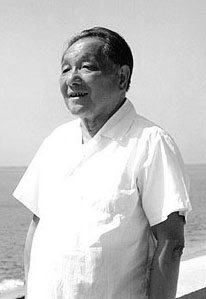
Other changes took place after Mao. Under Deng Xiaoping, the People’s Republic announced a policy of “socialism with Chinese characteristics.” John Gittings in The Changing Face of China quoted Deng Xiaoping as saying, “Planning and market forces are not the essential difference between socialism and capitalism. A planned economy is not the definition of socialism, because there is planning under capitalism; the market economy happens under socialism, too. Planning and market forces are both ways of controlling economic activity.”

Soon after Mao died in 1976, Deng Xiaoping’s Beijing Spring was introduced. This was a brief period lasting from 1977 into 1978. During that time, the public was allowed greater freedom to criticize the government, which wasn’t allowed under Mao.

An example of this may be seen in “The Awakening” (Su-Xing), a movie produced during this period starring Joan Chen (Chen-Chung) and Gau Fei. [ISBN: 978-7-88611-603-2]. There are no English subtitles so it helps to have someone that reads or speaks Mandarin beside you while watching the movie that can point out the subtle criticisms of the Party that appear in the film, which was considered controversial at that time.

There was also a new Beijing Spring between 1997 to November 1998 where the Chinese government relaxed some control over political expression and organization. It was during this time that China signed the International Covenant on Civil and Political Rights.

Learn about China’s Modern Dynasty

______________

Lloyd Lofthouse is the award-winning author of The Concubine Saga. When you love a Chinese woman, you marry her family and culture too. This is the love story Sir Robert Hart did not want the world to discover.

To subscribe to “iLook China”, look for the “Subscribe” button at the top of the screen in the menu bar, click on it then follow directions.


Innocent Until Proven Guilty

February 21, 2010

An American friend who taught English and lived in China for several years once said that it was possible to get around the government censors and reach sites that have been blocked.  It just takes time.  With that in mind, pointing fingers, as Google and Secretary of State Clinton did over the Google hacking episode, was a blunder and an insult to the Chinese people and their government.

Catching clever, cyber criminals on the Internet is not easy—especially if those criminals are Geeks getting thrills hacking into protected Websites. From what I’ve learned, organized Internet criminals are worse and harder to catch.

Shadow Land, the post before this one, is a case in point.

To understand more, I suggest you read How Prisoners Are Using Facebook to Harass Their Victims , and remember, next time you decide to blame the Chinese government for everything that happens in China, hold your tongue with forceps until the evidence—not opinions—proves guilt.

Consider that China has 1.3 billion people and only seventy million belong to the Communist party that rules the country. And regardless of popular Western opinions, the Chinese government does not control everything the Chinese people do with their daily lives and they never will.