Tibet Inside China – 2/5

April 12, 2010

I previously quoted the Tibetan government in exile’s Prime Minister Samdhong Rinpoche claiming that six million Tibetan Buddhists still lived in Tibet.

China, on the other hand, reports that Tibet’s population was 2.84 million at the end of last year, 31,500 more than at the end of 2006. Among its permanent residents, more than 2.5 million, or 95.3 percent, were Tibetans. (Tibet’s population was 1.14 million in 1951.)

1910 Map of Chinese Empire

More evidence that is interesting comes from the CIA World Factbook. It seems that there are about 80,000 Tibetan refugees living outside Tibet/China. Wikipedia estimates about 5,000 to 9,000 live in the United States. The rest live closer to the Tibetan government in exile.

There were no Tibetans in America prior to the 1950s. Chinese first immigrated to America in the 18th century, and Chinese Americans make up the largest Asian population in America today—more than three million.

Discover what happened after After Mao or go to Tibet Inside China – Part 3

View as Single Page

_______________

Lloyd Lofthouse is the award-winning author of My Splendid Concubine [3rd edition]. When you love a Chinese woman, you marry her family and culture too. This is the love story Sir Robert Hart did not want the world to discover.

Subscribe to “iLook China”!
Sign up for an E-mail Subscription at the top of this page, or click on the “Following” tab in the WordPress toolbar at the top of the screen.

About iLook China


Tibet Inside China – 1/5

April 11, 2010

In 2008, I wrote a post about Tibet on another forum. Someone with a Tibetan sounding name left a comment in crude English calling me a “Communist rabbit”.

Name-calling seems to be popular these days. In America, people like Glenn Beck (FOX network), Rush Limbaugh (600 radio stations) and the Tea Baggers have developed name-calling into an art form—not much substance but colorful and angry.

The Tibetan government in exile’s Prime Minister Samdhong Rinpoche was quoted in “Good” magazine’s May/June 2008 Issue that six-million Tibetan Buddhists still lived in Tibet. He also said that Tibet has never historically been part of China. That isn’t true. Tibet was ruled by three of China’s Imperial Dynasties.

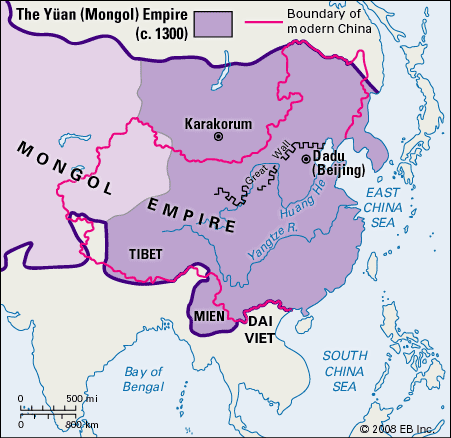
Yuan (Mongol) Dynasty 1277 – 1367

Tibet was first ruled by China during the Yuan Dynasty (1277-1367). Then, when the Ming Dynasty (1368-1643) reclaimed China, a Ming Imperial army was sent to Tibet to drive out the last of the Mongols–holdovers from the Yuan Dynasty. The Ming emperor ordered his army to stay.

When the Ch’ing (Manchu) Dynasty (1644-1911) came to power, the Chinese empire expanded further and Tibet remained in China. Later, I’ll provide evidence from a 1912 National Geographic magazine as proof.

Discover Wearing China’s Shoes or go to Tibet Inside China – Part 2

View as Single Page

_______________

Lloyd Lofthouse is the award-winning author of My Splendid Concubine [3rd edition]. When you love a Chinese woman, you marry her family and culture too. This is the love story Sir Robert Hart did not want the world to discover.

Subscribe to “iLook China”!
Sign up for an E-mail Subscription at the top of this page, or click on the “Following” tab in the WordPress toolbar at the top of the screen.

About iLook China


Traditional Chinese Diet

April 11, 2010

The concept of balance as taught by Confucius and Lao Tzu (Taoism) also plays an important role in diet. In China, yin foods are considered calming. It is believed that traditional Chinese foods come in three categories—yin, yang and neutral.

Yin foods should be eaten in summer and only in moderation in the winter as they are all very cooling. Yin foods are cool or cold in nature, clear away heat and eliminate toxins. Yang is the opposite of yin, and foods in this category are considered warm, dispel cold and treat symptoms from too much yin.

Some yin foods: Bananas, Clams, Crab, Grapefruit, Lettuce, Watercress, Watermelon, Apples, Cucumber, Pears, Mango, Spinach, Strawberries, Tomatoes

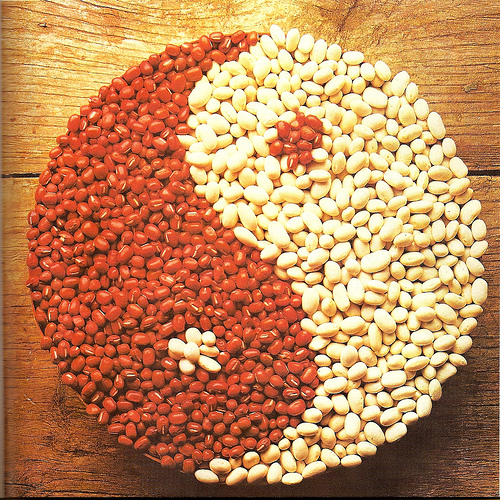
The yin and yang of food

Some yang foods: Cherries, Chicken, Dates, Ham, Leeks, Mutton, Peaches, Raspberries, Shrimps, Sunflower Seeds, Wine, Garlic, Ginger, Onion, Pepper

Some neutral foods: Beef, Beets, Carrots, Celery, Corn, Egg, Potatoes

The Chinese philosophy for eating is different from America and the West. Traditional Chinese medicine applies these philosophies to avoid or treat disease through diet. Once a Chinese doctor determines the nature of an imbalance, he or she aims to restore balance through acupuncture, herbs, and changes in diet or lifestyle. It is believed that as balance is restored in the body, so is health.

See “Health Care Without Drugs” http://wp.me/pN4pY-ey

Sign up for an RSS Feed for  iLook China

Lloyd Lofthouse is the author of the award winning My Splendid Concubine and writes The Soulful Veteran and Crazy Normal.


Yin Yang

April 11, 2010

Yin Yang is about balance.

In many ethical systems, the right path is the one that does not stray far from the middle. Aristotle preached that virtue was striking a balance between the vices of excess and of defect. A similar concept was presented by Plato, who was influenced by Pythagorean (570 -495 BC) ideas.

The concept of  balance is also an important aspect of  Confucianism since the philosophy of Yin Yang appeared about the same time as Confucius (551 – 479 BC), who wrote of a harmonious life that avoids excesses and deficiencies where wisdom was learned from both the old and the young, the high and the low.

Since Lao Tzu (the founder of Taoism and the concept of Yin and Yang) and Confucius lived about the same time, they may have met and shared thoughts.

The Doctrine of the Mean was a basis for civil service examinations in China from 1312 to 1905.

Confucius

The concept of Yin and Yang applies to many issues of life. In Taoism heaven is masculine and earth is feminine suggesting the dependence of the entire creation upon the Creator.

A whole series of possible interactions between the Yin and Yang in life is contained in the Chinese Book of Changes, the i Ching.

Discover Learning from China’s History

______________

Lloyd Lofthouse is the award-winning author of the concubine saga, My Splendid Concubine & Our Hart. When you love a Chinese woman, you marry her family and culture too.

If you want to subscribe to iLook China, there is a “Subscribe” button at the top of the screen in the menu bar 


Twin Disasters Shine a Light on Bias

April 10, 2010

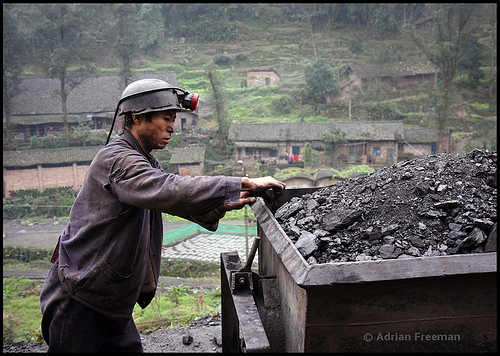
In China, a coalmine is flooded and traps more than a hundred. The Huffington Post reports this and says, “The real issue for the government (China’s) is to learn the lessons from this…The fundamental issue is, the miners should never have been put in this situation in the first place.”

In another piece, “A West Virginia coal mine explosion demands action”, Washington Post. “A huge explosion at the Upper Big Branch coalmine…claimed the lives of 25 miners.” This happened even after Congress passed the Mine Improvement and New Emergency Response act to make it safer.

After the US Congress passed this tougher law, the company that owned the West Virginia mine was cited with several safety violations prior to the explosion but was allowed to continue operating.

It seems the miners didn’t speak out for fear of losing their jobs. True Slant.com said, “Interesting how the West Virginia state police are necessary to allow the mining company CEO to speak now. He probably wouldn’t need them if the miners had been allowed to speak months ago.”

The US Bill of Rights protects freedom of speech but that freedom was written to protect US citizens from the government—not to protect people from corporations. The Huffington Post was right about one thing, “The miners should have never been put in this situation in the first place.”

See Human Rights the Chinese Way http://wp.me/pN4pY-m7

Sign up for an RSS Feed for  iLook China