The Millennium Cult

April 23, 2010

Religions, as Christians, Jews and Muslims practice them, have never played a “major” role in Chinese Culture and Politics. Even today, more than 800 million Chinese say they do not belong to any religion and the largest religion in China is Buddhism (about 10% of the population of China).  Even during Imperial times, most members of government did not belong to organized religions. The same is true today with the Communist government.

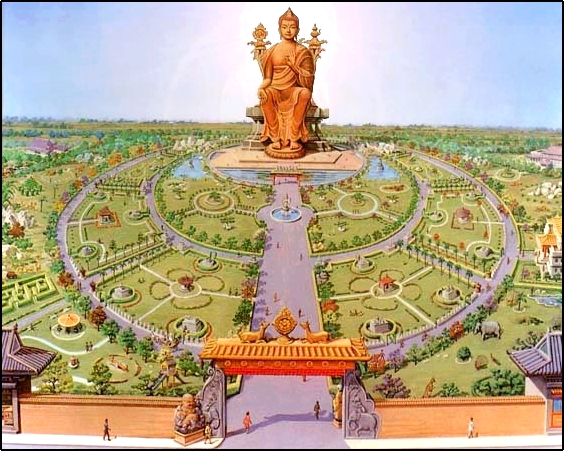
China’s struggle with pagan cults (like the White Lotus Society) reaches back almost a thousand years. The White Lotus Society appealed to poor Han Chinese peasants and more so to women, who found peace in worshiping the Eternal Mother. It was believed that this Eternal Mother would gather all her children at the millennium into one family.

The Eternal Mother

White Lotus Societies started out seeking tranquilly through a combination of Buddhism with some elements of Daoism (Taoism) and other native Chinese religions. Even in the 12th century, the Yuan Dynasty was distrustful of the Yellow Lotus Society, which didn’t fit comfortably with Confucianism and the five Great Relationships.

See A Visit from the Falun Gong

_________________________

Lloyd Lofthouse is the award winning author of the concubine saga, My Splendid Concubine & Our Hart. When you love a Chinese woman, you marry her family and culture too. 

Sign up for an RSS Feed for iLook China


The First Emperor: The Man Who Made China – Part 9/9

April 23, 2010

In the seventh month of 2010 BC, the first emperor’s search for immortality has ended. At the age of fifty, Qin Shi Huangdi is dead.

While China’s first emperor is being buried according to his wishes, a power struggle rages outside the tomb. By tradition, the oldest son should have become the emperor but several ministers want a younger son on the throne. The others are assassinated and there is a slaughter.

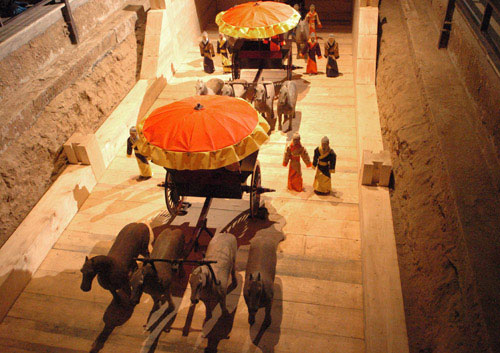
The emperor is also not going alone into the afterlife. While his chosen successors are being assassinated, hundreds of his favorite concubines will stay with their master and die with him. The tomb’s designers and builders will be sealed in the tomb too. Everyone who knows the way dies.

Qin Shi Huangdi left a legacy–a unified nation with a single written language and a system of administration that is still used today.

You may return to Part 8, or start with The Man Who Made China, Part 1

View as Single Page

_________________________

Lloyd Lofthouse is the award-winning author of the concubine saga, My Splendid Concubine & Our Hart. When you love a Chinese woman, you marry her family and culture too. 

To subscribe to “iLook China”, look for the “Subscribe” button at the top of the screen in the menu bar, click on it then follow directions.


A Story about Corruption

April 23, 2010

National Library Week was April 11 – 17.  Friday, I attended the Golden Leaves event at Cal Poly Pomona’s University Library. Afterwards, I joined a conversation about China, and one American Caucasian mentioned the corruption in China and how flawed their legal system was. He was adamant that China had to change and become more democratic like Taiwan was. He also said there were a lot of angry people in China who wanted change.

However, there are two sides to every coin, and there are times when I’m slow to respond.  I have to think about the issue first. Now, I’m ready.

“While the true extent and cost of white-collar crime (in the United States) are unknown, it is estimated to cost the United States more than $300 billion annually, according to the FBI.”

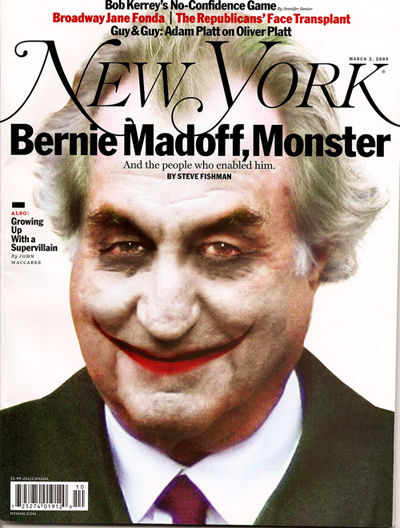
“According to experts, the actual amount investors gave to (Bernard) Madoff over the years is probably closer to $20 billion. But even that outlandish sum will never be found; it was chipped away year after year after year. That, after all, is the definition of a Ponzi scheme: Most of the cash put up by new investors went to pay the old ones.” Source: CNN.com
“Enron was the largest company ever to go bankrupt in U.S. history.… Enron gave over $5 million to campaigns since 1998. Out of the 248 elected officials investigating Enron’s collapse, 212 received campaign contributions from Enron or its accounting firm, Arthur Andersen.

“Enron donated money to George W. Bush’s campaign and Kenneth Lay was a close friend. This week, a congressional watchdog agency announced that it will sue Vice President Cheney to get records of meetings he had with Enron officials. The agency is investigating whether the company was able to influence the energy policies of the United States government.” Source: pbs.org

“WASHINGTON—The Securities and Exchange Commission suspected Texas financier R. Allen Stanford of running a Ponzi scheme as early as 1997 but took more than a decade to pursue him seriously, according to a report further tarring the agency that missed Bernard Madoff’s huge fraud.… Mr. Stanford was indicted last June and accused of orchestrating a Ponzi scheme that swindled investors out of $7 billion.

“The report by the SEC’s inspector general says SEC examiners concluded four times between 1997 and 2004 that Mr. Stanford’s businesses were fraudulent, but each time decided not to go further. It singles out the former head of the SEC’s enforcement office in Fort Worth, Texas, accusing him of repeatedly quashing Stanford probes and then trying to represent Mr. Stanford as a lawyer in private practice.” Source: Wall Street Journal

“The US sub-prime mortgage crisis has led to plunging property prices, a slowdown in the US economy, and billions in losses by banks. It stems from a fundamental change in the way mortgages are funded.”

“On Thursday, Sept. 18, 2008, the astonished leadership of the U.S. Congress was told in a private session by the chairman of the Federal Reserve that the American economy was in grave danger of a complete meltdown within a matter of days. “There was literally a pause in that room where the oxygen left,” says Sen. Christopher Dodd (D-Conn.)

“FRONTLINE then chronicles the disaster that followed. Within 24 hours, the stock market crashed, and credit markets around the world froze. “We’re no longer talking about mortgages,” says economist Gertler. “We’re talking about car loans, loans to small businesses, commercial paper borrowing by large banks. This is like a disease spreading.”
Sources:  BBC and PBS-Frontline

 What about China?

“For one thing, the Chinese trust their government more. According to a recent World Values Survey, 96.7 percent of Chinese expressed confidence in their government, compared to only 37.3 percent of Americans.

“Likewise, 83.5 percent of Chinese thought their country is run for all the people, rather than for a few big interest groups, whereas only 36.7 percent of Americans thought the same of their country. With this relatively higher trust, China’s government and enterprises are better able to enact and implement strict policies that promote saving and growth.” Source: The Economist’s View

I wonder if the corruption in China will ever threaten the world’s economies? I’ll let China speak for itself, Economists defend China’s high savings rate.

See Peter Hessler, an expatriate, on China http://wp.me/pN4pY-kI


The First Emperor: The Man Who Made China – Part 8/9

April 22, 2010

Chinese alchemists knew liquid mercury as the only substance that could dissolve gold. To the ancient mind, that meant mercury had power that might prolong life. However, the human body cannot absorb pure mercury so the Chinese alchemists made a compound the emperor could digest.

As the mercury is absorbed, it slowly destroyed his nervous system and brain. Emperor Qin Shi Huangdi becomes aggressive, argumentative and paranoid. He goes into hiding. Anyone revealing his location is killed. His kidneys’ are failing and he starts talking to the gods.

Thirty-five years after becoming the king of Qin at thirteen, he goes on another Imperial tour.  But this time, he does not see the nation that is bankrupt and near famine. All the emperor can think about is living forever.

He’s told that giant fish guards the island of the immortals. The emperor dreams that he is a sea god who will kill the giant fish. Near the end of 210 BC, he visits the ocean hunting the giant fish with a crossbow while wading in the surf.

His advisors plan what to do with China once the emperor dies. On the return to the capital, the emperor falls ill and the Imperial convoy stops.

Go to Part 9 for The Man Who Made China or return to Part 7

View as Single Page

______________

Lloyd Lofthouse is the award-winning author of the concubine saga, My Splendid Concubine & Our Hart. When you love a Chinese woman, you marry her family and culture too.

To subscribe to “iLook China”, look for the “Subscribe” button at the top of the screen in the menu bar, click on it then follow directions.


Going through Customs in China

April 22, 2010

“Reach the head of the line at immigration at Beijing airport and you see something unexpected: On a little ledge just below the officer’s line of sight is a small machine showing an array of buttons. Atop the buttons is a legend inviting travelers to rate the work of the officer: very satisfactory / satisfactory / not satisfactory / slow or rude. As soon as the officer places his or her stamp in the passport, the buttons go active. The lines did move fast.” Source: Frum Forum

Beijing International Airport

I’ve pushed those buttons. Considering how rude the Chinese can be to each other (not foreigners like me­—we get the polite treatment), that was a good idea.

Beijing International Airport

Maybe rating systems like these also motivate China’s homeland security to be more efficient than what I’ve experienced in the US.  For example, I always carry a 16 GB USB thumb drive with me when I travel. All my backup files are on that drive. If the house burns down or is robbed, I won’t lose any of my computer files.

During our last trip to China, no one at San Francisco’s international airport asked to see the USB drive in my loose-change pocket. When I arrived in China, security at Pudong airport asked to see what I had in that pocket.

See “Dragon Air” http://wp.me/pN4pY-lD