Measuring Earthquakes During the Han Dynasty

July 6, 2010

When critics accuse the Chinese of stealing technology from the West, consider that China was the most technologically advanced nation in the world at one time. In fact, the Han Dynasty (206 BC – 220 AD) put the Roman Empire (27 BC – 476 AD) to shame.

One example of China’s technological abilities was when the first seismograph was invented in 132 AD.  When Zhang Heng‘s device measured an earthquake in 134 AD, Zhang predicted the location. Han Ministers didn’t believe the scientist. Then a courier arrived and reported that an earthquake had taken place where Zhang said it did. For more information about Zhang Heng, see China Culture.

Zhang Heng's seismograph

In 1951, Chinese scientists from China’s National Museum worked on recreating Zhang Heng’s seismograph. Since there was a limited amount of information, it took until 2007 to complete the reconstruction.

In comparison, it wasn’t until the 18th century (AD) that there is any record that Western scientists worked on developing a seismograph.

Discover more about Earthquakes

_________________________

Lloyd Lofthouse is the award-winning author of the concubine saga, My Splendid Concubine & Our Hart. When you love a Chinese woman, you marry her family and culture too.

To subscribe to “iLook China”, look for the “Subscribe” button at the top of the screen in the menu bar, click on it then follow directions.


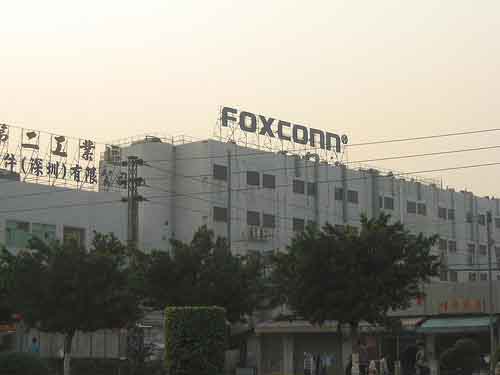
Facts Prove Foxconn a Better Place to Work and Live

July 6, 2010

The Huffington Post published another piece about Foxconn, a Taiwan based company, and mentioned, once again, the recent suicides among workers at their south China facility. The Post also reported that Foxconn might be planning to build a new factory in the city of Hebei in Henan province and hire another 300,000 workers. 

Since Foxconn already has about 800,000 workers in China, that would bring the total above a million. Does that mean more suicides are on the horizon? The answer may surprise you.

China already has one of the highest suicide rates in the world at 230 per million, while the global average is 100 per million. Source: Association for Asian Research

There were ten suicides at Foxconn in five months and several attempts were stopped proving that Foxconn has preventative measures in place. Since the suicide rate at Foxconn was 1.25 suicides per 100,000, the evidence suggests a much safer, healthier environment than outside Foxconn’s walls—including the US with 10.9 suicides per 100,000. Source: NIMH

In fact, I’m not alone in my opinion. Tom Foremski, writing for zdnet, says that the World Health Organization suicide figures for China show 18 male and 14.8 female suicides per 100,000.

The media is misrepresenting the facts about Foxconn.

Why?

A) Yellow Journalism
B)  It happened in China
C) Both A & B

See Roughed Up

_________________________

Lloyd Lofthouse is the award-winning author of the concubine saga, My Splendid Concubine & Our Hart. When you love a Chinese woman, you marry her family and culture too. 

Sign up for an RSS Feed for iLook China 


China’s Capitalist Revolution (Part 9 of 9)

July 6, 2010

Because of what happened in Tiananmen Square, foreign investors pulled out of China. Western businessmen fled. Foreign leaders and Deng’s Western friends criticized him.

The Maoists were back in power. Jiang Zemin said private companies had benefited from the reforms but in the turmoil, they supported the students against the government. We need to destroy them.

Deng Xiaoping was forced into retirement and his policies were reversed. Peasants were encouraged to reform collectives and private business was banned from competing with state enterprises.   The Maoists decided to clean house and close China’s doors to the West.

Desperate to save his reforms, at 87, Deng set out to save his reforms.  He went to Shanghai to encouraged supporters there to speak out.  When they did, the Maoists wanted to know who was criticizing them in the newspapers. Deng said he was responsible—don’t attack anyone but me.  Then Deng met with his old comrades in the People’s Liberation Army and the army announced they would protect Deng’s reforms and anyone who resisted would be dealt with.

Deng said, “Without reform and the Open Door policy, economic growth and improved living standards —any path for our country will be a dead end.” Deng’s call to arms worked.  In 1994, Jiang Zemin switched sides to support Deng. It was okay to get rich again.

Deng Xiaoping died in 1997. The country he inherited from Mao was the one of the world’s poorest. Today, it is one of the wealthiest.

Return to China’s Capitalist Revolution Part 8 or start with Part 1

_________________________

Lloyd Lofthouse is the award-winning author of The Concubine Saga. When you love a Chinese woman, you marry her family and culture too. This is the love story Sir Robert Hart did not want the world to discover.

To subscribe to “iLook China”, look for the “Subscribe” button at the top of the screen in the menu bar, click on it then follow directions.


The Challenge to Reduce China’s Carbon Footprint

July 5, 2010

Bloomberg reported that China Datang Corp has started construction on a rooftop solar power plant in Jiangsu province as another step in China’s goals to cut carbon emssions. Plans are for this power plant to generate 6.2 gigawatt hours of power reducing the need for coal-powered generating plants.

Solar Power

This plant is not the only one under construction.  China is already the world’s leading producer of solar panels, and China is also building a 2,000-megawatt project in the Mongolian desert, which is planned for completion in 2019, and may be the largest solar power facility on the globe. Along with solar power, China plans to install 100 gigawatts of wind power by 2020. Source: World Changing

With the demand from China’s people to improve lifestyles, cutting back on carbon emissions is going to be a challenge as reported in China Juggles an Increase in Carbon Emissions and Renewable Energy Plans.

See Electricity is the Key

_________________________

Lloyd Lofthouse is the award-winning author of the concubine saga, My Splendid Concubine & Our Hart. When you love a Chinese woman, you marry her family and culture too. 

Sign up for an RSS Feed for iLook China


China’s Capitalist Revolution (Part 8 of 9)

July 5, 2010

At Deng’s home, China’s leaders argued about what to do.  For a month, Deng resisted using force. He said, “Of course we want democracy, but we can’t do it in a hurry. If our one billion people jump into multi-party elections, we’d get chaos like the civil war we saw in the Cultural Revolution….”  Finally, Deng agreed to order martial law, but he wanted one more meeting with the student leaders.

The students were arrogant and demanded that the meeting be broadcast live so the nation could watch. One student leader said it wasn’t you who summoned us here. We summoned you. There was no way to bargain with them, and the students were disorganized.

The government’s negotiator said, “If you can’t control the situation and your comrades, then I won’t deal with you!”

The next day, the army was ordered into the city’s center, but demonstrators blocked roads and some army units joined the demonstrators.

One business leader warned the students not to push the party into a corner. Two weeks went by with the army and the demonstrators facing each other.

Finally, orders came to clear Tiananmen Square. Tens of thousands of soldiers moved on central Beijing.  Tanks rolled down streets.  There were announcements. “Stay in their homes. Democracy must come slowly step by step. You can’t grab it in the streets.”

The army closed in but the demonstrators were not afraid. Instead, they were angry. Then the army opened fire and the huge crowd turned and fled. Firebombs were tossed at military vehicles. Soldiers fired back. Demonstrators were shot and killed. Estimates of the dead ranged from 200 to 2,000.  It was a disaster for both sides.

Return to China’s Capitalist Revolution Part 7 or go to Part 9

_________________________

Lloyd Lofthouse is the award-winning author of The Concubine Saga. When you love a Chinese woman, you marry her family and culture too. This is the love story Sir Robert Hart did not want the world to discover.

To subscribe to “iLook China”, look for the “Subscribe” button at the top of the screen in the menu bar, click on it then follow directions.