Eating Bitterness

January 15, 2011

Mainland Chinese are different. They are willing to eat more bitterness than others to learn.

The reason I’m writing this post is due to Amy Chua’s Essay in The Wall Street Journal and a response from Funny Little World where Nang Ngot wrote in a comment, “You can have a system like China that churns out smart but obedient drones. There, the collective behavior guides the intellect.”

Mainland Chinese are not obedient drones any more than all Christians, Jews, Muslims, Buddhists or Hindus are obedient drones within their cultures.

Within every culture, each person is an individual. In China, the difference is how the individuals see themselves in relation to the whole. That does not make them drones.

There’s even an ancient Chinese saying that supports being disobedient, which explains why the central government in Beijing is having so much trouble with corruption at the local level. “The emperor lives behind high walls and is a long ways from our village.”

In simple language this means, “What the emperor doesn’t know won’t hurt us.”

Where Jews and Christians have the Bible and Islam has the Quran, the Chinese have a culture governed by a mixture of Confucianism, Taoism and in part by Buddhism.

The Chinese do not need a temple, church or mosque to tell them what to believe and how to act.

Although there is no Confucian bible, the basic guide that Confucius left behind is as significant as the Ten Commandments, the Bible and the Quran.

In Chinese culture, those guidelines were designed for living a moral life and the family teaches the children as the child grows into an adult.

The Chinese family has done this for thousands of years until it became part of the culture, as Christianity is to the West and Islam is to the Middle East.

Stanford.edu says, “A hallmark of Confucius’ thought is his emphasis on education and study.”

Nicholas D. Kristof, writing for the New York Times, says, “Perhaps as a legacy of Confucianism, its citizens have shown a passion for education and self-improvement — along with remarkable capacity for discipline and hard work, what the Chinese call “chi ku,” or “eating bitterness”.

Kristof  is a two-time Pulitzer Prize winner. He graduated Phi Beta Kappa from Harvard College and then studied law at Oxford University on a Rhodes Scholarship, graduating with first class honors. He later studied Arabic in Cairo and Chinese in Taipei.

Kristof writes, “China used to be one of the most sexist societies in the world — with female infanticide, foot binding, and concubinage — but it turned a corner (in 1949 when Mao said women hold up half the sky) and now is remarkably good at giving opportunities to girls as well as boys….”

At China Education Center.com, I learned that many scholars believe the history of education in China started in the 16th century B.C., and Confucianism has had the largest impact on education for more than two thousand years of Chinese history.

In fact, during the Han Dynasty (206 BC – 219 AD) a form of public education was established. Not only for the elite but also for the common man so both would become better gentlemen.

In contrast, it wasn’t until 1918 that all states in the US had laws requiring children to attend at least elementary school. In 1900, only 6% of children graduated from high school. By 1996, 85% were graduating from high school.

Compared to China, the importance of earning an education in the United States is relatively new and doesn’t have as strong of a cultural component.

Discover more on this topic at Mean Chinese Supermoms are Right while Positive Self-Esteemism is Wrong

______________

Lloyd Lofthouse is the award-winning author of the concubine saga, My Splendid Concubine & Our Hart. When you love a Chinese woman, you marry her family and culture too.

If you want to subscribe to iLook China, there is a “Subscribe” button at the top of the screen in the menu bar.


Combating Virtual Pornography in China

January 14, 2011

I had a good laugh when I read a BBC report on China rewards online porn surfer. A Chinese college student’s addicted to on-line porn ruined his chances of getting into a top university and ended in a junior college.

Now, this student is getting even with those that feed his addiction.

Since this unnamed student from northern Shanxi province couldn’t control his addiction, he decided to wage war against the porn industry by reporting porn sites to China’s censors and ended up being rewarded with 10,000 yuan ($1,465US or £913UK).

Just how serious is China’s government in combating porn? Back in February 2010, I reported China’s Stylish Assault Against Pornography. In fact, in the war against pornography, China recruited mothers.  Now China is recruiting Chinese addicted to porn.

Since that report almost a year ago, what have been the results of China’s war against porn?


Google warned to cut links to porn.

According to Politik Ditto, a Website claiming to be fighting Liberal Terrorism, “Around 1,330 people (in China) received punishments for producing, duplicating, publishing, selling and spreading pornographic and vulgar information from December 2009 to October 2010, and among them five were given prison sentences of five years or more…”

In fact, the Supreme People’s Court issued a judicial interpretation on crimes of spreading obscene content via Internet…

If you believe China is a country without morality, you are wrong! Instead of coming from the pulpit of a church since china has no established national religion as most countries do, China’s morality is measured by the government.

However, this isn’t new and has nothing to do with Communism. The measure of morality in China has “always” come from the family and the government and is often Puritanical. Under Mao during the Cultural Revolution (1966 – 1976), a forbidden teen romance could end in an execution.

If you read my post of Gwyneth Paltrow Popular in China, you would know that guidelines on movies in China are strict: “No sex.  No religion. Nothing to do with the occult. Nothing that could threaten public morality or portray criminal behavior…”

Being “somewhat” Puritanical myself, I applaud China’s war against pornography.

______________

Lloyd Lofthouse is the award-winning author of the concubine saga, My Splendid Concubine & Our Hart. When you love a Chinese woman, you marry her family and culture too.

If you want to subscribe to iLook China, there is a “Subscribe” button at the top of the screen in the menu bar.


In Defense of Tiger Mothers Everywhere

January 13, 2011

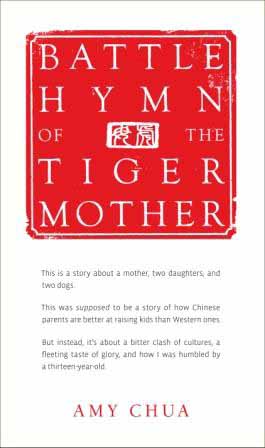
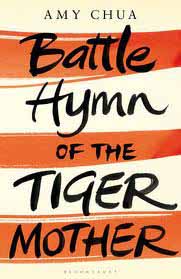
Amy Chua, the author of the Wall Street Journal essay Why Chinese Mothers Are Superior recently released her memoir Battle Hymn of the Tiger Mother. Since publication, Chua has been under virtual attack by guilty parents and spoiled children around the globe.

Amy Chua claims Chinese mothers are superior, and any way you cut it, she is right.

The Chinese mother does make the difference in her child’s education and lifestyle choices, because she is willing to say “NO” and stick to that hated word.

I left a comment at Avitable.com and a few other Blogs and cited statistics in support of Tiger Mothers. The host said, “Did you know that 90% of people can make up statistics on the spot?”

Then Adam Health Avitable says, “I have a BA in East Asian Studies and a doctorate, so I’m not ignorant in any fashion.”

If you visit Adam’s Blog, you will soon discover that he also says he is a lawyer, a nude model, a humorist, a geek and is single.


US Book Cover

Hey Adam Avitable, about a year ago, Business Insider.com published, “It’s Official, Asian-American Students Work Way Harder to Become More Educated Than Everyone Else” then went on to say Asian-American students take far more Advanced Placement (AP) classes during high school than most other Americans.

In fact, information gathered at City Data.com supports Amy Chua and Tiger Mothers.

I used the Academic Performance Index (API) in California to rank and compare four high schools. Although Chinese are the largest Asian minority in the US, they are not listed separately but are included with five other Asian groups, which are Chinese, Filipino, Asian Indian, Vietnamese and Koreans.

Today there are about 12 million Asians in the US.  As a group, Asian-Americans outperform all other racial groups.

At Rowland Unified School District’s Nogales High School, 76% of the student population is listed as Hispanic and 11% as Filipino.  The Filipino/Asian students averaged 790 on the API while the Hispanic students averaged 627.


Who is Adam Avitable?

At Oakland High School, three ethnic groups are listed. African Americans make up 26% of the student population with an API average of 517; Asians are 53% of students with an API of 667 and Hispanics are 16% of the student population with an API of 519.

At Los Lomas High School, 74% of the student population is white with an API average of 851 while the 11% Asian population averages 861.

At Gunn High School in Palo Alto, California, 53% of the students are white with an API average of 895.  Asians make up 32% of students and average 921 on the API.

From the Asian American Alliance, I learned that the Asian population in the US has the highest marriage rate among all other ethnic groups at 60.2% compared to the national average of 54.4%.

Education.com says that Asian American students generally fare better than other racial minority groups in respect to grade point averages, standardized test scores, or even numbers of high school, bachelor, and advanced degrees obtained compared to other racial minorities (NationalCenter for Education Statistics, 2003; U.S. Census Bureau, 2003).

Northeastern Illinois University (NEIU) says, “Contrary to popular belief, Asian-Americans very much experience racism in America, and are often lost in the “black and white” dichotomy that dominates racial issues in the U.S.  There is often resentment by both Caucasians and minority groups towards Asian-Americans because of their perceived “success” as minorities.”


UK Book Cover

Could the virtual outcry against Amy Chua as a Tiger Mother be part of this resentment?

In addition, NEIU reports that statistics for Asian-American with HIV/AIDS shows that Asians have the lowest case rate in America with 4 per 100,000 compared to 58.2 per 100,000 for African-Americans, 10 per 100,000 for Hispanics and 6.2 per 100,000 for whites.

The U.S. National Library of Medicine/National Institutes of Health reported that Chinese have the lowest ATOD (alcohol, tobacco, and other drug use) rates in the United States.

Last, the teenage birth rate per 1,000 women 15 to 19 was three for South Korea, four in Japan and five for China — the lowest teen pregnancy rates in the world.

In the United States, that teenage birth rate was 53 per 1000 women 15 to 19.

The facts say Asian Tiger Mothers are better.

Discover more of Amy Chua on Superior Chinese Mothers

______________

Lloyd Lofthouse is the award-winning author of the concubine saga, My Splendid Concubine & Our Hart. When you love a Chinese woman, you marry her family and culture too.

If you want to subscribe to iLook China, there is a “Subscribe” button at the top of the screen in the menu bar.


Mean Chinese Supermoms are Right while Positive Self-Esteemism is Wrong

January 13, 2011

Thanks to an old friend, I recently read Amy Chua’s excellent January 8, Saturday Essay in The Wall Street Journal of Why Chinese Mothers Are Superior.

That essay activated the dendrites in my dyslexic, PTSD challenged brain, which started to buzz with ideas for this post.

Then I thought of my mother, who defied the early tide of Positive Self-Esteemism that started to wash America clean of common sense as early as the 1950s. I shudder to think of what might have happened to me if she hadn’t done that.

Most “isms” have something to offer. Capitalism offers that a few get filthy rich. Socialism offers protection for the working class from greedy capitalists so the workers at least have food and shelter.

However, Positive Self-Esteemism has nothing to offer. It is a cancer eating the young minds of the most powerful nation on the planet.

Amy Chua, a professor at the Yale Law School and author of the Battle Hymn of the Tiger Mother, may be on a crusade to save American education by pointing out why Chinese mothers do a better job raising children that go on to do better in school.

Don’t you find it interesting that bad American teachers are blamed for the academic failure of many American students, while most Chinese-American students learned from those same teachers and go on to academic success anyway? Our daughter, who is Chinese-American, had bad teachers too but she also had mean parents, and she was accepted to Stanford University after graduating from high school with a 4.65 GPA.

Horror of horrors, as a child, our daughter had no telephone or TV in her room and no video games. Instead of watching TV nightly as most American kids do, she had to read. The TV was on only two hours a week to watch 20/20 and 60 Minutes.

In her Wall Street Journal essay, Chua says, “What Chinese parents understand is that nothing is fun until you’re good at it. To get good at anything you have to work, and children on their own never want to work, which is why it is crucial to override their preferences. This often requires fortitude on the part of the parents because the child will resist; things are always hardest at the beginning, which is where Western parents tend to give up.”


Amy Chu talks of her book, Day of Empire.

I despise Positive Self-Esteemism as much as or more than America’s Founding Fathers despised democracy.

I learned the hard way years ago how wrong Positive Self-Esteemism was. I taught for thirty years as a classroom teacher in the public schools and was in the trenches being shot at on an annual basis by the politically correct troops spreading this cancer.

In fact, we teachers were told to stop using the word “work” to describe the assignments we had our students doing because studies pointed out that American kids don’t like work. It was also suggested that we correct student work with green ink instead of red because red makes kids feel bad.

However, back in 1952, I was fortunate. For a brief time my mother defied Positive Self-Esteemism and taught me to read when educational experts decided I would never learn to read or write. A decade earlier, the same verdict had been made of my brother and he died illiterate at 64.

At 17, my brother Richard had already been in jail and was drinking booze and doing drugs. He was cutting school too. Why go when you cannot read?

Without knowing it, due to my older brother’s behavior, our mother learned the hard way that Positive Self-Esteemism was wrong. She didn’t blame bad teachers or the schools as many American parents are doing today.

After mother heard the verdict that her youngest son would also be illiterate, she drove home in tears. Both my mother and dad [due to the Great Depression they both dropped out of school at fourteen to work and never graduated from high school] loved to read. The thought of me not sharing a passion for the written word was too much to bear.

By the time we reached home, mother decided to teach me behind closed doors where none of the early shock troops of Positive Self-Esteemism could accuse her of being an abusive parent.

To motivate me, mother used a wire coat hanger and mean language. If I complained, mother hit me with the coat hanger and accused me of being stupid.

I learned to read and write.

When mother was 89 and near death, she asked my forgiveness for being mean to motivate me to read.  Mother said she had lived with guilt for what she had done for more than five decades.

I replied, “Mom, I wished you had told me this before. There is no reason to feel guilty or ask me for forgiveness for teaching me to read by being mean. If you hadn’t done that, I would have followed in Richard’s footsteps. Without being able to read, I may have gone to jail as he did. Thank you for using that coat hanger. Thank you for being mean and forcing me to learn.”

A few weeks later my mother died.

My brother spent fifteen years in jail, was an alcoholic and dabbled seriously in drugs. All those flaws didn’t matter to me. I still loved my brother.

He died having never read a book. In fact, if he were alive today, he wouldn’t be able to read Amy Chua’s work.

Learn more of how the Self-Esteem Movement Helps Cripple US Education System

______________

Lloyd Lofthouse is the award-winning author of the concubine saga, My Splendid Concubine & Our Hart. When you love a Chinese woman, you marry her family and culture too.

If you want to subscribe to iLook China, there is a “Subscribe” button at the top of the screen in the menu bar.


The Economist on China – Seriously – Part 4/4

January 13, 2011

Although I feel that some of the advice from The Economist (ET) of The dangers of a rising China is flawed, the most important advice for America is to abide by its own rules — and if it must break them, it should factor in the real cost of doing so.

I say that the problem here is the fact that every few years, the leadership of America changes and the new leadership (depending on political agendas and promises made to win votes) often does not respect agreements made by previous administrations.

However, China’s central government tends to be much more stable than that of the US. This may help.

Since the US has a history of breaking rules (and treaties), The Economist (TE) does offer valuable advice but I doubt if the US government will listen. The nature of US politics and much ignorance of China among many American voters increases the risk of making a costly mistake.

In fact, there are political factions in the US that do not care how many die or suffer to achieve their political/religious goals.

TE also offers important advice for the Chinese Communist Party to stop using censors… and to draw less on historic grievances.

I suspect that as long as life in China continues to improve, the majority of Chinese could care less about the censored topics.

However, what TE means by historic grievances is more important and a larger challenge for the Chinese to overcome. There are 19th century invasions of China by Western powers that led to the Opium Wars; the devastation of the Taiping Rebellion caused by a Christian convert; the results of the Boxer Rebellion and what happened in World War II when Japan invaded China slaughtering millions of innocent people.

In the 18th and 19th century, China wanted to avoid contact with the West but the West due to its politics and religious beliefs refused and forced China to open its doors to trade resulting in much suffering in China.

Forgetting those grievances, which smashed China’s “collective” pride, may be difficult for many Chinese to do now that the pride that was lost has been found again.

In fact, do not forget that many in China feel a serious connection to the ancestors who suffered at the hands of Western countries and Japan between the Opium Wars and the conclusion of World War II.

It may be difficult and even impossible for people in an “individualist” culture such as the US to understand why many Chinese may have difficulty letting go of these historic grievances.

After all, in America, it is easy to forget about the ancestors, the past and history. Many even believe it is a waste of time to learn of history.

Return to The Economist on China – Seriously – Part 3

______________

Lloyd Lofthouse is the award-winning author of the concubine saga, My Splendid Concubine & Our Hart. When you love a Chinese woman, you marry her family and culture too.

If you want to subscribe to iLook China, there is a “Subscribe” button at the top of the screen in the menu bar.