The Voice of Shanghai Dies—Shocking Fans

June 6, 2013

Cheng Naishan, a mainland Chinese author and writer known for her work about life in Shanghai, died recently of leukemia.

The Blue House, a novel that is also available in English, French and Spanish, is about the world of romance, business and family life in Shanghai during and after The Cultural Revolution.
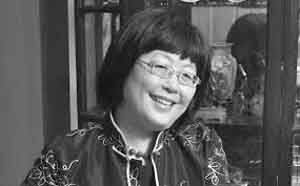
Image of Cheng Naishan

Her work is known for the history, culture and legacy of Shanghai in the 1930s before World War II when the city was known as the “Paris of the Orient”.

Cheng was born in 1947 into a family of bankers. The family moved to Hong Kong in 1949, and returned to Shanghai—out of patriotism—in 1956. Her first story was published in a literary magazine in 1979 launching a literary career in China that spanned more than three decades.

“I know some people say I always write about the old Shanghai and try to keep the flavor of old Shanghai and that makes my writing look less modern,” she said in a 2012 interview with an official publication run by the government-backed Shanghai Federation of Literary and Art Circles. “I am not concerned about what those people say about me because in my heart the old Shanghai is just an endless story and I won’t stop writing about it.”

The editor of the Shanghai Dialect column for Xinmin Evening News, Lyu Zheng said, “She can write adeptly about the lower-class life experience of dumping the chamber pot, as well as upper-class social life between coffee cups.”
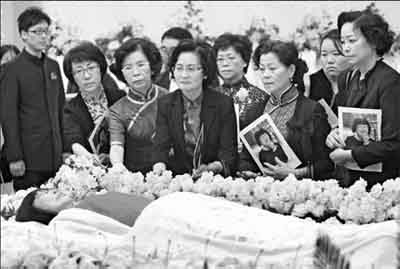
funeral of Cheng Naishan

Her husband, Yan Erchun, said, “Naishan has great love for the city of Shanghai, especially the district of Jing’an. She was born and raised here. There are endless stories she wanted to write about Shanghai.”

Cheng was diagnosed with leukemia in the winter of 2011, and she continued writing until near the end.

Discover Life is a Miracle, a movie review

_______________

Lloyd Lofthouse is the award-winning author of My Splendid Concubine [3rd edition]. When you love a Chinese woman, you marry her family and culture too. This is the love story Sir Robert Hart did not want the world to discover.

Subscribe to “iLook China”!

Sign up for an E-mail Subscription at the top of this page, or click on the “Following” tab in the WordPress toolbar at the top of the screen.

About iLook China


Breathing Huangzhou

June 4, 2013

The city of Huangzhou in Zhejiang province is about a hundred miles or 161 kilometers from Shanghai. We’ve visited several times. Our last trip together was in 2008 shortly before the project this story covers was launched. Huangzhou is one of the most beautiful cities in China.

In the video, Al Jazerra’s Melissa Chan reports on one of the largest bike sharing projects in the world and one of the most successful.

Launched in 2008, the city of Huangzhou provides 50,000 free bicycles at 2,000 bike stops across the city, and in July 2012 a paper was published on the Clean Air Action Planning in Chinese Cities: Hangzhou and Jinan Cases.

The people Chan interviewed say they use the bikes to go to work and it is great to be outside and exercising. One woman says it cuts her commute time.

Melissa Chan says the first hour of bike use is free. It’s actually possible to cycle free all day as long as you check in at a stop every hour.

The system is easy to use—just swipe a bike card across a reader (similar to riding many urban rapid transit systems) and off you go.

Registering for a card is simple.  All that’s needed is a deposit and identification.

Huangzhou, also known as the Westlake, has been one of the more environmentally conscious cities in China.

The government made space to build parks alongside the rapid development and modernization. Huangzhou has remained picturesque unlike many other cities in China where the concrete jungle has taken over.

Li Zhi Hong of Hangzhou Public Transport says the city wanted to encourage citizens to leave their cars and use more public transportation. The bicycles allowed people to take that final kilometer from the bus station to their destination.

The bikes are also great for tourism.

Melissa Chan says public busses have also adopted European emission standards. While there are still many cars on the road, people tell her that it could be a lot worse.

The city has taken the pollution issue seriously and Huangzhou’s success has attracted the attention of Beijing where the pollution problem is still “painfully” visible with each breath.

Today, Huangzhou is one of the cleanest cities in the country.  In fact, recently it was one of seven cities in China to limit the number of vehicles driving on roads using travel restrictions based on vehicle license plate numbers.” Source: Hangzhou Weekly.com (2013 update)

In addition, Huangzhou’s air is rated cleaner than seventeen of China’s Provincial Capitals including Xi’an, China’s ancient capital, and Beijing, its modern capital. Source: What’s On Ningbo.com

_______________

Lloyd Lofthouse is the award-winning author of My Splendid Concubine [3rd edition]. When you love a Chinese woman, you marry her family and culture too. This is the love story Sir Robert Hart did not want the world to discover.

Subscribe to “iLook China”!
Sign up for an E-mail Subscription at the top of this page, or click on the “Following” tab in the WordPress toolbar at the top of the screen.

About iLook China


Dragon Boat Season

May 31, 2013

James's avatarPlus Ultra

Preparing for the Stanley warm-up race

Race 65 at the Stanley warm-up event, and we have landed ourselves in the mixed division’s bronze cup final. “Focus!” The captain on the adjacent boat hollers over his anxious team. Our vessel is parked in lane two of the starting line, protected from the incoming waves by an orange pontoon. This year, instead of watching from the relative comfort of the beach, I am right in the thick of the action.

View original post 611 more words


Making the Hajj from China: Part 2/2

May 28, 2013

Another devout Chinese Muslim in Xian is proudly transcribing the Quran into Chinese using traditional Chinese brush calligraphy. He says it took him over a year to transcribe the entire Quran this way. Now he is working on a second copy.

He has also taught his son and his grandsons how to write with the Chinese brush wanting to pass down this tradition to the next generation.

His son says that every generation should try their best to transcribe the Quran with the Chinese brush, as it is also a good way to reinforce our faith.

The original copy of the Quran in this family is over four hundred years old, a priceless relic transcribed by the Chinese imams. There are only a few remaining copies left in the world.

Jia Wen Yi, a Hajj pilgrim, says the trip to Mecca is important to him and his wife, an elderly couple. They have done a lot of preparation for the hajj. Mr. Jia goes into detail about the planning.

Going on the hajj for Yi and his wife, Jia Wang Yi, has been a dream for over two decades as they saved to have enough money.

Mr. and Mrs. Jia will be part of a group of 250 pilgrims leaving for the hajj from the city of Xian. It was a matter of saving most of their lives until they could afford the trip.

Since these Muslims are considered a minority in China, they are not restricted by the one-child policy, as you would see in the video when the family and friends gather to say goodbye before Mr. and Mrs. Jia leave on the long journey to Mecca.

There is no direct flight from Xian to Mecca, so the pilgrims will take a train to Beijing where they will board a flight to Saudi Arabia.

Whenever pilgrims leave Xian to go on the hajj to Mecca, thousands of Chinese Muslims show up at the railway station to say goodbye. This is the first time Mr. and Mrs. Jia have left China. They have never been apart from their family before.

Return to Making the Hajj from China: Part 1

_______________

Lloyd Lofthouse is the award-winning author of My Splendid Concubine [3rd edition]. When you love a Chinese woman, you marry her family and culture too. This is the love story Sir Robert Hart did not want the world to discover.

Subscribe to “iLook China”!
Sign up for an E-mail Subscription at the top of this page, or click on the “Following” tab in the WordPress toolbar at the top of the screen.

About iLook China


Making the Hajj from China: Part 1/2

May 27, 2013

This two-part post may come as a surprise to many in the West that think there is no religious freedom in China.

In fact, China handles religious freedom similar to how Singapore does, and Singapore is seldom if ever criticized in the Western media for this practice.

The U.S. Department of State says that Singapore’s government has broad powers to limit citizens’ rights and handicap political opposition, which it uses. One of those restrictions is a limited freedom of religion.

However, the Constitution for the Republic of Singapore offers the same fundamental liberties China and the US does, which includes freedom of speech, assembly and association and freedom of religion.

For example, Singapore bans the Jehovah’s Witnesses and the Unification Church by making public meetings illegal. The Falun Gong has also had problems in Singapore.

China, on the other hand, recognizes five religions — Buddhism, Taoism, Islam, Catholicism and Protestantism but has banned certain new religious movements that are considered cults. China does not recognize cults as religions.

In the video embedded with this post, Al Jazeera follows Chinese Muslims as they prepare to undertake the hajj pilgrimage.

The ancient city of Xian in Shaanxi province is home to about 60,000 ethnic Chinese Muslims.

Xian claims it has a Muslim history going back more than thirteen hundred years when Islam was first introduced to China in 650 AD.

In fact, the oldest mosque in China was built in 685-762 AD in Xian during the reign of Emperor Xuanzong of the Tang Dynasty.

Chinese Imam Ma Yi Ping speaks both Chinese and Arabic. He studied at the Islamic University of Medina and has made the hajj several times. He was taught to be a devout Muslim by his parents during Mao’s time when the mosques in China were closed.

Despite the persecutions that took place during the Cultural Revolution (1966 – 1976), Islam survived in China.

Ma Yi Ping says that after Mao and the Gang of Four were gone and China opened for trade with the world, he did not have to study the Quran in secret anymore.

Since the 15th century, Xian Muslims have been going to Mecca in Saudi Arabia for the annual Hajj pilgrimage.

In the past, during the ancient days of the Silk Road, these journeys started and ended in Xian’s Muslim quarter. Today is no different.

Continued on May 28, 2013 in Making the Hajj from China: Part 2

_______________

Lloyd Lofthouse is the award-winning author of My Splendid Concubine [3rd edition]. When you love a Chinese woman, you marry her family and culture too. This is the love story Sir Robert Hart did not want the world to discover.

Subscribe to “iLook China”!
Sign up for an E-mail Subscription at the top of this page, or click on the “Following” tab in the WordPress toolbar at the top of the screen.

About iLook China