Wolf Totem – the book vs the film

September 22, 2015

I walked to town recently to see the film of a book I read several years ago. The theater I saw it in was huge and there were only three of us there. Wolf Totem was in Mandarin with English subtitles. Fortunately for the audience, there isn’t much dialogue so there isn’t that much to read if you don’t speak the language but the story—through the panoramic visuals—had a powerful message about mankind meddling with nature. In China, this film has earned more than $110 million U.S. I couldn’t find out how much it has earned in the U.S. where I saw it.

Consider the fact that pollution is not exclusive to China, and the United States, for instance, has more than 1,300 superfund sites—Superfund sites are polluted locations requiring a long-term response to clean up hazardous material contaminations. – epa.gov

In addition, the book and the film also offer another way to learn about China, it’s people and their humanity.

Jiang Rong is the pen name for Lu Jiamin, the author, a Chinese citizen. Set during the Cultural Revolution, Wolf Totem describes the education of an intellectual living with nomadic herders in the grasslands of Inner Mongolia.

The publisher of Wolf Totem said the novel was an epic Chinese tale and that’s true. Wolf Totem taught me a lot about this almost extinct culture. I learned about the fascinating connection between wolves and Mongolians and why this connection may have been the reason why Genghis Khan was so successful in his conquests.

I recommend the film more than the novel to anyone who wants to learn about the life of the Mongols and another perspective of Mao’s Cultural Revolution. If you can’t see the film, then the book is worth reading too.

However, the theme that runs through the novel of maintaining a balance with nature is a bit overdone—I didn’t get this impression from the film. In the novel, I got the message the first time the characters talked about it but then the topic comes up repeatedly—a bit too much but an insignificant criticism of a book worth reading and a film that I think is even more powerful.

I won’t give away the ending, but don’t expect it to be happy. Most Chinese novels don’t end with happy endings. The ending for the film was different than the novel, and I actually liked it better—a powerful and breathtakingly beautiful film.

______________________________

Lloyd Lofthouse is the award-winning author of My Splendid Concubine [3rd edition]. When you love a Chinese woman, you marry her family and culture too. This is the lusty love story Sir Robert Hart did not want the world to discover.

#1 - Joanna Daneman review posted June 19 2014

Where to Buy

Subscribe to “iLook China”!
Sign up for an E-mail Subscription at the top of this page, or click on the “Following” tab in the WordPress toolbar at the top of the screen.

About iLook China

China’s Holistic Historical Timeline


What! The U.S. Government Donates Money to China for its Poor People

September 16, 2015

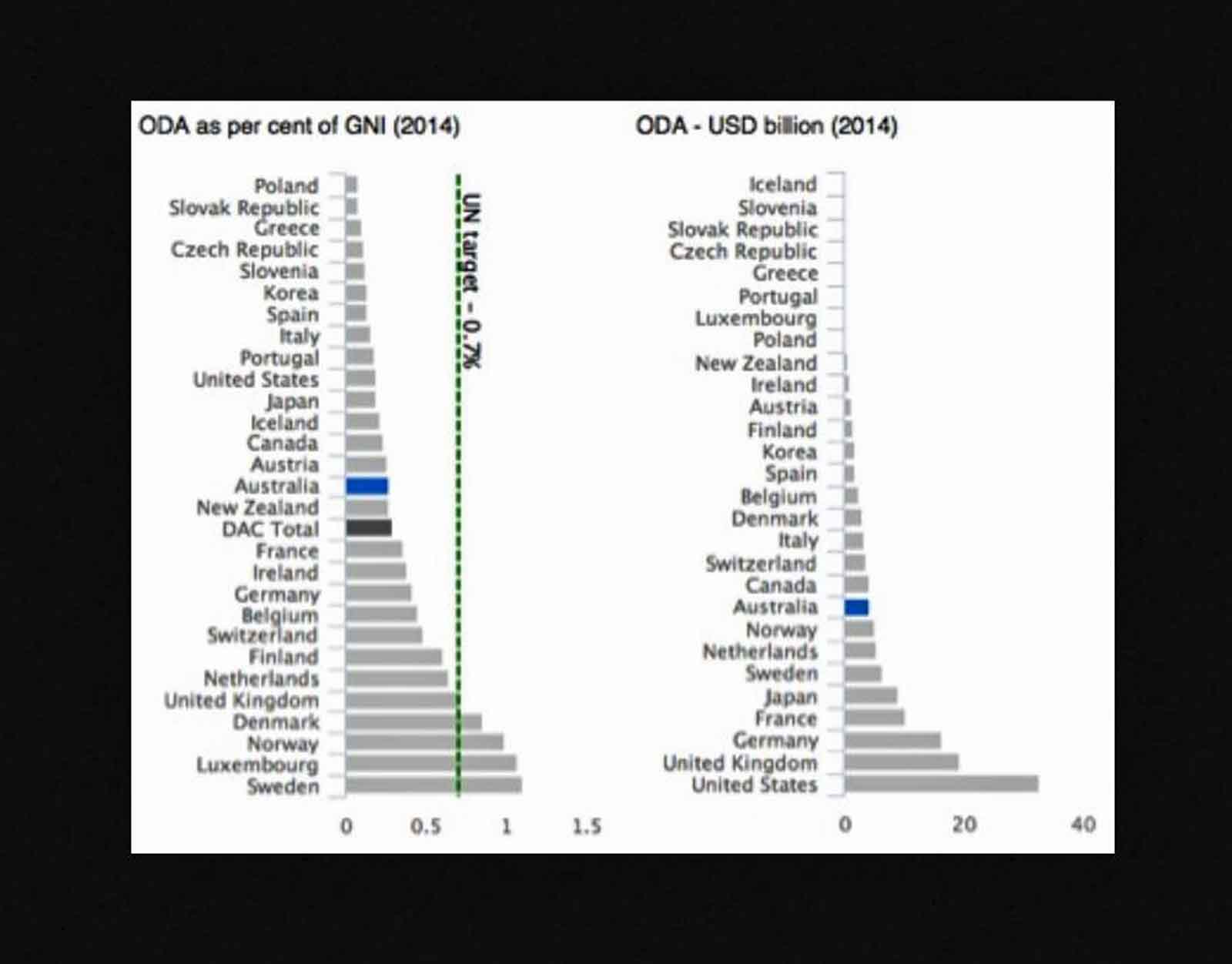
A post about “Foreign Aid for Development Assistance” from Global Issues reported that, “In 1970, some of the world’s richest countries agreed to give 0.7% of their gross national income (GNI) as official international development aid annually to countries that could use that money the most.

But since that agreement 45 years ago, despite billions of dollars given each year, rich nations have rarely met their actual promised targets. For example, the U.S. is often the largest donor in dollar terms, but ranks among the lowest when meeting the 0.7% agreed target—yes, that is less than 1%.

Curious, knowing that there is also hunger and poverty in United States, I went to Feeding America and learned that in 2008, 49.1 million Americans lived in food insecure households. Mississippi was the state with the highest percentage (17.4%) of food insecure households—and poverty is increasing in the U.S. while the wealthiest Americans keep getting richer at a faster pace.

With poverty that bad in the United States, why is America giving away so much money to other countries in foreign aid? Well, for one thing, the U.S. agreed to do it, and that means the country gave its word, and even though many Americans will probably grumble—especially members of the Tea Party, racists and Libertarians who probably don’t care of the U.S. breaks its promises again—they might also feel good that the U.S. isn’t keeping its word.

For instance, do you remember the 0.7% target that 29 of the wealthiest countries agreed to donate to the neediest countries? The U.S. donation is often if not always below that promised amount.

Way below!

In fact, only five of the 29 countries met their obligation in 2014: Sweden, Luxembourg, Norway, Denmark and the UK. Although the United States paid more due to the size of its Gross National Income (GNI), it was still ranked far below making the 0.7% target for donations and was #19 on the list right behind Japan with Sweden being #1.

ODA as per cent of GNI 2014

You might also want to learn the United States has had impressive growth in its GNI from 2010 to 2014. The World Bank reports that GNI in the U.S. went from $48,950 in 2010 to $55,200 in 2014 for each person.

What about China’s GNI?

China also had growth in its GNI from $4,300 for each person in 2010 to $7,380 in 2014 — 7.48 times less than in the U.S.

This might help explain why, according to The World Bank, China has continued to receive this foreign aid: $1.771 billion in 2011, $1.293 billion in 2012, $1.648 billion in 2014 and $1.856 billion for 2015.

In addition, the World Bank said, “With a population of 1.3 billion, China recently became the second largest economy and is increasingly playing an important and influential role in the global economy. Yet China remains a developing country (its per capita income is still a fraction of that in advanced countries) and its market reforms are incomplete. Official data shows that about 98.99 million people still lived below the national poverty line of RMB 2,300 per year at the end of 2012. With the second largest number of poor in the world after India, poverty reduction remains a fundamental challenge.”

Now, stop a moment and scroll back up and look at that chart of the names of the countries that have been sending foreign aid to China and other developing countries.

Starting in 1839 with the first of the two Opium Wars, Britain and France forced opium on the Chinese, and Germany became involved later with the burning of the Summer Palace near Beijing.

Then Japan caused the horrors of World War II slaughtering about 30 million Chinese after invading China. If you want to discover who encouraged Japan to become aggressive in Southeast Asia, I suggest you read The China Mirage by James Bradley to learn who the two U.S. presidents were that were responsible for World War II in the Pacific. One of the two presidents even encouraged Japan to militarize and become a major military power in Asia.

Could this foreign aid to China from, for instance, the United States, Japan, Germany, France and Britain be a means of atonement for more than a century of sins against the Chinese—a way to deal with the cultural and historical guilt?

______________________________

Lloyd Lofthouse is the award-winning author of My Splendid Concubine [3rd edition]. When you love a Chinese woman, you marry her family and culture too. This is the lusty love story Sir Robert Hart did not want the world to discover.

#1 - Joanna Daneman review posted June 19 2014

Where to Buy

Subscribe to “iLook China”!
Sign up for an E-mail Subscription at the top of this page, or click on the “Following” tab in the WordPress toolbar at the top of the screen.

About iLook China

China’s Holistic Historical Timeline


What is this thing called Enlightenment?

September 15, 2015

Santhip Kanholy, on TED, said, “Enlightenment is an actual experience which changes the perspective and perception of the individual, which has been touted in all the ancient religious scriptures spanning all global cultures. Buddha is considered to be enlightened. So is Jesus. Thus all major religions have sprung from individuals who have experienced enlightenment.”

I admit that I was surprised when I saw the embedded video in this post of a group of Americans searching for and finding their own form of enlightenment in China.

The popular stereotype about someone searching for change and enlightenment fits the plot we find in Eat, Pray, Love, a best seller that was made into a movie with Julia Roberts, where Elizabeth Gilbert’s memoir takes her to Italy for pleasure, India for enlightenment and Indonesia where she discovers love again—repeatedly, it seems.

In the following video, we follow a group of Kung Fu and Tai Chi students from the U.S. in search of Kung Fu wisdom in China.

While in China, they visit Chinese families, schools, temples and universities. They travel through both ancient and modern China visiting Hong Kong, Beijing and Shanghai.

They also climbed two of the five major mountains of China, Songshan and Yellow Mountain.

After surviving personal conflicts and emotional struggles, the group returns to America as Elizabeth Gilbert did in her journey—to be compassionate and harmonious with others and the environment.

Of course, finding harmony might not have worked out for Gilbert because  in a 2015 article for The New York Times titled “Confessions of a Seduction Addict,” Gilbert wrote that she “careened from one intimate entanglement to the next—dozens of them—without so much as a day off between romances.” She acknowledged, “Seduction was never a casual sport for me; it was more like a heist, adrenalizing and urgent. I would plan the heist for months, scouting out the target, looking for unguarded entries. Then I would break into his deepest vault, steal all his emotional currency and spend it on myself.” After reading what Gilbert wrote for the NY Times, I think it is arguable that Gilbert never found the enlightenment she was searching for, but her memoir did make her famous and wealthy.

However, in three weeks, the group that went to China for enlighten went places few foreigners have seen and maybe that adventure and discovery was a form of enlightenment all by itself.

______________________________

Lloyd Lofthouse is the award-winning author of My Splendid Concubine [3rd edition]. When you love a Chinese woman, you marry her family and culture too. This is the lusty love story Sir Robert Hart did not want the world to discover.

IMAGE with Blurbs and Awards to use on Twitter

Where to Buy

Subscribe to “iLook China”!
Sign up for an E-mail Subscription at the top of this page, or click on the “Following” tab in the WordPress toolbar at the top of the screen.

About iLook China

China’s Holistic Historical Timeline


China’s Concrete and Steel Miracle

September 9, 2015

About 3000 BC, the northern Chinese used a form of cement in boat-building and in building the Great Wall. A key ingredient in the mortar used in the Great Wall was glutenous, sticky rice, and some of these structures have resisted even modern efforts at demolition. – The History of Concrete

As for steel, The first famous metallurgist in ancient China was Qiwu Huaiwen of the Northern Wei Dynasty (386-557 AD), who invented the process of using wrought iron and cast iron to make steel. – china.org.cn

Once steel is produced it becomes a permanent resource for society – as long as it is recovered at the end of each product life cycle – because it is 100% recyclable without loss of quality and has a potentially endless life cycle. Its combination of strength, recyclability, availability, versatility and affordability makes steel unique. – worldsteel.org

In 1980 when China first opened its doors to world trade, it produced 37.1 million metric tons of modern crude steel–5.17% of global production that year. For a comparison, the U.S. produced 101.4 million metric tons, Japan produced 111.4 million, and the European Union produced 208 million metric tons.

Thirty-four years later in 2014, China’s share of global crude steel product reached 49.1% or 822.698 million metric tons to the 88.174 million metric tons produced in the United States that year.

What caused this dramatic change? The answer is easy, the growth of China’s middle class. China has more than four times the population of the United States and almost twice the population of Europe.

And that’s why Business Insider says, “China’s rising middle class will create opportunism the world has never seen before.”

About 30 years ago, China started to modernize and in those thirty years, it has achieved what it took Europe and the North America more than two hundred years. China’s goal is to end up with the same urban to rural population ratio found in Europe and North America, and it is nearing that goal. Imagine compressing more than two hundred years of pollution from the West’s industrial revolution into thirty years in China.

To understand this spectacle, in 2004 the BBC News reported that, “The biggest mass migration in the history of the world is under way in China, and it is creating what some are calling the second industrial revolution.… A massive building boom unparalleled anywhere is taking place ­– last year, half the concrete used in construction around the world was poured into China’s cities.”

Concrete isn’t the only product China needs.  Iron and steel are also necessary.

China hunger for iron has been epic. In 2009, India exported 106 million tons of iron to China. A July 2010 Reuters piece says, “Chinese steel producers are increasingly turning to Australia’s magnetite iron ore sector, pouring in funds to explore and develop mines once considered uneconomic…”

In 2006, China was the number one producer with 820 million metric tons of iron ore and still imported 52% from other countries like Australia (470 metric tons), India (150) and Brazil (250).  Source: Wikipedia

Now that China is nearing its goal—in about 15 years China’s middle class will outnumber the entire population of the United States—it has an excess of steel and is exporting that excess at lower prices to other countries creating stiff competition across the globe. For instance, the ISSB reports that from 2013 to 2014 China increased its steel exports by 53% from 57.9 million to 88.6 million tonnes while the United States saw a 5% drop in its steel exports.

With the United States so obsessed to be #1 in everything—except for reducing the poverty rate—its capitalist oligarchs must be obsessively stressed out and worried that they are going to lose their Imperial crowns.

______________________________

Lloyd Lofthouse is the award-winning author of My Splendid Concubine [3rd edition]. When you love a Chinese woman, you marry her family and culture too. This is the lusty love story Sir Robert Hart did not want the world to discover.

#1 - Joanna Daneman review posted June 19 2014

Where to Buy

Subscribe to “iLook China”!
Sign up for an E-mail Subscription at the top of this page, or click on the “Following” tab in the WordPress toolbar at the top of the screen.

About iLook China

China’s Holistic Historical Timeline


Diving Deep into China with Isham Cook “At The Teahouse Café”

September 8, 2015

At The Teahouse Cafe, 15 essays by Isham Cook, delves into East Asian Culture and a number of related issues and topics.

Isham Cook has been based in China since 1994, more than twenty years. Writing with the perspective of an American expatriate who has lived in East Asia that long offers readers a view from someone on the ground, and I think that Cook does not disappoint.

The topics of his 15 essay range, for instance, from China’s Great Firewall, the complexity and meaning of Chinese “face”, music, China’s education system to the aversive racism of the term “yellow fever”—something that I’ve also been accused of. Cook goes into detail of why men are attracted to specific women of any race, and I think he is right.

And for his essay on The Chinese University, I Hi-Lited: “The problem with the Chinese university is not the people, it is the system in control, which paralyzes, demotivates and demoralizes.”

The reason why I Hi-Lited that one phrase while reading the book was because it described what is happening in the United States. Since 2001 and President G. W. Bush’s No Child Left Behind Act, and then President Obama’s attempt to seize control of America’s public schools with the so-called Common Core State Standards and the high stakes test meant to rank teachers, fire them and close public schools, that quote describes what is happening in the U.S.

Isham Cook At The Teahouse Cafe

You have been gone too long, Isham. The U.S is under attack by a flock of oligarchs and autocrats that might even shock or impress the Chinese Communist Party because of their tactics to mislead and fool as many people as possible in the U.S. In fact, while China is struggling to lift as many of its people out of poverty as possible, what’s going on in the U.S. is increasing poverty at a frightening pace, especially among children.

Anyway, Isham Cook delves deep into many topics about China, it’s culture and people based on his own experiences living there and interacting with the Chinese. He discusses the bad and the good and doesn’t spare the United States either, and I think that is a good thing because far too many ignorant Americans think the U.S. can do no wrong.

My own interaction with the Chinese pales in comparison. My wife is Chinese, her family is Chinese—mostly born and raised in China during the Mao era—and I’ve been to China nine or 10 times but never lived or worked there, and my last trip was in 2008 when the air pollution in Shanghai contributed to a sinus and respiratory infection that sent me flying home several weeks earlier than planned to recover.

I recommend At The Teahouse Cafe for anyone who wants to get a serious, intellectual dose of the real China from an American who has lived and worked there as long as Isham Cook has. This book should open your eyes as long as your thinking isn’t a closed, dead-end street.

______________________________

Lloyd Lofthouse is the award-winning author of My Splendid Concubine [3rd edition]. When you love a Chinese woman, you marry her family and culture too. This is the lusty love story Sir Robert Hart did not want the world to discover.

#1 - Joanna Daneman review posted June 19 2014

Subscribe to “iLook China”!
Sign up for an E-mail Subscription at the top of this page, or click on the “Following” tab in the WordPress toolbar at the top of the screen.

About iLook China

China’s Holistic Historical Timeline