An American Shadow Over the Philippines

February 16, 2010

After the Spanish American War, America took possession of the Philippine islands and waged war against the native people killing more than two hundred thousand. This went on until World War II.

An American flag flying over Fort Santiago in Manila, Phillippines-c1920s

In fact, the treatment of American Indians hasn’t changed much.  The United States government might not wage brutal war against Native American Indians today as they did in the past, but in recent times billions of dollars slated to support Native American Indian tribes on reservations went missing, and no one seems to know where all that money went or care, except the Indians. It would appear that the era of lies and broken treaties has not ended.

If you want to learn more about American Indians, I suggest you read what the New York Times said about the work written by Vine Deloria Jr., and check out Native American Literature worth reading. It’s best to stay away from Hollywood if you want to get closer to the truth.

It is always good to have the facts before passing judgment, and history does count.

Discover In a Dark Mirror Without Reflection

______________

Lloyd Lofthouse is the award-winning author of The Concubine Saga. When you love a Chinese woman, you marry her family and culture too. This is the love story Sir Robert Hart did not want the world to discover.

To subscribe to “iLook China”, look for the “Subscribe” button at the top of the screen in the menu bar, click on it then follow directions.


American Genocide

February 15, 2010

Christ once said let he who has no sin cast the first stone.

The topic of the next few posts will be about minority native treatment in China and America. As I have done before, I will compare China to America. This post will focus on the United States with some historical background.

Atrocities abound in the history books concerning treatment of Native American Indians during the sixteenth to nineteenth centuries. The Spanish destroyed the Aztec and Inca civilizations with disease and warfare. The Catholic mission system in California enslaved American Indians.

After the Civil War, the United States military was sent west and drove North American Indians from the land they had lived on for thousands of years and slaughtered men, women and children—millions died. Today, many of the surviving natives live in horrible poverty on reservations.

Trail of Tears

Then the American government grabbed Hawaii from the native Hawaiian people against their will. (There’s a native Hawaiian nonviolent separatist movement asking for freedom from America.)

It is always good to have the facts before passing judgment, and history counts.

Discover more at An American Shadow over the Philippines

______________

Lloyd Lofthouse is the award-winning author of The Concubine Saga. When you love a Chinese woman, you marry her family and culture too. This is the love story Sir Robert Hart did not want the world to discover.

To subscribe to “iLook China”, look for the “Subscribe” button at the top of the screen in the menu bar, click on it then follow directions.


Rediscovering China

February 15, 2010

China has turned into a tourist destination—for the Chinese.

Before Nixon visited China, the country was surrounded by an invisible bamboo curtain. It’s citizens were not allowed to travel far—even from their homes. In September and October 2008, there were so many Chinese tourists, that we were the minority.

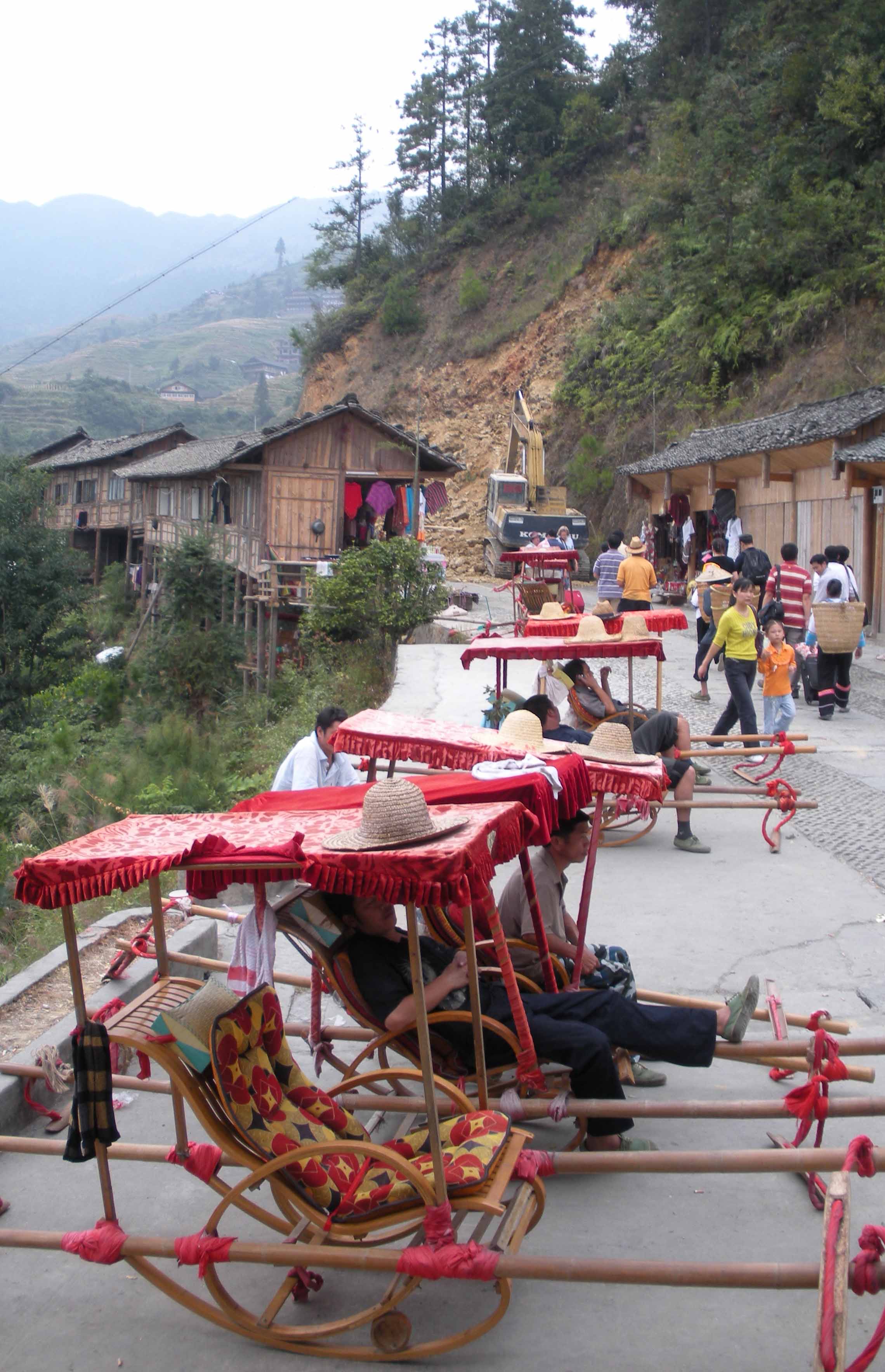
Sedan Chairs Waiting to Climb the Dragon's Back

The Dragon’s Back is in Southeast China near Vietnam. After our bus climbed a narrow, winding mountain road, we reached a parking lot. For a few yuan, we gained entry and men with iron legs were willing to carry us to the top in sedan chairs. We walked.

The construction of the Longi Rice Terraces started during the Yuan Dynasty (1271 – 1368). Today, many Zhuan and Yao ethnic people live simple lives that honor the laws of nature. China’s central government encourages that life.

A hundred feet further, vendor’s stalls lined both sides of the road. It was China’s market economy in action reminding me of Disneyland and the shops that sold trinkets no one needs.

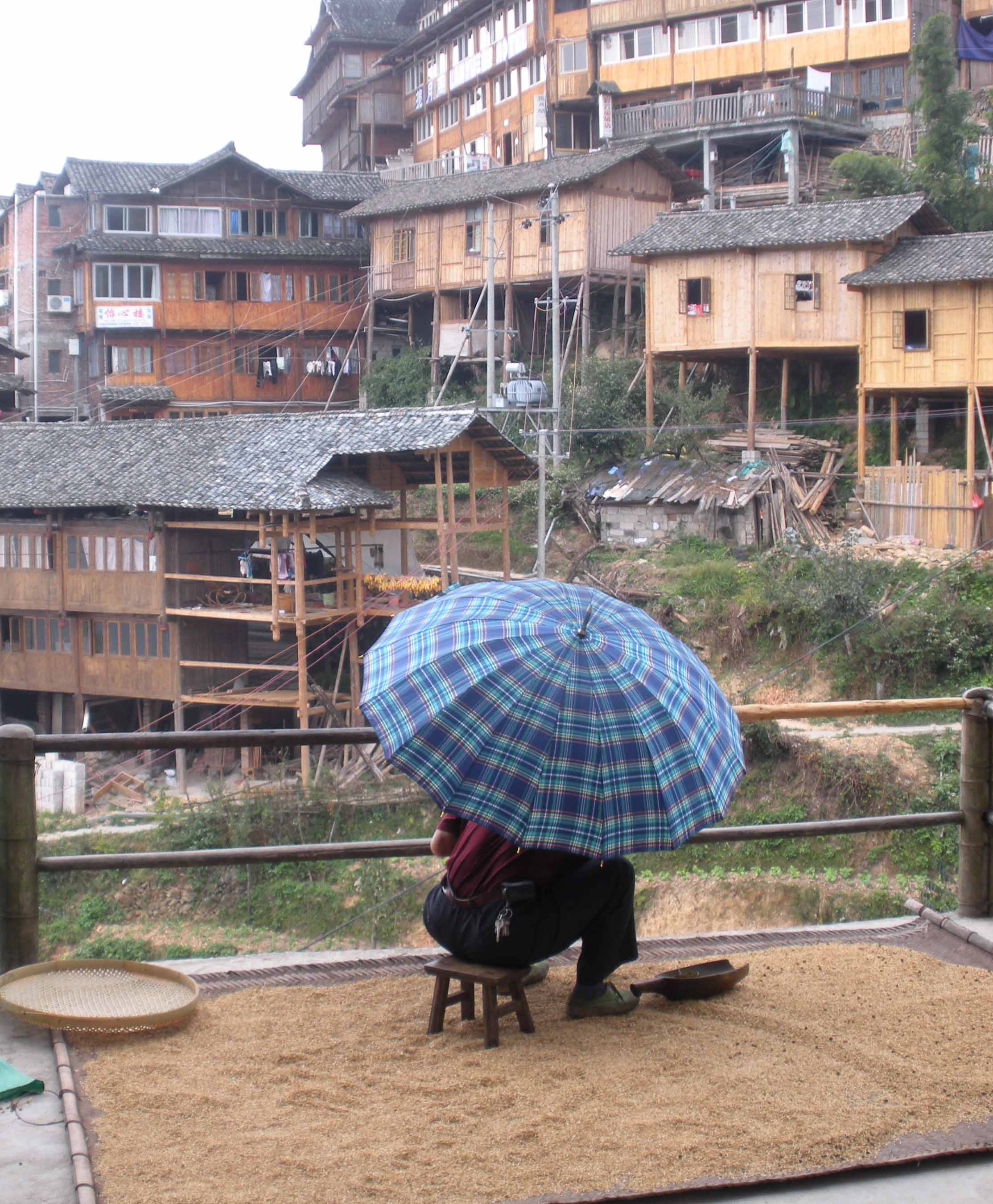
Halfway to the top, we reached a village built on stilts clinging to the mountain. The steep slopes were terraced to grow rice. Since it was mid afternoon, we stopped to eat local rice cooked in sections of bamboo on a hot bed of coals.

Cleaning Home Grown Rice Safe from the Sun

Mao’s Cultural Revolution ended decades in the past, and China is moving on while time seems to stand still on the Dragon’s Back.

See About iLook China

Lloyd Lofthouse is the author of the award winning novels My Splendid Concubine and Our Hart.


Pain, Pollution and People

February 14, 2010

It’s difficult to write when I’m gasping for air and blowing my top. When I was still teaching, walking into a classroom in the morning made me sick—and no, I wasn’t allergic to my students, but I should have been.

Then I retired and for five years, I have been free of wheezy lungs and sinus infections that always arrived with the start of each school year when I worked in those old buildings at the high school where I taught. Have you heard of sick building syndrome? I lived it. The last time I was sick from air pollution was in Shanghai.

This new, peaceful world changed several weeks ago. Workers came with power tools and mud-caked boots. I should have fled, but I stayed at my computer as a stupid, stubborn, former United States Marine would.
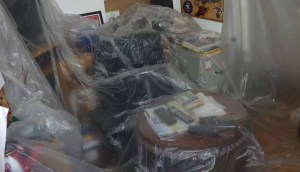
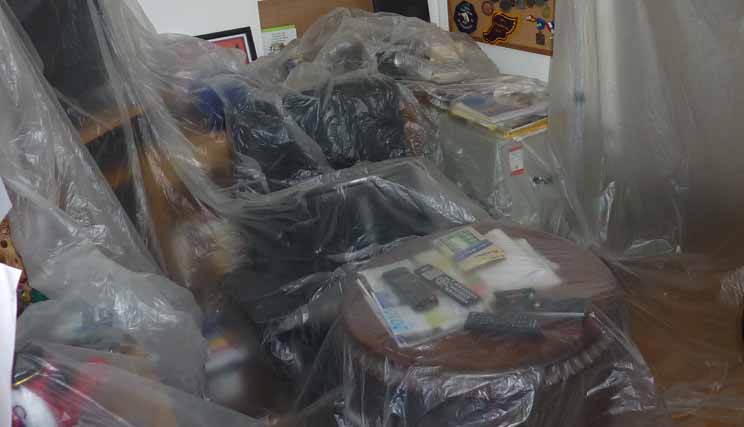
covered office furniture

My office has three doors. One that leads toward the other rooms and one that opens to the outside. Then there is the door that opens to the space under the second story and the foundation. That crew drilled, pounded, cut and tracked dirt from room to room—always in my office. I had trouble concentrating. I suffered from memory loss. Plastic tarps covered most of the furniture, and I couldn’t find things. When I left the office to find a moment of peace, I covered the computer and printers with a bed sheet. The noise reminded me of combat but worse, because I was nineteen and then twenty when I was in Vietnam—noise did not bother me as it does now.

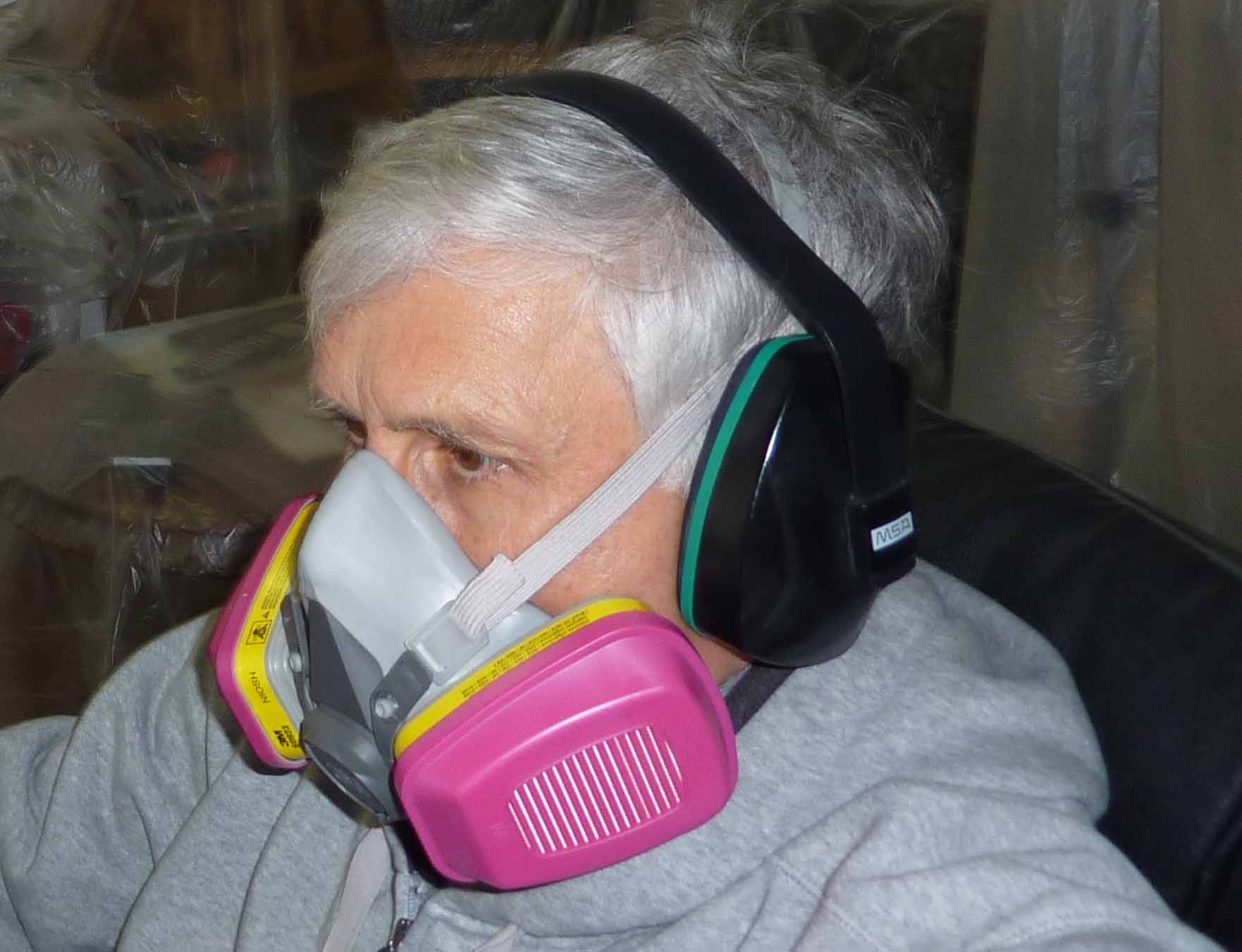
Concrete dust floated through the air and my sinuses and lungs rebelled, so I put on a 3M mask with two pink HEPA filters attached. The last time I wore a mask like this was when I was teaching. I searched the garage and found the noise suppresser to help mute the pounding and drilling.  I looked like an explorer to Mars or a survivor of trench warfare struggling to write while the frigid air froze my fingers.
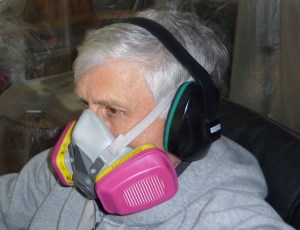
The crew had arrived to bolster the foundation against future earthquakes that might never arrive. Even if a hard tumbler did visit, I doubt that all that work would hold our sixty-year old hillside house together. It still might slide down the hill into the middle of the street blocking traffic.

I could have moved, but I didn’t want to disconnect all the cables and cart the equipment to another room for a few days to escape the dust and noise—something (I soon discovered) that would have been impossible without checking into a hotel.

Even with a noise suppresser covering my ears, muted sounds intruded and the last place I wanted to be was in this chair writing about China, the Vietnam War or being a teacher in the tortured American public schools. I stuck with it for days as my suppressed anger fueled by PTSD started to simmer and fume.

It was a relief when the workers finished. I thought I was going to have the tranquility back where the only noise would be the click of the keys as my warmed hands flew across the keyboard meeting my Blogging goals.

But the workers left something behind.

I started sneezing. My sinuses ran hundred mile marathons. I went to the doctor and he prescribed medications that didn’t work. The sneezing went volcanic—like Mt. Saint Helena blowing its top.  One time, I sneezed so bad, I blew the 3M mask off my face—so much for a mask that’s supposed to protect you from every gas and plague Islamic terrorists can brew. Upstairs or outside, I was fine. But in my office, I was a goner. “Blam, blam, balm,” my nose exploded like rapid shots from a fifty-caliber submachine gun.

I could have opened windows, but it’s been raining for weeks.  The sky has been overcast.  The air breezy and cold.  Then today, the sun came out and I finally let the outside in and the sneezing stopped—I’m crossing my fingers and knocking on wood. I’m afraid to close the windows, but night will come and with it lower temperatures. I fear that whatever industrial poison is haunting my once tranquil office space might return.

I am not the Manchurian Candidate

February 14, 2010

Originally published at “Speak Without Interruption” on February 7, 2010
By Bob Grant — publisher/editor for Speak Without Interruption

How can you embrace an enemy of the USA?  More important–why would you?  If these questions have not been outright asked of me–they have been implied.  Why I chose to speak highly of China, and its people, is something that I do willingly and with pride. 

I am not the Manchurian Candidate. I was never brainwashed during my visits there. I was not tortured or forced into my feelings in any way. Subliminal messages were not piped into my hotel room at night. I did not have bamboo shoots shoved under my fingernails. I was not drugged or impaired in any way unless it was done willingly by drinking too much of that fine Chinese beer.

Within my small circle of business contacts, experiences, and associations I would say it is Western business people who are trying to brain wash the Chinese. As I developed my business relationships, I both read and experienced failures mainly because Western companies tried to “Westernize” their Chinese business partners rather than adapting to their Chinese partners way of doing business. 

Maybe it has been different for others who have done business within China but for me, personally, my successes came from letting the Chinese conduct business in “their way”, and I tried to educate my customers in their methods and ways. I won’t say it was not frustrating at times—in fact, it was frustrating most of the time. 

However, in the end, it was what worked best for me while others failed. Honor and “saving face” are very important to the Chinese—I tried not to put any of my associates in a position that threatened either.

Again, just from my experience, I have to say that people from any part of the world can work together to achieve a common goal if all parties can be flexible and understanding. From my perspective, this is the true receipt for success among the world’s population.

If you would like to read other guest posts by Bob Grant, see They All Look Alike.