Changing Times for Women’s Rights

March 21, 2010

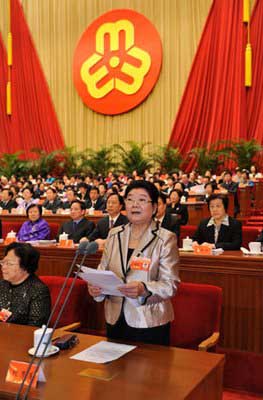
To compare the changes taking place in China concerning women’s rights, first a brief timeline for Women’s Rights in America.

Starting in 1848, the first women’s rights convention was held in Seneca Falls, New York. Then in 1850, the first National Women’s Rights Convention was held in Worcester, Mass. Nineteen years later, the National Woman’s Suffrage Association is organized to achieve voting rights for women by means of a Congressional amendment to the Constitution.

1890 – Two women’s rights organizations merge and wage state-by-state campaigns to obtain voting rights for women.

1903 – The National Women’s Trade Union League is established to advocate improved wages and working conditions.

1920 – The 10th Amendment to the Constitution grants women the right to vote.

Eleanor Roosevelt

1961 – President John Kennedy establishes a Commission to study the Status of Women and appoints Eleanor Roosevelt as chairwoman.  The Commission reports substantial discrimination against women exists in the workplace resulting in 1964 with Title VII of the Civil Rights Act barring discrimination in employment based on race and sex.

In 1972, The Equal Rights Amendment is passed by Congress and sent to the states for ratification. The amendment dies in 1982 when it fails to achieve ratification by a minimum of 38 states.

Discover more about China’s Modern Women

______________

Lloyd Lofthouse is the award-winning author of The Concubine Saga. When you love a Chinese woman, you marry her family and culture too. This is the love story Sir Robert Hart did not want the world to discover.

To subscribe to “iLook China”, look for the “Subscribe” button at the top of the screen in the menu bar, click on it then follow directions.


Cruising the Li River

March 21, 2010

Southeast China near Vietnam and Laos is a beautiful area to visit.  The air is clean. The sky blue. One morning, we left the hotel early to join a river cruise along the Li River.

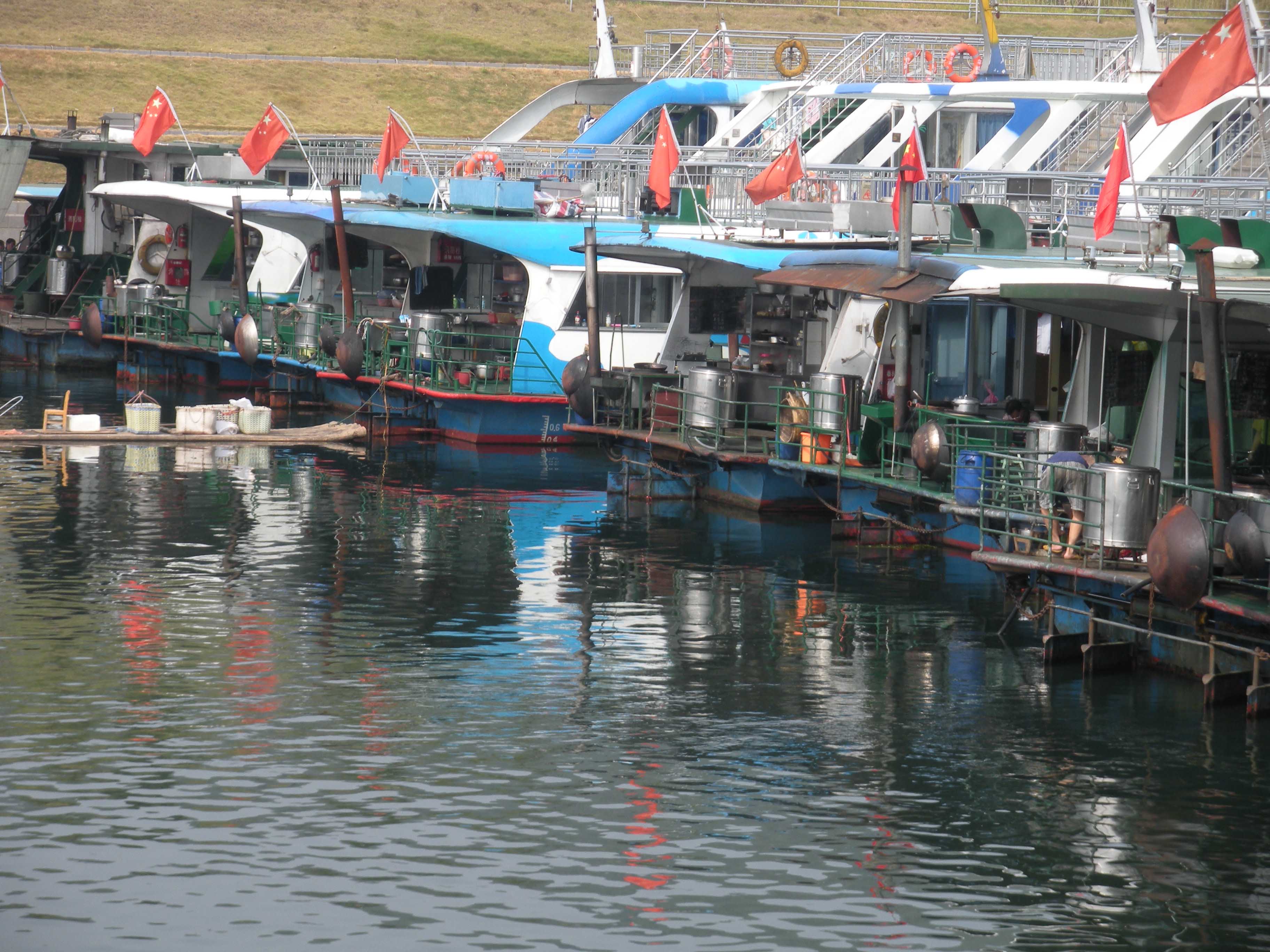
Soon after leaving the dock, I snapped this shot of the boat in front of ours. While the tourists were on the upper decks, the cooks were preparing lunch.  The dinning room is in the large, first-deck cabin.

Cruising the Li River will carry you past one of the ten places to see in China.

I couldn’t resist taking a picture of water buffalo eating the plants that grow under the water.  They would dip their heads under and come up with a mouthfull of green.

Small boats and villages are scattered along the river.

I wasn’t the only tourist taking pictures.  Most of the tourists were from the Chinese middle class.

If you enjoyed this post, you may enjoy Shanghai Huangpu River Tour

______________

Lloyd Lofthouse is the award-winning author of The Concubine Saga. When you love a Chinese woman, you marry her family and culture too. This is the love story Sir Robert Hart did not want the world to discover.

Subscribe to “iLook China”!
Sign up for an E-mail Subscription at the top of this page, or click on the “Following” tab in the WordPress toolbar at the top of the screen.

About iLook China


China Law and Justice System

March 20, 2010

Over the years, I’ve talked to citizens in China and the opinion is that most of the police take their jobs seriously and are honest.  It is also believed that the judges in the court system follow the laws of China and are also honest.  Yes, there is corruption in China even at the highest level, but there is also corruption in America and any other country.

Chart for China's Court System


Article 5 of China’s Organic Law states the functions and powers of the people’s procuratorates at all levels as the following:

  1. to exercise procuratorial authority over cases of treason, cases involving acts to dismember the state and other major criminal cases severely impeding the unified enforcement of state policies, laws, decrees and administrative orders
  2. to conduct investigation of criminal cases handled directly by themselves;
  3. to review cases investigated by public security organs and determine whether to approve arrest, and to prosecute or to exempt from prosecution;
  4. to exercise supervision over the investigative activities of public security organs to determine whether their activities conform to the law;
  5. to initiate public prosecutions of criminal cases and support such prosecutions;
  6. to exercise supervision over the judicial activities of people’s courts to ensure they conform to the law;
  7. to exercise supervision over the execution of judgments and orders in criminal cases and over the activities of prisons, detention houses and organs in charge of transformation through labor to ensure such executions and activities conform to the law. source

A Western legal system would not work in China. China’s legal system represents China—not America or another country.

This series of posts about the legal system in China started with Officer in Action

______________

Lloyd Lofthouse is the award-winning author of the concubine saga, My Splendid Concubine & Our Hart. When you love a Chinese woman, you marry her family and culture too.

If you want to subscribe to iLook China, there is a “Subscribe” button at the top of the screen in the menu bar. 


Older than the New Testament

March 20, 2010

A conservative friend once said that Communism was evil and that China needed a proper legal system. Since China already has a legal system, what did he mean?  I’ve known this individual for decades, and I’m sure he meant that China should have a legal system like the one in America or the U.K. After all, he claims scripture guides his life and the Christian Bible has been around for centuries proving it comes from God. There is no other choice.

The problem with that logic is Confucius walked the earth long before Christ, and the New Testament didn’t exist for centuries after Christ was gone. What Confucius taught has been around longer.

What about China’s legal system? The highest agency in China is the Supreme People’s Procuratorate.  This agency is responsible for both prosecution and investigation in the People’s Republic of China.  Similar institutions influence the office of the Procurator in the Socialist legal system. Its direct predecessor in China is the Supreme Court of the Republic of China, which in turn is descended from the Procuratorial Office of the late Qing Dynasty.

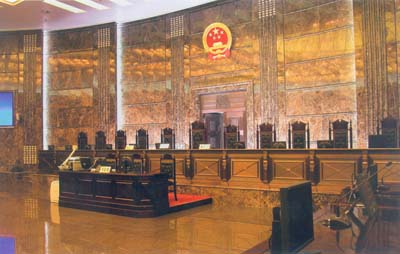
China's Supreme Court

The Chinese legal system may have been broken during Mao’s Cultural Revolution but not any longer.  It also appears that China’s legal system is an organic institution capable of change as seen in this piece from the Dui Hua Human Rights Journal.

This series of posts about the legal system in China started with Officer in Action http://wp.me/pN4pY-ho


A Global Misunderstanding

March 20, 2010

“There is nothing wrong with thanking your father and mother, but you should thank your country first,” Yu Zaiqing, China’s State Sports deputy director said. “You have to put the country ahead of your parents.” Source: Vancouver Sun

Yu Zaiqing

What Yu probably meant was “community” instead of “country”. The rest of the piece in the Vancouver Sun goes on with more examples of wrong thinking (by Western standards) from Chinese officials. I disagree with the opinions of the journalist, who wrote the piece, Aileen McCabe, Canwest News Asia Correspondent. Her ignorance of Chinese culture shines.

The reason I disagree is because of Confucius (551-470 B.C.E.), who is considered the founder of China’s ethical and moral system based on the family and his Five Great Relationships. These values have been learned from the family and the community for more than two millennia.

1. between ruler and subject
2. father and son
3. husband and wife
4. elder and younger brother
5. friend and friend

Did you notice the first of Confucius’s relationships? There’s a reason it is number one. Is China supposed to throw out its two thousand years of behavior and thought because a foreigner does not approve?

The first post in this series about Chinese law was Officer in Action http://wp.me/pN4pY-ho