A Millennia of History at a Silk Road Oasis

June 3, 2010

The first time I heard about Dunhuang in China’s Gobi desert, I was attending a seminar conducted by Dr. Vincent Yip. Dr. Yip is an accomplished photojournalist who teaches a Silk Road course at Stanford in addition to his courses about Marketing to more than 1.3 Billion Customers in China and Asia.
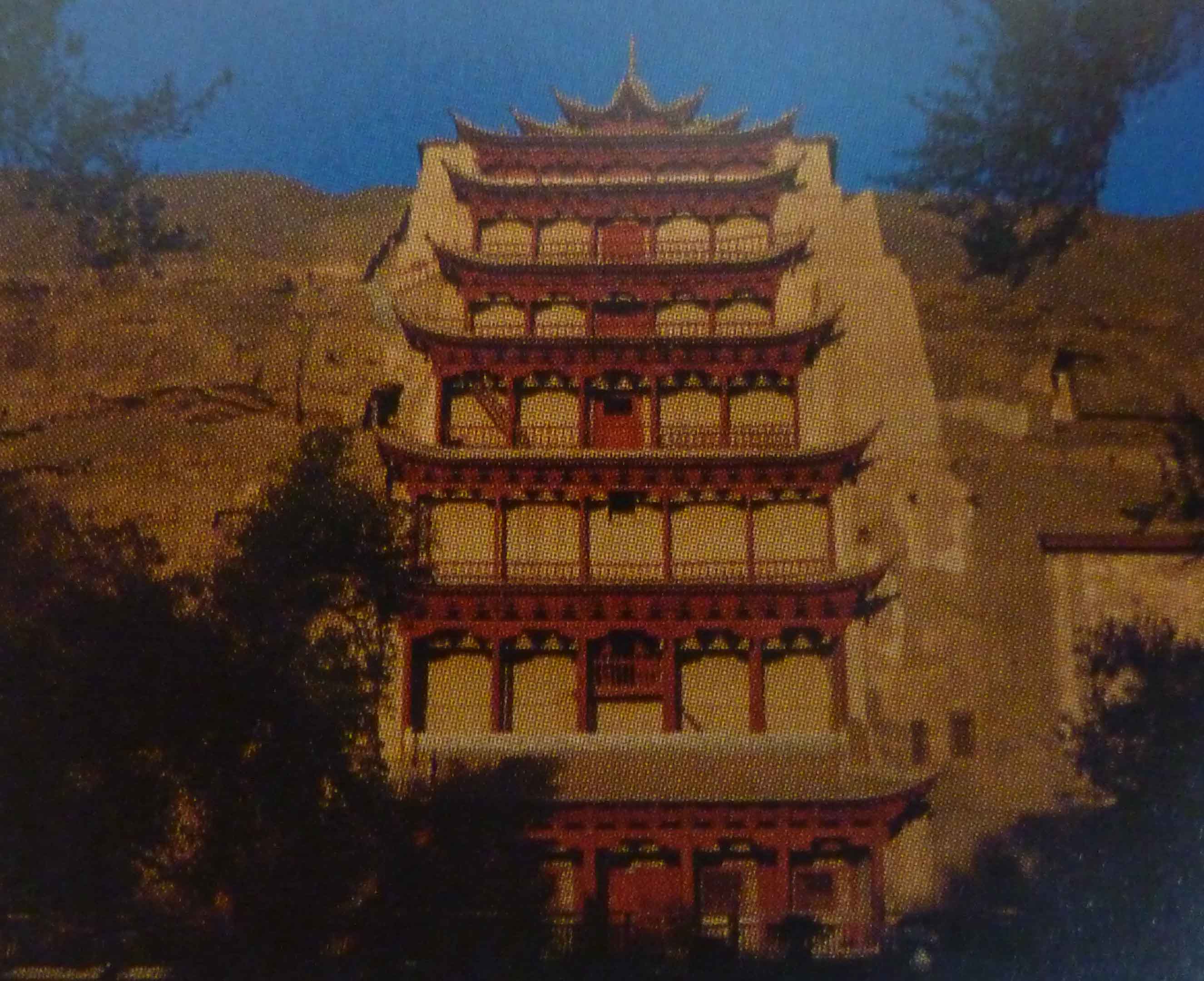
The June 2010 issue of National Geographic had a piece about the history of the Mogao caves near Dunhuang, a Silk Road oasis in northwestern China.

The Buddhist art found in almost 800 hand carved caves are considered among the world’s finest. There is nearly a half-million square feet of wall space decorated with these murals and more than 2,000 sculptures.

Between the fourth and 14th centuries AD—over a thousand years of history was documented on scrolls, sculptures and wall paintings revealing a multicultural world more vibrant than anyone imagined.

Contrary to popular belief and the Dalai Lama’s soft-spoken words of peace, Buddhism, like all large religious movements, has had a bloody and violent history depicted in the picture on page 145 of the National Geographic that shows an eighth-century heavenly armored guard with bulging eyes trampling a foreign demon.

Discover more of Buddhism in China

_______________

Lloyd Lofthouse is the award-winning author of My Splendid Concubine [3rd edition]. When you love a Chinese woman, you marry her family and culture too. This is the love story Sir Robert Hart did not want the world to discover.

His latest novel is the multiple-award winning Running with the Enemy.

Subscribe to “iLook China”!
Sign up for an E-mail Subscription at the top of this page, or click on the “Following” tab in the WordPress toolbar at the top of the screen.

About iLook China


Poor in Paradise

June 3, 2010

Newsweek reported about China’s changing landscape in China’s Hobson’s Choice.  It’s a well-balanced piece and halfway down the page is a video, “Millionaires Overnight”, worth watching.  The message in that video is that sometimes it is better off staying poor.

Guilin, Southeast China

However, China doesn’t have much of a choice but to keep changing. There’s pressure from the hundreds of millions of have-nots in rural China to get what the new urban middle class already has. Then there is the drive to stay “strong” so no one will push China around as the Western powers and Japan did for more than a century after the 1st Opium War until 1949 when Mao won China.

This Newsweek piece talks about the central government waking up to the fact that they have to do something about the pollution.  However, an old Chinese saying explains the clean-up challenge best, “The mountains are high, and the emperor is far away.” 

China’s one party government may appear powerful but reality is a grim fact. After all, the Communist’s Net Nanny’s cannot even keep Chinese from getting past the Internet censors and many Chinese play by their own rules regardless of laws that might end in a death penalty. Greed is a great motivator in any country.

See The Use of Power

_____________________

Lloyd Lofthouse is the author of the award winning novels My Splendid Concubine and Our Hart. He also Blogs at The Soulful Veteran and Crazy Normal.

Sign up for an RSS Feed for iLook China


Catching Up With Supercomputing

June 2, 2010

 China is not standing still or playing by Western rules, which are designed to let the West win. Instead, China is moving forward claiming solar power, wind power, high-speed rail, future footprints on the moon and a host of other titles.  Soon, China may be adding the supercomputing record to that list.

The New York Times reported that a Chinese supercomputer was recently ranked as the world’s second fastest machine. China is serious with science. To make this happen, China is graduating more top rated scientists, technicians and engineers than America.

Cray Jaguar Supercomputer

Although the world’s fastest computer is the Cray Jaguar supercomputer at Oak Ridge National Laboratory in Tennessee, China may soon take that title as well.  China has a microprocessor that has been designed and manufactured in China and should be out near the end of 2010. A number of experts in the field say this new Chinese microprocessor may be the machine that will claim the title of the world’s fastest computer.

In fact, China is no stranger to innovations. Centuries ago, China invented the printing press, paper, the compass, the crossbow, gunpowder and the multi-stage rocket.

See One Step from the Global Gold Medal

_____________________

Lloyd Lofthouse is the author of the award winning novels My Splendid Concubine and Our Hart. He also Blogs at The Soulful Veteran and Crazy Normal.

Sign up for an RSS Feed for iLook China


Love, Business and War

June 2, 2010

What happens today will be history tomorrow. With that in mind, I copied this opening quote from what Willi Paul wrote for Sustain Lane.com, “By stealing our technology, copying our products, forcing us into a trade deficit, manipulating their own currency and then buying our debt, the Chinese may win the long-term war of globalization.” Paul’s rant goes on with examples of how the Chinese are unscrupulous spies and thieves.

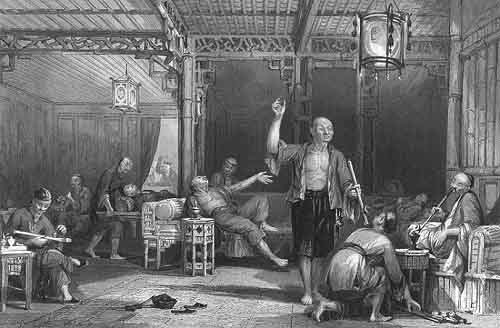
Western Opium destroying Chinese lives

If America and the rest of the Western world are in a trade war with China, the Chinese did not fire the first shot. In the 18th century, the powerful Qianlong Emperor rejected proposed trade and cultural exchanges with the British Empire and said the Qing Empire had no need for goods and services the British could provide.

The Western powers did not like being told “no”, so during the 19th century two Opium Wars were fought with China to force the door to trade and Christianity open—I recall that Japan was forced to trade with the West too, which resulted in the bombing of Pearl Harbor leading to World War II.

In fact, those trade wars started by Western powers with China in the 19th century aren’t over yet and the rules of fair play do not apply to love, business and war.

See The Reasons Why China is Studying Singapore

_____________________

Lloyd Lofthouse is the author of the award winning novels My Splendid Concubine and Our Hart. He also Blogs at The Soulful Veteran and Crazy Normal.

Sign up for an RSS Feed for iLook China


Cornering the Plug-In Hybrid or all Electric Car

June 2, 2010

Soon after the Copenhagen Climate Conference, China announced to the world that they would cut Greenhouse gases by 40%. I read at AutoBlogGreen, that one step to achieve that pledge has already been put in place—China is offering a $7,300 (in US dollars—the exchange rate today was 6.8279 yuan for each dollar) rebate for Chinese who buy plug in hybrids and $8,800 (US) for a fully-electric vehicle.

One such car is the BYD F6DM, a plug-in hybrid. Top speed should be 100 mph (160 kph, speed should be 100 mph (160 kph), with a range of 62 miles (100 km) in all-electric mode and 267 miles (430 km) total after the gas engine kicks in. A fully electric version called the F6E is planned for 2009. […] the lithium iron phosphate battery is said to be safer, less expensive, without heavy metals, completely recyclable and should be rechargeable to 70% in 10-minute at special charging stations. It can also be recharged more slowly with a home charging station, of course.” To learn more visit Tree Hugger.com

A recent survey shows that nearly 5-6 times more Chinese residents would consider buying an electric car or plug-in hybrid than citizen in the U.S., Germany, Japan and the UK… In the U.S. less than 1 in 4 (depending on who you ask) would consider buying an electric car right now. Source: gas2.0

See China Going Green

______________

Lloyd Lofthouse is the award-winning author of the concubine saga, My Splendid Concubine & Our Hart. When you love a Chinese woman, you marry her family and culture too. 

If you want to subscribe to iLook China, there is a “Subscribe” button at the top of the screen in the menu bar.