Chinese Pavilion, Shanghai World Expo

June 28, 2010

Dan Redford writes in The Huffington Post that at the Shanghai World Expo, the Chinese Pavilion is a 220 million dollar advertisement for the Chinese people and the world to see.

Redford’s post is worth reading, but he misses a few points when he says, “China’s economic growth is happening exclusively in cities.”  That’s old news.

Evidently, he hasn’t heard that last year China’s ruling body launched a five-year plan to extend the electric grid into rural China and subsidize modern electric appliances for peasants, explore ways to modernize rural villages, build about 40,000 additional kilometers of railroads while crisscrossing the country with a grid of high-speed rail.

China was the most powerful nation on the planet between 206 BC and 1800 AD. The Han Dynasty was more powerful and more technologically advanced than the Roman Empire at its height.  Prior to British opium flooding China from India early in the 19th century, China had the largest economy in the world.

Starting with the first Opium War, that power was robbed by the West.  It wasn’t until Deng Xiaoping said, “Getting rich (and powerful) is glorious”, that the Chinese started to get back on their feet. He also said, “Some areas must get rich before others.”

China was a global power for more than two millennia.  America has only been one since the end of World War II in 1945. Although Redford doesn’t say so, it was obvious that the Chinese are sending a strong message—”We are back”.

To discover more about Shanghai visit:
Shanghai
Shanghai’s History & Culture
Eating Gourmet in Shanghai
Shanghai Huangpu River Tour
Shanghai Huxinting Teahouse

_________________________

Lloyd Lofthouse is the award-winning author of the concubine saga, My Splendid Concubine & Our Hart. When you love a Chinese woman, you marry her family and culture too. 

If you want to subscribe to iLook China, there is a “Subscribe” button at the top of the screen in the menu bar.


The Opium Wars in the 19th Century (1800s)

June 28, 2010

China began the 19th century confident of its superiority over the rest of the world.  China’s population numbered 400 million. The Qing (Manchu) Empire controlled the world’s biggest economy.  China enjoyed a favorable balance of trade with the West—receiving a huge amount of money for its silk, porcelain, and tea.

By 1800, the British consumed 10,000 tons of tea annually.  So much money poured into China, that one Chinese merchant became the richest man in the world, and all foreign business with was restricted to one city, Canton.

However, Britain had a product to reverse that balance of trade—opium. The British shipped opium into China and up its rivers to almost every part of China.  So many became addicted to the drug, the stability China was threatened.

Then in 1839, the Emperor acted to stop the opium trade. Lin, the man in charge, wrote to Queen Victoria asking for her help. Ignored by Great Britain, Lin resorted to confiscating the opium and destroying it, which led to the Opium Wars started by Britain and France, who respected nothing but force. China lost the war and was forced to pay for a war they did not want and did not start.

In the British parliament, William Gladstone criticized his government calling the Opium war a disgrace.

See Mao’s War Against Illegal Drugs

______________

Lloyd Lofthouse is the award-winning author of the concubine saga, My Splendid Concubine & Our Hart. When you love a Chinese woman, you marry her family and culture too.

If you want to subscribe to iLook China, there is a “Subscribe” button at the top of the screen in the menu bar.


Conversation—Sung Dynasty Philosophy

June 28, 2010

China may be the only ancient culture that survived the spread of Islam and Christianity and managed to hold onto its identity.

________________________________

“Guan-jiah,” Robert said, “before I came to China I read The Travels of Marco Polo. Do you know who he was?”

“No, Master,” Guan-jiah replied.

“He came to China from Europe more than six hundred years ago and served under Kublai Khan during the Yuan Dynasty. Polo wrote that Hangzhou was the finest and noblest city in the world.”

“Hangzhou was the capital of the Southern Sung Dynasty, Master,” Guan-jiah said. “I’ve heard it is beautiful. Sung philosophy says that we have the power in our minds to overcome our emotions.”

“Marco Polo believed it was God’s will that he came back from China so others in the West might know what he’d seen.” Robert turned to his servant, who was the last in line. “Do you believe in this Sung philosophy, Guan-jiah?”

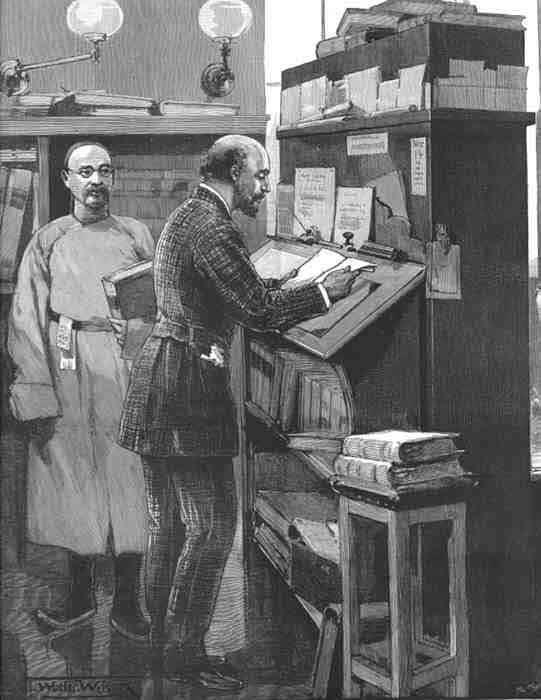
Guan-jiah and Robert Hart - 19th century China

“The Sung said that if you know yourself and others, you would be able to adjust to the most unfavorable circumstances and prevail over them.”

“That’s admirable, Guan-jiah. You never mentioned you were a scholar. If the Sung Dynasty was that wise, I want to see Hangzhou one day.”

“I am no scholar, Master, but I must believe in the Sung philosophy to survive. I have read and contemplated much literature. However, I am like a peasant and have never mastered calligraphy. It is a skill that has eluded me.”

“How old were you when you studied this philosophy?”

“I was eleven, Master, two years after I was sent to Peking.”

Source: From Chapter 4, My Splendid Concubine
See The Influence of Confucius

_________________________

Lloyd Lofthouse,
Award winning author of Hart’s concubine saga, My Splendid Concubine & Our Hart. When you love a Chinese woman, you marry her family and culture too. 

Sign up for an RSS Feed for iLook China


A Stable Basket of Cash

June 27, 2010

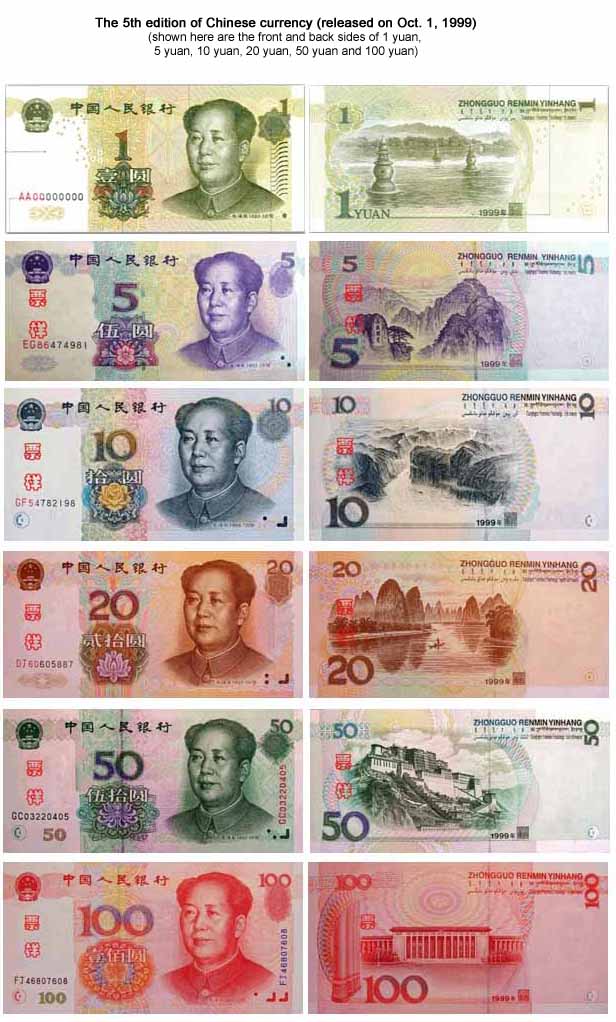
I laughed when I read The Wall Street Journal’s, Is China Serious This Time About a Yuan Basket? I laughed because the Chinese are serious but not serious enough to risk the yuan fluctuating in value to the point that it becomes a burden to the people.

“A report from the Chinese Academy of Social Sciences indicated that in … 2006, the annual per capita disposable income of urban households was 11,759 yuan compared with only 3,587 yuan in rural households.” Source: China Labour Bulletin

The cost of essential goods must be kept stable. It helps that rural Chinese grow most of their food and live in collectives so there are no mortgages or property tax. The villages and houses belong to everyone and there are no deeds. However, in urban China, many pay rent or a mortgage unless they live in factory dormitories.

Whatever basket of currency China uses, even if it is the same as Singapore, there will still be a narrow band so the yuan doesn’t change value to the point that it would cause an unbearable burden to the people of China. How would you like to be sitting on a powder keg that size?

See The Urban-Rural Divide

_________________________

Lloyd Lofthouse,
Award winning author of Hart’s concubine saga, My Splendid Concubine & Our Hart. When you love a Chinese woman, you marry her family and culture too. 

Sign up for an RSS Feed for iLook China


How US Fanatics Lose Jobs to China

June 27, 2010

I read The dragon’s DNA in The Economist last night before sleep, and after waking up, I read a piece in the May Smithsonian about how one born-again man used a minority Christian fundamentalist movement to bring about Prohibition.  If the nation’s voters had been given a choice at the polls, Prohibition would have failed.

Because I read the two pieces close together, I made a connection. The Economist piece is  about a company in China, BGI (Beijing Genomics Institute) and is about China soon dominating DNA research. BGI is about to have more DNA-sequencing capacity than the United States possibly making China the leader in this field.

Meanwhile, in the US, research in genetics is hampered by minority groups similar to the one the Smithsonian talks about in The Man Who Turned Off The Taps. Wayne B. Wheeler, who’s responsible for bringing about prohibition touched every American life, and he did this by using political blackmail—something organized, born-again Christians and the Tea Bag people are doing today.

It is obvious that political minority dictatorships in the US send jobs to China. Instead of China, the US could be the leader in genetic research. Allowing minorities to use political blackmail to achieve political and religious agendas is wrong.  No wonder the Chinese have kicked religions out of China every few centuries and killed those who didn’t leave fast enough.

See Jobless in America and Angry at China

_________________________

Lloyd Lofthouse,
Award winning author of Hart’s concubine saga, My Splendid Concubine & Our Hart. When you love a Chinese woman, you marry her family and culture too. 

Sign up for an RSS Feed for iLook China