China’s Capitalist Revolution (Part 1 of 9)

June 30, 2010

When Chairman Mao died in 1976, he left China in chaos due to the Cultural Revolution. Under Mao, who led the revolution and built the People’s Republic, millions had starved and died (due to poor decisions, droughts, floods, crop losses and a complete embargo by the United States). Deng Xiaoping, who overturned Maoism and taught the Chinese to love capitalism, succeeded him but not without a struggle.

Today, China has transformed the lives of many of its citizens and is challenging the world.  This BBC series is the story of how Communist China learned to love capitalism.  It is also the story of Deng Xiaoping—a survivor often punished by Mao, who refused to quit.

Unfortunately, for all the success Deng had in transforming China into a modern nation, his reputation was stained by what happened during the Tiananmen Square incident. During the demonstrations, Deng, who had been a military man most of his life, was faced with a choice between his modernizing instincts and his commitment to national stability to the party he had served for seventy years since 16.

By bringing wealth and stability to China, Deng defied those who said capitalism could not succeed without Western style politics.  He often said, “Our system has its advantages. We can make decisions quickly.”

If you enjoyed this, see The Roots of Madness or go to Part 2 of China’s Capitalist Revolution.

_________________________

 Lloyd Lofthouse is the award-winning author of The Concubine Saga. When you love a Chinese woman, you marry her family and culture too. This is the love story Sir Robert Hart did not want the world to discover.

To subscribe to “iLook China”, look for the “Subscribe” button at the top of the screen in the menu bar, click on it then follow directions.


Stuck on a Name

June 30, 2010

Dave left this comment for a post on the China Law Blog: “The country (China) is ruled by an organization called “The Communist Party” claiming fealty to the teachings of the German Karl Marx and organizationally based on the teachings of the Russian Lenin.” Source of comment: China Law Blog

Think again, Dave. After Mao died and Deng Xiaoping declared, “Getting rich was glorious”, Marxism and Lenin went in the trash with Maoism. In fact, China is a mixture of capitalism and socialism and the socialism is shrinking.

Check out medical care in China. Soon after Mao died, the cradle to grave socialist system of medicine went into the rubbish. It’s cash, baby, or have a nice death. Along with the state-run hospitals, a growing and very expense private medical system caters to rich expatriates and wealthy Chinese.

In fact, in 2004, there were almost 2 million privately owned enterprises in China. The number of individually owned businesses stood at more than 39 million primarily concentrated in such areas as wholesale and retail, manufacturing and industrial, transport, personal services, and lodging and restaurants. Source: Research Institute of Economy, Trade & Industry, IAA

Soon after 1976, China’s government revised the Chinese Constitution imposing term limits (2 five-year terms) for public office and an age limit (67), something we don’t have in the US. Granted, China still has a one party system but regional governments don’t always listen to Beijing. China is a “Communist” nation in word only.

See Dictatorship Defined

_________________________

Lloyd Lofthouse,
Award winning author of the concubine saga, My Splendid Concubine & Our Hart. When you love a Chinese woman, you marry her family and culture too. 

Sign up for an RSS Feed for iLook China


The Boogeyman Books and Fear Sells

June 30, 2010

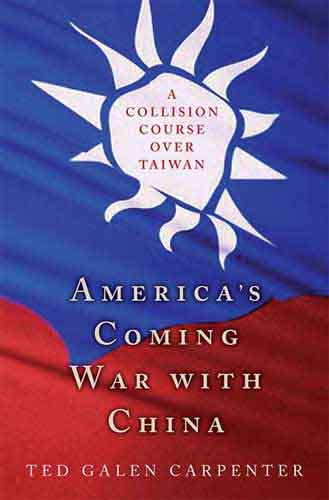
Out of curiosity, I crawled Amazon looking for books bashing China. The first one was Americas Coming War with China, published in 2006.

Martin Sieff, the National Security Correspondent for UPI had this to say, “America’s Coming War with China is a thoughtful, even-toned, deeply disturbing book. Ted Galen Carpenter has long been one of the wisest, most far-seeing foreign policy voices in Washington. His quiet, careful documentation of an on-rushing, potentially catastrophic confrontation between the United States and China over Taiwan, which can still be avoided, but may not be, is far more troubling than the hysterical claims from other sources that brand China as an inevitable, mortal enemy of the United States. This is clearly one of the most important books on U.S. foreign policy in years. It is essential reading for everyone who cares about the peace of the world.”

Now, a dose of reality. China has more troops in uniform but look at the weapons.

America’s military expenditures for 2009 were almost 700 billion (4.3% of GDP) and China spent less than 100 billion (2.0% of GDP).

Not counting Afghanistan and Iraq, there are about 100,000 US troops in Asia, 40,000 in South Korea, and more bases in countries that ring China like Japan. Source: Global Research

The US has 11 aircraft carriers and 1,559 navy ships
China has 1 aircraft carrier with 760 navy ships

China has about 240 nuclear warheads
The US has more than 5,000 active with another 4,500 retired

The US has 18,000 military aircraft
China has 1,900. Source: Global Firepower

Here are a few other titles to help stay awake and afraid in the dark.

  • Showdown: Why China Wants War with the United States, 2006
  • The Coming Conflict with China, 1998
  • Red Dragon Rising, 2002
  • Hegemon, China’s Plan to Dominate Asia and the World, 2000

See When the Generals Laughed

_________________________

Lloyd Lofthouse,
Award winning author of the concubine saga, My Splendid Concubine & Our Hart. When you love a Chinese woman, you marry her family and culture too. 

Sign up for an RSS Feed for iLook China


Making China the Goat Again

June 29, 2010

China’s currency policies continue to ruffle feathers.  Robert E. Scott writes in the Huffington Post that US lawmakers must force China to raise the value of the yuan by 40% so jobs will materialize in America.  He claims that China is responsible for 1 million displaced jobs and must be punished economically with high tariffs if they don’t comply.

What he doesn’t mention are the jobs lost to the subprime mortgage crises, which almost sunk GM and Chrysler along with plummeting real estate prices, a storm of bankruptcies and endless foreclosures—not counting the trillions added to the national debt to bail out banks. 

He doesn’t mention that more than 10 million US jobs go to illegal immigrants who flood across America’s southern border to work for low wages.  He doesn’t mention NAFTA, which took another three million US jobs to Mexico and Canada.

He also doesn’t mention the 20 to 40 million Chinese who lost their jobs and tens of thousands of Chinese factories that closed due to the same subprime mortgage crises that was caused by US Wall Street banking greed and lax government oversight when G. W. Bush was president.

My question is, “Mr. Scott, why are you making China the lone goat for America’s debt crises and job losses?” 

Why not mention all the other low wage countries that manufacture products sold in the US—the list is long. I bought something made in Haiti recently, and it wasn’t art. Does that mean someone in Haiti took a job from someone in the US?

Why not ask Americans to stop buying iPods, iPads, Macintosh, Dell, and HP since most of these products are assembled or manufactured in China or other low wage countries.

Why not ask Americans to stop buying from the likes of Wal-Mart or mention how many Americans have jobs because of high-end American products that Chinese consumers buy.

See A Stable Basket of Cash

_________________________

Lloyd Lofthouse,
Award winning author of the concubine saga, My Splendid Concubine & Our Hart. When you love a Chinese woman, you marry her family and culture too. 

Sign up for an RSS Feed for iLook China


Far from the Facts

June 29, 2010

Due to a China Law Blog post, I spent the better part of an hour hunting for a quote from Sir Robert Hart where he compares China and England’s legal systems in the 19th century. In the quote, which I couldn’t find, Hart points out that the British and Chinese legal systems differ because of culture—one is based on the individual and China’s is not.

Robert Hart's statue in Shanghai (1913 - 1942)

In I Wish All China Could be California Girls, Dan Harris (China Law Blog) mentions a post I wrote, Belching for China, and then he takes the topic further. Harris writes, “I agree with iLooks overall premise, but I am not so sure Hindrey’s article is the right one on which to go off, because it is neither simplistic nor jingoistic…”

To make his point, Harris provides better evidence written by a personal Injury lawyer, William Marler, who feels that China needs a few good lawyers and a legal product liabilty system similar to the US.

That is the last thing China needs. In my “opinion” many of America’s problems stem from a lottery ticket mentality and bumper stickers saying, “Go Ahead and Hit Me and Make My Day.”

Marler writes that executing a top food-safety official in China for taking bribes is not the way to solve problems in food safety. What Marler doesn’t understand is that removing a rotten egg from the carton is sending a message to the Chinese and they get it. The Chinese have punished convicted criminals like this for more than two thousand years—far longer than any Western culture. In fact, today’s China is far less brutal since 1976.

To strengthen his point, Harris uses evidence from Stan Abrams at China Hearsay, another lawyer who chastises Marler for getting his facts wrong.  

What I learned from Harris and Abrams was that people like Marler and Hindrey and their stereotypical “opinions” about China are examples of what many in America believe, which is usually far from the truth.

_________________________

Lloyd Lofthouse,
Award winning author of the concubine saga, My Splendid Concubine & Our Hart. When you love a Chinese woman, you marry her family and culture too. 

Sign up for an RSS Feed for iLook China