Nixon in China – Part 3/3

February 6, 2011

While in China, President Nixon gave a speech in the Great Hall of the People in Beijing.

This was the first time a U.S. president had visited the People’s Republic of China (PRC), and China was considered one of America’s greatest enemies.

While in China, Nixon would meet with Zhou Enlai, who was the first Premier of the PRC. Zhou Enlai (along with Deng Xiaoping) played an important role in the future development of the Chinese economy and restructuring Chinese society leading to the China of today. 

In fact, Zhou Enlai not only avoided the purges of high-level Chinese Communist Party officials during the Cultural Revolution, but he also attempted to contain the damage caused by the teenage Red Guard and to protect others from them. This made him very popular with the people near the end of the Cultural Revolution.

Zhou Enlai supported peaceful coexistence with the West.  He would die eight months before Mao.

It is ironic that one of the main reasons Richard Nixon became the vice-president of President Eisenhower was due to his strong anti-communist stance.

If you listen to Nixon’s speech in Beijing carefully, you will hear how he managed to slip in a veiled criticism of the fact that the media was free to report what they wanted in the US.

Nixon says of his visit to the Great Wall, “As I walked along the Wall, I saw the sacrifices that went into building it. I saw what is showed about the determination of the Chinese people to retain their independence throughout their long history. I thought about the fact that the Wall tells us that China has a great history and that the people who built this wonder of the world also have a great future.”

I wonder if Nixon realized how true his statement was.

The embedded video then shows Nixon and Zhou Enlai in Hangchow, China, which is southwest of Shanghai.

Could it be possible that Nixon’s trip to China provided Deng Xiaoping the support needed to reject revolutionary Maoism and launch China’s capitalist revolution a few years later?

Return to Nixon in China – Part 2

______________

Lloyd Lofthouse is the award-winning author of the concubine saga, My Splendid Concubine & Our Hart. When you love a Chinese woman, you marry her family and culture too.

If you want to subscribe to iLook China, there is a “Subscribe” button at the top of the screen in the menu bar.


Nixon in China – Part 2/3

February 5, 2011

When President Nixon went to China, he met with Chairman Mao.  At the time, Mao was already suffering from illnesses. In four years, he would be dead and Nixon would be the only president in US history to resign while in office due to the Watergate Scandal.

After Nixon resigned as the US president, the Chinese offered him a home in China where he would be allowed to live in peace away from his political enemies.

Two months before his meeting with Mao in Beijing, Nixon had approved a bombing operation in North Vietnam.

Many called it the Christmas bombings since it took place over the holidays. It was the first continuous bombing in Vietnam since President Lyndon Johnson had halted bombing in 1968.

Over 20 thousand tons of bombs were dropped during the campaign. That’s forty million pounds of explosives.

Ironically, Nixon ran for election as the “Peace Candidate” in 1968. Can you think of other US politicians that have used similar lies to win elections?

Because of Nixon’s record of being anticommunist, no one would have thought that he would have unexpectedly gone to China to meet with Mao and the Party’s other leaders.

A recent report from AOL News revealed, “Newly released audiotapes and secret documents from the Richard Nixon Presidential Library show a president obsessed with controlling the media and his public persona during the latter stages of his doomed administration.” 

I find it ironic that this comes from a former president of a country that often criticizes China’s control of its media. Is it possible that US politicians are jealous?

Return to Nixon in China – Part 1

______________

Lloyd Lofthouse is the award-winning author of the concubine saga, My Splendid Concubine & Our Hart. When you love a Chinese woman, you marry her family and culture too.

If you want to subscribe to iLook China, there is a “Subscribe” button at the top of the screen in the menu bar.


Nixon in China – Part 1/3

February 4, 2011

In 1969, the Soviet Union was planning a nuclear attack on China. The USSR only backed down when President Nixon’s administration warned Moscow that such a move would start World War Three since the US would bomb Russia in retaliation.

The United States, under President Nixon (1969-1974), clearly indicated that China’s interests were closely related to America’s. Source: Free Republic

At the time, I’m sure President Nixon had no idea how close those relations would become.

Thirty-nine years ago this month, in February 1972, President Richard Nixon went to China and changed the course of history a second time. His motives may not have been meant to encourage China to become the economic powerhouse it is today.

However, if it weren’t for Nixon, the odds say the Soviet Union would have bombed China with nuclear weapons and China would have retaliated.

While flying to China, President Nixon made notes. Here are a few.

What they (China) want? Build up their world credentials, Taiwan, and get the U.S. out of Asia (In 1968, Nixon ran for President promising to get the U.S. out of Vietnam).

What we (the US and China) both want? Restraint on USSR

The BBC reporter in the embedded video says that Nixon’s trip to Beijing wasn’t to see if China would help get the US out of Vietnam. Instead, the trip was designed to put pressure on the USSR with a goal to make them agree to strategic arms limitations.

Soon after Nixon’s China trip, the Soviets were forced to negotiate and within three months signed two arms control agreements.

What I find interesting is how often US Presidents (and politicians) have been wrong about China.

In 1961, President John F. Kennedy said if China had nuclear bombs, it would swallow Southeast Asia. That never happened and today China has more than three hundred nuclear bombs with the missiles to deliver them to targets thousands of miles distant.

In 1965, China successfully tested its first nuclear bomb. President Lyndon Johnson said it was “the blackest and most tragic day for the free world”.

How was that day the “blackest and most tragic day for the free world”?

After all, China has never used a nuclear weapon on another country as the US did on Japan to end World War II by bombing Hiroshima and Nagasaki killing about a quarter million people.

In fact, about 25 American POWs were also killed in the first blast. Most of the Japanese dead were noncombatants—the elderly, women and children.

Di Text.com reports that the US firebombed (with napalm) 67 Japanese cities in World War II.  More than half of Tokyo (one of the 67 cities) was destroyed. Estimates of the number killed in Tokyo range between 80,000 and 200,000.

Robert S. McNamara was reported to have said, “If we’d lost the war, we’d all have been prosecuted as war criminals.”

Question — In modern times, has Communist China inflicted that many casualties on another nation’s civilian population? Don’t forget that Japan killed about 30 million Chinese during World War II.

Discover what it took to survive Mao’s Long March.

______________

Lloyd Lofthouse is the award-winning author of the concubine saga, My Splendid Concubine & Our Hart. When you love a Chinese woman, you marry her family and culture too.

If you want to subscribe to iLook China, there is a “Subscribe” button at the top of the screen in the menu bar.


Tiger Mother Invades China

February 3, 2011

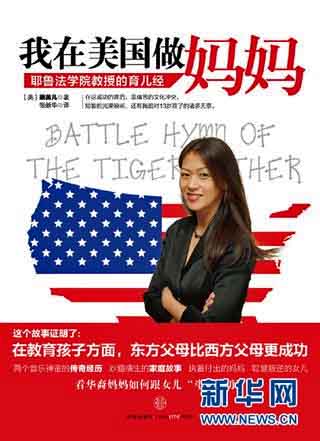
Amy Chua, the Chinese-American Tiger Mother has invaded China with her memoir.  Early results look promising in a market of 1.2 billion readers.

According to the Los Angeles Times, the book has been available online since mid-January and ranked No. 80 in sales as of Thursday on Joyo.com, a Chinese version of Amazon (its rank was 43 as I wrote this post).

The paper version of the book will be out after the Chinese New Year holiday.

However, keeping track of sales of the paper version may be difficult since the Chinese have a tradition of borrowing what someone else wrote, printing it without a contract and not paying the author for it while charging a more competitive price than the contracted publisher charges.

To many in the Middle Kingdom, printing a book you don’t have the rights to is not theft.

After all, Confucius considered all information and entertainment in the public domain even if it is against today’s Chinese law.

The Huffington Post was correct when it said the Chinese edition has a new title and a new cover, which I find more colorful than the drab US version.

The China Daily, which is China’s state owned English language newspaper/Website, quoted a Middle Kingdom mother saying, “I can’t imagine a mother in China so frankly revealing the embarrassment and brutal confrontation she went through while trying to tap her kids’ potential to succeed.”

This matches what my wife said about Chua’s memoir being very non-Chinese. It isn’t acceptable in China to talk publicly about White Elephants in the family and this story, to most mainland Chinese, is a White Elephant better kept as a family secret.

China Daily said, “Many Chinese parents see themselves in Chua, not only in terms of the strict parenting, but the desire to help their children excel. But few hope to be the next Tiger Mother.”

The best quote of the China Daily piece was from Zhang Yiwu, A Chinese literature professor and deputy director of the Cultural Research Center of Peking University: “If anything is worth introspection, I think the Tiger Mother has reminded both Chinese and American parents of the necessity to ditch stereotypical thinking and unrealistic fantasies about ideal parenting models.”

I wonder how many SAP parents (Self-esteem arm of Political Correctness in the US) will read those words and take them seriously–to question fantasy parenting models.

Discover Amy Chua Debates Former White House “Court Jester” Larry Summers

______________

Lloyd Lofthouse is the award-winning author of the concubine saga, My Splendid Concubine & Our Hart. When you love a Chinese woman, you marry her family and culture too.

If you want to subscribe to iLook China, there is a “Subscribe” button at the top of the screen in the menu bar.


Changing China through its Youth – Part 5/5

February 3, 2011

As PBS’s Frontline started its fourth year of filming in China, the subjects of their documentary were still restless rethinking their lives, their ambitions and values.

One Chinese woman (not identified) talks about a survey called the “Happiness Index”, which is practical.  It has nothing to do with the individual and society. She says, “When Chinese talk about happiness, it’s about affording the things they want to buy, the housing they want, and if they like the work they do…”

Lu Dong, who started an Internet tailoring business, says, “China is a country with no beliefs and there are no role models. All the models are materialistic.”

Although Lu Dong’s opinion may be true for many Chinese in the rising middle class, I disagree that it means everyone in China. There are role models in China’s history, and even today, there are others who will look to them as an example.

He says, “Chinese are very hungry now and hard to satisfy,” which may be a better way of stating the situation today and goes a long way to explain why rural Chinese are willing to sacrifice so much to migrate to cities and work long hours in factories for low pay.

Lu Dong says, “The water is still dirty. What I can do is make the water in my company clean… Although when I deal with the outside world I still have to deal with business the way others do. That’s another reason why I became a Christian.”

Then Ben Wu, who launched the Internet cafe, says he won’t be in the Internet cafe business for the rest of his life. His real passion is renewable energy. His father’s expertise in is solar cells. He wants to start a factory to build this product.

Dr. Zhang Yao works in a large hospital and feels an obligation to do public health work. He thinks residents in large urban hospitals could provide training in rural ones.

Zhang Jingjing is a public interest lawyer. She represented more than a 1,000 families over a power line built for the (2008) Olympics. She wants to protect China’s environment and natural resources. However, she wants to meet the right man too.

Meanwhile, the rapper, Wang Xiaolei, is achieving his dream of becoming a star. He says he has 20,000 fans. He wants to be the head of a record company. He says he firmly believes that if you work hard your dream will come true.

Wow! That sounds like many of the American children I taught during my thirty years in the classroom. How many do you believe actually achieve their dreams?

In conclusion, this PBS Frontline documentary shows us that there are no stereotypes in China. Even in a collective culture such as China, there are individuals.

Return to Changing China through its Youth – Part 4

______________

Lloyd Lofthouse is the award-winning author of the concubine saga, My Splendid Concubine & Our Hart. When you love a Chinese woman, you marry her family and culture too.

If you want to subscribe to iLook China, there is a “Subscribe” button at the top of the screen in the menu bar.