Finding Balance through Yin and Yang

March 10, 2015

In many ethical systems, the right path is the one that does not stray far from the middle. Aristotle preached that virtue was striking a balance between the vices of excess and of defect. A similar concept was presented by Plato, who was influenced by Pythagorean (570 -495 BC) ideas.

The concept of  balance is also an important aspect of  Confucianism since the philosophy of Yin Yang appeared about the same time as Confucius (551 – 479 BC), who wrote of a harmonious life that avoids excesses and deficiencies where wisdom was learned from both the old and the young, the high and the low.

Since Lao Tzu (the founder of Taoism and the concept of Yin and Yang) and Confucius lived about the same time, they may have met and shared thoughts.

The Doctrine of the Mean was a basis for civil service examinations in China from 1312 to 1905.

The concept of Yin and Yang applies to many aspects of life. In Taoism heaven is masculine and earth is feminine suggesting the dependence of the entire creation upon the Creator.

A whole series of possible interactions between the Yin and Yang in life is contained in the Chinese Book of Changes, the i Ching.

_______________

Lloyd Lofthouse is the award-winning author of My Splendid Concubine [3rd edition]. When you love a Chinese woman, you marry her family and culture too. This is the lusty love story Sir Robert Hart did not want the world to discover.

Finalist in Fiction & Literature – Historical Fiction
The National “Best Books 2010” Awards

Low-Res_E-book_cover_MSC_July_24_2013

Honorable Mentions in General Fiction
2012 San Francisco Book Festival
2012 New York Book Festival
2012 London Book Festival
2009 Los Angeles Book Festival
2009 Hollywood Book Festival

Subscribe to “iLook China”!
Sign up for an E-mail Subscription at the top of this page, or click on the “Following” tab in the WordPress toolbar at the top of the screen.

About iLook China

China’s Holistic Historical Timeline


An Art Gallery in Zhouzhang, China’s Venice

March 4, 2015

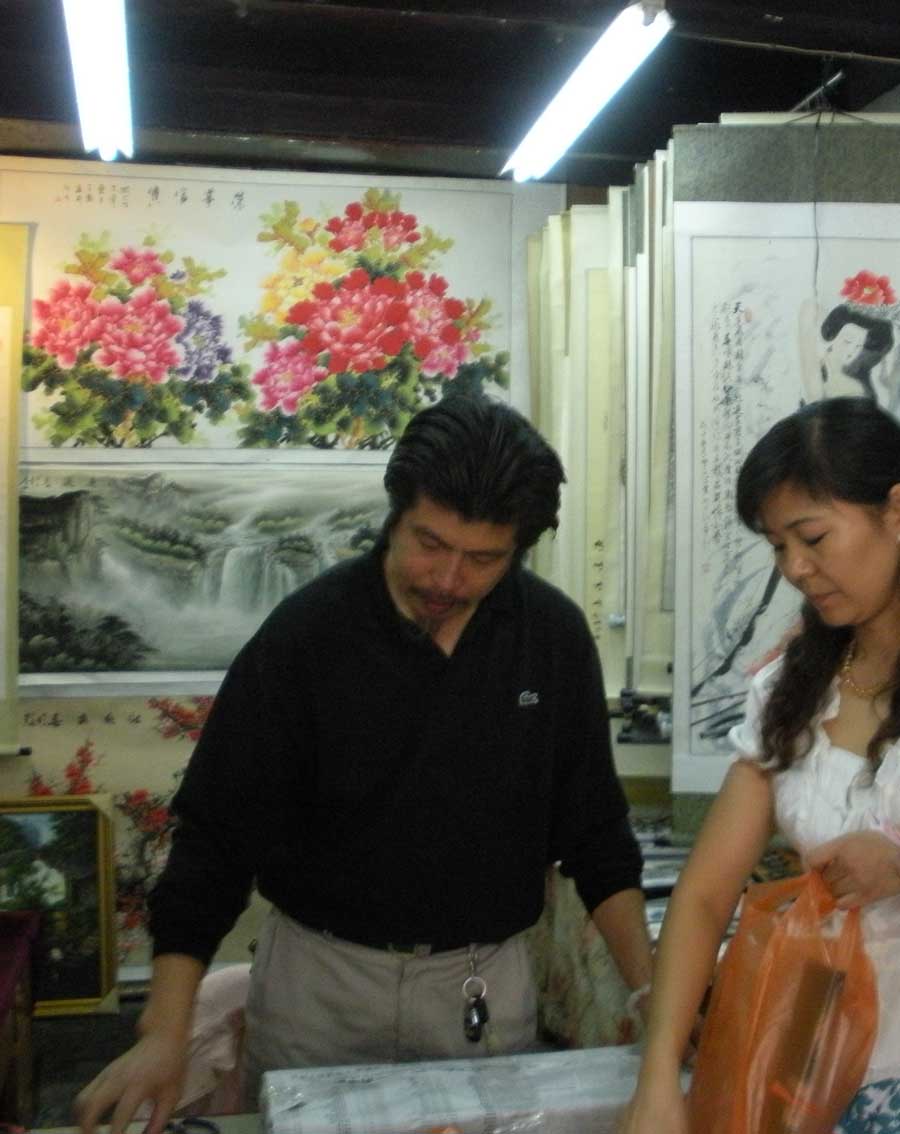
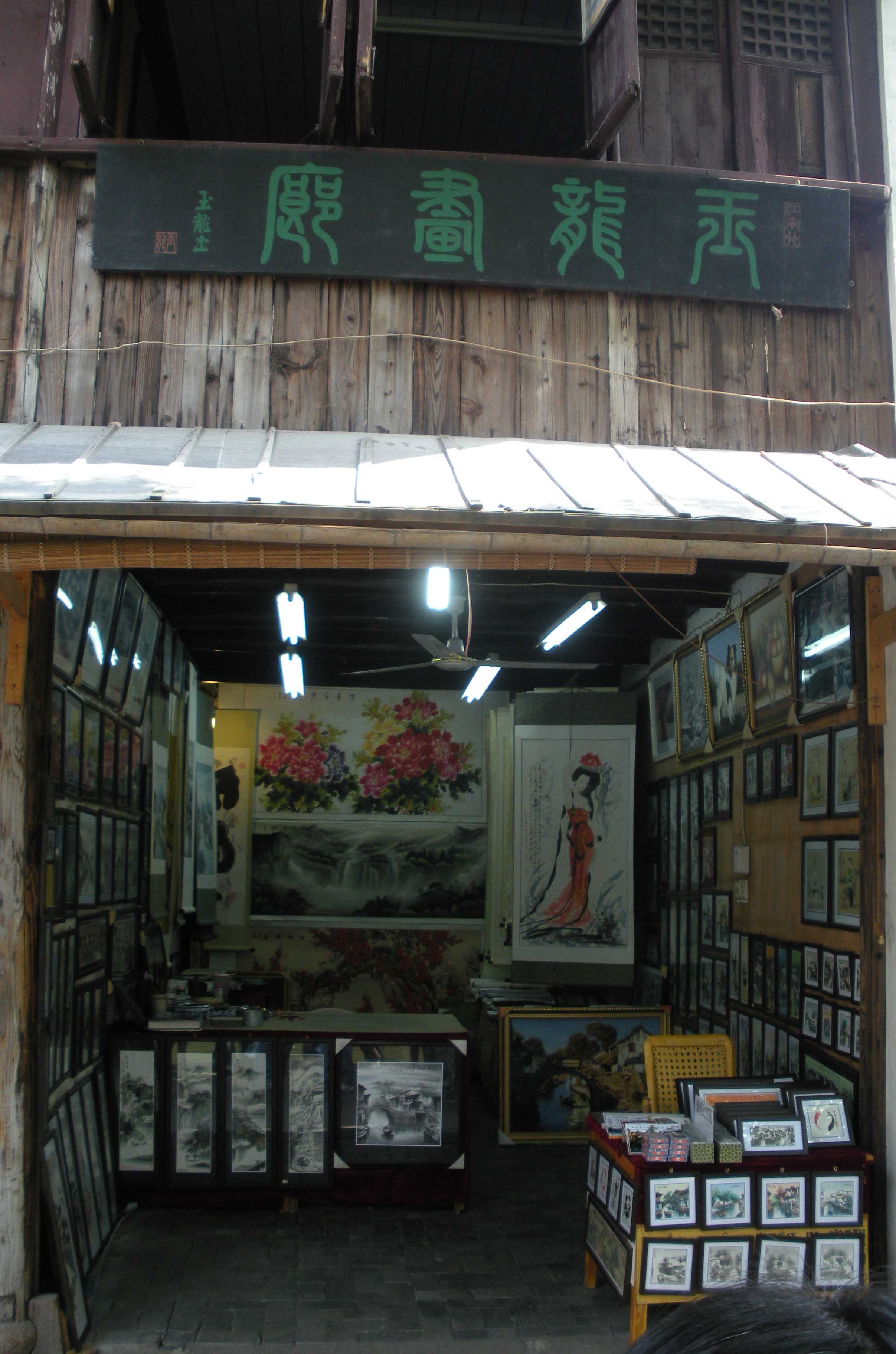
In 2008, while visiting Zhouzhang, China’s #1 Water Town for Tourists, we stopped at Xu Xiao-dong’s gallery and art studio.

 
Xu-Xiao-dong

The artist trained under a master and keeps a newspaper clipping that mentions it.

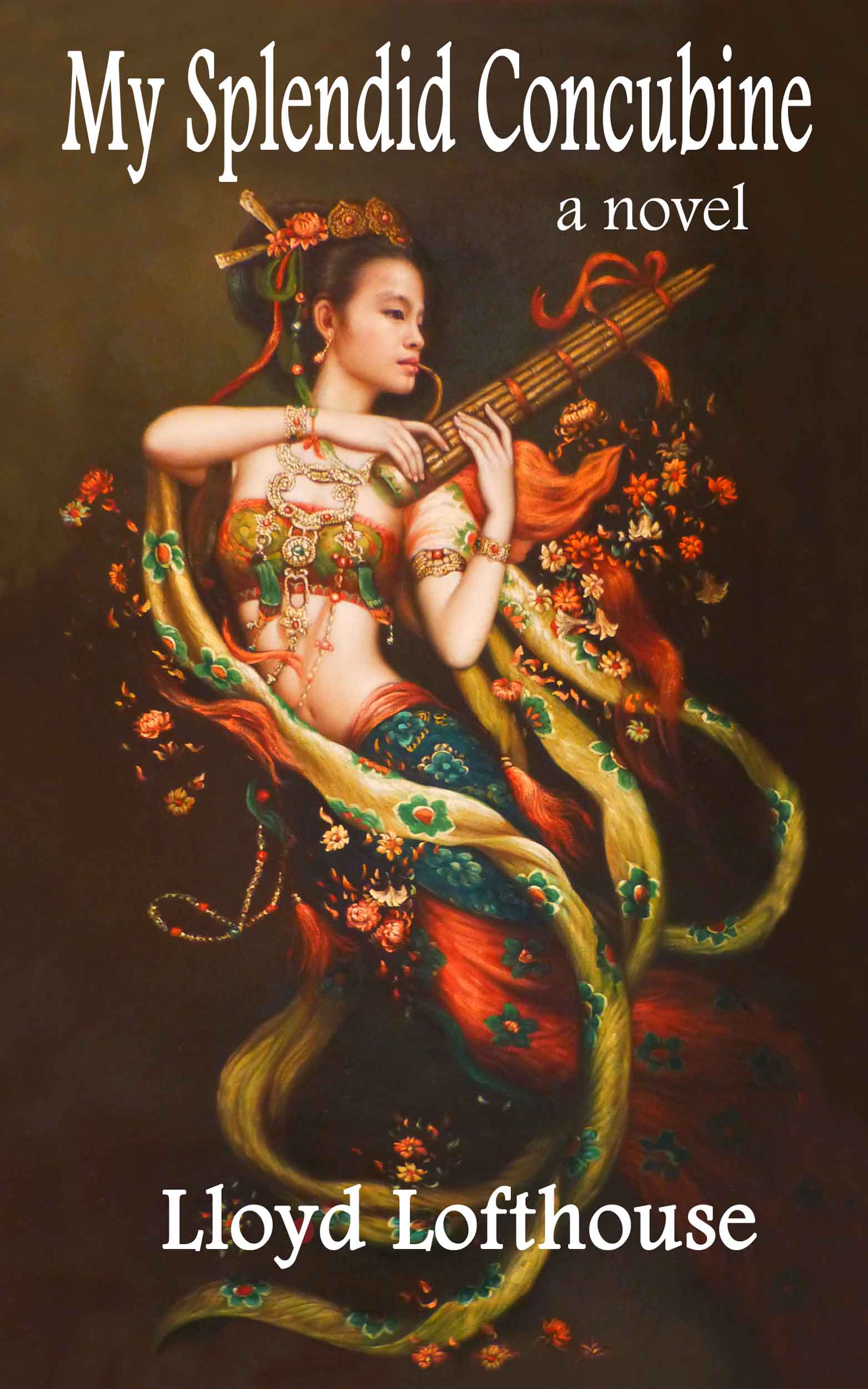
We bought several watercolors from Xu Xiao-dong, and he gave me written permission to use his art for the cover of My Splendid Concubine’s 2nd edition. The 3rd edition has a dancer on the cover (you can see it below this post).

 Xu Xiao-dong’s gallery

There’s a narrow, steep stairway in the back (left) that goes to another floor and more art. The artist also paints his art on the second floor.

Zhouzhang, near Shanghai, is almost a thousand years old—built in 1086. Unlike most tourist attractions in America, this town is still occupied with 138,000 people, and they make their living from the tourists who cannot enter unless they pay a fee.

A boat ride through the town costs about RMB 100 (US$16). Traditional Chinese folk songs sung by gondoliers are free.
At least they were when we visited.

_______________

Lloyd Lofthouse is the award-winning author of My Splendid Concubine [3rd edition]. When you love a Chinese woman, you marry her family and culture too. This is the lusty love story Sir Robert Hart did not want the world to discover.

Finalist in Fiction & Literature – Historical Fiction
The National “Best Books 2010” Awards

Kindle_LR_e-book_cover_MSC_July_25_2013

Honorable Mentions in General Fiction
2012 San Francisco Book Festival
2012 New York Book Festival
2012 London Book Festival
2009 Los Angeles Book Festival
2009 Hollywood Book Festival

Subscribe to “iLook China”!
Sign up for an E-mail Subscription at the top of this page, or click on the “Following” tab in the WordPress toolbar at the top of the screen.

About iLook China

China’s Holistic Historical Timeline


Peter Hessler on China

March 3, 2015

Peter Hessler arrived in China with the Peace Core in 1996 and taught English for two years. After leaving the Peace Corps, Hessler freelanced for The Atlantic Monthly, The Wall Street Journal, National Geographic and The New York Times before becoming the Beijing correspondent for The New Yorker until 2007. He lived in China about fifteen years.

Today, Hessler is better known for his books on China: River Town: Two Years on the Yangtze (2001), Oracle Bones (2006), and Country Driving: A Journey Through China From Farm to Factory (2010). His latest work is Strange Stones: Dispatches from East and West (2013).

I agree with Hessler when he said in a CNNGo interview, “People in China are not forthcoming like Americans; they don’t like to tell you their personal story. It’s a type of modesty, I think, in a culture where people are not encouraged to see themselves as the center of the universe.”

I have a born-again Christian friend—a white American—who boasted about Christianity being the fastest growing religion in China. I wonder what he’d say if he’d read what Hessler thinks: “The Chinese relationship with religion is pragmatic and fluid; people often change their faith very quickly. And I don’t see them following religion to a degree where it’s clearly not in their self-interest.”

And I also wonder what my old fundamentalist Christian friend would think if he knew the results of the CFPS 2012 survey of 25 of the provinces of China that found only 10% of the population belonged to organized religions—specifically, 6.75% were Buddhists (87.8 million), 2.4% (31.2 million) were Christians (of which 1.89% Protestants and 0.41% Catholics), 0.54% were Taoists, 0.46% were Muslims, and 0.40% declared to belong to other religions. Although 90% (1.17 billion) of the population declared to not belong to any religion, the authors of the survey estimated that only 6.3% were atheists neither believing nor worshipping gods and ancestors.

On happiness, Hessler says, “At this particular moment I think that Americans … might be less happy than Chinese people. The Chinese can roll with the punches. … Everybody in China has seen ups and downs; if they get laid off from the factory, they just go back to the village and play mah-jong.”

_______________

Lloyd Lofthouse is the award-winning author of My Splendid Concubine [3rd edition]. When you love a Chinese woman, you marry her family and culture too. This is the lusty love story Sir Robert Hart did not want the world to discover.

Finalist in Fiction & Literature – Historical Fiction
The National “Best Books 2010” Awards

Low-Res_E-book_cover_MSC_July_24_2013

Honorable Mentions in General Fiction
2012 San Francisco Book Festival
2012 New York Book Festival
2012 London Book Festival
2009 Los Angeles Book Festival
2009 Hollywood Book Festival

Subscribe to “iLook China”!
Sign up for an E-mail Subscription at the top of this page, or click on the “Following” tab in the WordPress toolbar at the top of the screen.

About iLook China

China’s Holistic Historical Timeline