Steel production had to double in one year. Instead of producing steel from industry, Mao wanted the peasants to build small furnaces. Again, there was competition between teams of peasants. Forests were cut down to fuel the crude peasant furnaces.
All over China, people were neglecting their other jobs to produce steel because the people had to obey Mao. All metal was melted—including cooking woks. The steel produced was useless.
While the peasants were producing steel, the crops rotted in the fields. In 1960, there was a drought and food production fell more than 25%. Twenty million or more died from the resulting famine.
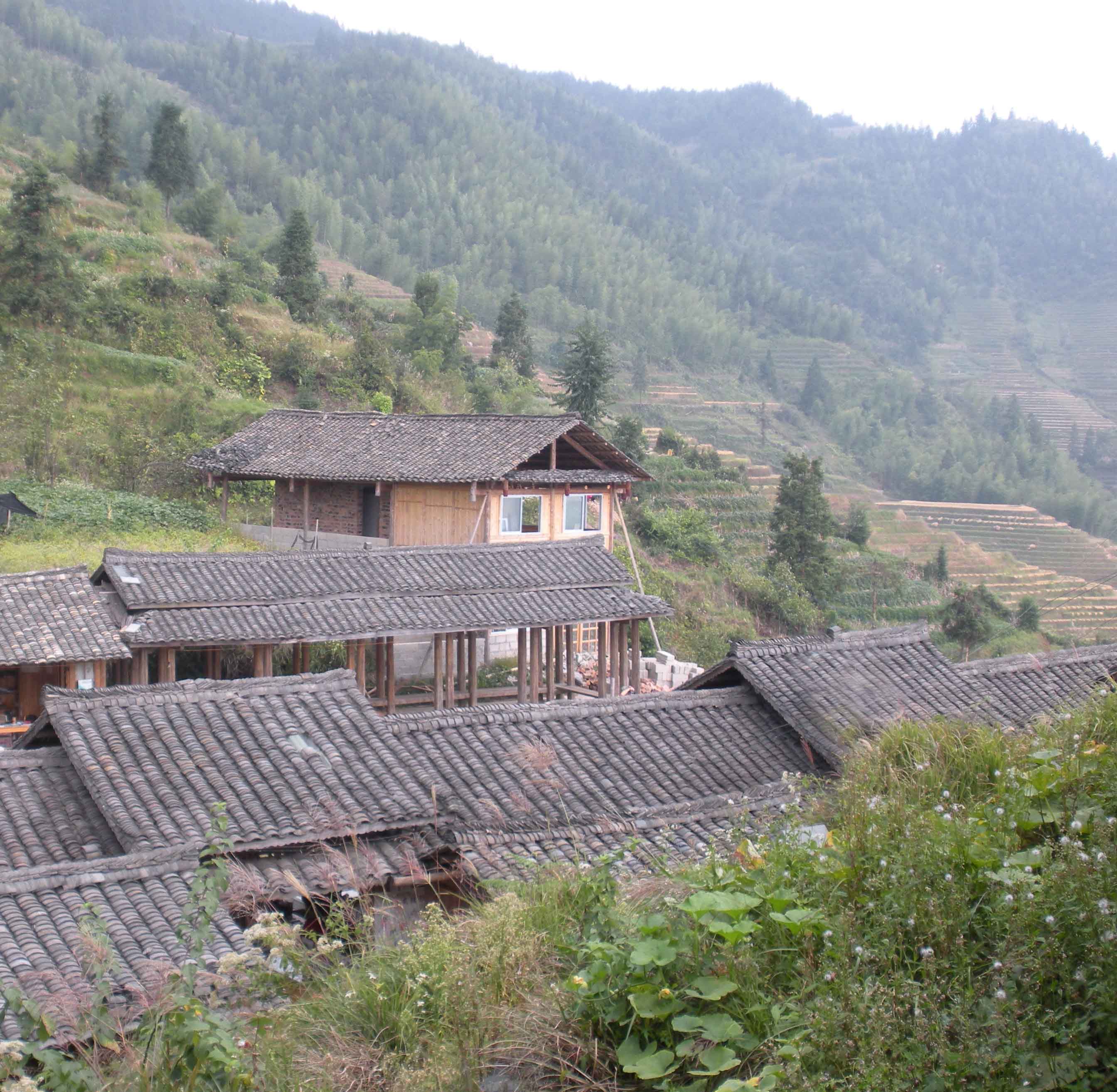
Village in Southeast China
Having failed, Mao stepped aside to let someone else run the nation. The large communes were abandoned. The peasants returned to their villages and were given land again.
Fearing the return of capitalism, Mao’s supporters printed a book with his slogans. Mao wanted to break the thinking and attitudes of old China. Using film, a propaganda campaign was launched so Mao could regain power. Then in 1966, he launched the Cultural Revolution.
Return to Part 3, China’s Great Leap Forward or go to Part 5
______________
Lloyd Lofthouse is the award-winning author of the concubine saga, My Splendid Concubine & Our Hart. When you love a Chinese woman, you marry her family and culture too.
If you want to subscribe to iLook China, there is a “Subscribe” button at the top of the screen in the menu bar.
 iLook China