A Difference in Defensive Thinking

March 13, 2010

Teddy Roosevelt said, “Speak softly and carry a big stick.”

I’m not sure that America speaks all that softly and that stick has been around the world more than once and has been expensive.  I did a bit of virtual sleuthing and the military budgets approved by the Congress between 1946 to 2009 have cost the American tax-payer about 23 trillion dollars. These figures do not include the wars since World War II.

Korea cost more than five hundred billion (2008 dollars).
The Vietnam War cost more than a trillion.
To date, the cost of war in Iraq since 2003 has cost 747.3 billion and Afghanistan 299 billion since 2001.

China intervened in the Korean War and sent hundreds-of-thousands of troops. To understand why the Chinese got involved, hear Mao’s words during the Vietnam War. “Vietnam is the gums to our teeth. What happens when the gums are gone?” Between 1965 and 1970, over 320,000 Chinese soldiers served in North Vietnam.

China's Military

“Rather than worrying about this development, we should understand that Beijing’s maintenance of a large, modern military is driven by history.” Source: Huffington Post  “On 4 March 2010, Beijing announced China’s declared defense budget will only increase by 7.5% this year — the slowest rate in 20 years.”

To learn more, read “When the Generals Laughed” http://wp.me/pN4pY-dG


Tolerance to Infinity Guest Post by Bob Grant

March 13, 2010

Originally published at Speak Without Interruption on February 17, 2010 by Bob Grant — publisher/editor for Speak Without Interruption. Posted on iLook China, 3/13/10 at 08:00

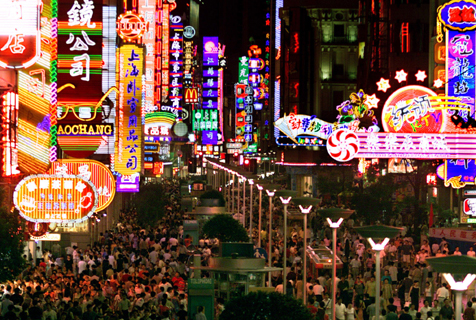
(Note: There are more photos at the original site. The Nanjing Road photo here does not appear at Speak Without Interruption.)

Wherever people normally congregate in groups—shopping areas, elevators, subways, airports, city streets, and the like—there are a lot more people in China congregating in those same places.  Again, I can only use my own experiences – in these types of crowds in China – but I was amazed how tolerant people were of each other.  In some cases I was squeezed to the people next to me so closely that I could almost feel their hearts beating.  In these situations – personal space was at zero.  I was crammed into a subway once and could literally stand – without holding on to anything – because we were packed so close together (not that I really had anything to hold on to anyway).  The exit from this subway was orderly and people were polite to each other – and me.  At our stop, we had to ask people to move, which was difficult for them, but we got off with no problems or delays.

Nanjing Road, Shanghai - this is the normal crowd

 I am not certain the Chinese people have a choice living – and working – among that many other people.  However, I saw it as another attribute of China and its people.  As a “Westerner” I could have easily been accosted by anyone in these large crowds as most of the time I was the only non-Chinese among them.  But this never happened.  No one stared at me or otherwise acknowledged me as anything other than one of them.  Perhaps I am reading too much into these situations, but I will go with my feelings here and believe this is a nation of extremely tolerant individuals. 

 Places I went did not always have these types of crowds, but in the locations where large crowds congregated, I was always impressed by the politeness of my fellow “Crowdies”.  I can’t say the same for other crowds, in which I have found myself, in the US and other parts of the world.  I think China is unique in this area and its people have Tolerance to Infinity.

 Read China Trip 2008 at  http://wp.me/pN4pY-c


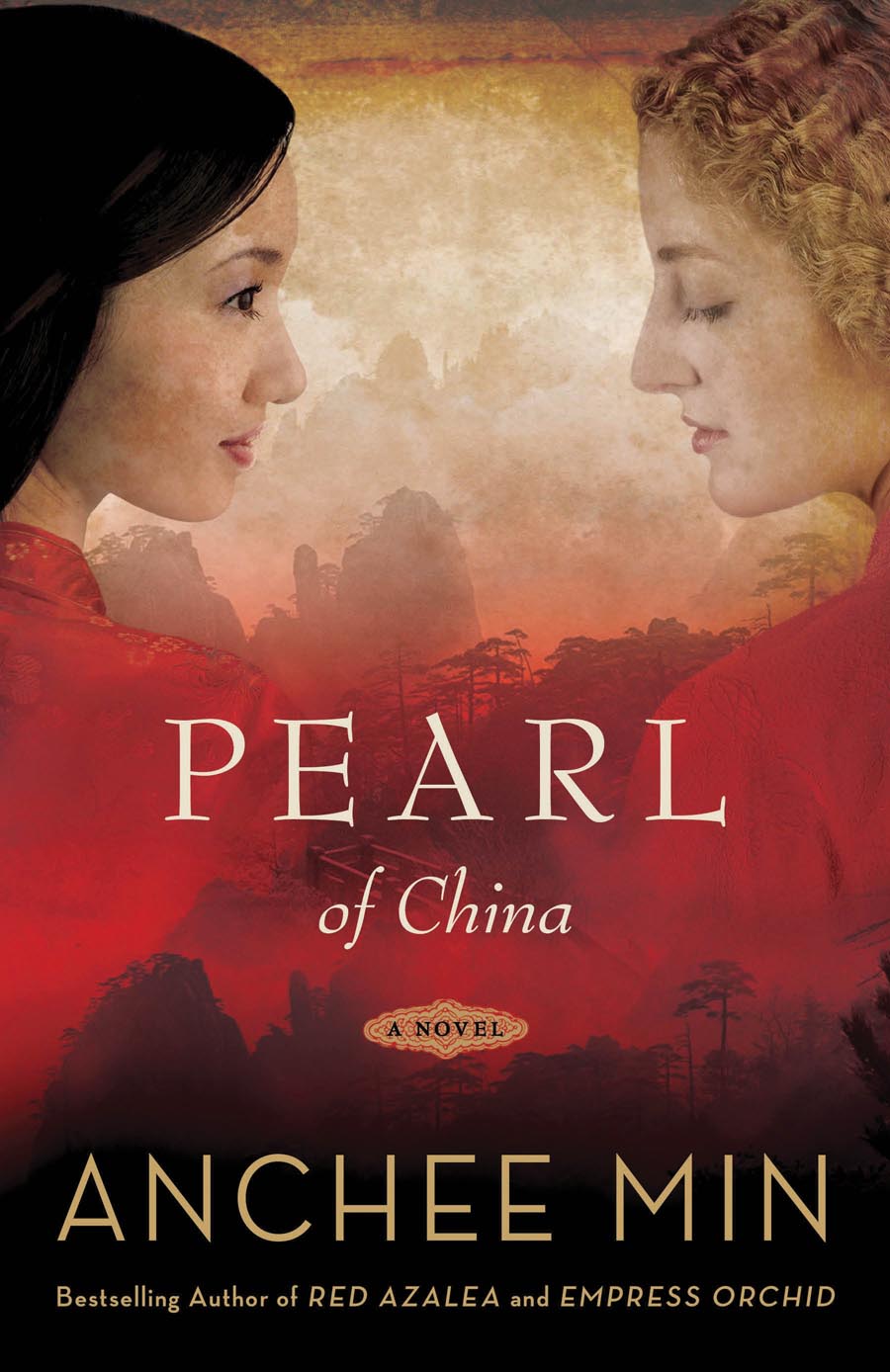
Pearl of China

March 12, 2010

“From the bestselling author of Red Azalea and Empress Orchid comes the powerful story of the friendship of a lifetime, based on the life of Pearl S. Buck.”

“In this ambitious new novel (Pearl of China), Anchee Min brings to life a courageous and passionate woman who is now hailed in China as a modern heroine. Like nothing before it, Pearl of China tells the story of one of the twentieth century’s greatest writers, from the perspective of the people she loved and of the land she called home.” Source Bookbrowse

At Bookbrowse, thirty-five early, reader reviews rated Pearl of China an average 4.5/5 stars.

In the southern town of Chin-kiang, in the last days of the nineteenth century, two girls bump heads and become thick as thieves. Willow is the only child of a destitute local family. Pearl, the headstrong daughter of zealous Christian missionaries, will become Pearl S. Buck, Nobel Prize-winning writer and activist. Their friendship will be tested during decades of great tumult, by imprisonment and exile, bloody civil war and Mao’s repressive Communist regime.

Pearl S. Buck won the Pulitzer Prize in 1932, the Howells Medal in 1935, and the Nobel Prize for literature in 1938.

Read International Women’s Day where Anchee Min was a guest speaker http://wp.me/pN4pY-ft


International Women’s Day

March 12, 2010

March 8, marks the 100th anniversary of International Women’s Day. Nations that officially honor women, range from China and Russia to Macedonia and Vietnam.

In Imperial China, women could not hold positions of power. They were considered “objects” to be sold into marriage or to serve men as concubines or prostitutes. However, while men ruled the world outside, women ruled the home. The head wife dictated who went where, how much money was spent on household needs, what education the children received, and ultimately the fate of the lives of the other wives and concubines beneath her.

When the Kuomintang ruled China, rural women were expected to stay home and care for the family, while women in the major cities were given a chance to have a formal education. When Mao came to power, he eliminated these differences between men and women. Afterwards, many women marched beside their fellow comrades in the same uniforms. They went to school and worked at jobs.

Today, Chinese women can be seen in all aspects of life. They are famous actors, accomplished musicians and skilled scientists. They are award-winning writers and politicians. Two successful Chinese women will be speaking at the Women in the World Summit  (starting the evening of March 12 to 14). The schedule of speakers and events shows that these two notable Chinese women will be speaking Saturday afternoon, March 13.

Wei Sun Christianson

Wei Sun Christianson, head of Morgan Stanley China manages all aspects of the firm’s China business. She has helped start many of the landmark privatizations critical to China’s economic progress.

Anchee Min

 Anchee Min is the author of the bestselling memoir Red Azalea, the story of her childhood in communist China. At age 17, Min was sent to a labor camp during Mao’s Cultural Revolution. In 1984, with help from a friend, Min went to America. At the time, she spoke no English, but within six months taught herself the language. Her next novel, Pearl of China, is a fictional account covering the 40 years Pearl S. Buck lived in China. The novel will be released in April by Bloomsbury.

Hillary Clinton will also appear. She said, the world “can’t solve problems of financial crisis, climate change, disease and poverty if half of the population is left behind.” The International Women’s Day doesn’t get much attention in the United States.

Discover China’s Modern Women

______________

Lloyd Lofthouse is the award-winning author of the concubine saga, My Splendid Concubine & Our Hart. When you love a Chinese woman, you marry her family and culture too. 

If you want to subscribe to iLook China, there is a “Subscribe” button at the top of the screen in the menu bar. 

Lessons from History

March 12, 2010

Most of the top men in China’s modern government are engineers. They think logically. They plan. For this reason, China has a powerful military to protect the country, and China is leading the world in green energy.

Prospect Hill

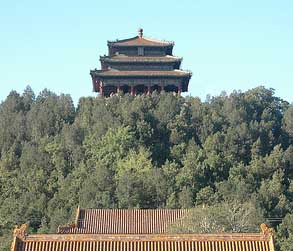
The last Ming Emperor, Ch’ung-Chen, hung himself from a tree on Prospect Hill when the Manchu claimed China.  Ch’ung-Chen failed. Instead of appointing ministers to different posts to help rule the empire, he tried to do all the work of government himself. The last Dynasty, the QING (MANCHU) 1644-1911, were not popular with the Han majority and there were brutal rebellions where millions died. The emperor before Ch’ung-chen, the T’ien-Ch’i emperor, spent most of his days doing carpentry instead of doing his job.

It appears that China’s current leaders learned from the mistakes of these Emperors. China’s president cannot serve for more than two, five-year terms, and retirement is mandatory at sixty-seven. In addition, the Chinese Communist Party has more than seventy million voting members who debate and discuss issues behind closed doors. Decisions are not made lightly.

Then there is the Communist Youth League with seventy million more members.

See “No Political Machine” http://wp.me/pN4pY-dh