On September 18, 2008, my wife and I flew to China (my ninth trip since 1999). My wife planned the trip and made all travel and hotel arrangements.
During the next twenty-eight days, with my older sister Nancy and her youngest daughter Jenny , we traveled China. Starting from Shanghai, we took a train to Beijing where we visited the Great Wall.
Just like the boat on the left, we spent several relaxing hours on the lake.
Several days later, we flew to Xian, the ancient capital of China where hundreds of emperors ruled the empire for more than a thousand years before the Ming Dynasty moved the capital to Beijing.
After a few days in Xian, we flew back to Shanghai and took a train to Hangzhou, better known to foreigners as the West Lake, where the Southern Sung Dynasty (1127-1279) ruled what was left of China after invading barbarians conquered Northern China.
After Hangzhou, we took a slow train back to Shanghai and then to Suzhou, where I got sick. I returned to Shanghai to recuperate before we flew southwest to Guilin near Vietnam.
Lloyd Lofthouse is the award-winning author of the concubine saga, My Splendid Concubine & Our Hart. When you love a Chinese woman, you marry her family and culture too.
To subscribe to “iLook China”, look for the “Subscribe” button at the top of the screen in the menu bar, click on it then follow directions.
Why am I writing about China? Simple—many Americans do not respect the differences between cultures. They say they do, but I don’t believe them. During the 2008-2009 school year, our daughter returned home one day to tell us that her history teacher talked about China and said the people had to be very depressed to live under a totalitarian government like the Communists.
Retired citizens playing Chinese chess in a Shanghai park.
When our daughter attempted to disagree, the teacher and the entire class put her down, so she shut up. Now it is January 2010 (another school year), and she came home recently and said the same thing happened during another class discussion, but this time she stayed quiet and fumed.
I taught English and journalism in American public schools for thirty years. The high school where I taught was a spicy multicultural soup where I learned that teachers should know what they are talking about or keep quiet.
Our daughter, a senior in high school now, was born in Chicago and grew up speaking English. Her mother was born in Shanghai and survived Mao’s Cultural Revolution (which caused the deaths of at least thirty million). My wife came to the United States in the 1980s when she was twenty-eight. Our daughter has been to China sometimes twice a year during her eighteen years, and she speaks fluent Mandarin with no accent. She has also been learning Spanish since Middle School.
I wanted to educate that ignorant teacher with facts about China, but my wife and daughter said not to stir the pot (very Chinese). I’ve been to China many times and have never seen the people depressed as I’ve seen in the country of my birth. I was born in Southern California soon after World War II. My ancestors come from Ireland, England and Europe.
When in China, you hear little about the government unless you listen to the official, government media. The people are too busy enjoying life to be bothered by a government that is doing all it can to raise the standard of living for 1.3 billion Chinese. I see more depression and anger in America during more than six decades of life than I have seen in China the last ten.
There are seventy million communists in China and more than a billion people that love life and live it to the fullest without chasing one material thing after another with credit-card debt.
My wife has an American-born friend who broke into tears once because she couldn’t charge a two thousand dollar jacket–her credit cards debt was maxed out. I’ve never seen or heard of that type of behavior in China. I’m sure it happens, but I haven’t witnessed it. Most Chinese live simple lives in simple, but crowded, surroundings. Over the years, I’ve discovered that family, friends and gaining an education are more important to most Chinese than buying material junk.
______________
Lloyd Lofthouse is the award-winning author of the concubine saga, My Splendid Concubine & Our Hart. When you love a Chinese woman, you marry her family and culture too.
If you want to subscribe to iLook China, there is a “Subscribe” button at the top of the screen in the menu bar.
The reason my mother would have burned “My Splendid Concubine” was because she grew up in a country with the soul of a church. After my mother died, I found a video collection of the Bible, an audio version and about thirty different published versions.
I didn’t know then that there was that many ways to speak for one God.
After my father died, mother spent her last decade to the age of eighty-nine studying the Bible several hours a day. This was her attempt to discover the answer to salvation that haunted her most of her life.
My mother loved to read other books too, as did my father, who was not a religious person. However, if my mother ran into a vivid sex scene in a novel, she threw the book in the fireplace.
Since I was born and raised a Catholic and when I was twelve my mother switched to the Jehovah Witnesses, I know why she would have burned my book.
To Catholics, Jehovah Witnesses, and most devout Christians of all sects, lust is a mortal sin.
In fact, Catholic Questions in a Secular Worldsays, “The seven deadly sins are pride, avarice, envy, wrath, gluttony, sloth and lust.… Lust is the self-indulgent desire for gratification … without the sanctifying graces of marriage.”
When I was single in my thirties, I had a lusty relationship with a lawyer, who ended the relationship due to Christian guilt. She wasn’t a Catholic but she attended two different Christian churches on Sundays, and she made it clear that it was the guilt that drove her to stop seeing me.
My Splendid Concubine is historical fiction about a real man that went to China in 1854, bought a concubine and stayed until 1908 to become the most powerful Westerner in China’s history and the only foreigner trusted by the Emperor.
My reason for writing this series of posts was to show how cultural differences bring about biased opinions due to religious, spiritual and/or cultural beliefs.
Books have been written on the subject of sex in America that explains why my mother would have burned My Splendid Concubine.
America’s War on Sex: The Attack on Law, Lust, and Liberty by Marty Klein, Ph D. is one example, which “Spotlights the political, legal and civic battles raging in this country against what is arguably our most private and pluralistic right – sexual freedom.”
An anonymous reviewer known as “colorado outback” posted a one-star review on Amazon of My Splendid Concubine, “You should Not Buy This Book – Seriously, just Soft Porn.” My mother would have agreed with “colorado outback”, because she was influenced by her religion.
Outback said: “this seemed more like the sexual fantasy of the author and NOT the historical novel it is purported to be.”
However, “outback” was wrong. The idea to write My Splendid Concubine didn’t originate from a sexual fantasy or wet dream, as I’ll explain.
Since writing My Splendid Concubine was not motivated by sexual fantasies, I responded to “outback’s” biased opinion, and he counterattacked saying my book does not “come up to par with Anchee Min, John Steinbeck, Kurt Vonnegut, Alice Walker, Charles Dickens, Amy Tan, Pearl S. Buck, James Michener, Eudora Welty, Harper Lee, Isabel Allende, Gabriel Garcia Marquez, Aleksandr Solzhenitsyn, Tom Robbins and so on….”
I’d have to agree. I’ve never thought that I was equal or better than these authors.
Outback claimed to have read all of the books by the above authors and thousands more yet he only had two, one-star reviews posted on Amazon (at the time I wrote this post).
Where are all those five-star reviews extolling the virtues of the work he admires?
Outback has a right to “his or her” opinion, but I don’t have to agree or stay silent as he indicated when “outback” wrote, “P.S. You may want to grow a thicker skin.” In fact, there are other opinions of My Splendid Concubine that don’t agree with “colorado outback” that demonstrate a better understanding of why I wrote the novel.
Since “colorado outback” may argue (if he, she or it ever reads this) I quoted a friend’s biased review to defend my “thin skin”, I will use a review from a non-biased source — the Midwest Book Review, which has posted almost 60,000 reviews on Amazon and compiled about 200,000 helpful votes compared to “outback’s” two reviews with two helpful votes.
The Midwest Book Review has a policy that if a reviewer doesn’t like a book, they stop reading and find a book to enjoy. Good thing “colorado outback” doesn’t write reviews for Midwest.
The Midwest Book Reviewer wrote of My Splendid Concubine, “Love for ones wives’ sister is typically forbidden by most western religions, but the most successful westerner in Chinese history is faced with this conflict.
“‘My Splendid Concubine’ is the tale of Robert Hart who deals with his lust the Chinese way, which conflicts with his upbringing.
Midwest says: “The Taiping Rebellion doesn’t help matters, him making enemies of established and skilled mercenaries in the process of protecting his interest and the women he loves. ‘My Splendid Concubine’ is packed cover to cover with intriguing characters and plot, a must read for historical fiction fans and a fine addition to any collection on the genre.”
After first reading The Midwest Book Review for My Splendid Concubine, I thought, “Maybe I can write, but what happens if this is the only person that enjoys the book?”
Then a reviewer from the Historical Novels Review Online, wrote, “Some readers may be uncomfortable with the frank sexuality of the novel, as well as Hart’s simultaneous romantic relationship with both Ayaou and Shao-Mei, but those who are interested in unconventional romances with an out-of-the-ordinary setting will find plenty to enjoy.”
If I didn’t write such a lusty novel from personal sexual fantasies as “outback” claims, why did I write it?
The answer is simple.
I wanted to show the clash between different cultures and Sterling Seagrave showed me the way when he wrote in Dragon Lady: “To take the pain out of learning, his Chinese tutor suggested that (Robert) Hart might buy a concubine and study the local dialect with her.
“Hart wrote in his journal, ‘Here is a great temptation. Now, some of the China women are very good looking: You can make one your absolute possession for from 50 to 100 dollars and support her at a cost of 2 or 3 dollars per month. … Shall I hold out or shall I give way?'”
Seagrave writes in the next paragraph, “By early May he (Robert Hart) had a sleep-in dictionary, his concubine, Ayaou. He had just turned twenty; Ayaou was barely past puberty.”
Then the editors of Entering China’s Service – Robert Hart’s Journals, 1854-1863, wrote on page 8, “But anyone who reads the journals through knows that his mental struggles about women were not soon or lightly won; whether the relapse was to daydreams or to a Chinese mistress, it caused him ambivalence and anguish.”
In China, the concubine is a trophy showing a man’s success, and no major religion on earth has had a lasting impact on the Chinese culture in more than a thousand years.
In fact, the concept that lust is a mortal sin doesn’t exist in China unless a Chinese adopts Christianity as their religion.
That does not mean China is without morals but the moral codes of China exist without the sin of mortal lust as Catholics and many devout Christians believe. In fact, I’ve known mainland Chinese that are extremely moral and would put most Puritans to shame.
The idea to focus on Robert Hart’s struggles with his Victorian, Christian morals while living in 19th century China’s concubine culture sprouted when I first read his journals and letters published by Harvard University Press.
Other influences were Anchee Min’s Empress Orchid and The Last Empress: A Novel—both go into detail about the lives of the more than three thousand concubines that belonged to the emperor.
In fact, in 19th century China, the more power and wealth a man had, the more women he owned.
Another influence was the movie directed by Zhang Yimou in 1991, Raise the Red Lantern, which “focuses on the ever-shifting balance of power between the various concubines while the husband ignores much of what is going on — taking his pleasures when he feels like it.”
_______________
Lloyd Lofthouse is the award-winning author of My Splendid Concubine [3rd edition]. When you love a Chinese woman, you marry her family and culture too. This is the love story Sir Robert Hart did not want the world to discover.
Subscribe to “iLook China”!
Sign up for an E-mail Subscription at the top of this page, or click on the “Following” tab in the WordPress toolbar at the top of the screen.
I found this information from a 1967 documentary conceived and written by Theodore H. White to have half-truths about Imperial China. It is understandable that any American film from that era would be flawed since McCarthyism’s Red Scare took place in the US the decade before. Even today, Sinophobia infects almost half of America.
Author Theodore White lived in China for seven years and said that foreigners who lived in China during the crises often remembered it differently as if his opinions were correct and they were wrong.
The Roots of Madness unwittingly documents the lies and deceit that demonized the Empress Tsu Hsi when the narrator calls the empress evil. To discover the truth about the empress, I suggest reading Dragon Lady by Sterling Seagrave, who revealed the lies and deceit of Western journalists.
Nothing in China’s ancient culture could guide the Chinese to become part of the modern world.
Instead, China would experiment with different forms of government—a process that is still going on.
Although “China: The Roots of Madness” is a flawed production, there is enough accurate history to show why China is the way it is today.
British and American power controlled the wheels of industry in Shanghai, Nanking, Hankow and Chunking. In the steaming south, peasants, working like beasts, plant rice and speak languages most Chinese do not understand.
At the turn of the century, a three-year-old child was the emperor and the throne sat empty. On October 10, 1911, a riot took place that couldn’t be controlled.
Five weeks later, the Imperial government collapsed. The Qing Dynasty vanished and two-thousand years of Imperial tradition was gone.
The Chinese call this time the “Double Death”.
The British and Americans could not control what replaced the Qing Dynasty.
Students without weapons rioted in the streets.
Warlords that controlled armies divided China and the chaos and anarchy grew worse.
Life became so cheap, that death was like a bloody circus.
However, while the Chinese people suffered and starved, the foreigners live in luxury and controlled China’s industry while being protected by the Western military.
Chinese students demanded a revolt and Sun Yat-sen called on China to slay the dragon of Imperialism. He said China must start with nationalism, then democracy and finally socialism. The only country that offered to help was Soviet Russia.
Death claims Sun Yat-sen (1866 – 1925) after he has accepted support from Soviet Russia. Soon, General Chiang Kai-shek (1887 – 1975), with help from the Communists, consolidates power in southern China.
Chiang is known to Westerners as a fiery nationalist and revolutionary. He mobilizes an army under Sun Yat-sen’s flag and marches north with a few divisions.
Meanwhile, the warlords have gathered half-a-million troops to stop him. Outnumbered, Chiang sends an advance group of nationalists and communists to call the peasants and workers to join his army.
Among those peasants and workers is Mao Tsetung (1893 – 1976).
While moving north, Chiang’s army raids foreign concessions, burns foreign buildings and tears down foreign flags.
Leftist leaders of the Kuomintang distrust Chiang Kai-shek and some want to assassinate him but others disagree.
In Shanghai, Chiang Kai-shek, now a dictator, strikes first on April 12, 1927. His troops kill anyone suspected of being a Communist.
In December, there is a Communist uprising in Canton. A battle rages for two days between the Communists and Kuomintang ending in the executions of most Communists, but Mao escapes and goes into hiding.
Chiang Kai-shek’s army is not ready when Japan invades Manchuria. He doesn’t have tanks, the artillery is old and the Chinese are learning about airplanes.
Meanwhile, the Communists that Chiang thought he had destroyed are back. Mao knew the peasants lived in horrible poverty. He promised land reforms and by 1932 has millions of supporters.
The language in this documentary describing Mao is not flattering.
Yes, when Mao ruled China, he was a dictator but that ended in 1976 when he died. Since then, China has had several presidents that the 1982 Chinese Constitution allows to lead China for two five-year terms and there is an impeachment clause.
However, Chiang Kai-shek was also a dictator. The only difference between Mao and Chiang is that Chiang converted to Christianity in 1929, and the West called him the president of China—not a dictator. Chiang Kai-shek was never elected by the people of a democracy to rule China or Taiwan.
Instead, he ruled Taiwan under martial law until he died then his son became president without a popular vote by the people.
Instead of fighting Japan, Chiang’s army bombs villages that Mao controls killing tens of thousands of noncombatants. Mao takes his ninety thousand troops on the famous thousand-mile Long March.
A year later, only a few thousand remain. Mao calls for unity to fight Japan.
One of Chiang’s generals, Zhang Xueliang, forces the Nationalist dictator to sit down with the Communists where Chiang Kai-shek agrees to fight Japan. As soon as Chiang returns to his capital, he breaks the agreement and throws Zhang in prison.
Meanwhile, Mao’s troops in the hills of Yunnan grow their own food. His army, dressed in shabby clothing wearing straw sandals, doesn’t look like a fighting force. Mao says the people are the sea and guerrillas are like fish that swim in the sea. Within a year, Mao’s army grows to 200,000.
Chiang Kai-shek’s army loses battles and cities to the Japanese. To continue fighting, his government and army moves to the deep mountain city of Chongqing in Sichuan province.
In 1939, the Japanese start bombing Chongqing 24/7.
When asked about the Japanese threat, Chiang says that the Japanese are a disease of the skin, but the Communists are a disease of the heart.
Then on December 7, 1941, Japan bombs Pearl Harbor and America enters the war.
War supplies start to trickle to China through India and across the Himalayas to Chiang Kai-shek’s four-million-man army.
However, his government is corrupt, his troops are poorly fed and morale is low. In fact, the peasants do not trust Chiang’s
troops or him.
Chiang Kai-shek is accepted as an equal among the West’s leaders while Mao works to keep up the moral of his Communist troops through political training—something Western leaders don’t understand and criticize.
Theodore H. White tells of an incident with Chiang Kai-shek’s troops when a Nationalist officer lies to peasants saying he belongs to Mao’s Communist army. When White asks why lie, he is told the peasants would not help if they knew the truth.
In fact, regardless of the suffering from Mao’s Great Leap Forward and the Cultural Revolution, this loyalty never wavers.
Joseph Stilwell, the commanding US general in China, is not happy with Chiang since he is not fighting Japan.
Chiang says he needs his troops to fight the Communists.
In 1945, America invites representatives from Chiang’s government to take part in Japan’s surrender on the battleship Missouri but ignores the Communists under Mao.
An American ambassador urges Mao to join Chiang in a unified government. To bring this about, America offers Mao protection and there are face-to-face negotiations between Mao and Chiang.
During the negotiations, in secret, Chiang moves his troops to launch an assault on the Communists in Manchuria.
America urges Chiang to win the people by implementing Sun Yat-sen’s promised reforms.
Instead, Chiang’s war to destroy the Communists causes run-away inflation. Essential goods become too expensive. The people want peace, and Mao offers the peasants what they want—land.
In 1948, Mao attacks when his army leaves the caves and captures Manchuria
When Chiang Kai-shek’s northern army surrenders, modern American weapons and equipment falls to Mao’s troops.
Mao demands total surrender, but Chiang’s army boards ships for Taiwan taking China’s wealth and historical treasures.
In fear, western businessmen and missionaries flee China.
By 1967, when this documentary was produced, Mao had ruled China for 18 years and was still an inigma to most in the West. Nixon wouldn’t visit China for several more years.
Protected by America’s military and navy, Chiang was still in Taiwan serving as president for life (a dictator). He also had six-hundred thousand Kuomintang troops armed by the US, and the island people lived under martial law.
Theodore H. White says America does not understand Communist China. America could not predict the “Great Leap Forward” or the purges that followed.
White says the quality of life for the peasants had not improved (which is not true since the World Bank has reported that even under Mao the quality of life improved over what it had been), but they still had to work hard.
White’s documentary ends with words of fear for the world’s future because China has nuclear weapons.
There is no mention that America has enough nuclear weapons to destroy the earth a hundred times over and used two of them on Japan killing hundreds of thousands.
This revised post first appeared as an eight-part series starting June 8, 2010 at Roots of Madness – Part 1
______________
Lloyd Lofthouse is the award-winning author of the concubine saga, My Splendid Concubine & Our Hart. When you love a Chinese woman, you marry her family and culture too.
To subscribe to iLook China, look for the “Subscribe” button at the top of the screen in the menu bar, click on it then follow directions.
Who would win in a fight: Mulan or Emmajin Beki or Teenage Angst, Mongolian-style? “Can you imagine, a mere girl fighting on the battlefield?”
The role of females in combat is a debate as timeless as war itself, and one that remains divisive and unresolved to this century.
While present-day arguments for and against allowing women in the military revolve around psychological and biological issues, back in olden times, one needed only cite “tradition” and “familial roles” to silence the detractors.
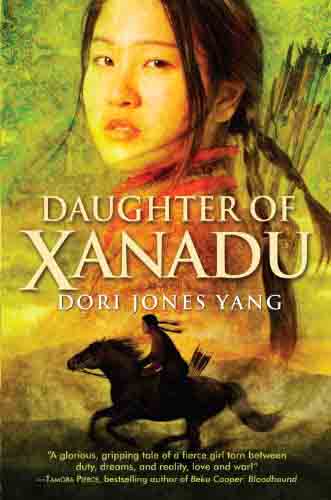
The teenaged heroine of Dori Jones Yang’s new 13th-century historical fiction novel, Daughter of Xanadu, is one such detractor, albeit immutable.
Often imagining herself on the battlefield, “the son my father never had,” Emmajin Beki, the granddaughter of Mongolian king (and emperor of China’s Yuan Dynasty) Khubilai Khan (1215-1294), learned to ride a horse before she could walk and can outshoot all her cousins in archery. She confidently and outspokenly aspires to emulate her female ancestors who assisted Chinggis Khan in conquering Asia (“the blood of all these earlier strong women flowed in my veins”).
Unfortunately, for this princess, “the days of strong women had ended once luxurious court life had begun.”
The Mongols, fattened, lazy and resting on their laurels, now prefer to tell stories of battles-past over lavish “orgies of excess” rather than engage in new wars, much to Emmajin’s restless discontent.
When she makes known her desire to “become a legend” like real-life women warriors Aiyurug Khutulun and Hua Mulan of China, the great Khan placates her by sending her on a secret mission to spy on a family of foreign merchants currently visiting the Mongol court.
The merchants’ young son turns out to be one Marco Polo, the now-legendary Venetian journeyer credited for introducing Asian culture to the west.
To Emmajin, however, he is just another “colored-eye man,” a court curiosity from Christendom whose gallantry and romantic gestures are as ridiculous to the manly Mongolians as his facial hair (“his beard was so thick I could imagine food sticking in it”).
Try as she might, however, Emmajin, caught in the peak of puberty, is unable to resist Marco’s western charm, and quickly finds herself enamored by his worldly vision (“I had learned to see the world through Marco’s eyes”) as well as his pelt.
“What would the hair on his arm feel like?” she often fantasized about at night.
But she was a Mongolian first, and reluctantly sacrifices her blossoming relationship with the foreigner to complete her spy mission (“He was not a friend but a source of information.”).
Authoress Dori Jones Yang is a Caucasian American, yet she is no stranger to writing from the perspective of conflicted adolescent Chinese girls, as evinced in her previous, award-winning novel, The Secret Voice of Gina Zhang.
In Daughter of Xanadu, she hones in even deeper into the physiological confusion and emotional conflictions that make youth such a joy, turning Emmajin into such a hormonal wreck that this male reviewer often found himself gritting his teeth in frustration at such contradictive revelations as, “if he had pursued me, I would have rebuffed him. By holding himself aloof, he challenged me to win back his esteem.”
Daughter of Xanadu is not all-teenage angst. As our protagonist matures, so does the content of the story.
Emmajin eventually persuades Khubilai Khan to allow her to train for war against the Burmese at the Battle of Vochan (present-day Yunnan province), where the embarrassment of getting her period in front of the all-male troops is a bloody omen for what’s to come.
Upon seeing her cousin slain, innocent Emmajin is transformed into a “mindless killer.”
Bloodlust unleashed, the young princess swings her sword indiscriminately (“the hatred pounded in my ears…killing him felt good”), resulting in hundreds of men dead by her hand alone.
One can only imagine all the Mulan vs. Emmajin fan fiction that this novel will inspire!
By story’s conclusion, Messer Polo, who witnessed and wrote about the Mongols’ real-life battle against the Burmese in his book, The Travels of Marco Polo, has elevated “Emmajin the Brave” into the living legend she wanted to be, though she now regrets it.
“These men needed a hero, but I no longer needed to be one.” She resigns her sword and rank, and departs with Polo back to Europe as the Khan’s emissary of peace, leaving the literary door wide open for a sequel.
Dori Jones Yang, who also penned the best-selling Pour Your Heart Into It: How Starbucks Built a Company One Cup at a Time, is a skilled historian.
In researching Daughter of Xanadu, Yang, fluent in Putonghua, traveled all the way to the ruins of Xanadu in remote Inner Mongolia, which this itinerant backpacker can personally attest is no easy journey.
The short chapters and brief sentences, edited with razor precision for a younger audience, along with a helpful glossary for ESL students, make reading Daughter of Xanadu a breeze, though adults will admittedly want to beg this book back afterwards from their tweens.
This post first appeared as a four-part (guest author) series starting April 17, 2011 at Daughter of Xanadu – Part 1
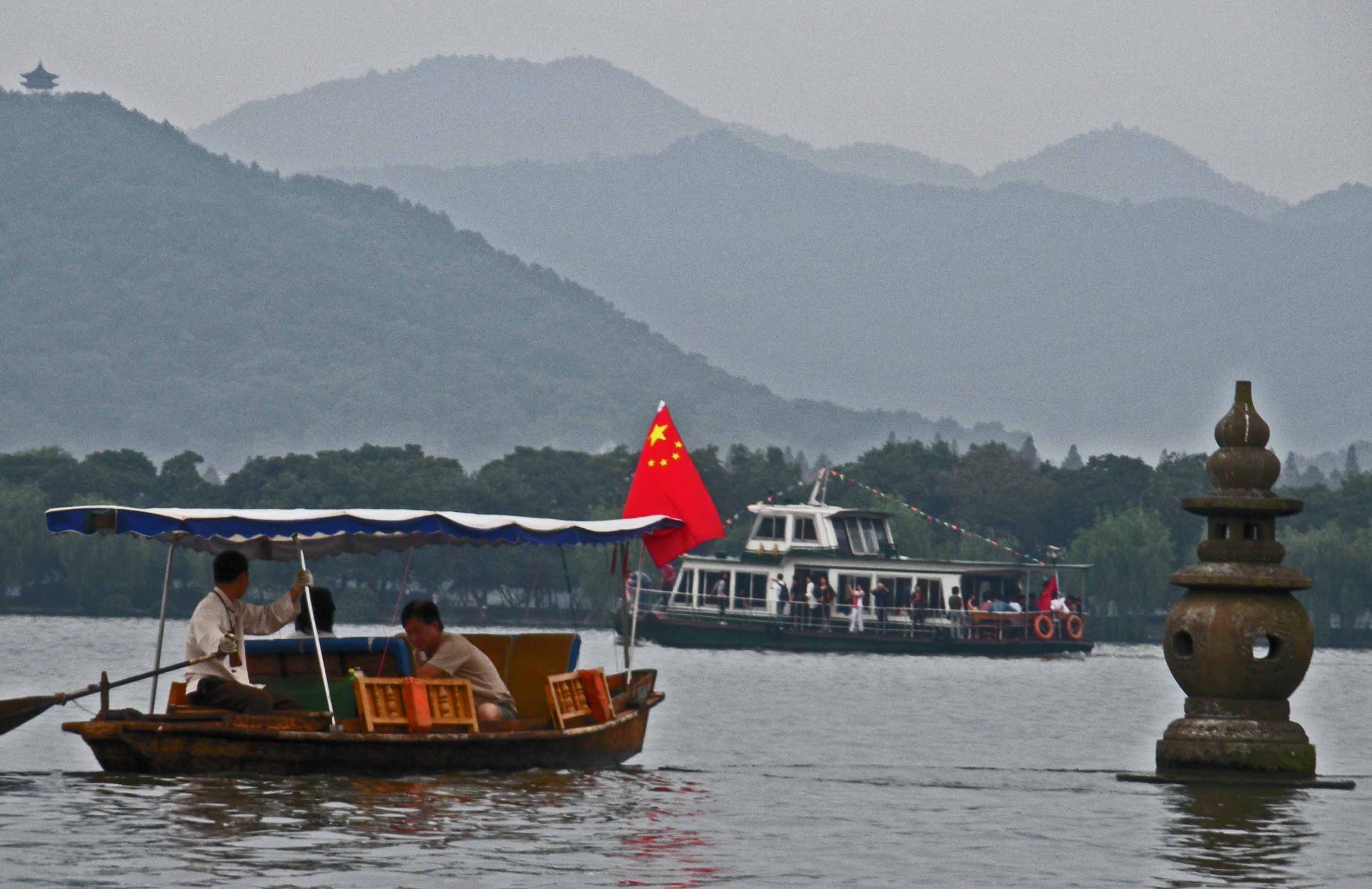
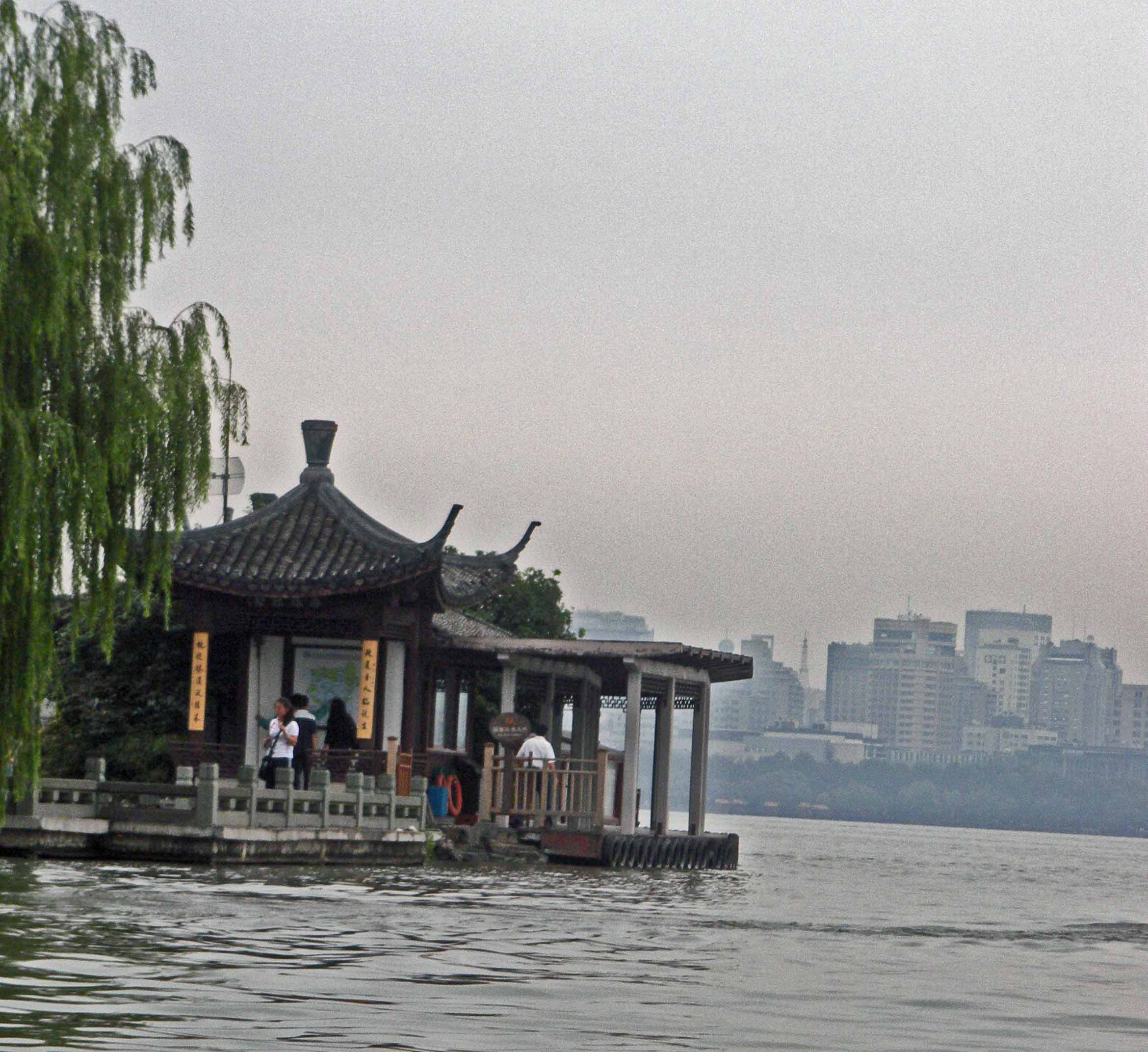 After a few days in Xian, we flew back to Shanghai and took a train to Hangzhou, better known to foreigners as the West Lake, where the Southern Sung Dynasty (1127-1279) ruled what was left of China after invading barbarians conquered Northern China.


 Posted by Lloyd Lofthouse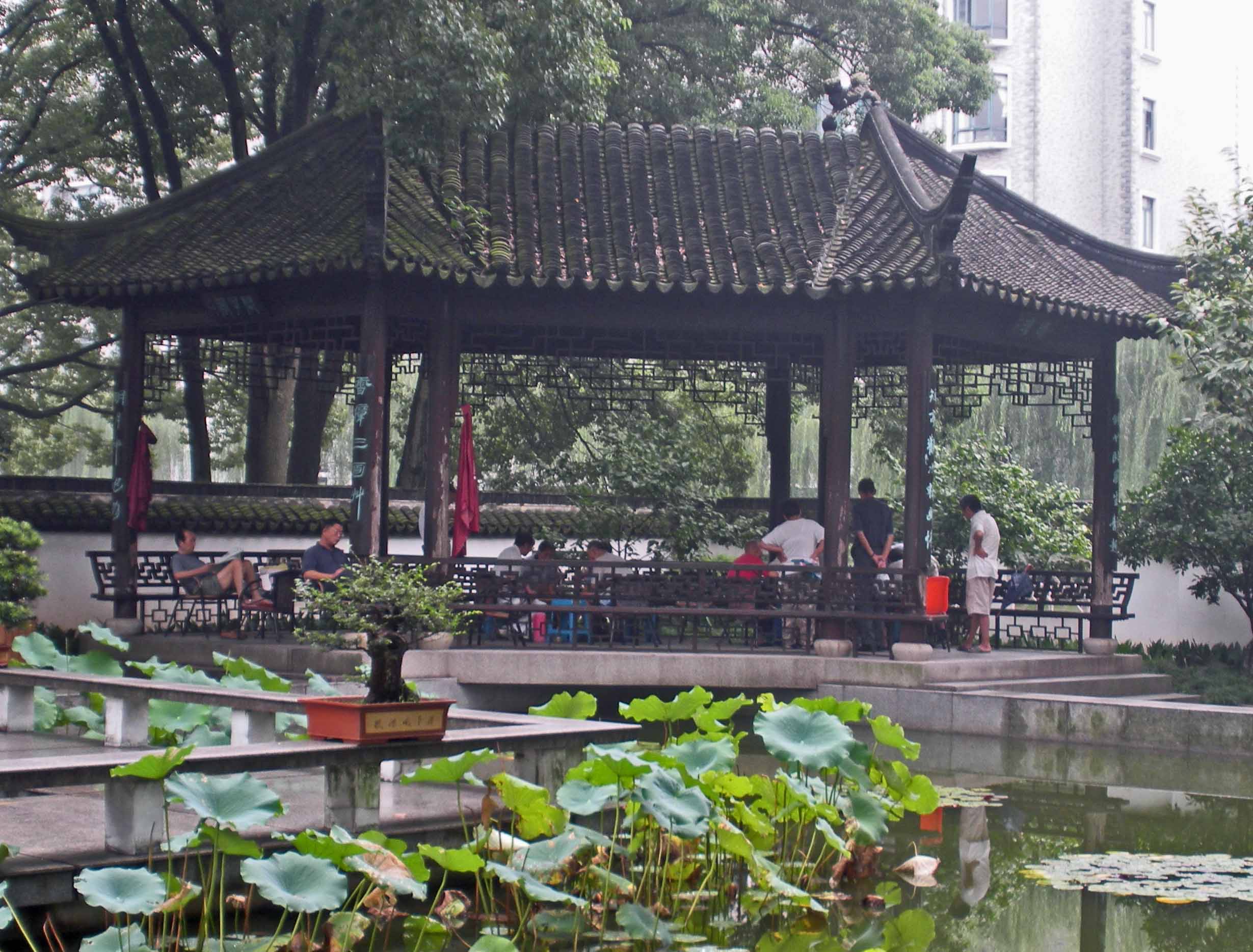

 iLook China