The White Lotus Mutation

April 24, 2010

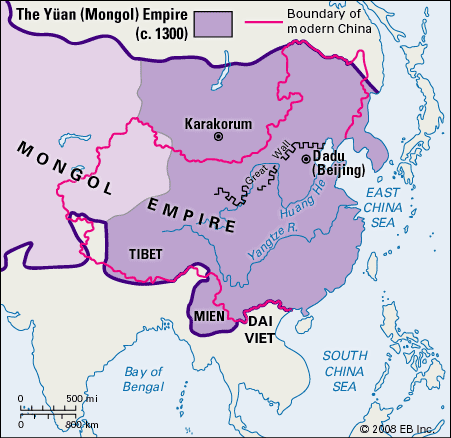
Persecution of the White Lotus Society started during the Yuan Dynasty (Mongols 1271 – 1368). Due to this, the White Lotus Society changed from one of peace and tranquility and organized protests against the Mongol rulers, the first non-Han to rule China.

Since Yuan Imperial authorities distrusted the White Lotus Society, the Dynasty banned them, and the White Lotus went underground.  The White Lotus also started to predict that a messianic (Christ like) figure would come and save them from persecution.
White Lotus Rebellion

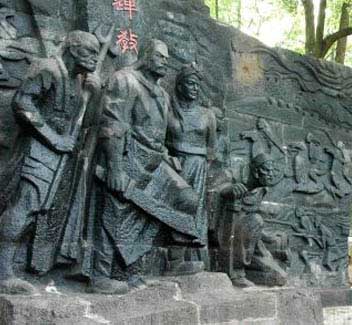
A White Lotus led revolution started in 1352 around Guangzhou. A Buddhist monk, Zhu Yuanzhang, joined the rebellion. Soon, he became the leader by forbidding his soldiers to pillage, in observance of White Lotus religious beliefs.

By 1355, the rebellion had spread through much of China. In 1356, Zhu Yuanzhang captured Nanjing and made it his capital. Then Confucian scholars issued pronouncements supporting Zhu’s claim of the Mandate of Heaven, the first step toward establishing a new dynasty.

Zhu Yuanzhang liberated China from the Mongols and became the founding Emperor of the Ming Dynasty (1368 – 1643).  

At this point, you may see the danger of allowing a religious cult like the White Lotus to have any power.

Sign up for an RSS Feed for  iLook China


Tibet Inside China – 1/5

April 11, 2010

In 2008, I wrote a post about Tibet on another forum. Someone with a Tibetan sounding name left a comment in crude English calling me a “Communist rabbit”.

Name-calling seems to be popular these days. In America, people like Glenn Beck (FOX network), Rush Limbaugh (600 radio stations) and the Tea Baggers have developed name-calling into an art form—not much substance but colorful and angry.

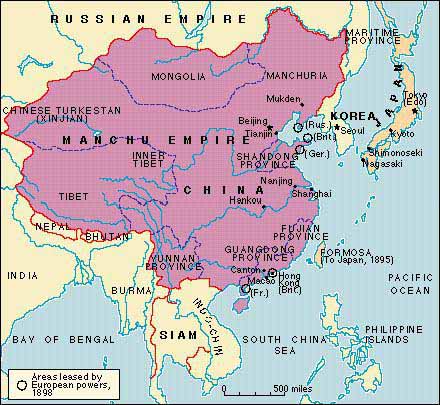
The Tibetan government in exile’s Prime Minister Samdhong Rinpoche was quoted in “Good” magazine’s May/June 2008 Issue that six-million Tibetan Buddhists still lived in Tibet. He also said that Tibet has never historically been part of China. That isn’t true. Tibet was ruled by three of China’s Imperial Dynasties.

Yuan (Mongol) Dynasty 1277 – 1367

Tibet was first ruled by China during the Yuan Dynasty (1277-1367). Then, when the Ming Dynasty (1368-1643) reclaimed China, a Ming Imperial army was sent to Tibet to drive out the last of the Mongols–holdovers from the Yuan Dynasty. The Ming emperor ordered his army to stay.

When the Ch’ing (Manchu) Dynasty (1644-1911) came to power, the Chinese empire expanded further and Tibet remained in China. Later, I’ll provide evidence from a 1912 National Geographic magazine as proof.

Discover Wearing China’s Shoes or go to Tibet Inside China – Part 2

View as Single Page

_______________

Lloyd Lofthouse is the award-winning author of My Splendid Concubine [3rd edition]. When you love a Chinese woman, you marry her family and culture too. This is the love story Sir Robert Hart did not want the world to discover.

Subscribe to “iLook China”!
Sign up for an E-mail Subscription at the top of this page, or click on the “Following” tab in the WordPress toolbar at the top of the screen.

About iLook China


Chinese Cloisonné Vases

March 14, 2010

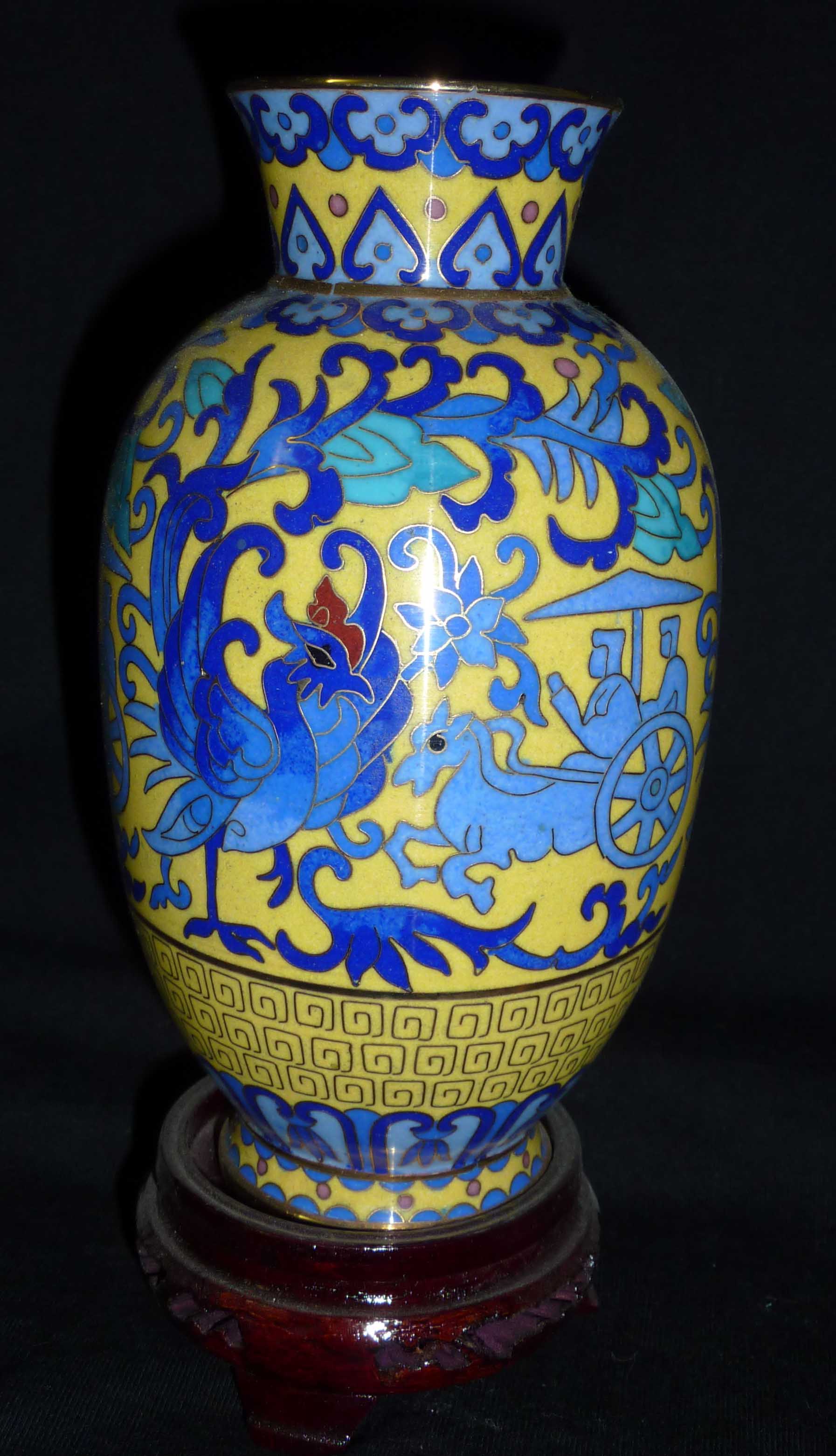
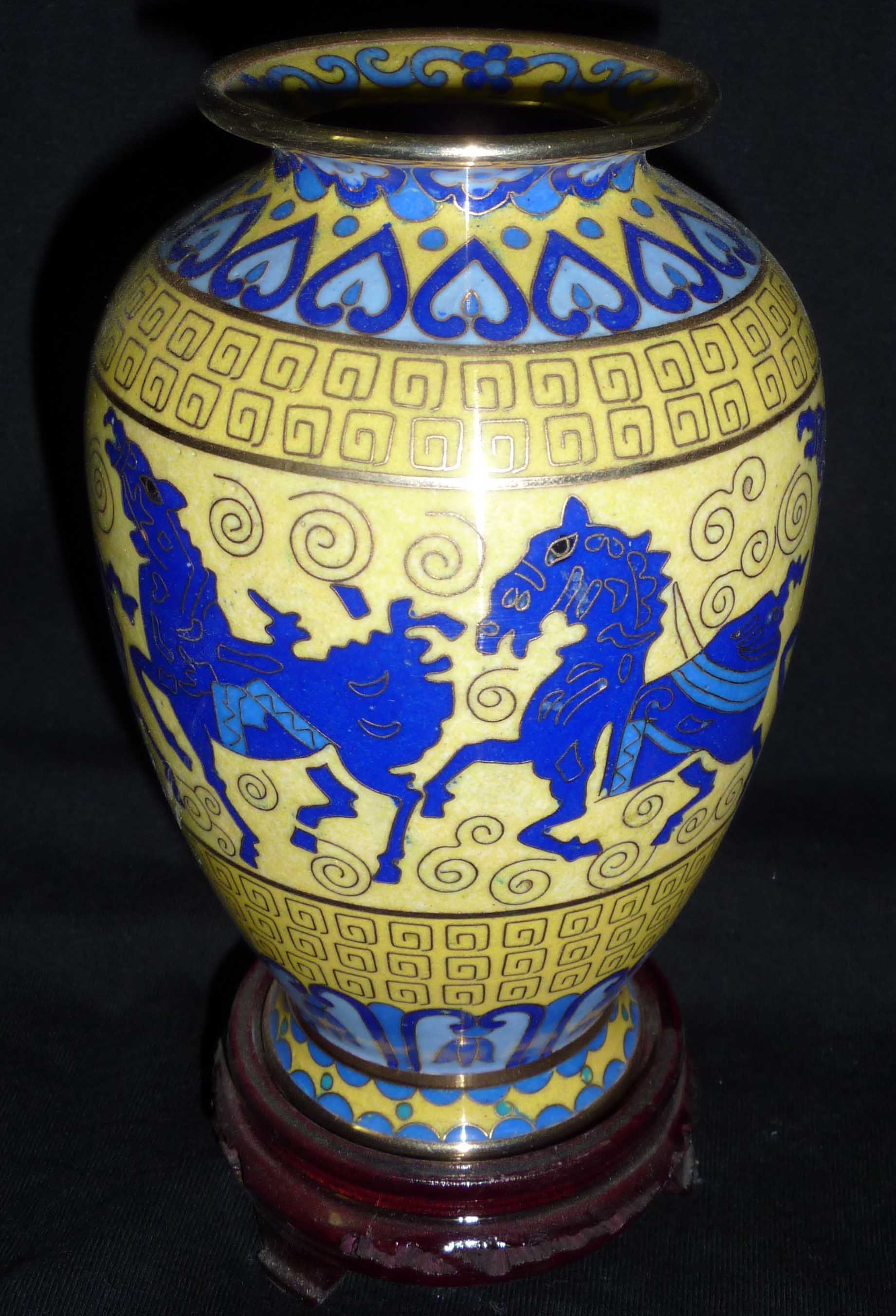
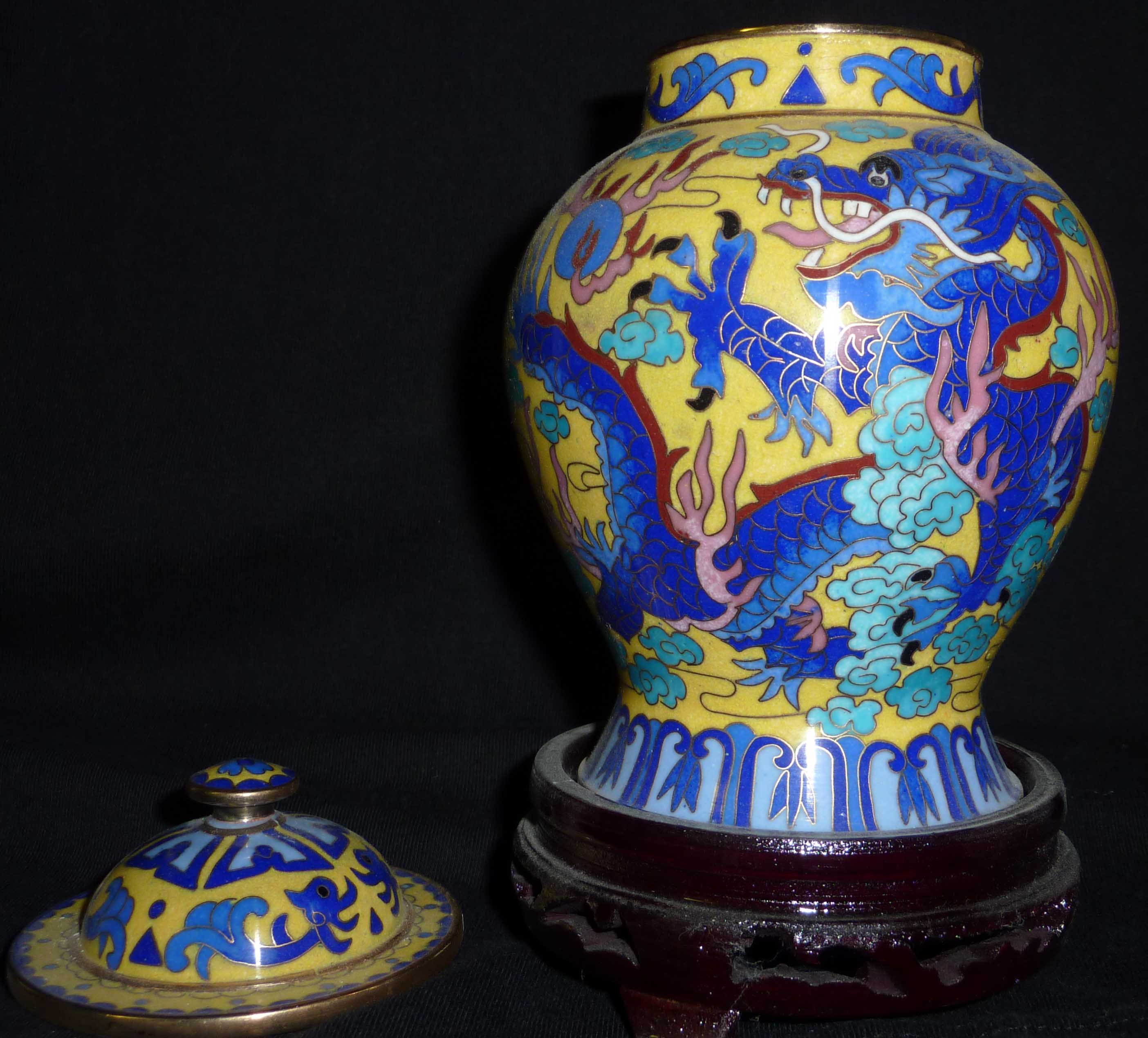
On our way back from the Great Wall at Mutianyu, we stopped at a factory and showroom where we learned about the manufacturing techniques for Cloisonné brass vases. First, we went on a tour where we watched men and women creating vases. Once the tour was over, we went into the showroom.

The vases I bought (after negotiating a price) are yellow with a blue trim.  One has a blue dragon on it, the second a phoenix beside a chariot, and the third running horses. Each one is about the size of my hand.

The cloisonné process is enamel on copper craftwork. It first appeared in Beijing in the Yuan Dynasty (1271-1368) and continued during the Ming Dynasty (1368-1644). Cloisonné vases are crafted by using a copper porcelain process. The vase is made from copper with brass wires soldered to the body. Then a porcelain glaze is applied to cells between the brass wires.

After a series of complex procedures, such as burning, burnishing and gilding, the cloisonné vase is done.

Chinese name: 景泰蓝(jǐng tài lán)

If you are interested in the arts, discover Chinese Yu Opera

_______________

Lloyd Lofthouse is the award-winning author of My Splendid Concubine [3rd edition]. When you love a Chinese woman, you marry her family and culture too. This is the love story Sir Robert Hart did not want the world to discover.

Subscribe to “iLook China”!
Sign up for an E-mail Subscription at the top of this page, or click on the “Following” tab in the WordPress toolbar at the top of the screen.

About iLook China


Rediscovering China

February 15, 2010

China has turned into a tourist destination—for the Chinese.

Before Nixon visited China, the country was surrounded by an invisible bamboo curtain. It’s citizens were not allowed to travel far—even from their homes. In September and October 2008, there were so many Chinese tourists, that we were the minority.

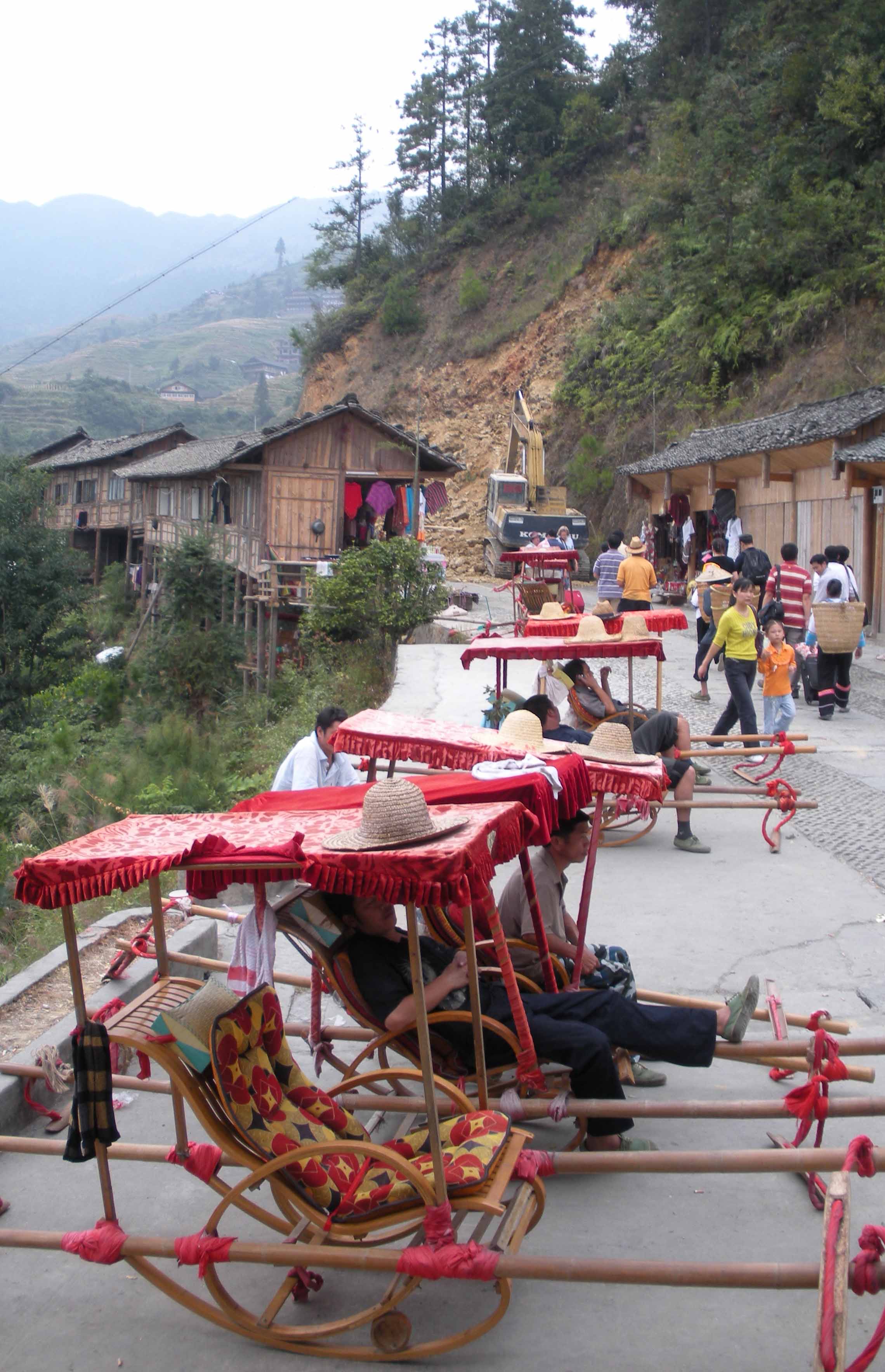
Sedan Chairs Waiting to Climb the Dragon's Back

The Dragon’s Back is in Southeast China near Vietnam. After our bus climbed a narrow, winding mountain road, we reached a parking lot. For a few yuan, we gained entry and men with iron legs were willing to carry us to the top in sedan chairs. We walked.

The construction of the Longi Rice Terraces started during the Yuan Dynasty (1271 – 1368). Today, many Zhuan and Yao ethnic people live simple lives that honor the laws of nature. China’s central government encourages that life.

A hundred feet further, vendor’s stalls lined both sides of the road. It was China’s market economy in action reminding me of Disneyland and the shops that sold trinkets no one needs.

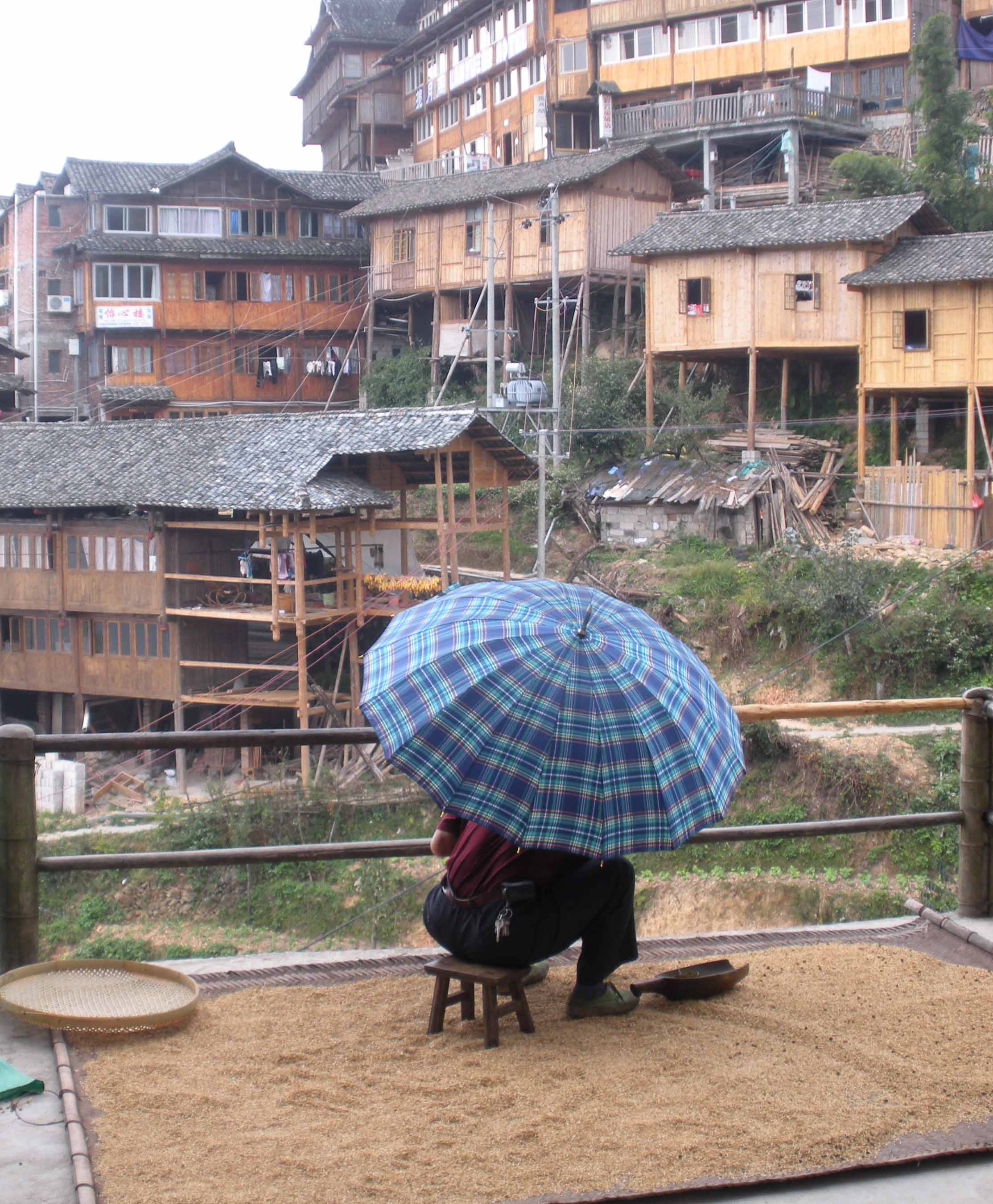
Halfway to the top, we reached a village built on stilts clinging to the mountain. The steep slopes were terraced to grow rice. Since it was mid afternoon, we stopped to eat local rice cooked in sections of bamboo on a hot bed of coals.

Cleaning Home Grown Rice Safe from the Sun

Mao’s Cultural Revolution ended decades in the past, and China is moving on while time seems to stand still on the Dragon’s Back.

See About iLook China

Lloyd Lofthouse is the author of the award winning novels My Splendid Concubine and Our Hart.


Why Tibet?

February 8, 2010

A recent New York Times headline screamed, China Opposed to Obama-Dalai Lama Meeting. “China maintains that Tibet has been part of its territory for centuries, but many Tibetans say the region was functionally independent for much of its history.”

Since Tibetan separatists have claimed that China “never” ruled over Tibet prior to Mao’s reoccupation in 1950, every time the Dali Lama wins another award for humanitarianism or meets a world leader, it is a slap in the face for most Chinese—not just their government. The Chinese are proud of their history, and they don’t like foreigners believing lies about their country.

Tibet was first occupied by China during the Yuan Dynasty (1277-1367), and it was a Mongol emperor or king who made a Dalai Lama the spiritual leader for Tibet. Before that, the Tibetans were a warlike race and were a plague on a peaceful China. Warlike Tibetans, not exactly the image the Western media paints, raided China for centuries from their mountain fortresses.

When the Ming Dynasty drove the Mongols from China in 1368, the emperor sent an army to Tibet. For the next six hundred years, the Tibetans were never easy to rule. Sir Robert Hart, considered the godfather of China’s modernization, said the same thing. He wrote in 1888, “China will regard England as an ally and helper in reducing trouble-some tributaries (meaning Tibet) to a proper sense of position!”

______________

Lloyd Lofthouse is the award-winning author of The Concubine Saga. When you love a Chinese woman, you marry her family and culture too. This is the love story Sir Robert Hart did not want the world to discover.

Subscribe to “iLook China”!
Sign up for an E-mail Subscription at the top of this page, or click on the “Following” tab in the WordPress toolbar at the top of the screen.

About iLook China