China’s Capitalist Revolution (Part 6 of 9)

July 4, 2010

For those Red Hat capitalists who survived harassment from the hardliners, the rewards were huge—fortunes were made. Some Chinese were following Deng Xiaoping’s advice “To Get Rich Gloriously.”

However, there was an area of China’s industry that Deng couldn’t change—factory owned industries, which were outdated and inefficient. The state industries still placed politics over profit. In the average state-owned factory, 15 to 20% of the workers did nothing but read and shout slogans.

Deng decided to take state-owned industries from government management.  He said we are going to bring in experts to run our factories like they do in the West. In fact, Beijing was spending a quarter of its revenues supporting state-owned enterprises. The Chinese constitution guaranteed jobs and no one could be fired.

In 1986, Deng decided to allow unprofitable state-owned enterprises to close. Millions lost jobs. With people out of work, crime soared.  In 1989, Deng did away with price controls. There was a panic while workers in private industries were earning much more than people in state-owned industries.

Then bribery became a problem as those in charge at the local level started to accept bribes from foreign investors.

Return to China’s Capitalist Revolution Part 5 or go to Part 7

_________________________

Lloyd Lofthouse is the award-winning author of The Concubine Saga. When you love a Chinese woman, you marry her family and culture too. This is the love story Sir Robert Hart did not want the world to discover.

To subscribe to “iLook China”, look for the “Subscribe” button at the top of the screen in the menu bar, click on it then follow directions.


China’s Capitalist Revolution (Part 3 of 9)

July 2, 2010

In May 1978, Deng invited President Carter’s National Security Advisor to Beijing. Deng needed a deal with the US but he wanted something in return. The US had to end its friendship with the breakaway republic of Taiwan—an island China considered theirs. America agreed and closed its embassy in Taiwan to open full diplomatic relations in China. A few weeks later, Deng became the first Chinese leader to visit the US.

Deng Xiaoping meets President Carter in the White House and signs the new alliance.  Deng says, “Mr. President, we share the sense of being on a historic mission.  Sino-US relations have reached a new beginning.”

Later in the White House, Carter mentions human rights and says that people in China should have the right to leave if they wanted to. Deng says, “Sure, how many Chinese would you want—forty or fifty million?”  Deng tours the US.

After US diplomats arrive in China, a new cultural revolution starts.  With the Chinese and Americans now the best of friends, Deng opened China to American companies, who would get cheap labor while China would get money to grow an economy.

Return to China’s Capitalist Revolution Part 2 or go to Part 4

_________________________

 Lloyd Lofthouse is the award-winning author of The Concubine Saga. When you love a Chinese woman, you marry her family and culture too. This is the love story Sir Robert Hart did not want the world to discover.

To subscribe to “iLook China”, look for the “Subscribe” button at the top of the screen in the menu bar, click on it then follow directions.


China’s Capitalist Revolution (Part 2 of 9)

July 1, 2010

In 1978, Deng was elected leader of the Communist Party beating the Maoists.  His goal was to have China’s economy catch up with the West within 20 years. “In this new age we will focus our efforts on modernizing industry, agriculture, technology and national defense to transform the country by the end of the century in a Chinese way.”

The first challenge was to grow food for China’s starving peasants. During Mao’s failed programs, millions had died. At the end of 1979, peasants in Anhui had started a private farming system. In one year, food production had increased three fold.

Deng was happy to support whatever worked, but local party bosses resisted change after 30 years of Maoism. There was a saying, “We’d rather have the weeds of socialism than the fruits of capitalism.”

Deng surprised the Maoists by giving his blessing to the farmers of Anhui, and by 1981, Anhui was feeding itself. They said, “We’ve been liberated. It’s not like in the past when peasants were rounded up like an army.”

The next step was to modernize China’s industry and that meant China had to work with the United States. Deng also wanted and ally because of threats from the Soviet Union.

Return to China’s Capitalist Revolution Part 1 or go to Part 3

_________________________

 Lloyd Lofthouse is the award-winning author of The Concubine Saga. When you love a Chinese woman, you marry her family and culture too. This is the love story Sir Robert Hart did not want the world to discover.

To subscribe to “iLook China”, look for the “Subscribe” button at the top of the screen in the menu bar, click on it then follow directions.


Sinophobia and the Nation With the Soul of a Church

July 1, 2010

An old friend of mine once wrote in an e-mail that Communism was evil and if China didn’t do what America wanted, the US would spank them. That and his endless born-again preaching bruised about five decades of friendship. Now, we don’t communicate much.

The definition for Sinophobia is one who fears or dislikes China, its people or its culture—in other words, an ignorant, brainwashed bigot (my opinion).

This morning, I finished reading  An Exceptional Obsession by John Lee, which was published in The American Interest. On page 42, Lee wrote, “Above all, Chinese leaders are anxious about having to deal with a society so different from their own, and by different we don’t mean a superficial contrast between communism and capitalism.  China’s is a communal culture; America’s is individualist. China is rooted in its land longer and more deeply than any society on earth. America is an immigrant society and an unprecedentedly mobile one at that. China has never institutionalized the rule of law; America is fundamentally based on it. China has never experienced deistic religions; America, as Chesterton once said is “a nation with the soul of a church.”

Lee’s comparison reminded me of the few shallow Communist haters and Sinophobic people I’ve run into on the Internet, who live in this nation with the soul of a church. Occasionally, one crawls out of the woodpile on a thousand legs.

Discover Power Corrupts

______________

Lloyd Lofthouse is the award-winning author of The Concubine Saga. When you love a Chinese woman, you marry her family and culture too. This is the love story Sir Robert Hart did not want the world to discover.

To subscribe to “iLook China”, look for the “Subscribe” button at the top of the screen in the menu bar, click on it then follow directions.


Betting Against China’s Housing Market

June 21, 2010

You may have seen stories or headlines predicting a housing bubble bursting in China as it did in the US. China bashers are probably praying this will happen, but don’t count on it.  Placing a bet that China is going to stop growing its economy soon is throwing money away.

The Market Oracle talks about this in “Will China Housing Market Follow the U.S. In a Mortgage Bust?” Although the Bank of China held $10 billion in US subprime assets when the  US bubble burst, Chinese banks don’t make those loans in China—the risky subprime loans to poor people with bad credit was in US. The only reason the Bank of China held those assets was that they trusted America—then.

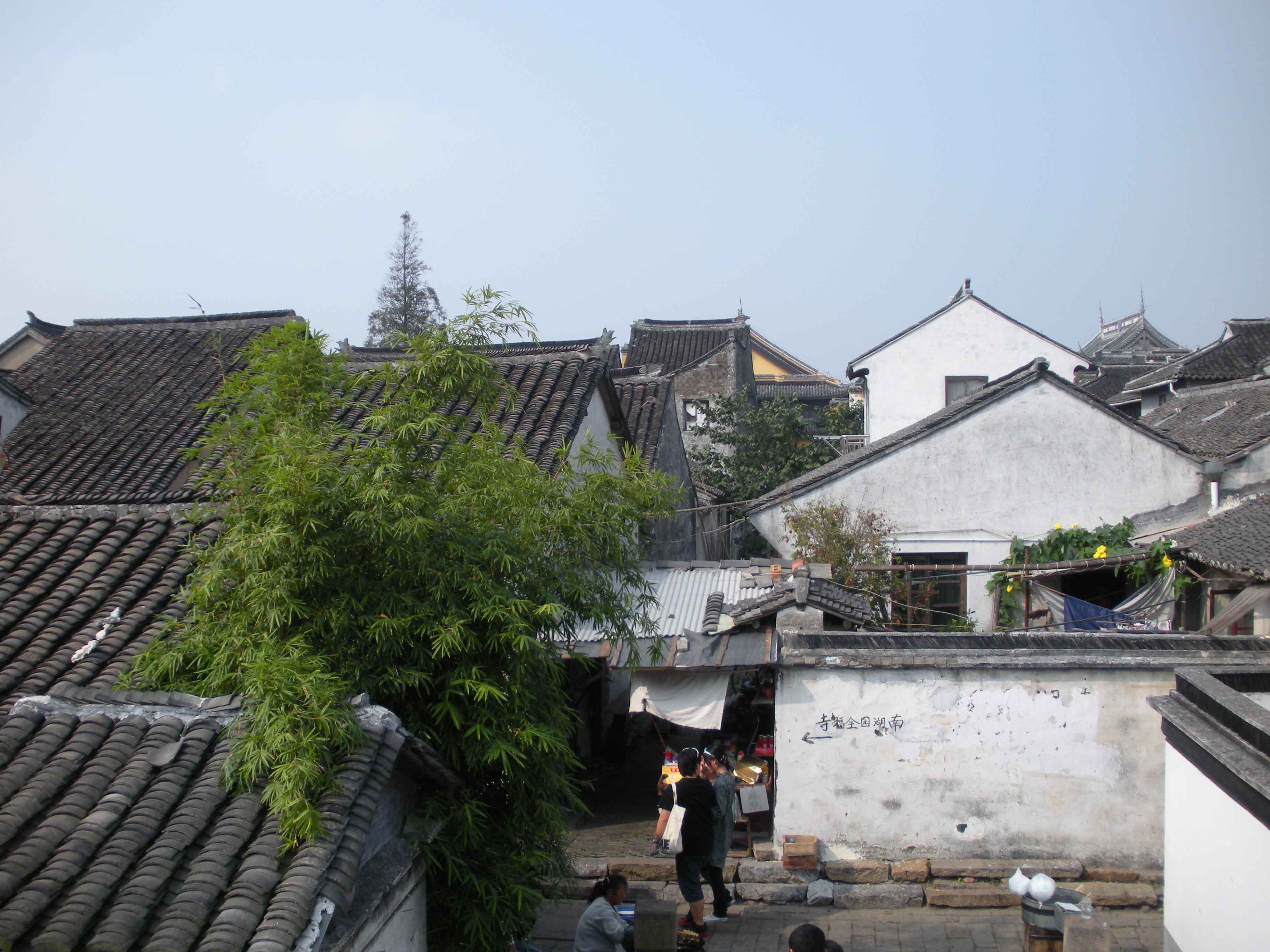
Older Housing in China

The real estate market in China is different. Chinese families contribute and buyers often pay 30 to 50% down. Also, when the bubble burst in the US, housing loans to GDP were 79% but in China that number was 15.3%.

In fact, according to the May 29 – June 4, 2010 The Economist, about 20 – 30% of urban housing is owned by the top income earners. The rest live in free housing provided by employers or in  state owned housing with low or no rent. It also helps that most Chinese save and avoid using credit cards. Then there is rural China where 750 million live and all the housing belongs to collectives and there are no mortgages or rent.

See Greedy Buyers Beware

______________

Lloyd Lofthouse is the award-winning author of The Concubine Saga. When you love a Chinese woman, you marry her family and culture too. This is the love story Sir Robert Hart did not want the world to discover.

To subscribe to “iLook China”, look for the “Subscribe” button at the top of the screen in the menu bar, click on it then follow directions.