Organized religions and cults such as theFalun Gong have been in China for centuries, but have never played a major role in the culture until the 19th century when Christianity was forced on China.
C.M. Cipolla wrote in his book, Guns, Sails and Empires, “While Buddha came to China on white elephants, Christ was born on cannon balls” powered by opium.
The treaty that ended the opium wars included a clause that required China to allow Christian missionaries free access to all of China to convert the heathens.
Then the Taiping Rebellion led by Hong Xiuquan, God’s Chinese son and a Christian convert, was responsible for more than 20 million deaths. Hong claimed to be the younger brother of Jesus Christ. Millions believed him.
In the early months of 1900, thousands of Boxers, officially known as Fists of Righteous Harmony, roamed the countryside attacking Christian missions, slaughtering foreign missionaries and Chinese converts.
Confucius and possiblyLao-Tse have influenced the foundation of Chinese culture and morality the most. These two along with Buddha offer more of a blended influence on Chinese culture than Christianity or Islam.
Thanks to Confucius, China’s mainstream culture understands the importance of people within the family and society more so than many other countries and cultures.
This may explain why China is a powerhouse of industry today.
Lloyd Lofthouse is the award-winning author of the concubine saga, My Splendid Concubine & Our Hart. When you love a Chinese woman, you marry her family and culture too.
If you want to subscribe to iLook China, there is a “Subscribe” button at the top of the screen in the menu bar.
Note: This post first appeared on iLook China March 11, 2010 as post # 128. This revised version reappears as post # 1095.
In 1999, I was introduced to two dead people. One was a white guy from Ireland that died a hundred years ago and the other was Ayaou, a Chinese woman that was a mystery since Robert Hart tried to erase her from his personal history.
I’m fortunate that Hart failed and traces of Ayaou survived.
Since I was a child of seven or eight, I’ve been writing stories. They were short with lots of bad drawings.
Soon after I was honorably discharged from the US Marine Corps in 1968, I took my first writing workshop at a community college. Then Ray Bradbury came to the campus to speak and although I never read his work, what he said inspired me to never stop writing.
Although I did receive a few encouraging rejections through the decades and was represented by two or three reputable agents before Amazon.com and eBooks were born, nothing I wrote was picked up by a traditional publisher.
Believing I wasn’t good enough, I decided to learn more of the writing craft by earning a BA in journalism. An MFA with a focus in twentieth century American literature came much later.
Between earning the two college degrees, I drove about 150 miles one day each week for seven years to attend a workshop out of UCLA’s writing extension program.
The teacher was a chain smoker with an explosive tempter but she was sharp and several of the writers in her workshop went on to publish their work. When she felt one of her students was ready, she went all out and even found an agent for the author. She found one for me, but that’s another story.
When I publishedMy Splendid Concubine in 2008, I held my breath wondering if anyone would read it and enjoy the lusty, violent story of Robert Hart and Ayaou in the middle of 19th century China immersed in the smoke of the Opium Wars and the oceans of blood of the Taiping Rebellion.
On May 12, 2009, an Amazon reader, an anonymous person in Hong Kong, posted a one-star review of My Splendid Concubine.
The anonymous reader wrote, “As a great fan of Robert Hart’s, I was very eager to get my hands on this book. And what a huge disappointment it proved to be, for many reasons…”
One of those reasons was a “g” missing from one of five “Tang Dynasties” in the novel.
This one-star review was of the first edition. By the time it appeared on Amazon, the second revised edition was out and some of the anonymous reader’s complaints had been corrected.
In three years, My Splendid Concubineearned three honorable mentions in city book festival literary contests then Our Hartearned another four honorable mentions and became a finalist for a national writing award.
About a year ago, the sequel, Our Hart, was submitted to the 18th Annual Writer’s Digest Self-Published Book Awards.
Recently, an envelope arrived from Writer’s Digest.
Jessica Strawser, the editor of Writer’s Digest, wrote that the competition was particularly fierce this year…
Our Hart didn’t win.
This is the book trailer I produced in 2008 of the first edition of My Splendid Concubine. My wife has been telling me I need a better one and to delete this version.
However, when you enter a book to this Writer’s Digest literary award, a judge writes a commentary of your work and ranks it for plot, grammar, character development, production quality and cover design, which helped dispel the criticism of that one-star review that discovered a missing “g” from one of five “Tang Dynasties” in My Splendid Concubine.
The Writer’s Digest judge, a professional in the publishing industry, awarded grammar a five with five being the highest score.
The judge wrote, “In Our Hart, Elegy for a Concubine, author Lloyd Lofthouse has penned an intriguing story set in an ancient Chinese dynasty. Political intrigue and matters of the heart are both fully explored. The book is meticulously researched and the author’s enthusiasm for his subject is evident.… The author has an ear for natural-sounding dialogue, making Our Hart an engaging read.… That said, readers who enjoy vicariously experiencing other times and cultures will find Our Hart a fascinating journey.”
______________
If you want to subscribe to iLook China, there is a “Subscribe” button at the top of the screen in the menu bar.
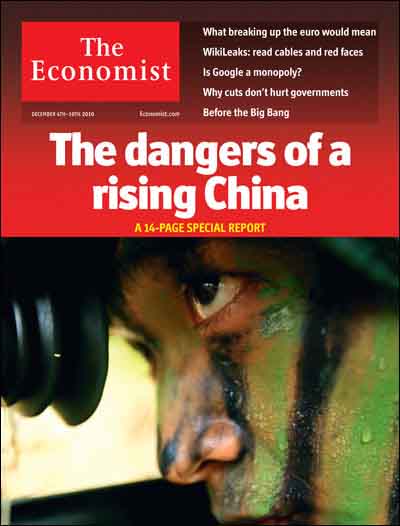
Although I feel that some of the advice from The Economist (ET) of The dangers of a rising China is flawed, the most important advice for America is to abide by its own rules — and if it must break them, it should factor in the real cost of doing so.
I say that the problem here is the fact that every few years, the leadership of America changes and the new leadership (depending on political agendas and promises made to win votes) often does not respect agreements made by previous administrations.
However, China’s central government tends to be much more stable than that of the US. This may help.
Since the US has a history of breaking rules (and treaties), The Economist (TE) does offer valuable advice but I doubt if the US government will listen. The nature of US politics and much ignorance of China among many American voters increases the risk of making a costly mistake.
In fact, there are political factions in the US that do not care how many die or suffer to achieve their political/religious goals.
TE also offers important advice for the Chinese Communist Party to stop using censors… and to draw less on historic grievances.
I suspect that as long as life in China continues to improve, the majority of Chinese could care less about the censored topics.
However, what TE means by historic grievances is more important and a larger challenge for the Chinese to overcome. There are 19th century invasions of China by Western powers that led to the Opium Wars; the devastation of the Taiping Rebellion caused by a Christian convert; the results of the Boxer Rebellion and what happened in World War II when Japan invaded China slaughtering millions of innocent people.
In the 18th and 19th century, China wanted to avoid contact with the West but the West due to its politics and religious beliefs refused and forced China to open its doors to trade resulting in much suffering in China.
Forgetting those grievances, which smashed China’s “collective” pride, may be difficult for many Chinese to do now that the pride that was lost has been found again.
In fact, do not forget that many in China feel a serious connection to the ancestors who suffered at the hands of Western countries and Japan between the Opium Wars and the conclusion of World War II.
It may be difficult and even impossible for people in an “individualist” culture such as the US to understand why many Chinese may have difficulty letting go of these historic grievances.
After all, in America, it is easy to forget about the ancestors, the past and history. Many even believe it is a waste of time to learn of history.
Lloyd Lofthouse is the award-winning author of the concubine saga, My Splendid Concubine & Our Hart. When you love a Chinese woman, you marry her family and culture too.
If you want to subscribe to iLook China, there is a “Subscribe” button at the top of the screen in the menu bar.
The Yongzheng Emperor ruled from 1722 to 1735. He was frugal like his father, the Kangxi Emperor.
Yongzheng created an effective government and used military force to preserve the dynasty’s position as his father had. Under his leadership, he continued the era of peace and prosperity by cracking down on corruption and waste while reforming the financial administration of the empire.
The Qianlong Emperor (birth/death 1711 – 1799) ruled China for much of the 18th century (1735 – 1796). He subdued about ten rebellions known as the “ten successful campaigns”, which drained the Qing Dynasty’s treasury. These rebellions stretched from 1747 to 1792.
However, when the Qianlong Emperor died, China was unified, at peace and strong. He was a brilliant military leader and expanded the empire further into Mongolia and Tibet.
During the rule of the Qianlong Emperor, Manchu and Chinese armies proved the Qing sovereignty over Burma and Nepal.
Chinese settlers in Yunnan, Guizhou, Sichuan and Taiwan dealt with rebellions of the aboriginal tribes that could only be subdued by military force. Muslim people also resisted the Qing regime in Gansu and Xinjiang.
During the 19th century, the two Opium Wars started by Britain and France weakened the Qing Dynasty.
Besides the Opium Wars, there was also the Taiping Rebellion, which lasted more than a decade and cost about 20 million lives.
In 1900, The so-called Boxer Rebellion (known as “I-ho Chuan” or the “Righteous and Harmonious Fists”) was originally started against the Manchu Qing Dynasty but the Qing government managed to redirect this rebellion against the foreigner invaders that had defeated China during the earlier Opium Wars.
This ended in a worse defeat after the foreign powers formed an alliance and marched on Beijing slaughtering the rebels.
The driving force behind the revolution of 1911 that ended the Qing Dynasty was Dr. Sun Yat-sen.
However, once the Qing Dynasty fell, warlords tore China apart and it would take years of struggle to reunify China under one government in 1949 after the Communist Party defeated the Nationalists, who fled to Taiwan with much of China’s imperial treasures and gold.
Lloyd Lofthouse is the award-winning author of the concubine saga, My Splendid Concubine & Our Hart. When you love a Chinese woman, you marry her family and culture too.
If you want to subscribe to iLook China, there is a “Subscribe” button at the top of the screen in the menu bar.
This segment of the travelogue takes us to the Wong family compound in Lingshi county, Shanxi province. The Wong mansion offers another example of China’s ancient collective culture.
Twenty-seven generations of the Wong family lived in this mansion for 680 years.
To build the mansion and the wall that protects it took more than fifty years.
The narrator points out that the buildings and gardens are well arranged (according to feng shui) and adapted to the geographical conditions.
Three architectural complexes were part of the Wong family compound completed during the Qing Dynasty. This included the Red Gate Fort and an ancestral temple. The area covered 45,000 square meters (almost 54 thousand square yards).
Although the narrator in the video doesn’t mention this, for more than two millennia the Chinese raised their children to follow the Chinese ethical and moral system based on the family and Confucius’s Five Great Relationships.
1. between ruler and subject
2. father and son
3. husband and wife
4. elder and younger brother
5. friend and friend
Instead of being taught from a church pulpit, these values are part of child rearing.
Of the five relationships, in each pair, one role was superior and one inferior; one role led and the other followed. Yet each involved mutual obligations and responsibilities.
When most children married, the newlyweds lived with the groom’s family. Failure to properly fulfill one’s role according to this Chinese ethical and moral system could lead to the end of the relationship.
In fact, when the ruler didn’t fulfill his role, bloody rebellions often gave rise to new dynasties after a period of chaos and violence that in some cases lasted decades or centuries.
China’s history is also littered with failed rebellions often citing the Mandate of Heaven as the right to rebel and challenge the ruling dynasty.
During the Qing Dynasty, there were several failed rebellions. The bloodiest was the Taiping Rebellion, which lasted more than a decade with more than twenty million killed.
Lloyd Lofthouse is the award-winning author of “The Concubine Saga”, My Splendid Concubine & Our Hart. When you love a Chinese woman, you marry her family and culture too.
To subscribe to “iLook China”, look for the “Subscribe” button at the top of the screen in the menu bar, click on it then follow directions.


 Posted by Lloyd Lofthouse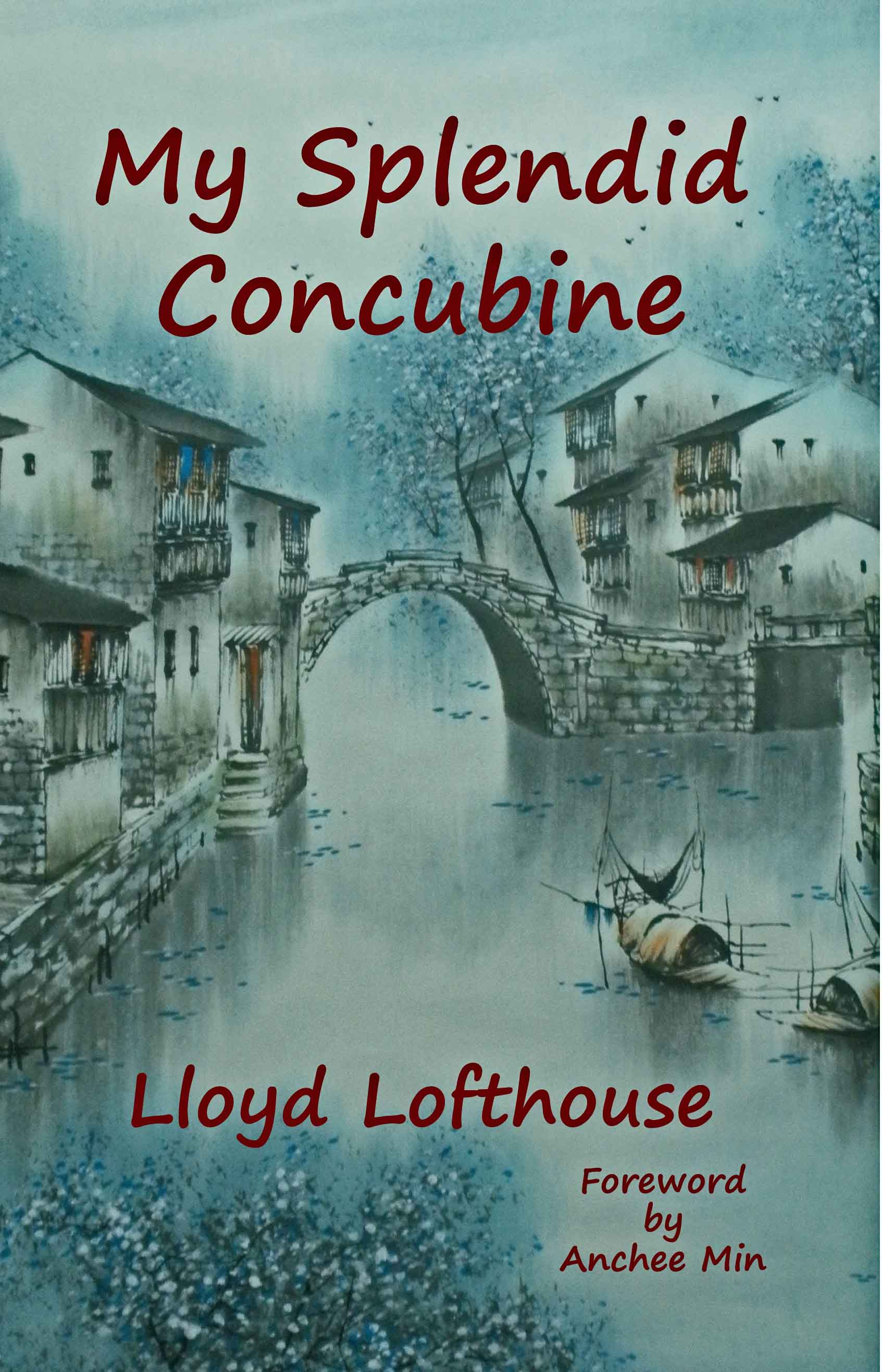
 iLook China