Chinese Brush Painting – Gongbi Style (flower and bird painting)

September 3, 2010

Chinese brush painting developed over a period of more than six thousand years.

Figure Painting developed beyond religious themes during the Song Dynasty (960-1127 AD), and landscape painting was established by the 4th century.

Another style is flower-and-bird painting, which became independent of other Chinese brush art around the 9th century then gradually developed into two different styles. Source: Asia Art.net

One famous 20th century Chinese brush-painting artist was Chen Zhifo (1895 – 1963)

Chen was born into an educated family.  At 23, he went to Japan to learn patterns that later influenced his painting style.

Chen would become a renowned painter in the early 20th century.

His artistic career started in design, patterns and other arts. When he started Gongbi style flower-and-bird painting, he was nearly 40, and he revived the declining tradition of Gongbi style Chinese brush painting.

When he started painting, he usually sketched his subjects then went through many drafts modifying them before applying colors.

Chen focused on the design of branches, leaves and birds to portray his subjects.

See Caressing Nature with Chinese Calligraphy

_______________

Lloyd Lofthouse is the award-winning author of the concubine saga, My Splendid Concubine & Our Hart. When you love a Chinese woman, you marry her family and culture too. 

Sign up for an RSS Feed for iLook China


Chinese Crossbow and other Inventions (1/4)

July 31, 2010

The Chinese invented the forerunner to the modern machine gun—a repeating crossbow. If you watch the video, you will see that firing the repeating crossbow takes the pull of one lever.  The arrows are in a clip above the firing mechanism.

Then the Chinese invented the stirrup. Prior to that, all of the ancient people on earth rode horses without stirrups and staying on horseback and fighting was difficult without the stirrup.

Thanks to stirrups, the horse became a more stable platform for war. Prior to the stirrup, it was common for a man to ride about seven miles a day. After the stirrup, that distance was extended to as much as 70 miles a day.

The invention of the stirrup along with the repeating crossbow created a powerful weapon. The Chinese could also manufacture items in mass, quickly and efficiently. The Chinese used pottery molds to accomplish this—even to build the advanced trigger mechanism for the crossbow. When it came to cast iron, the Chinese were a thousand years ahead of the world.

However, by the time of the Sung Dynasty, the world was catching up—meaning China’s enemies were stealing their technology.  It’s ironic that today, many in the West accuse the Chinese of stealing innovations. If so, China is only doing what was done to them centuries ago.

Go to Chinese Crossbow and other Inventions – Part 2 or learn more about The Accidental Discovery of Gunpowder

_______________

Lloyd Lofthouse is the award-winning author of My Splendid Concubine [3rd edition]. When you love a Chinese woman, you marry her family and culture too. This is the love story Sir Robert Hart did not want the world to discover.

His latest novel is the multiple-award winning Running with the Enemy.

Subscribe to “iLook China”!
Sign up for an E-mail Subscription at the top of this page, or click on the “Following” tab in the WordPress toolbar at the top of the screen.

About iLook China


Invented in China—Printing

July 9, 2010

Six hundred years after paper was invented, the Chinese invented printing and the first printed work was Buddhist scripture during the Tang Dynasty (618 – 906). The most basic printing techniques are older. Engraving came later. The carving, printing technique originated during the Tang Dynasty

When we talk about paper and printing, it is to collect knowledge, preserve and share it.

Once there were paper books being printed to share Buddhist ideas, the religion spread through China into Korea and Japan. Over a thousand years printing techniques continued to improve until there were multi-colored printings.

Then during the Sung Dynasty, the printing board was invented, which used clay characters. One character was carved into a small block of clay. Then the clay was put in a kiln to heat into a solid block. This method was efficient for printing thousands of sheets. These blocks would be placed together to create sentences and paragraphs of Chinese characters.

Later, the characters were carved into wood. Over time, printing was developed into an art.  In fact, Ancient Chinese culture was preserved due to the invention of paper and these printing methods, which wouldn’t reach Europe until after 1300 AD, almost 800 years later.

Without the Chinese invention of printing, Christianity, Islam and Buddhism may not have spread to the extent that they have.

See With or Without Paper

_________________________

Lloyd Lofthouse is the award-winning author of the concubine saga, My Splendid Concubine & Our Hart. When you love a Chinese woman, you marry her family and culture too. 

To subscribe to “iLook China”, look for the “Subscribe” button at the top of the screen in the menu bar, click on it then follow directions.


China’s Electric Challenge

May 10, 2010

To bring electricity to the 1.3 billion people in China is a challenge due to the terrain. If we count only land, America is the third largest country and China the second. Russia is first.

To give you an idea, America has 922,095,840 square miles of cropland to feed 4.5% of the earth’s population. China, by comparison, has 247,878,000 square miles of farmland to feed 20% of the earth’s population. The rest of the land is either desert or mountains.

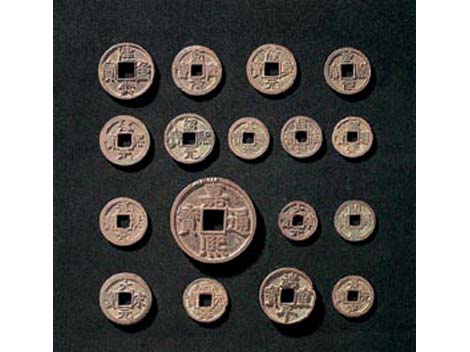
Currency from the Song Dynasty

Never forget that during the Song Dynasty (960 – 1279 AD), China had the highest per capital production and income in the world. At the time, China’s GDP was the largest in the world until the middle of the 19th century when Western Imperial colonial powers invaded China winning two Opium Wars. Source: ELSA Berkeley.edu

Discover China’s clean coal power plant in Tianjin

See Electricity is the Key

______________

Lloyd Lofthouse is the award-winning author of the concubine saga, My Splendid Concubine & Our Hart. When you love a Chinese woman, you marry her family and culture too.

If you want to subscribe to iLook China, there is a “Subscribe” button at the top of the screen in the menu bar.