Traveling the Great Wall

March 14, 2010

Everywhere you go in China, there is something new to see and do.  Disneyland is planning to build a theme park near Shanghai.

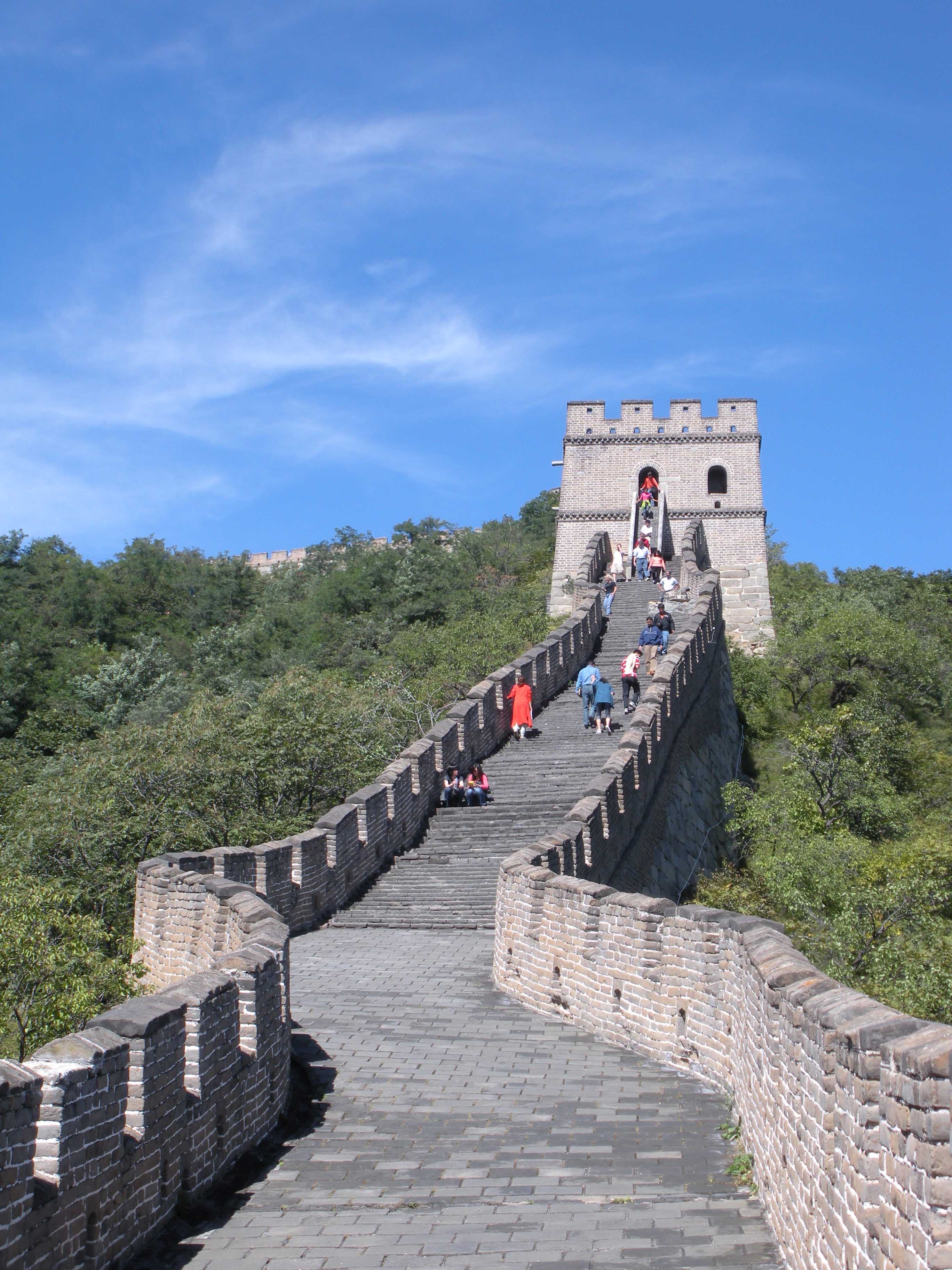
The sections of the Great Wall we have visited are an hour out of Beijing. The most popular site is at Badaling.  The second choice, Mutianyu, is more dramatic. This portion of the Great Wall runs along the ridge of a mountain range. Badaling, meanwhile, is in a mountain pass.

The best way to reach the Great Wall is by taxi or bus. After you get there, you will discover the usual tourist shops. Since I enjoy haggling, I spend time shopping.

Great Wall at Mutianyu

At Badaling, there were camels and horses you could pay a fee to sit on while having your picture taken.

Once you reach Mutianyu, you have a choice—take a few hours to climb the mountain or ride a ski lift to the top in fifteen minutes. Getting back is easy. Take the toboggan seen during the 2008 Beijing Olympics on network TV and ride down.

______________

Lloyd Lofthouse is the award-winning author of the concubine saga, My Splendid Concubine & Our Hart. When you love a Chinese woman, you marry her family and culture too.

To subscribe to “iLook China”, look for the “Subscribe” button at the top of the screen in the menu bar, click on it then follow directions.


Tolerance to Infinity Guest Post by Bob Grant

March 13, 2010

Originally published at Speak Without Interruption on February 17, 2010 by Bob Grant — publisher/editor for Speak Without Interruption. Posted on iLook China, 3/13/10 at 08:00

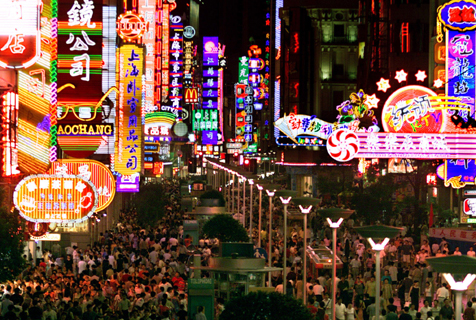
(Note: There are more photos at the original site. The Nanjing Road photo here does not appear at Speak Without Interruption.)

Wherever people normally congregate in groups—shopping areas, elevators, subways, airports, city streets, and the like—there are a lot more people in China congregating in those same places.  Again, I can only use my own experiences – in these types of crowds in China – but I was amazed how tolerant people were of each other.  In some cases I was squeezed to the people next to me so closely that I could almost feel their hearts beating.  In these situations – personal space was at zero.  I was crammed into a subway once and could literally stand – without holding on to anything – because we were packed so close together (not that I really had anything to hold on to anyway).  The exit from this subway was orderly and people were polite to each other – and me.  At our stop, we had to ask people to move, which was difficult for them, but we got off with no problems or delays.

Nanjing Road, Shanghai - this is the normal crowd

 I am not certain the Chinese people have a choice living – and working – among that many other people.  However, I saw it as another attribute of China and its people.  As a “Westerner” I could have easily been accosted by anyone in these large crowds as most of the time I was the only non-Chinese among them.  But this never happened.  No one stared at me or otherwise acknowledged me as anything other than one of them.  Perhaps I am reading too much into these situations, but I will go with my feelings here and believe this is a nation of extremely tolerant individuals. 

 Places I went did not always have these types of crowds, but in the locations where large crowds congregated, I was always impressed by the politeness of my fellow “Crowdies”.  I can’t say the same for other crowds, in which I have found myself, in the US and other parts of the world.  I think China is unique in this area and its people have Tolerance to Infinity.

 Read China Trip 2008 at  http://wp.me/pN4pY-c


Pain, Pollution and People

February 14, 2010

It’s difficult to write when I’m gasping for air and blowing my top. When I was still teaching, walking into a classroom in the morning made me sick—and no, I wasn’t allergic to my students, but I should have been.

Then I retired and for five years, I have been free of wheezy lungs and sinus infections that always arrived with the start of each school year when I worked in those old buildings at the high school where I taught. Have you heard of sick building syndrome? I lived it. The last time I was sick from air pollution was in Shanghai.

This new, peaceful world changed several weeks ago. Workers came with power tools and mud-caked boots. I should have fled, but I stayed at my computer as a stupid, stubborn, former United States Marine would.
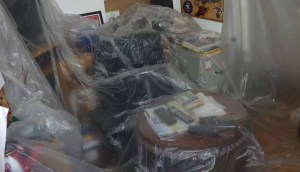
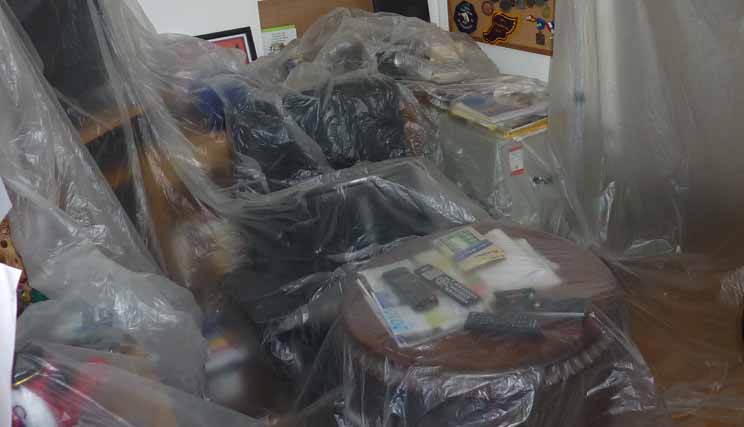
covered office furniture

My office has three doors. One that leads toward the other rooms and one that opens to the outside. Then there is the door that opens to the space under the second story and the foundation. That crew drilled, pounded, cut and tracked dirt from room to room—always in my office. I had trouble concentrating. I suffered from memory loss. Plastic tarps covered most of the furniture, and I couldn’t find things. When I left the office to find a moment of peace, I covered the computer and printers with a bed sheet. The noise reminded me of combat but worse, because I was nineteen and then twenty when I was in Vietnam—noise did not bother me as it does now.

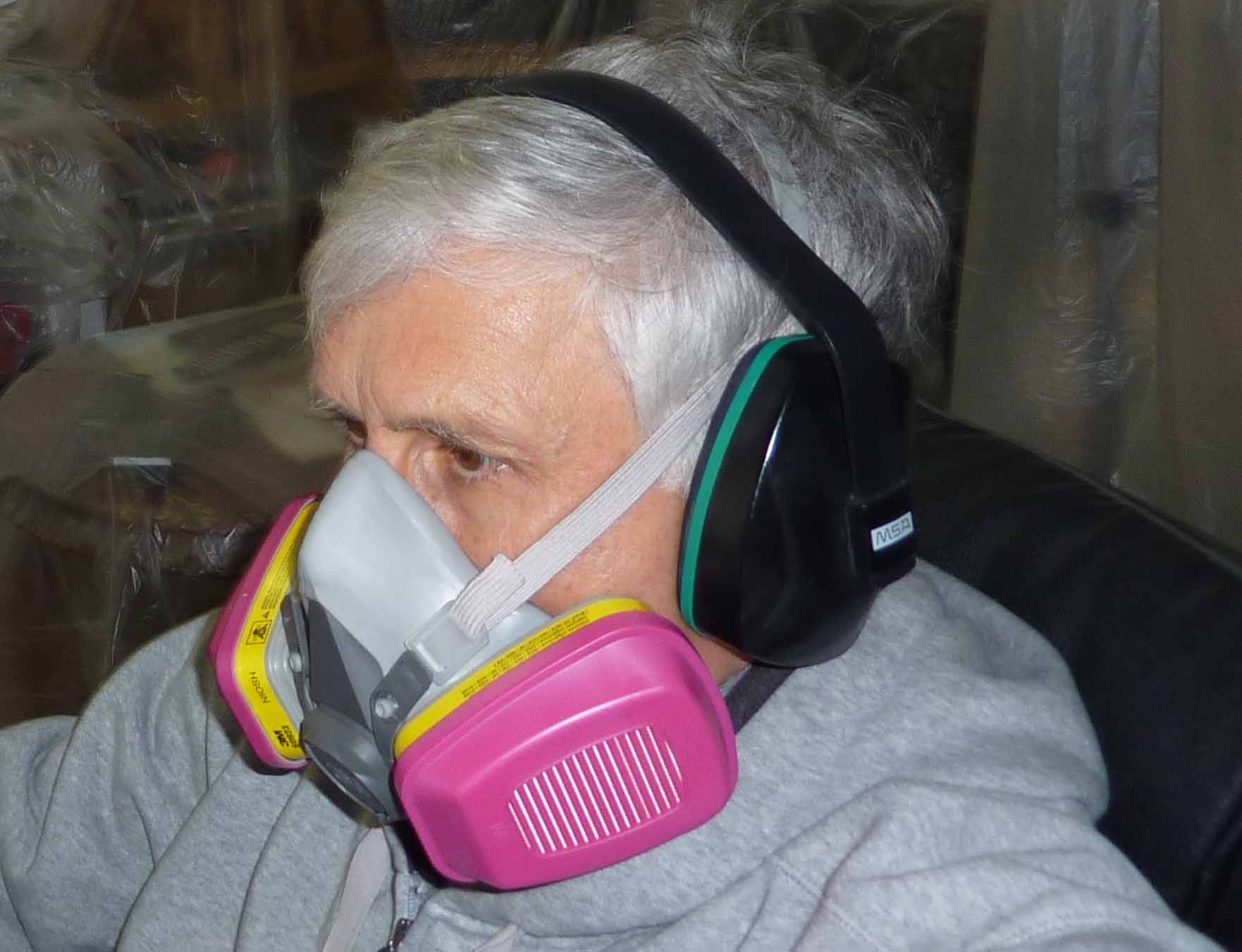
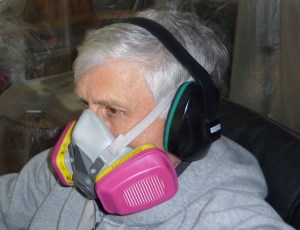
Concrete dust floated through the air and my sinuses and lungs rebelled, so I put on a 3M mask with two pink HEPA filters attached. The last time I wore a mask like this was when I was teaching. I searched the garage and found the noise suppresser to help mute the pounding and drilling.  I looked like an explorer to Mars or a survivor of trench warfare struggling to write while the frigid air froze my fingers.
The crew had arrived to bolster the foundation against future earthquakes that might never arrive. Even if a hard tumbler did visit, I doubt that all that work would hold our sixty-year old hillside house together. It still might slide down the hill into the middle of the street blocking traffic.

I could have moved, but I didn’t want to disconnect all the cables and cart the equipment to another room for a few days to escape the dust and noise—something (I soon discovered) that would have been impossible without checking into a hotel.

Even with a noise suppresser covering my ears, muted sounds intruded and the last place I wanted to be was in this chair writing about China, the Vietnam War or being a teacher in the tortured American public schools. I stuck with it for days as my suppressed anger fueled by PTSD started to simmer and fume.

It was a relief when the workers finished. I thought I was going to have the tranquility back where the only noise would be the click of the keys as my warmed hands flew across the keyboard meeting my Blogging goals.

But the workers left something behind.

I started sneezing. My sinuses ran hundred mile marathons. I went to the doctor and he prescribed medications that didn’t work. The sneezing went volcanic—like Mt. Saint Helena blowing its top.  One time, I sneezed so bad, I blew the 3M mask off my face—so much for a mask that’s supposed to protect you from every gas and plague Islamic terrorists can brew. Upstairs or outside, I was fine. But in my office, I was a goner. “Blam, blam, balm,” my nose exploded like rapid shots from a fifty-caliber submachine gun.

I could have opened windows, but it’s been raining for weeks.  The sky has been overcast.  The air breezy and cold.  Then today, the sun came out and I finally let the outside in and the sneezing stopped—I’m crossing my fingers and knocking on wood. I’m afraid to close the windows, but night will come and with it lower temperatures. I fear that whatever industrial poison is haunting my once tranquil office space might return.

Education Chinese Style – Part 6

February 11, 2010

Guess who taught me to read—my mother. When I was seven, education experts said I would never read. My mother didn’t blame them. She blamed herself and went to work to fix the problem. She told me she came home from that meeting and cried. Then she got out the coat hanger.

No matter how much I complained, I learned to read at home. Today, many American parents don’t spend enough time with their children.

Inside a Shanghai Bookstore

In America, many kids don’t like to read. To get the students I taught to read for half-an-hour a day was like pulling teeth with oily fingers. Instead, they watch television or spend hours on the Internet or hang out with friends after school.

The largest bookstore in Shanghai, China, is several stories tall with elevators and escalators. You have to wait in line to reach another floor. The bookstores I visit in Shanghai when I’m there are always crowded. On the other hand, in the United States bookstores are going out of business as if a book plague struck. In China, new ones are opening all the time.

  See Part 1

Lloyd Lofthouse is the author of the award winning novels My Splendid Concubine and Our Hart.


China Going Green

February 8, 2010

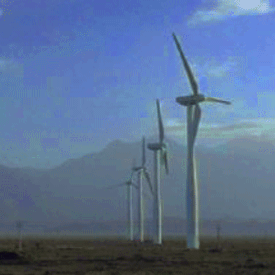
The evidence shows that China is waking up sooner than Western countries did after their industrial revolutions. China now leads the world in hydroelectric power providing 20% of the country’s power. China has made it a priority to use hydroelectric power to reduce pollution in the future. Chine also plans to lead the world in solar cell and wind turbine production.

The Dabancheng Wind Farm – At 100 megawatts, China’s largest

China plans to relocate 15,000 citizens from an area poisoned by lead (due to manufacturing) that would cost the government 146 million dollars or one billion yuan.

In August 2009, two chemical factory officials were convicted of releasing carbolic acid into a river and they were sentenced to prison terms of 6 and 11 years. In the past, such acts usually resulted in little more than a fine. Recently, Chinese authorities made it clear that China is entering a new era in environmental enforcement.

In April 2009, China’s leaders announced a plan to turn the country into the leading producer of hybrid and all-electric cars in three years. In addition, subsidies of up to $8,800 are being offered to taxi fleets and local government agencies in 13 Chinese cities for each hybrid or all-electric vehicle purchased. The state electricity grid has been ordered to set up electric car charging stations in Beijing, Shanghai and Tianjin.

One goal is to reduce energy consumption by 20 percent. Another is to close down polluting factories including the heaviest polluting coal power plants. The plan is to switch those plants from coal to natural gas something that is also being considered in the United States. China is also building nuclear power plants with plans for thirty in the next fifteen years.

Another goal is to increase the amount of land covered by forests from 28 percent to 30 percent over a five-year period. If you have traveled extensively in China recently, you may have witnessed this taking place. We have.

I am optimistic. Considering that the Chinese built the Great Wall and the Grand Canal more than two thousand years ago, I predict that the Chinese will do this too, but it will take time–maybe decades to reverse a trend started by the rest of the world hundreds of years before China became the world’s factory floor.

At the Copenhagen environmental conference, China sounded like the bad guy in the Western media—as usual. You may want to read this piece to find out more at Guardian.com.uk

Also, consider that the call to have China policed by the world to make sure they cut back on carbon emissions as they said they would was a slap saying, “We don’t trust you?”  That’s a loss of face and embarrassing to the Chinese. If China made it public that they are going to cut back a certain amount of carbon emissions by a certain date and they do not, that will also be a loss of face. There’s a good chance that they will cut more than they pledged. Let’s wait and see.

Return to Where Did All That Pollution Come From

_______________

Lloyd Lofthouse is the award-winning author of My Splendid Concubine [3rd edition]. When you love a Chinese woman, you marry her family and culture too. This is the love story Sir Robert Hart did not want the world to discover.

His latest novel is the multiple-award winning Running with the Enemy.

Subscribe to “iLook China”!
Sign up for an E-mail Subscription at the top of this page, or click on the “Following” tab in the WordPress toolbar at the top of the screen.

About iLook China

China’s Holistic Historical Timeline