Controlling Opinions

April 17, 2010

Have the Tea Baggers in the United States been learning from China, or is it the other way around?

“Another strategy is manipulation. In recent years, local and provincial officials have hired armies of low-paid commentators to monitor blogs and chat rooms for sensitive issues, then spin online comment in the government’s (China’s) favor.

“Mr. Xiao of Berkeley cites one example: Jiaozuo, a city southwest of Beijing, deployed 35 Internet commentators and 120 police officers to defuse online attacks on the local police after a traffic dispute. By flooding chat rooms with pro-police comments, the team turned the tone of online comment from negative to positive in just 20 minutes.” Source: New York Times

The Ku Klux Klan in 1926 - Is there a difference between them and today's American Tea Baggers

Isn’t this what Fox Network’s Glenn Beck, then Rush Limbaugh, who is heard on more than 600 radio stations, have been doing for years. Filling the airwaves with their opinions controlling what people hear and think. The American Tea Baggers are doing the same thing with the same results—behavior control.

Is America really different from China? See American Hypocrisy http://wp.me/pN4pY-6

Sign up for an RSS Feed for  iLook China


Tibet Inside China – 5/5

April 13, 2010

Regardless of the evidence that proves the Tibetan government in exile is not telling the truth about Tibet being part of China for centuries before declaring independence in 1913 (when the Ch’ing Dynasty was collapsing and the British Empire urged Tibet to break free for political reasons), the Dalai Lama and his Prime Minister represents less than 100,000 Tibetans outside China.

Tibet Monastery

If Rinpoche’s figure of six million is correct, that means the Tibetan government in exile represents about 1% of the Tibetan population.  If China’s 2.5 million is correct, the percentage goes up to 3.2%.  Not much of a base to wage a violent rebellion. There are more troops in the PRC’s army than the entire Tibetan population inside and outside of China.

I also wonder if that 1% in exile were the Tibetan landowners. Did they leave most of the serfs/slaves behind when they fled?

Maybe the Tibetan separatists/rebels (whatever term you like), with help from the CIA, should join the American Tea Bagger movement and gain the support of Glenn Beck and Rush Limbaugh. They could sit around the campfire during protests and sing hymns about marching into battle to take back the wealth.

Start with Tibet Inside China – Part 1 or discover how Power Corrupts

View as Single Page

_______________

Lloyd Lofthouse is the award-winning author of My Splendid Concubine [3rd edition]. When you love a Chinese woman, you marry her family and culture too. This is the love story Sir Robert Hart did not want the world to discover.

Subscribe to “iLook China”!
Sign up for an E-mail Subscription at the top of this page, or click on the “Following” tab in the WordPress toolbar at the top of the screen.

About iLook China


Tibet Inside China – 1/5

April 11, 2010

In 2008, I wrote a post about Tibet on another forum. Someone with a Tibetan sounding name left a comment in crude English calling me a “Communist rabbit”.

Name-calling seems to be popular these days. In America, people like Glenn Beck (FOX network), Rush Limbaugh (600 radio stations) and the Tea Baggers have developed name-calling into an art form—not much substance but colorful and angry.

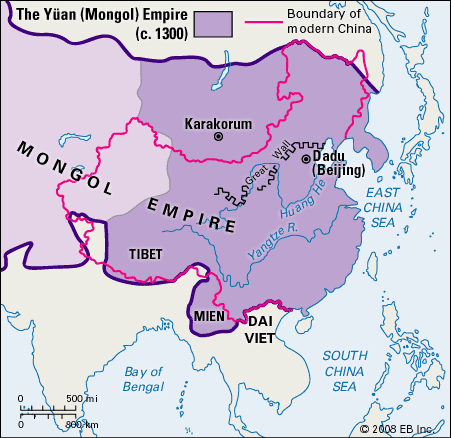
The Tibetan government in exile’s Prime Minister Samdhong Rinpoche was quoted in “Good” magazine’s May/June 2008 Issue that six-million Tibetan Buddhists still lived in Tibet. He also said that Tibet has never historically been part of China. That isn’t true. Tibet was ruled by three of China’s Imperial Dynasties.

Yuan (Mongol) Dynasty 1277 – 1367

Tibet was first ruled by China during the Yuan Dynasty (1277-1367). Then, when the Ming Dynasty (1368-1643) reclaimed China, a Ming Imperial army was sent to Tibet to drive out the last of the Mongols–holdovers from the Yuan Dynasty. The Ming emperor ordered his army to stay.

When the Ch’ing (Manchu) Dynasty (1644-1911) came to power, the Chinese empire expanded further and Tibet remained in China. Later, I’ll provide evidence from a 1912 National Geographic magazine as proof.

Discover Wearing China’s Shoes or go to Tibet Inside China – Part 2

View as Single Page

_______________

Lloyd Lofthouse is the award-winning author of My Splendid Concubine [3rd edition]. When you love a Chinese woman, you marry her family and culture too. This is the love story Sir Robert Hart did not want the world to discover.

Subscribe to “iLook China”!
Sign up for an E-mail Subscription at the top of this page, or click on the “Following” tab in the WordPress toolbar at the top of the screen.

About iLook China


Wheezing for Profits

February 20, 2010

Thomas L. Friedman wrote in an OP-ED column for the New York Times, “China, of course, understands that (about Global warming), which is why it is investing heavily in clean-tech, efficiency and high-speed rail. It sees the future trends and is betting on them. Indeed, I suspect China is quietly laughing at us right now.”

It is obvious from Friedman’s OP-Ed piece that there is a benefit when Chinese engineers run the country instead of lawyers, accountants, corporate CEO’s with next quarter’s profits in mind, lobbyists, professional politicians and people like Rush Limbaugh, who confuses his ditto heads with bogus opinions.

If China’s engineers and scientists are laughing, it is because of the American fools that preach that carbon emissions are not the cause of global warming as if they are fighting a crusade against the infidel while ignoring all the other reasons why oil and coal are bad.

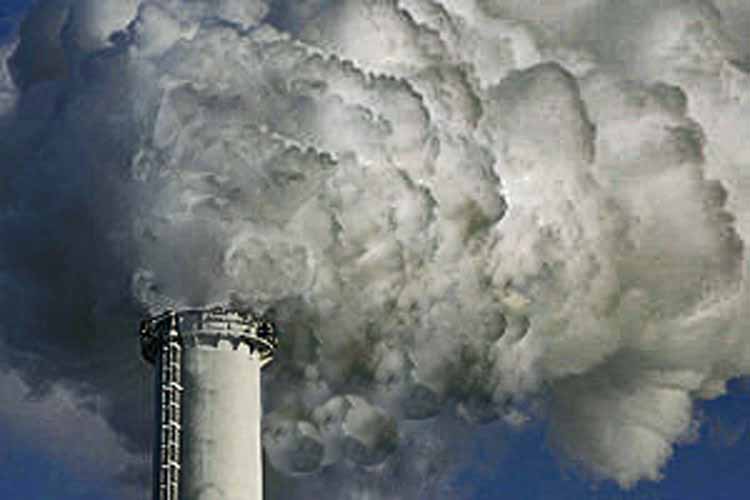
coal burning power plant - how would you like to breath this?

Let’s examine some other reasons why carbon emissions are not good and why humans should wean themselves from this dirty source of energy as quickly as possible.

1. Living near a freeway is not healthy
2. Carbon emissions and asthma
3. Dirty power from coal
4. Ocean acidification
5. Carbon Monoxide Poisoning