In Search of the Tomb of Cao Cao – Part 1/3

September 19, 2010

Knowing the country’s history helps to understand China today. The Romance of the Three Kingdoms was a historical novel written by Luo Guanzhong in the 14th century. 

The novel is based on events in the turbulent years near the End of the Han Dynasty when China fell into chaos and anarchy. The Three Kingdom era of China started in 169 AD and ended with the reunification in 280 AD.

Similar events took place in China after the Qing Dynasty (1644 – 1911 AD) collapsed eventually ending in the Communists ruling the mainland in 1949. See The Roots of Madness

The man credited for reuniting China when the Han Dynasty ended was Cao Cao (155 – 220 AD).

According to the historical records, Cao Cao was a brilliant ruler and a military genius. However, in literature and opera, Cao Cao has often been portrayed as a cruel and despotic tyrant—an image of a Chinese ruler unique in history.

What was Cao Cao really like?

For centuries, the search for Cao Cao’s tomb was unsuccessful.

At the time, there was the Kingdom of Wei, Shuhan and Wu. Cao Cao ruled Wei in Northern China.

Soon after his death, Wei defeated the other kingdoms and reunified China establishing the Western Jin Dynasty (265 – 420 AD).

When the war to reunify China began, Cao Cao had the smaller force—10,000 troops against 100,000.

See The Han Dynasty

______________

Lloyd Lofthouse is the award-winning author of the concubine saga, My Splendid Concubine & Our Hart. When you love a Chinese woman, you marry her family and culture too. 

If you want to subscribe to this Blog, there is a “Subscribe” button at the top of the screen in the menu bar.


The Question of Religion (2/2)

August 13, 2010

Think of the violence and wars that religions have caused—the Crusades, the Spanish Inquisition, genocide against the Cathars (see video), the wars between Catholics and Protestants, and the persecution of Jews by both Muslims and Christians.

Then there are Islamic fundamentalists and the suffering and death caused by their religious beliefs.

Although most people in China are not religious, religions have caused uprising and wars in China too.

The Ming Dynasty (1368-1643) came about due to a rebellion against the Mongol Yuan Dynasty led by a religious sect known as the “Red Turbans” or “Red Scarves”, which included elements from “White Lotus”, a Buddhist sect from the late Southern Song Dynasty. Source: New World Encyclopedia

During the Qing Dynasty (1644-1911) when the Manchu minority ruled China, there were a number of religious uprisings.

There was the White Lotus Rebellion (1796-1804) in the mountain region that separates Sichuan province from Hubei and Shaanxi provinces. The White Lotus was a secret religious society promising salvation to its followers similar to the Falun Gong today.

A Christian convert claiming to be the younger brother of Jesus Christ led the Taiping Rebellion (1850-1864) and more than 20 million died.

The Panthay Rebellion (1856-1873) was a separatist movement led by the Hui people and Chinese Muslims.

There was also the Dungan revolt (1862-1877), led by Muslims in China’s Shaanxi, Gansu, Ningxia and Xinjiang provinces. Chinese historians and officials believed that Islam played a role in causing that uprising.

Maybe the reason China survived for thousands of years without collapsing as Western civilization did when Rome fell was the absence of a major religious movement in China stirring the peoples’ emotions.

Instead of listening to God from the mouths of Popes, prophets and priests, the Chinese had a blend of Confucianism and Taoism, which the family taught by example.

Return to The Question of Religion – Part 1

_______________

Lloyd Lofthouse is the award-winning author of the concubine saga, My Splendid Concubine & Our Hart. When you love a Chinese woman, you marry her family and culture too. 

Sign up for an RSS Feed for iLook China


Goodbye traditional China — Hello New-world Glamour

July 10, 2010

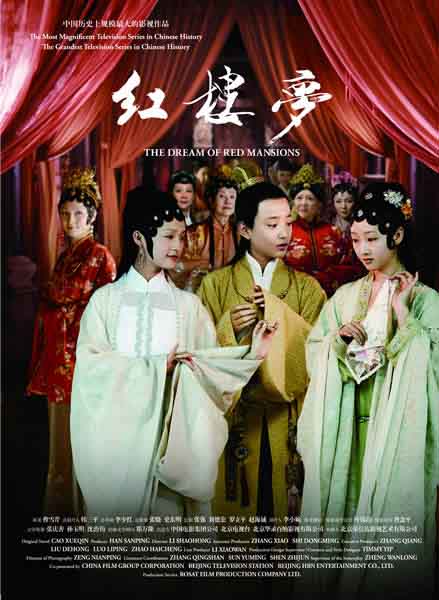
About China’s TV Program, Red Mansion
Guest Post by Hannah in China

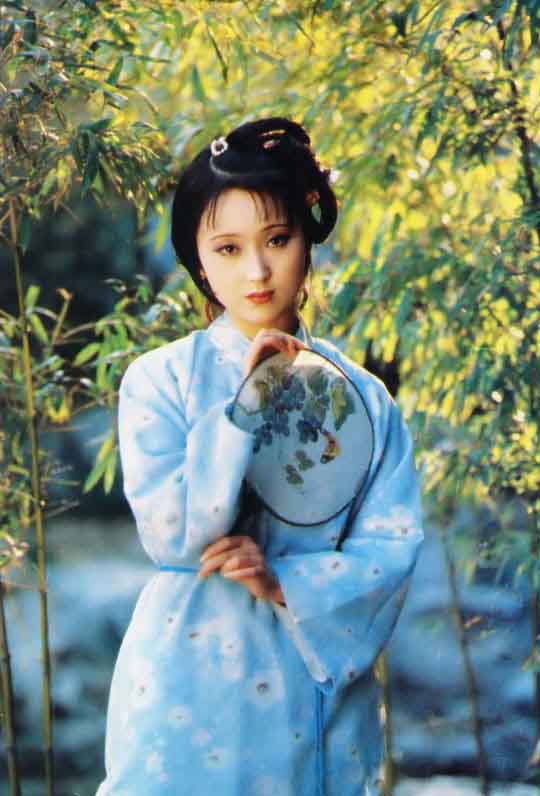
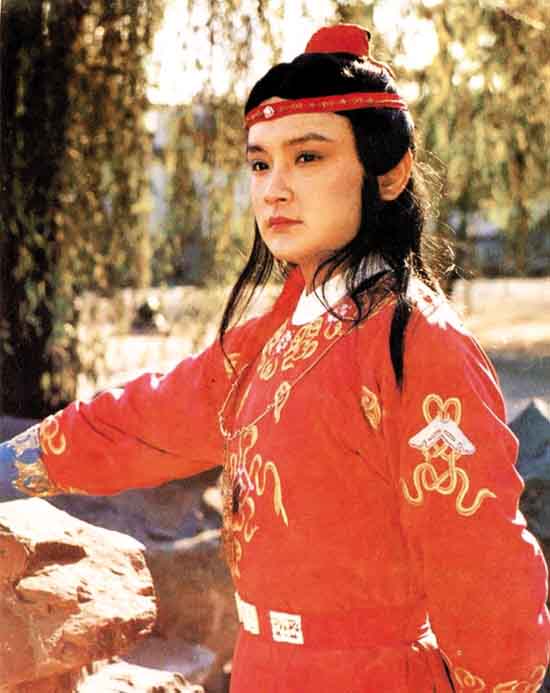
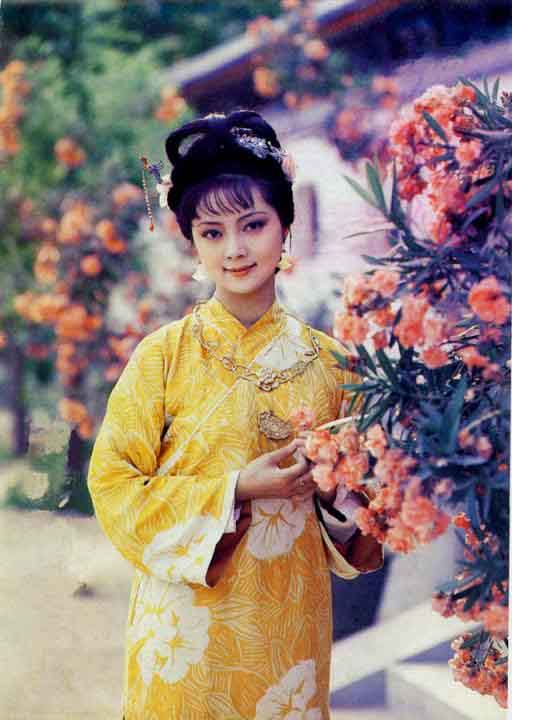
These days, Chinese TV is showing the all-new version of Red Mansion (Hong Lou Meng, which is directed by Li Shaohong). Red Mansion is based on the well-known Qing Dynasty novel (also known as Dream of Red Chamber) written by Cao Xue Qin. The story is about the feudal noble family’s rise and fall from prosperity to decline. But to the Chinese, the most fascinating parts of the book are the sad love story, which happens to the three main characters: Jia Baoyu, Lin Daiyu and Xue Baochai.
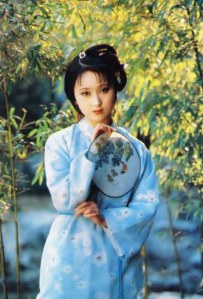
Lin Daiyu

Red Mansion is one of four Chinese classic novels. The other three are the Journey to West, Water Margin and Romance of the Three Kingdoms. So, these four stories are constantly made and remade into Chinese TV shows or movies since television first became popular in China in 1980s.
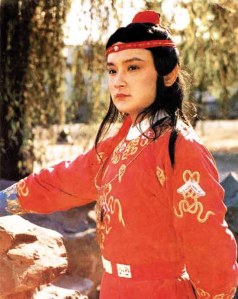
Jia Baoyu

Before this new version of Red Mansions, there’s the most popular one made in 1987, which is the best accepted and beloved by all the Chinese people from young to old (Find the 1987 version of A Dream of Red Mansions at Amazon.com). Even till now, when people talk about the Red Mansion, all we can think of is the 1987 version. These original actor and actress really conveyed the souls of the book’s character and never can be performed or interpreted by anyone else as well as they did. The producers from 1987 spent YEARS to pick out from millions of people in the country these actors and also took a year to train them and naturally develop into the characters, then took another year to film the show. That’s why the 1987 production is the best and the classic.
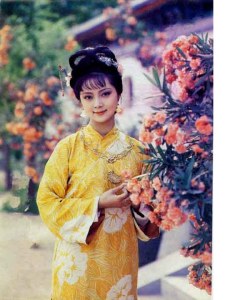
Xue Baochai

Now China has new technologies and enough material to make all the beautiful scenes for the same shows. But are we Chinese still pure enough to make the real GREAT shows?

There are hidden rules in all the entertainment these days—talent does not matter anymore. So new actors must have connections or money. Maybe that’s why the first director left the new production of Red Mansions and was replaced by Li Shaohong. Truthfully, I like Li Shaohong a lot because of the great show Palace of Desire (Da Ming Gongci) about Tang Dynasty. Dream-like beautiful scenes are the trademark of Li Shaohong, but in the new version of Red Mansion, all the actors are too young and glamorous compared with the original, traditional cast from 1987.
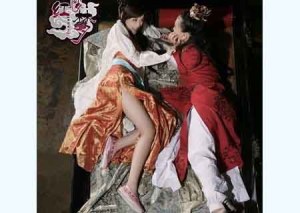
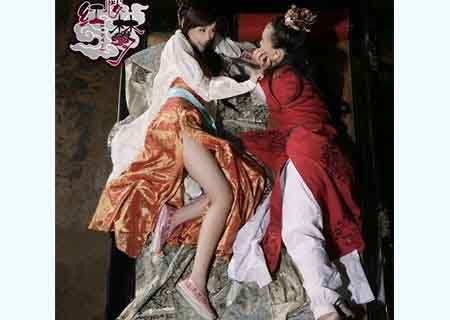
naked legs in the modern TV production

Viewers of the new version comment on their blogs that the new show sometimes feels like a ghost show because it tries to shock us so often. And they say the new female leads dress and wear makeup more like girls from a modern brothel than an ancient royal court. They show too much of their legs and thighs in every scene. They are liked whores.

Lin Daiyu - naked and dead in the modern production

And it seems even the director Li Shaohong cannot understand the true meaning of the Red Mansion story. First, she doesn’t like the book (she admitted this in an interview). Second, she made Lin Daiyu naked in her dying scene, explaining that she aimed to shock the audience by doing this. This is an insult. The Qing Dynasty was very conservative and women were not allowed to show skin. How can a noble, elegant young girl be naked?

Also, there’s a funny mistake in a scene on the Qing-era boat. There are rubber tires on the boat!!!
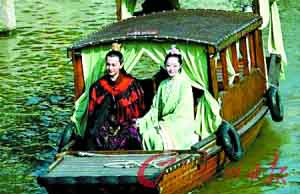
rubber inner tubes on an 18th century Chinese boat

I don’t know when or where rubber was invented, but certainly not in ancient China.

 (Note from this Blog’s host: The invention of rubber has been traced to the ancient Mayans of central America to 1600 BC. There is no record of rubber tires reaching China at the time “A Dream of Red Mansions” was written by Cao Xueqin [1715-1763]. In fact, Charles Goodyear invented the first vulcanized rubber in 1844 and it wouldn’t be until 1888, that John Dunlop invented air-filled tires for bicycles.)
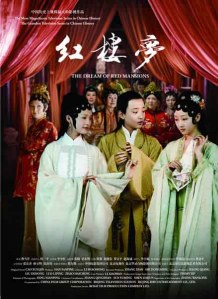
modern production - the one with nudity

So, on and on are my criticisms of the new Red Mansion TV show. It’s more like watching the new world, but maybe that’s what China’s government-run media wants—everything new and glamorous. 

See Hannah Travel Adventure (Chinese) or Hannah China Backpacker (English)

_________________________

Lloyd Lofthouse, the host of the Blog, is the award-winning author of the concubine saga, My Splendid Concubine & Our Hart. When you love a Chinese woman, you marry her family and culture too. 

Sign up for an RSS Feed for iLook China


The Power of Chinese Assimilation

July 9, 2010

Andrew Clark contributed a post to Politics Daily about China’s minorities and the autonomous regions they call home. As Andrew clearly pointed out, “Han Chinese make up 92 percent of the People’s Republic of China. The remaining 8 percent is made up of minority groups, mainly Tibetan, Zhuang, Uyghur, Mongolian, Miao, Manchu, and Hui (these are the major ethnic groups — China officially recognizes 55 minority populations).”

Clark concludes with, “It remains to be seen whether the Chinese government can successfully assimilate these groups, or if consistent suppression of uprisings can force social tranquility.”

The Chinese map has inflated and deflated for more than two-thousand years. Some of these minorities have been in China longer than others. The Mongolians Clark visited, like the Tibetans and the Uyghur, are three who haven’t been inside China as long since they were conquered by the Qing Dynasty (the Manchu minority), who ruled China from 1644 – 1911.

One other minority ruled China for a brief time and that was the Mongols as the Yuan Dynasty (1277 – 1367). Both the rulers of the Qing and the Yuan were assimilated into the Han culture while they ruled China. That’s was primarily because they were surrounded by Han Chinese in the capital.

Tibet broke from China in 1913 and stayed out until 1950 when Mao sent an army into Tibet, which has always been a difficult place for China to rule since sending armies there to enforce control was difficult. But today, a highway and a railroad make that journey easy. If those transportation routes are cut, there’s still air transportation. The travel distance between Tibet and  Beijing is shorter than it was a century ago.

Currently, China is adding about 40 thousand more kilometers of rail throughout China and building another grid of high-speed rail. This improved transportation system is also bringing about change and causing a Han migration that would have been unthinkable more than a century ago when most of China didn’t have electricity or roads.

For centuries, China ruled over these minorities without moving Han Chinese into their territories, but times have changed and the Han Chinese, like the Americans Europeans moving West, have been migrating into the autonomous regions for years, which may have more of an impact keeping these territories part of China than armies ever have. And if that doesn’t work, China still has the largest standing army in the world.

Clark also claimed, “the United States has seemingly countless ethnic and cultural minorities that are proud to call themselves American…”  While somewhat true, many of almost 2,500 American native tribes still  hold to their old ways and live on reservations proud to be Navaho or Sioux, Black Foot or Apache, maybe more so than being American.

If given a choice,  many of these North American tribes would jump at the chance to have their ancestral homes back. But the FBI keeps a tight watch over these American minorities, and the US Marines are always a phone call away. Then there is the fact that Alaska and Hawaii both have strong secessionist movements.

Discover more about Minorites in China

_________________________

Lloyd Lofthouse is the award-winning author of the concubine saga, My Splendid Concubine & Our Hart. When you love a Chinese woman, you marry her family and culture too. 

Sign up for an RSS Feed for iLook China


The Opium Wars in the 19th Century (1800s)

June 28, 2010

China began the 19th century confident of its superiority over the rest of the world.  China’s population numbered 400 million. The Qing (Manchu) Empire controlled the world’s biggest economy.  China enjoyed a favorable balance of trade with the West—receiving a huge amount of money for its silk, porcelain, and tea.

By 1800, the British consumed 10,000 tons of tea annually.  So much money poured into China, that one Chinese merchant became the richest man in the world, and all foreign business with was restricted to one city, Canton.

However, Britain had a product to reverse that balance of trade—opium. The British shipped opium into China and up its rivers to almost every part of China.  So many became addicted to the drug, the stability China was threatened.

Then in 1839, the Emperor acted to stop the opium trade. Lin, the man in charge, wrote to Queen Victoria asking for her help. Ignored by Great Britain, Lin resorted to confiscating the opium and destroying it, which led to the Opium Wars started by Britain and France, who respected nothing but force. China lost the war and was forced to pay for a war they did not want and did not start.

In the British parliament, William Gladstone criticized his government calling the Opium war a disgrace.

See Mao’s War Against Illegal Drugs

______________

Lloyd Lofthouse is the award-winning author of the concubine saga, My Splendid Concubine & Our Hart. When you love a Chinese woman, you marry her family and culture too.

If you want to subscribe to iLook China, there is a “Subscribe” button at the top of the screen in the menu bar.