Mao’s Motives

June 24, 2010

Why did Mao cause so much suffering with his failed Great Leap Forward and The Cultural Revolution? Yes, the power Mao held was a corrupting factor in the decisions he made, but  fear of repeating history was also a factor.

Mao's Little Red Book of Quotations

How many millions of Chinese were addicted to Western opium forced on China by Great Britain and France during two Opium Wars?

Historians say that 20 to 30 million were killed due to the Taiping Rebellion. If Christian missionaries had not been forced on China because of the Opium Wars, would that rebellion have taken place?

Another 115,000 Chinese were killed during the Boxer Rebellion, which was a popular peasant uprising against Christian missionaries, foreign meddling and exploitation.

After 1911 when the Qing Dynasty collapsed, chaos and anarchy ruled China, while foreigners—Americans included— lived in luxury in the treaty ports protected by modern foreign military forces. A Century of Madness chronicles this time.
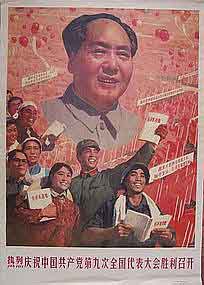
Mao survived Chiang Kai-shek‘s crack down on the labor movement led by the Communist Party. During World War II, Mao’s army not only fought Chiang Kai-shek’s troops but also the Japanese, who killed between 10 to 20 million Chinese in their attempt to conquer China. The peasants trusted Mao’s troops but did not trust Chiang Kai-shek’s army. Why?

Mao believed that socialism would create a better life for the Chinese. His failures were attempts to make China strong enough to defend the country against foreign meddling and invasions. He failed, but Deng Xiaoping didn’t. What happened in Tiananmen Square in 1989—where a few hundred demonstrators were killed—was nothing compared to what China suffered starting with the First Opium War.

______________

Lloyd Lofthouse is the award-winning author of the concubine saga, My Splendid Concubine & Our Hart. When you love a Chinese woman, you marry her family and culture too.

To subscribe to “iLook China”, look for the “Subscribe” button at the top of the screen in the menu bar, click on it then follow directions.


China’s Great Leap Forward ends to be replaced with Mao’s Cultural Revolution (Part 5 of 6)

June 24, 2010

In 1966,  Mao’s Red Book of quotations was used as a textbook in the schools. Shao Ailing, a head teacher in Shanghai said, “The pupils began to realize that all the changes taking place in their families, in school, in Shanghai and China were brought about by Chairman Mao.”

Mao encouraged students to attack authority and the leadership of the Communist Party. This advice came from the “George Washington” of China, the man who had delivered on his promises to the peasants and brought them medicine and land reforms—something the emperors and Chiang Kai-shek had never done.

Tourist Attraction in Today's China

Zhang Baoqing, an early Red Guard member in Beijing, said, “Chairman Mao started the Cultural Revolution to keep up the momentum for change. We thought if we followed Mao, we could not go wrong.”

Mao motivated millions of students from speeches in Tiananmen Square. This time it wasn’t the rural peasants. It was China’s urban youth, who were too young to remember Mao’s mistakes from the Great Leap Forward.

Student anger focused on Mao’s rivals, President Liu Shaoqi and Deng Xiaoping. Even small children were taught to denounce Liu. Then anyone in power was denounced. The structure of the Communist Party collapsed. Schoolteachers were attacked and tortured by their students. Up to a million were killed or driven to suicide.

Return to Part 4, China’s Great Leap Forward or go to Part 6

______________

Lloyd Lofthouse is the award-winning author of the concubine saga, My Splendid Concubine & Our Hart. When you love a Chinese woman, you marry her family and culture too.

If you want to subscribe to iLook China, there is a “Subscribe” button at the top of the screen in the menu bar.


Kun Opera

June 4, 2010

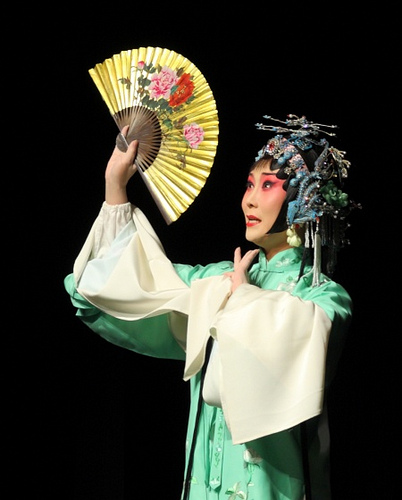
Kun Opera is the most refined and literary form of Chinese opera with a six hundred year history.  This opera is known as the “mother” of a hundred Chinese operas.  Kun Opera ushered in the second Golden Era of Chinese drama and almost vanished when it was suppressed during Mao’s Cultural Revolution.

When Kun Opera was dying in China during Mao’s rule, it was still being performed in the British Crown Colony of Hong Kong.  Prior to the Cultural Revolution, there were over 500 classical Kun Operas. Today there are about 100 that have survived.

Kun Opera is known for the tenderness of the actor’s voices, delicate hand gestures, dramatic facial expressions, beautifully abstract movements, gorgeous costumes and stage design.  The Peach Blossom Fan is considered a landmark in this form of Chinese opera.

See a scene from the Peony Pavilion, another classical Kun Opera.

If you enjoyed this presentation, discover Huangmei Opera.

_____________________

Lloyd Lofthouse is the author of the award winning novels My Splendid Concubine and Our Hart. He also Blogs at The Soulful Veteran and Crazy Normal.

Sign up for an RSS Feed for iLook China


Christianity in China

April 26, 2010

My wife’s mother was a Chinese Christian convert. It was not safe to belong to a religion during Mao’s Cultural Revolution. To survive, she became a closet Christian. She prayed at night but never let her children know that she was a Christian.

She told her husband that having children was for God. Whatever her religious beliefs were, she kept to herself. Since she had a statue of the Virgin Mary and held it when she prayed, it should be safe to say that Catholicism influenced any form of Christianity she believed in.

I understand Catholicism. When I was a child, I was baptized a Catholic and my family went to mass each Sunday. I also attended a Catholic elementary school for a few years.

I write about what I know, and I know only a little about other cultures outside the United States.

However, I do know something about China. After all, my wife is Chinese. I have been to China a dozen times since 1999, and we have a flat in Shanghai.

After nine years of researching China, I published my first novel, which takes place in 19th century China. For the last ten years, I have immersed myself in discovering China and have learned that there is more to discover. I have barely scratched the surface.

See When in Rome, Do as the Romans

______________

Lloyd Lofthouse is the award-winning author of the concubine saga, My Splendid Concubine & Our Hart. When you love a Chinese woman, you marry her family and culture too. 

If you want to subscribe to iLook China, there is a “Subscribe” button at the top of the screen in the menu bar. 


Farewell, My Concubine

April 2, 2010

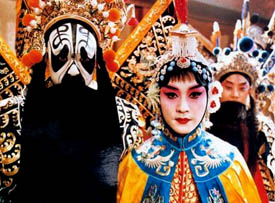
Chen Kaige, self-trained as a filmmaker, was the director for this award winning 1993 film. Prior to “Farewell, My Concubine“, Chen received modest acclaim for the “Yellow Earth” and “The Big Parade”. With “Farewell, My Concubine,” he won the Palme d-or in Cannes.

Farewell, My Concubine

Although the film is in Mandarin with English subtitles, the story captured me from the beginning. If you are interested in Chinese history, this film spans several decades beginning near the end of the Ch’ing Dynasty. On the surface, it is just a story of two boys who happen to become famous, but have their difficulties like most of us lesser mortals do. However, the setting shows the  transformation of a nation from the Ch’ing Dynasty to a warlord dominated republic, the Japanese invasion of World War II and then Mao’s Cultural Revolution.

I saw this movie a decade ago and I remember this powerful, dramatic story of one man’s life from the day his mother took a knife and chopped off an extra finger on each hand so he would have five instead of the six he was born with.

The main character is apparently modeled after an actual person—Peking Opera superstar Mei Lanfang—some may imagine that Lanfang was ‘gay’. However, he only specialized in male roles. He was married at least three times and had children.

Discover Not One Less

______________

Lloyd Lofthouse is the award-winning author of The Concubine Saga. When you love a Chinese woman, you marry her family and culture too.  This is the love story Sir Robert Hart did not want the world to discover.

To subscribe to “iLook China”, look for the “Subscribe” button at the top of the screen in the menu bar, click on it then follow directions.