China’s Great Leap Forward (1958 to 1961) – Part 1 of 6

June 21, 2010

Before reading this series about Mao’s Great Leap Forward, I recommend you first read China, The Roots of Madness to understand what led to Mao’s era as the leader of Communist China (1949 – 1976). This link will take you to that post.  When you finish, return to China’s Great Leap Forward.

_____________________________

Mao’s era begins in October 1949 with victory celebrations in Beijing, as the country with the largest population in the world sees a Communist government come to power.

(when the advertisement appears, advance the video scroll bar to 2:00 minutes to avoid it)


Mao says, “The People’s Republic of China is founded today. China will be free of inequality, poverty and foreign domination.”  In 1950, most Chinese live as they have for centuries. The video shows what this life was like.  Before Mao, most lived in poverty and were in debt to landowners.

Hu Benxu, a peasant farmer in Sichuan says that in the past, there was justice for the rich but nothing for the poor.
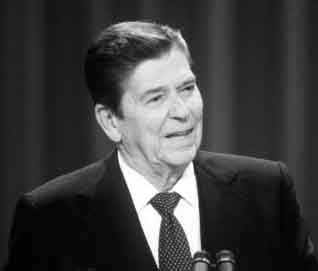
President Ronald Reagan

Chiang Kai-shek believed that improvements would spread through the country (sort of like President Reagan’s trickledown theory, which didn’t work) as foreign investments poured into China. But the opposite happened. As the country industrialized, the gap between the rich and the poor grew wider. The rich held on to money and wanted more. Protests about working condition in the factories were met with death from Chiang Kai-shek’s troops.

Meanwhile, Mao promised land reforms, and his troops treated the peasants with respect. When Mao won China, he said, “We Chinese should work hard. The country is poor. Our people are uneducated.  We must make China a modern industrialized state.”

However, there would be many mistakes and much suffering during the next 27 years. After two thousand years of an Imperial system of government, China was embarking on a journey of reinventing a country and a culture without any foreign influence.

Go to Part 2, China’s Great Leap Forward

______________

Lloyd Lofthouse is the award-winning author of the concubine saga, My Splendid Concubine & Our Hart. When you love a Chinese woman, you marry her family and culture too.

If you want to subscribe to iLook China, there is a “Subscribe” button at the top of the screen in the menu bar.


China: The Roots of Madness – Parts 7 & 8 of 8

June 12, 2010

In Part 7, it is 1948 and Mao attacks. His army leaves the caves and captures Manchuria. When Chiang Kai-shek’s northern army surrenders, modern American weapons and equipment fall into Mao’s hands. Mao demands total surrender, but Chiang’s army boards ships for Taiwan taking China’s wealth and historical treasures. In fear, western businessmen and missionaries flee China.

By 1967, when this documentary was produced, Mao had ruled China for 18 years. Protected by America, Chiang was still in Taiwan serving as president for life. He also had six-hundred thousand Kuomintang troops, and the island people lived under martial law.

Theodore H. White says America does not understand Communist China. America could not predict the “Great Leap Forward” or the purges that followed. He says the quality of life for the peasants had not improved. They still worked like beasts as they always had.

Part 7 ends with words of fear for the world’s future because China has nuclear weapons. There is no mention that America has enough nuclear weapons to destroy the earth a hundred times over. In Part 8, White concludes the documentary in about two minutes.

Return to Part 6, The Roots of Madness or start with The Roots of Madness-Part 1

View as Single Page

______________

Lloyd Lofthouse is the award-winning author of the concubine saga, My Splendid Concubine & Our Hart. When you love a Chinese woman, you marry her family and culture too.

If you want to subscribe to iLook China, there is a “Subscribe” button at the top of the screen in the menu bar.


China: The Roots of Madness – Part 6/8

June 11, 2010

In Part 6, Theodore H. White tells of an incident with Chiang Kai-shek’s troops when an officer tells peasants they were Mao’s men.  When White asks why lie, he’s told the peasants wouldn’t help if they knew the truth. In fact, regardless of the suffering from Mao’s Great Leap Forward and the Cultural Revolution, this loyalty never wavers.

Joseph Stilwell, the commanding US general in China, is not happy with Chiang since he is not fighting Japan. Chiang says he needs his troops to fight the Communists. In 1945, America invites representatives from Chiang’s government  to take part in Japan’s surrender on the battleship Missouri and ignores the Communists.

USS Missouri

An American ambassador urges Mao to join Chiang in a unified government. To bring this about, America offers Mao protection and there are face-to-face negotiations between Mao and Chiang.  Meanwhile, in secret, Chiang moves his troops to launch an assault in Manchuria.

America urges Chiang to win the people by implementing Sun Yat-sen’s promised reforms.  Instead, Chiang’s war causes run-away inflation. Essential good become too expensive. The people want peace, and Mao offers the peasants what they want—land.

Continued in Part 7 & 8, The Roots of Madness or return to Part 5, The Roots of Madness

View as Single Page

______________

Lloyd Lofthouse is the award-winning author of the concubine saga, My Splendid Concubine & Our Hart. When you love a Chinese woman, you marry her family and culture too.

If you want to subscribe to iLook China, there is a “Subscribe” button at the top of the screen in the menu bar.


China: The Roots of Madness – Part 4/8

June 10, 2010

In Part 4, Chiang Kai-shek’s army is not ready when Japan invades Manchuria. He doesn’t have tanks, the artillery is old and the Chinese are learning about airplanes.

Meanwhile, the Communists that Chiang thought he had destroyed are back. Mao knew the peasants lived in horrible poverty. He promised land reforms and by 1932 has millions of supporters.

The language describing Mao is not flattering. Yes, when Mao ruled China, he was a brutal dictator. However, Chiang Kai-shek was also a brutal dictator. But Chiang converted to Christian in 1929, and the West still refers to him as the president of China—not a dictator.

Instead of fighting Japan, Chiang’s army bombs villages that Mao controls killing tens of thousands of noncombatants. Mao takes his ninety thousand troops on the famous thousand-mile Long March. A year later, only a few thousand remain. Mao calls for unity to fight Japan.

One of Chiang’s generals, Zhang Xueliang, forces him to sit down with the Communists where Chiang Kai-shek agrees to fight Japan. As soon as Chiang returns to his capital, he breaks the agreement and throws Zhang in prison.

Continued in The Roots of Madness- Part 5 or return to Part 3

View as Single Page

______________

Lloyd Lofthouse is the award-winning author of the concubine saga, My Splendid Concubine & Our Hart. When you love a Chinese woman, you marry her family and culture too.

To subscribe to iLook China, look for the “Subscribe” button at the top of the screen in the menu bar, click on it then follow directions.


An Attitude Shift in China

June 7, 2010

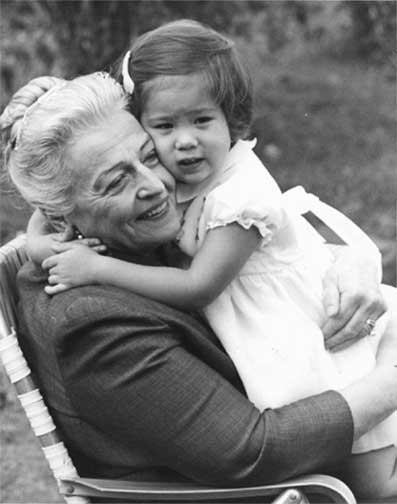
During Mao’s Cultural Revolution, Pearl S. Buck, who wrote The Good Earth and was awarded the Nobel Prize for Literature, the first American woman to win it, and the Pulitzer Prize, was denounced in 1972 as an “American cultural imperialist” by the Communists in China and was not allowed to visit China with Richard Nixon.

Pearl S. Buck

I recently read in Xinhua, the official voice of China’s government, that “A few months ago, the American novelist who spent most of the first 42 years of her life in China, from 1892 to 1934, putting her heartfelt and acute understanding of Chinese grassroots people in her Pulitzer Prize-winning novel, The Good Earth (1931), was voted one of the top “friends of China” in an international event hosted by the Chinese government.”

In February 2009, city officials in Zhenjiang, Jiangsu Province in China opened the Pearl S. Buck Museum and Philanthropy Pavilion adjacent to her historic home. The museum and pavilion were divided into three sections: one devoted to her humanitarian works, another to her life and achievements, and the last, to her writings.

See International Women’s Day

_____________________

Lloyd Lofthouse is the author of the award winning novels My Splendid Concubine and Our Hart. He also Blogs at The Soulful Veteran and Crazy Normal.

Sign up for an RSS Feed for iLook China