After the Communists won China in 1949, health care improved. Prior to that, life expectancy for the Chinese people was thirty-five years. By Mao’s death in 1976, average life expectancy had increased by twenty years.
There were three basic areas of medical care. Free substandard medical care was provided to the proletarian working class, meaning workers and peasants.
Mao started a program called ‘bare-foot doctors’. This program was the backbone of rural health care in China. This meant anyone could become a doctor.
Video: Documentary of Bare-Foot Doctors in China
Mao told the people that if you wanted to be a doctor, you didn’t need to go to medical school. All you had to do was have the motivation to provide medical care to needy people and the government would support you and provide limited training.
The second class of medical care went to people like teachers, clerks and secretaries, ‘friends’ of the working class, the proletariat. The only difference was that these ‘friends’ had to pay to get medical treatment. It was possible to face financial ruin from one hospital stay.
The third class were termed enemies of the proletariat like former shop-owners, landlords and denounced intellectuals like liberal arts professors. These people were denied treatment altogether.
Lloyd Lofthouse is the award-winning author of The Concubine Saga. When you love a Chinese woman, you marry her family and culture too. This is the love story Sir Robert Hart did not want the world to discover.
To subscribe to “iLook China”, look for the “Subscribe” button at the top of the screen in the menu bar, click on it then follow directions.
Unlike Mao’s time, today’s Chinese leaders must answer to the seventy-million party members scattered throughout China. These people listen to the 1.3 billion Chinese that do not belong to the party. The result: if an elected official is not doing his or her job, that person usually isn’t reelected.
Deng Xiaoping
Other changes took place after Mao. Under Deng Xiaoping, the People’s Republic announced a policy of “socialism with Chinese characteristics.” John Gittings in The Changing Face of China quoted Deng Xiaoping as saying, “Planning and market forces are not the essential difference between socialism and capitalism. A planned economy is not the definition of socialism, because there is planning under capitalism; the market economy happens under socialism, too. Planning and market forces are both ways of controlling economic activity.”
Soon after Mao died in 1976, Deng Xiaoping’sBeijing Springwas introduced. This was a brief period lasting from 1977 into 1978. During that time, the public was allowed greater freedom to criticize the government, which wasn’t allowed under Mao.
An example of this may be seen in “The Awakening” (Su-Xing), a movie produced during this period starring Joan Chen (Chen-Chung) and Gau Fei. [ISBN: 978-7-88611-603-2]. There are no English subtitles so it helps to have someone that reads or speaks Mandarin beside you while watching the movie that can point out the subtle criticisms of the Party that appear in the film, which was considered controversial at that time.
There was also a new Beijing Spring between 1997 to November 1998 where the Chinese government relaxed some control over political expression and organization. It was during this time that China signed the International Covenant on Civil and Political Rights.
Lloyd Lofthouse is the award-winning author of The Concubine Saga. When you love a Chinese woman, you marry her family and culture too. This is the love story Sir Robert Hart did not want the world to discover.
To subscribe to “iLook China”, look for the “Subscribe” button at the top of the screen in the menu bar, click on it then follow directions.
How does Communist China treat its minorities compared to the way minorities have been treated in the Americas?
Yes, human rights violations did happen in Tibet, but most happened during the Cultural Revolution. Mao ruled China for twenty-seven years (1949 – 1976) but the Cultural Revolution started in the mid 1960s and ended in 1976 with his death, and everyone in China suffered during that decade.
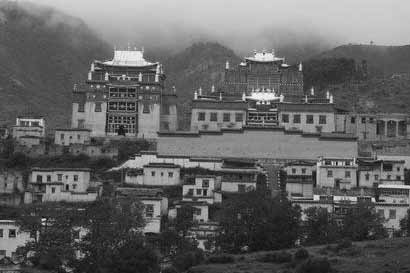
Since Mao considered Tibet to be part of China (and recorded, nonbiasedevidence from primary sources prior to the rise of Communism supports that claim), those who suffered in Tibet were treated the same as the rest of China. Monasteries in Tibet were destroyed–but this was going on everywhere in China and after 1976 many of the major monasteries were rebuilt by China.
The next post shows what happened after Mao died—facts we seldom if ever hear. It is always good to have the facts to see who sins and who doesn’t.
Lloyd Lofthouse is the award-winning author of the concubine saga, My Splendid Concubine & Our Hart. When you love a Chinese woman, you marry her family and culture too.
If you want to subscribe to iLook China, there is a “Subscribe” button at the top of the screen in the menu bar.
True, under Mao Zedong (1893 – 1976), China suffered but that isn’t the whole story. During Mao’s Great Leap Forward and the Cultural Revolution, thirty-seven million died—many from starvation. Mao’s form of communist socialism did not work.
On June 30, 1984, Deng Xiaoping said, “Given that China is still backward, what road can we take to develop the productive forces and raise the people’s standard of living? … Capitalism can only enrich less than 10 per cent of the Chinese population; it can never enrich the remaining more than 90 per cent. But if we adhere to socialism and apply the principle of distribution to each according to his work, there will not be excessive disparities in wealth. Consequently, no polarization will occur as our productive forces become developed over the next 20 to 30 years.”
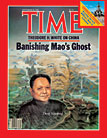
Deng Xiaoping on the cover of Time Magazine
Deng Xiaoping may have been right. Bruce Einhom writing for Business Week, Countries with the Biggest Gaps Between Rich and Poor, October 16, 2009, listed the top countries with the biggest gaps. America was number three on the list. China wasn’t on the list—yet.
What does this mean for America? (CBS/AP) The Census Bureau reports that 12.5 percent of Americans, or 37.3 million people, were living in poverty in 2007, up from 36.5 million in 2006.
After 2000, the situation in America deteriorated quickly (with President George W. Bush in the White House)—all of the gains in middle-class economic security since WWII were erased within a few years.
PBS reported in “Middle Class Squeeze” (December 13, 2002), the shape of income distribution in America is changing and many are finding it increasingly difficult to afford housing while keeping up with necessities such as food, clothing, transportation, and health care.”
What does capitalism, Chinese style, look like? Under Deng Xiaoping’s economic policies, China became the world’s factory floor.
Prior to 1979, the year China opened its economy to world trade, it was rare to find anything made in China. Since then, exports from China have increased 10,000%, and this year China’s economy become the second largest in the world as Japan slipped to third place.
In the last decade, something happened in China that Mao thought he had destroyed. China grew a middle class. During a trip to China in 2008, we saw the Chinese middle class everywhere we went. Instead of the majority of tourists being foreigners, they are now Chinese.
A middle-class family in China usually owns an apartment, a car, eats out and takes vacations. National Geographic in the May 2008 magazine, said, “they owe their well-being to the government’s (Deng Xiaoping’s) economic policies…”
Current estimates show China’s growth will continue and grow between five and eight percent a year. China’s real GDP growth accelerated on a year-over year basis by a full percentage point, rising from 7.9% in the second quarter to 8.9% in the third quarter (reported Oct. 22, 2009).
Lloyd Lofthouse is the award-winning author of The Concubine Saga. When you love a Chinese woman, you marry her family and culture too. This is the love story Sir Robert Hart did not want the world to discover.
To subscribe to “iLook China”, look for the “Subscribe” button at the top of the screen in the menu bar, click on it then follow directions.
I found this information from a 1967 documentary conceived and written by Theodore H. White to have half-truths about Imperial China. It is understandable that any American film from that era would be flawed since McCarthyism’s Red Scare took place in the US the decade before. Even today, Sinophobia infects almost half of America.
Author Theodore White lived in China for seven years and said that foreigners who lived in China during the crises often remembered it differently as if his opinions were correct and they were wrong.
The Roots of Madness unwittingly documents the lies and deceit that demonized the Empress Tsu Hsi when the narrator calls the empress evil. To discover the truth about the empress, I suggest reading Dragon Lady by Sterling Seagrave, who revealed the lies and deceit of Western journalists.
Nothing in China’s ancient culture could guide the Chinese to become part of the modern world.
Instead, China would experiment with different forms of government—a process that is still going on.
Although “China: The Roots of Madness” is a flawed production, there is enough accurate history to show why China is the way it is today.
British and American power controlled the wheels of industry in Shanghai, Nanking, Hankow and Chunking. In the steaming south, peasants, working like beasts, plant rice and speak languages most Chinese do not understand.
At the turn of the century, a three-year-old child was the emperor and the throne sat empty. On October 10, 1911, a riot took place that couldn’t be controlled.
Five weeks later, the Imperial government collapsed. The Qing Dynasty vanished and two-thousand years of Imperial tradition was gone.
The Chinese call this time the “Double Death”.
The British and Americans could not control what replaced the Qing Dynasty.
Students without weapons rioted in the streets.
Warlords that controlled armies divided China and the chaos and anarchy grew worse.
Life became so cheap, that death was like a bloody circus.
However, while the Chinese people suffered and starved, the foreigners live in luxury and controlled China’s industry while being protected by the Western military.
Chinese students demanded a revolt and Sun Yat-sen called on China to slay the dragon of Imperialism. He said China must start with nationalism, then democracy and finally socialism. The only country that offered to help was Soviet Russia.
Death claims Sun Yat-sen (1866 – 1925) after he has accepted support from Soviet Russia. Soon, General Chiang Kai-shek (1887 – 1975), with help from the Communists, consolidates power in southern China.
Chiang is known to Westerners as a fiery nationalist and revolutionary. He mobilizes an army under Sun Yat-sen’s flag and marches north with a few divisions.
Meanwhile, the warlords have gathered half-a-million troops to stop him. Outnumbered, Chiang sends an advance group of nationalists and communists to call the peasants and workers to join his army.
Among those peasants and workers is Mao Tsetung (1893 – 1976).
While moving north, Chiang’s army raids foreign concessions, burns foreign buildings and tears down foreign flags.
Leftist leaders of the Kuomintang distrust Chiang Kai-shek and some want to assassinate him but others disagree.
In Shanghai, Chiang Kai-shek, now a dictator, strikes first on April 12, 1927. His troops kill anyone suspected of being a Communist.
In December, there is a Communist uprising in Canton. A battle rages for two days between the Communists and Kuomintang ending in the executions of most Communists, but Mao escapes and goes into hiding.
Chiang Kai-shek’s army is not ready when Japan invades Manchuria. He doesn’t have tanks, the artillery is old and the Chinese are learning about airplanes.
Meanwhile, the Communists that Chiang thought he had destroyed are back. Mao knew the peasants lived in horrible poverty. He promised land reforms and by 1932 has millions of supporters.
The language in this documentary describing Mao is not flattering.
Yes, when Mao ruled China, he was a dictator but that ended in 1976 when he died. Since then, China has had several presidents that the 1982 Chinese Constitution allows to lead China for two five-year terms and there is an impeachment clause.
However, Chiang Kai-shek was also a dictator. The only difference between Mao and Chiang is that Chiang converted to Christianity in 1929, and the West called him the president of China—not a dictator. Chiang Kai-shek was never elected by the people of a democracy to rule China or Taiwan.
Instead, he ruled Taiwan under martial law until he died then his son became president without a popular vote by the people.
Instead of fighting Japan, Chiang’s army bombs villages that Mao controls killing tens of thousands of noncombatants. Mao takes his ninety thousand troops on the famous thousand-mile Long March.
A year later, only a few thousand remain. Mao calls for unity to fight Japan.
One of Chiang’s generals, Zhang Xueliang, forces the Nationalist dictator to sit down with the Communists where Chiang Kai-shek agrees to fight Japan. As soon as Chiang returns to his capital, he breaks the agreement and throws Zhang in prison.
Meanwhile, Mao’s troops in the hills of Yunnan grow their own food. His army, dressed in shabby clothing wearing straw sandals, doesn’t look like a fighting force. Mao says the people are the sea and guerrillas are like fish that swim in the sea. Within a year, Mao’s army grows to 200,000.
Chiang Kai-shek’s army loses battles and cities to the Japanese. To continue fighting, his government and army moves to the deep mountain city of Chongqing in Sichuan province.
In 1939, the Japanese start bombing Chongqing 24/7.
When asked about the Japanese threat, Chiang says that the Japanese are a disease of the skin, but the Communists are a disease of the heart.
Then on December 7, 1941, Japan bombs Pearl Harbor and America enters the war.
War supplies start to trickle to China through India and across the Himalayas to Chiang Kai-shek’s four-million-man army.
However, his government is corrupt, his troops are poorly fed and morale is low. In fact, the peasants do not trust Chiang’s
troops or him.
Chiang Kai-shek is accepted as an equal among the West’s leaders while Mao works to keep up the moral of his Communist troops through political training—something Western leaders don’t understand and criticize.
Theodore H. White tells of an incident with Chiang Kai-shek’s troops when a Nationalist officer lies to peasants saying he belongs to Mao’s Communist army. When White asks why lie, he is told the peasants would not help if they knew the truth.
In fact, regardless of the suffering from Mao’s Great Leap Forward and the Cultural Revolution, this loyalty never wavers.
Joseph Stilwell, the commanding US general in China, is not happy with Chiang since he is not fighting Japan.
Chiang says he needs his troops to fight the Communists.
In 1945, America invites representatives from Chiang’s government to take part in Japan’s surrender on the battleship Missouri but ignores the Communists under Mao.
An American ambassador urges Mao to join Chiang in a unified government. To bring this about, America offers Mao protection and there are face-to-face negotiations between Mao and Chiang.
During the negotiations, in secret, Chiang moves his troops to launch an assault on the Communists in Manchuria.
America urges Chiang to win the people by implementing Sun Yat-sen’s promised reforms.
Instead, Chiang’s war to destroy the Communists causes run-away inflation. Essential goods become too expensive. The people want peace, and Mao offers the peasants what they want—land.
In 1948, Mao attacks when his army leaves the caves and captures Manchuria
When Chiang Kai-shek’s northern army surrenders, modern American weapons and equipment falls to Mao’s troops.
Mao demands total surrender, but Chiang’s army boards ships for Taiwan taking China’s wealth and historical treasures.
In fear, western businessmen and missionaries flee China.
By 1967, when this documentary was produced, Mao had ruled China for 18 years and was still an inigma to most in the West. Nixon wouldn’t visit China for several more years.
Protected by America’s military and navy, Chiang was still in Taiwan serving as president for life (a dictator). He also had six-hundred thousand Kuomintang troops armed by the US, and the island people lived under martial law.
Theodore H. White says America does not understand Communist China. America could not predict the “Great Leap Forward” or the purges that followed.
White says the quality of life for the peasants had not improved (which is not true since the World Bank has reported that even under Mao the quality of life improved over what it had been), but they still had to work hard.
White’s documentary ends with words of fear for the world’s future because China has nuclear weapons.
There is no mention that America has enough nuclear weapons to destroy the earth a hundred times over and used two of them on Japan killing hundreds of thousands.
This revised post first appeared as an eight-part series starting June 8, 2010 at Roots of Madness – Part 1
______________
Lloyd Lofthouse is the award-winning author of the concubine saga, My Splendid Concubine & Our Hart. When you love a Chinese woman, you marry her family and culture too.
To subscribe to iLook China, look for the “Subscribe” button at the top of the screen in the menu bar, click on it then follow directions.


 Posted by Lloyd Lofthouse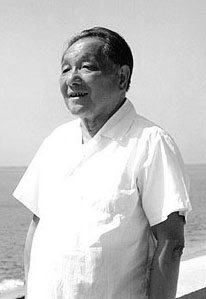
 iLook China