The Concubine’s Journey

January 17, 2011

In 1999, I was introduced to two dead people. One was a white guy from Ireland that died a hundred years ago and the other was Ayaou, a Chinese woman that was a mystery since Robert Hart tried to erase her from his personal history.

I’m fortunate that Hart failed and traces of Ayaou survived.

Since I was a child of seven or eight, I’ve been writing stories. They were short with lots of bad drawings.

Soon after I was honorably discharged from the US Marine Corps in 1968, I took my first writing workshop at a community college. Then Ray Bradbury came to the campus to speak and although I never read his work, what he said inspired me to never stop writing.

Although I did receive a few encouraging rejections through the decades and was represented by two or three reputable agents before Amazon.com and eBooks were born, nothing I wrote was picked up by a traditional publisher.

Believing I wasn’t good enough, I decided to learn more of the writing craft by earning a BA in journalism. An MFA with a focus in twentieth century American literature came much later.

Between earning the two college degrees, I drove about 150 miles one day each week for seven years to attend a workshop out of UCLA’s writing extension program.

The teacher was a chain smoker with an explosive tempter but she was sharp and several of the writers in her workshop went on to publish their work. When she felt one of her students was ready, she went all out and even found an agent for the author. She found one for me, but that’s another story.
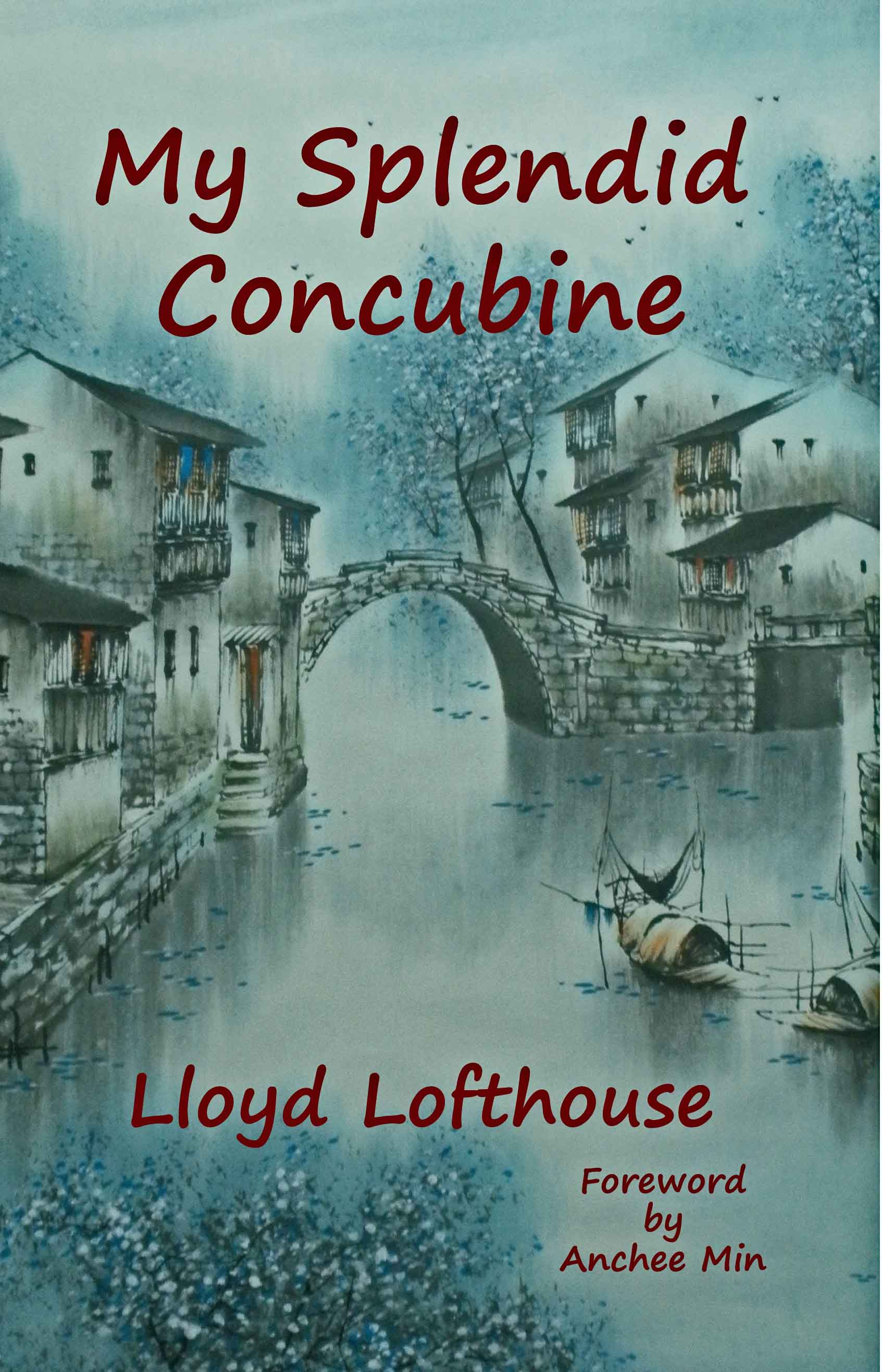
When I published My Splendid Concubine in 2008, I held my breath wondering if anyone would read it and enjoy the lusty, violent story of Robert Hart and Ayaou in the middle of 19th century China immersed in the smoke of the Opium Wars and the oceans of blood of the Taiping Rebellion.

On May 12, 2009, an Amazon reader, an anonymous person in Hong Kong, posted a one-star review of My Splendid Concubine.

The anonymous reader wrote, “As a great fan of Robert Hart’s, I was very eager to get my hands on this book. And what a huge disappointment it proved to be, for many reasons…”

One of those reasons was a “g” missing from one of five “Tang Dynasties” in the novel.

This one-star review was of the first edition. By the time it appeared on Amazon, the second revised edition was out and some of the anonymous reader’s complaints had been corrected.

In three years, My Splendid Concubine earned three honorable mentions in city book festival literary contests then Our Hart earned another four honorable mentions and became a finalist for a national writing award.

About a year ago, the sequel, Our Hart, was submitted to the 18th Annual Writer’s Digest Self-Published Book Awards.

Recently, an envelope arrived from Writer’s Digest.

Jessica Strawser, the editor of Writer’s Digest, wrote that the competition was particularly fierce this year…

Our Hart didn’t win.


This is the book trailer I produced in 2008 of the first edition of
My Splendid Concubine. My wife has been telling me I need a better one and to delete this version.


However, when you enter a book to this Writer’s Digest literary award, a judge writes a commentary of your work and ranks it for plot, grammar, character development, production quality and cover design, which helped dispel the criticism of that one-star review that discovered a missing “g” from one of five “Tang Dynasties” in My Splendid Concubine.

The Writer’s Digest judge, a professional in the publishing industry, awarded grammar a five with five being the highest score.

The judge wrote, “In Our Hart, Elegy for a Concubine, author Lloyd Lofthouse has penned an intriguing story set in an ancient Chinese dynasty. Political intrigue and matters of the heart are both fully explored. The book is meticulously researched and the author’s enthusiasm for his subject is evident.… The author has an ear for natural-sounding dialogue, making Our Hart an engaging read.… That said, readers who enjoy vicariously experiencing other times and cultures will find Our Hart a fascinating journey.”

______________

If you want to subscribe to iLook China, there is a “Subscribe” button at the top of the screen in the menu bar.


Surviving Extinction

December 11, 2010

In a conversation (through comments) of Saving Siberian Tigers in Northeast China, I wrote that the tiger poachers, if caught, should be castrated and given a second chance at life then executed if they hunted tigers again.

The individual I was having this conversation with said that castration followed by a death sentences was a bit harsh and he or she was right. 

It is harsh.

However, my response, which follows, shows why such harshness may be necessary for humanity to survive its own extinction.

You are correct to sense my anger over the slaughter of animal species by humans.  It’s one thing for a species to go extinct due to environmental changes in the planet but for humans to slaughter senselessly as Americans did with the North American buffalo in the 19th century when expanding west toward the Pacific was wrong in so many ways.

What explains the 19th century people who sat in trains shooting through open windows at the buffalo to see how many they could kill?

The closest example I can think of is World War II in China when Japanese army officers would have beheading contests to see how many innocent Chinese noncombatant citizens could be beheaded in a given time span.

There are terms for people like this:  sociopaths, narcissists, self-centered, and “A” type personalities such as Hitler.   Humanity would be better off to rid individuals like this from the gene pool, which is why I have no problem with China’s death sentences and execution rate.

I’m reading a book, Living With Evolution or Dying Without It.  Before writing the book, the author, K. D. Koratsky spent most of his life studying all aspects of evolution—not just the evolution of species but culture, civilizations, religions, etc.

In one section, he pointed out that cultures that executed dangerous criminal types with behavior that threatened the stability of the culture such as what happened in 2008 with the global economic crises caused by Wall Street and US banks, tended to be stable and survive for much longer period of time than cultures that were too lenient on such people such as the US is today.

If the men depicted in the Inside Job documentary had been Chinese citizens and had caused the 2008 global financial crises from China instead of the United States, the odds are good that they would all have been tried and convicted in a Chinese court and already have been executed for the 64 trillion US dollars in global losses and millions of jobs that vanished.

Instead, in the US, there hasn’t been an investigation and most of the men who brought the world this crises are still working in the industry doing business the way they did before the 2008 financial crises hit.

In America, repeat child molesters are allowed to go free after prison sentences and are often chemically castrated yet have managed to molest again and then are sent back for another prison sentence with another parole in the future. 

This is insanity.

I was actually going easy on the tiger poachers when I suggested castration and a chance to live.  People like that should be tortured then executed to send a strong message.

______________

Lloyd Lofthouse is the award-winning author of the concubine saga, My Splendid Concubine & Our Hart. When you love a Chinese woman, you marry her family and culture too.

If you want to subscribe to iLook China, there is a “Subscribe” button at the top of the screen in the menu bar.


The White Lotus Mutation

April 24, 2010

Persecution of the White Lotus Society started during the Yuan Dynasty (Mongols 1271 – 1368). Due to this, the White Lotus Society changed from one of peace and tranquility and organized protests against the Mongol rulers, the first non-Han to rule China.

Since Yuan Imperial authorities distrusted the White Lotus Society, the Dynasty banned them, and the White Lotus went underground.  The White Lotus also started to predict that a messianic (Christ like) figure would come and save them from persecution.

White Lotus Rebellion

A White Lotus led revolution started in 1352 around Guangzhou. A Buddhist monk, Zhu Yuanzhang, joined the rebellion. Soon, he became the leader by forbidding his soldiers to pillage, in observance of White Lotus religious beliefs.

By 1355, the rebellion had spread through much of China. In 1356, Zhu Yuanzhang captured Nanjing and made it his capital. Then Confucian scholars issued pronouncements supporting Zhu’s claim of the Mandate of Heaven, the first step toward establishing a new dynasty.

Zhu Yuanzhang liberated China from the Mongols and became the founding Emperor of the Ming Dynasty (1368 – 1643).  

At this point, you may see the danger of allowing a religious cult like the White Lotus to have any power.

Sign up for an RSS Feed for  iLook China


The Millennium Cult

April 23, 2010

Religions, as Christians, Jews and Muslims practice them, have never played a “major” role in Chinese Culture and Politics. Even today, more than 800 million Chinese say they do not belong to any religion and the largest religion in China is Buddhism (about 10% of the population of China).  Even during Imperial times, most members of government did not belong to organized religions. The same is true today with the Communist government.

China’s struggle with pagan cults (like the White Lotus Society) reaches back almost a thousand years. The White Lotus Society appealed to poor Han Chinese peasants and more so to women, who found peace in worshiping the Eternal Mother. It was believed that this Eternal Mother would gather all her children at the millennium into one family.

The Eternal Mother

White Lotus Societies started out seeking tranquilly through a combination of Buddhism with some elements of Daoism (Taoism) and other native Chinese religions. Even in the 12th century, the Yuan Dynasty was distrustful of the Yellow Lotus Society, which didn’t fit comfortably with Confucianism and the five Great Relationships.

See A Visit from the Falun Gong

_________________________

Lloyd Lofthouse is the award winning author of the concubine saga, My Splendid Concubine & Our Hart. When you love a Chinese woman, you marry her family and culture too. 

Sign up for an RSS Feed for iLook China


Controlling Opinions

April 17, 2010

Have the Tea Baggers in the United States been learning from China, or is it the other way around?

“Another strategy is manipulation. In recent years, local and provincial officials have hired armies of low-paid commentators to monitor blogs and chat rooms for sensitive issues, then spin online comment in the government’s (China’s) favor.

“Mr. Xiao of Berkeley cites one example: Jiaozuo, a city southwest of Beijing, deployed 35 Internet commentators and 120 police officers to defuse online attacks on the local police after a traffic dispute. By flooding chat rooms with pro-police comments, the team turned the tone of online comment from negative to positive in just 20 minutes.” Source: New York Times

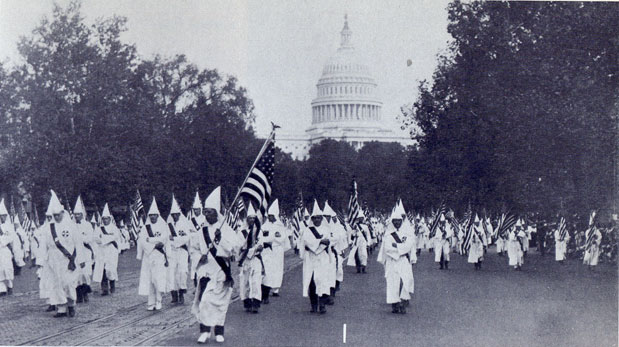
The Ku Klux Klan in 1926 - Is there a difference between them and today's American Tea Baggers

Isn’t this what Fox Network’s Glenn Beck, then Rush Limbaugh, who is heard on more than 600 radio stations, have been doing for years. Filling the airwaves with their opinions controlling what people hear and think. The American Tea Baggers are doing the same thing with the same results—behavior control.

Is America really different from China? See American Hypocrisy http://wp.me/pN4pY-6

Sign up for an RSS Feed for  iLook China