The Future of Health Care in China at Risk

February 28, 2010

Although China’s government has promised that by 2010, basic medical and health care will cover all rural residents, if someone becomes seriously ill and can’t afford medical care, he or she is out of luck.

Under this proposed basic medical system, subscribers will be funded at a level of fifty yuan per person (twenty yuan from the central government, twenty from the local government and ten from the individual).

Chinese peasant

Rural health care in China has become a challenge. For many peasants in rural areas, this could mean as much as ten percent or more of their annual income would have to go toward basic health care insurance. The rural people do not have a choice. The government will force everyone to pay his or her share.

Read about the Rural-Urban Divide at http://wp.me/pN4pY-69


Attitudes Toward Health in China

February 28, 2010

The focus in China is on prevention—meaning to plan your lifestyle around healthy habits. That’s why early in the morning you may find many older Chinese outside exercising using the graceful, poetic movements of Tai Chi to insure health and longevity.  

Meanwhile, behavior shows the old attitudes toward preventative health eroding. More than three hundred million Chinese smoke American cigarettes and obesity is a growing epidemic in China as it is in the United States.

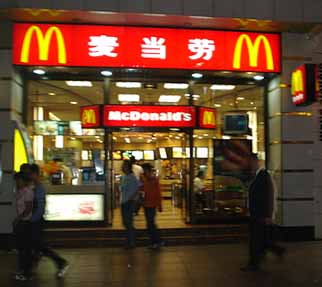
Shanghai McDonald's

How could obesity not be a problem since the Chinese are having a love affair with American fast food? China loves most things American. McDonalds and Domino’s Pizza are considered gourmet restaurants and can easily be found in China’s cities.

Learn about Doing Business in China

______________

Lloyd Lofthouse is the award-winning author of the concubine saga, My Splendid Concubine & Our Hart. When you love a Chinese woman, you marry her family and culture too. 

If you want to subscribe to iLook China, there is a “Subscribe” button at the top of the screen in the menu bar.


China’s Health Care Today

February 28, 2010

The health care system built under Mao’s leadership no longer exists. Doctors and nurses are trained the same as in the United States. Since Mao’s death, in one of the greatest policy reversals of modern times, China dissolved free medical care in its rural communities, privatized vast areas of the economy and shifted public-health resources toward the cities. Socialized medicine vanished.

President Ronald Reagan

President Ronald Reagan’s administration seems to have been the role model for these changes. During Reagan’s years, the U.S. saw a steep rise in the for-profit sector in medicine, in particular the for-profit hospital chains.

Other Republican presidents like the first George Bush continued this rush toward a for-profit, free market approach to health care. What has happened in the United States is starting to happen in China. There is no room for the poor and uninsured and uninsurable beyond what is considered basic services like blood pressure tests and taking your temperature along with a bit of advice.  

If you don’t have the money or a health plan linked to retirement, you face a death sentence. And like America, everyone working for the government (elected or not) has the best health care.

See China’s Health Under Mao


Learning from China’s History

February 27, 2010


I’m weighing in on the health care debate. I’m an impartial observer, because I already have socialized medicine through the VA. Serving in Vietnam earned me that benefit, and the VA works better than most systems.

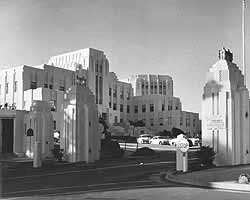
VA Medical Facility, San Francisco

We can learn from history if we pay attention. In 141 B.C.E., a new Han emperor sat on the Dragon Throne in China. His name was Wudi. He ruled for fifty-four years. Wudi believed that all people should have the right to buy certain commodities essential to survival and they should not be included in the free-market system. He implemented government monopolies in certain critical areas like salt, alcohol and iron. Prices were controlled so everyone paid the same low price.

After his death, a national debate known as the “Debate on Salt and Iron” took place. The government monopolies were abolished, and the poor could no longer afford many essentials. The rich grew wealthier. Soon after that, the Han Dynasty entered a period of stagnation like what is taking place in America today, and the Han Dynasty eventually collapsed. 

What could we learn from what happened in China during the Han Dynasty?
Isn’t health care a commodity essential to survival?

Learn about China Investing Big in Education

______________

Lloyd Lofthouse is the award-winning author of the concubine saga, My Splendid Concubine & Our Hart. When you love a Chinese woman, you marry her family and culture too.

If you want to subscribe to iLook China, there is a “Subscribe” button at the top of the screen in the menu bar


Chocolate Tofu Pie Recipe

February 26, 2010

I’m taking a break from serious subjects for this post.

The Chinese invented tofu.  Americans are reinventing it. I was introduced to Chocolate Tofu Pie at Mother’s Market in Costa Mesa, California. Then I figured out how to make it at home by experimenting.

Ingredients:

  • Two 10-ounce containers of soft or silken organic tofu
  • Two four-ounce packages of baker’s, unsweetened chocolate—but use only six of the ounces. This chocolate has no milk or sweeteners added.  Use six ounces of the eight.
  • One bag of malt-sweetened chocolate bits. There are no dairy or refined sugars in this chocolate. Use half of this bag. If you skip this ingredient, add more of the baker’s, unsweetened chocolate.
  • Agave nectar. This low absorbing sweetener is absorbed into the body slowly.
  • One package of readymade whole-wheat piecrust (recommended for fiber).
  • Use one tablespoon of arrowroot for a thickener


Directions:

  • Mix the tofu in a blender with the arrowroot or another natural thickener.
  • Heat the chocolate in a pan (double boiler hopefully) until melted and pour into blended tofu and mix.
  • Add the Agave nectar.
  • Taste to make sure it is sweet enough and that the bitterness from the baker’s chocolate is gone. Add more Agave if desired. Our daughter enjoys this step the most, since she is the taster.
  • Blend until it is all one smooth color.
  • Pour equally into the pie pans.
  • Put pies in oven at 350 degrees for 30 minutes.
  • Let pies cool after cooking; put in refrigerator after they are cool.
  • The pies will be ready the next day.

I shop at Whole Foods and Trader Joe’s
See more about Tofu