The Hsiao (Xiao) – Chinese flute music

July 15, 2010

The most popular flues in China are the Dizi and the Hsiao (Xiao), which rhymes with “cow”. I wrote about the Dizi, which is a transverse flute, in March.

The Hsiao is longer than the Dizi and is used to play classical Chinese music and solo music. The Hsiao has eight holes for fingers.  The other two Hsiao flutes are the Dong Hsiao from Southern China with six holes for the fingers and the Qin Hsiao, which is used mainly to accompany the ancient seven-string Chinese zither.


Xiao Solo by Zeng Gege – Mooring by the Autumn River at Night

Chinese flutes with finger holes have been traced back to the Han Dynasty (206 BC – 220 AD).  These flutes have been made from the bones of birds or animals, from stone and jade. the Dizi became common later in the western region of the Han Dynasty.

If you enjoy listening to Chinese music, you may also enjoy the Chinese opera. See Chinese Yu Opera with Mao Wei-tao

______________

Lloyd Lofthouse is the award-winning author of The Concubine Saga. When you love a Chinese woman, you marry her family and culture too. This is the love story Sir Robert Hart did not want the world to discover.

Subscribe to “iLook China”!
Sign up for an E-mail Subscription at the top of this page, or click on the “Following” tab in the WordPress toolbar at the top of the screen.

About iLook China


Measuring Earthquakes During the Han Dynasty

July 6, 2010

When critics accuse the Chinese of stealing technology from the West, consider that China was the most technologically advanced nation in the world at one time. In fact, the Han Dynasty (206 BC – 220 AD) put the Roman Empire (27 BC – 476 AD) to shame.

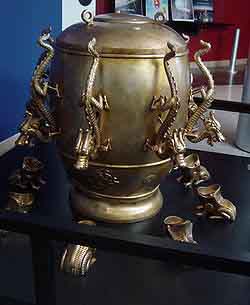
One example of China’s technological abilities was when the first seismograph was invented in 132 AD.  When Zhang Heng‘s device measured an earthquake in 134 AD, Zhang predicted the location. Han Ministers didn’t believe the scientist. Then a courier arrived and reported that an earthquake had taken place where Zhang said it did. For more information about Zhang Heng, see China Culture.

Zhang Heng's seismograph

In 1951, Chinese scientists from China’s National Museum worked on recreating Zhang Heng’s seismograph. Since there was a limited amount of information, it took until 2007 to complete the reconstruction.

In comparison, it wasn’t until the 18th century (AD) that there is any record that Western scientists worked on developing a seismograph.

Discover more about Earthquakes

_________________________

Lloyd Lofthouse is the award-winning author of the concubine saga, My Splendid Concubine & Our Hart. When you love a Chinese woman, you marry her family and culture too.

To subscribe to “iLook China”, look for the “Subscribe” button at the top of the screen in the menu bar, click on it then follow directions.


Buddhism in China

May 24, 2010

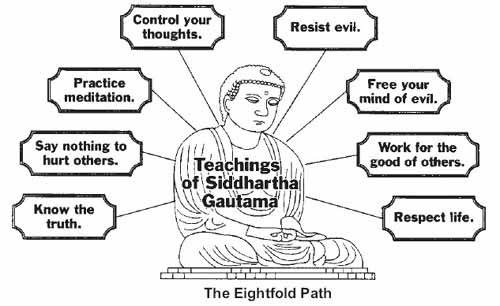
During the Han Dynasty in the first century B.C., trade with Central Asia introduced Buddhism to China.  Over the centuries, interest in Buddhism grew.  However, due to Confucianism and Taoism, the Chinese adapted Buddhist scripture to fit the Chinese culture creating the Mahayana sect, which spread to Korea and Japan.

Like most major religions, there are subdivisions within Buddhism but most may be classified into three. This is why Southeast Asian Buddhists differ from the Chinese.  The Theravada  form of Buddhism is found in Southeast Asia in countries like Burma, Thailand, Cambodia and Laos.

Tibetan Buddhism incorporates other beliefs, and there are four principal schools or types of Tibetan Buddhism. The Dalai Lama is the spiritual leader of one of the four, the Yellow Hat sect.

Buddhism in China reached its high point during the Tang Dynasty, 618 to 907. However, in 845 AD, the Tang emperor suppressed Buddhism and destroyed thousands of monasteries, temples and shrines.

Soon after Mao and the Communists won China, Buddhism flourished for a time but was repressed during the Cultural Revolution along with all other religions. Many monasteries and Buddhist texts were destroyed. After Mao, many of the major monasteries were rebuilt. Today, Buddhists represent the largest religious group in China between 100 to 200 million. Source: PEW Forum

Discover The First of all Virtues

_______________

Lloyd Lofthouse is the award-winning author of My Splendid Concubine [3rd edition]. When you love a Chinese woman, you marry her family and culture too. This is the love story Sir Robert Hart did not want the world to discover.

His third book is Crazy is Normal, a classroom exposé, a memoir. “Lofthouse presents us with grungy classrooms, kids who don’t want to be in school, and the consequences of growing up in a hardscrabble world. While some parents support his efforts, many sabotage them—and isolated administrators make the work of Lofthouse and his peers even more difficult.” – Bruce Reeves.

lloydlofthouse_crazyisnormal_web2_5

Subscribe to “iLook China”!
Sign up for an E-mail Subscription at the top of this page, or click on the “Following” tab in the WordPress toolbar at the top of the screen.

About iLook China

China’s Holistic Historical Timeline


The Man Who Made China

March 8, 2010

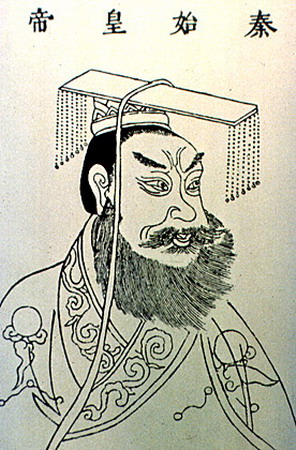
Genghis Khan, Attila the Hun, Alexander the Great, Napoleon Bonaparte, Adolf Hitler, Tamerlane, Mussolini, Stalin, Togo and all the rest of the great conquerors failed where Qin Shi Huangdi, China’s First Emperor, succeeded. National Geographic has a short film that is worth watching.

Qin Shi Huangdi, the man who made China

While history records this emperor as a cruel and brutal tyrant, he did several things that made sure China would stay unified.  First, he forced every nation he conquered to accept one written language. Anyone who protested was killed.  Today, more than twenty-two hundred years later, China still has one written language but many spoken languages. He also created one form of money and a code of laws that everyone had to obey.  Soon after the man who made China died, a rebellion swept the Qin Dynasty (221 – 206 B.C.) away and the Han Dynasty replaced it (206 B.C. to 219 A.D.).

Qin Shi Huangdi may have been the only conqueror in history who did not allow those he defeated to retain their written language. Because of this, China has survived for more than two millennia—something no other civilization may claim.

Visit Xian and see Qin Shi Huangdi’s capital and/or The First Emperor: The Man Who Made China (Part 1 of 9)

______________

Lloyd Lofthouse is the award-winning author of The Concubine Saga. When you love a Chinese woman, you marry her family and culture too. This is the love story Sir Robert Hart did not want the world to discover.

Subscribe to “iLook China”!
Sign up for an E-mail Subscription at the top of this page, or click on the “Following” tab in the WordPress toolbar at the top of the screen.

About iLook China


Basic Health Care in China

March 1, 2010

Basic care in China does not include a stay in a hospital, which would cost about $100 a night compared to a thousand or more in America. Since the best doctors live in the major cities, the best-equipped hospitals are there too.

If a peasant living in the countryside becomes seriously ill, he may have to travel a long distance to get proper medical care. That is, if he has the money. Medical care in China is all about money just like in the United States. Money opens hospital doors and pays the rent for the surgeon’s scalpel.  To understand the challenges that come with living in China’s rural areas, I suggest reading this post on Mark’s China Blog.

Chinese pharmacy

However, when it comes to drugs, the Chinese government has factories in every province that manufactures drugs at a low cost. This is one commodity where the prices are controlled. For example, a bottle of antibiotics in the U.S. that costs $80 would cost $14 in China. That cost is still out of reach for many rural peasants living on an average hundred dollars a year (six or seven hundred yuan). 

Maybe Emperor Wudi from the Han Dyansty had the right idea when he decided that certain necessary commodities and services should not be part of the private market economy.

_________________________

Lloyd Lofthouse is the award-winning author of the concubine saga, My Splendid Concubine & Our Hart. When you love a Chinese woman, you marry her family and culture too. 

Sign up for an RSS Feed for iLook China