A special (guest) report from the front lines of teaching English in China
By Chris “Foreign Monkey” Bewley
When I first arrived in China as an English teacher, I had lofty scholastic goals: I wanted to try a creative variety of class activities and apply a broad spectrum of teaching methods that my students could benefit from to make them competitive in academia and, later, the international job market.
Almost 1 year later, my primary responsibility as a “Foreign Expert English Instructor” has been distilled down to little more than babysitting a bunch of spoiled, undisciplined children who for the most part want nothing to do with English.
At my crowded primary school in a small, semi-urban city in East China, there exists what I have coined the “20/20/20” split in each of my classes (60 kids per class): 20 eager/20 indifferent/20 bad. Basically, I’m teaching 20 while trying to control 40.
To make it fair for everyone, I have to dumb-it-down/ fun-it-up every class. Instead of actually teaching, I find myself playing games with them and jumping around for them like a monkey, which is the only way to retain their attention.
On the positive side, of the eager 20, there are several extremely smart students who I expect one day to be quite successful in what ever they do. Unfortunately, whenever those eager 20 are trying to learn, the other naughty 40 will try just as hard to spoil it for them.
Any fool can be a parent, and the average American parent is a fool.
Amy Chua is not a fool.
I taught English, journalism and reading in the American public schools from 1975 to 2005. I experienced the decline of the American family while working 60 to 100 hours a week teaching, writing lesson plans and correcting the work my students turned in.
When I was born, children were still taught to be seen and not heard. Most of my generation was polite and respectful of our elders — not so today.
My mother taught me how to read and I was required to learn and play a musical instrument. For me that was the accordion. However, my parents weren’t as tough as Chua was, and I don’t remember how to play the accordion, which is something I regret.
In America, any semblance of a parent’s freedom of choice of how to raise a child all but vanished starting in the 1960s when the Self-esteem Arm of Political Correctness (SAP) became the only acceptable way to act, think, and speak as a parent.
Parents that deviated from the self-esteem model were driven underground and Chua was perceptive enough to see that.
Sophia, Amy Chua’s oldest daughter, shows what SAP has done to America’s children on page 191 (hardcover). Sophia says, “Do you know what a good daughter I am? Everyone else I know parties all the time, and they drink and do drugs. And do you know what I do? Every day I run straight home from school. I run.…”
What Sophia said is true. My wife and I heard much the same story from our daughter, and I saw this self-destructive behavior become the norm during the thirty years I was a teacher in the US public schools.
I suggest strongly that if you plan to be a parent soon or in the future, read Amy Chua’s memoir so you know what your parenting choices are.
For anyone who has a child already in school, it may be too late to reverse the damage that has been done by being a SAP
Changing a child’s unacceptable behavior can happen but the longer a child goes without being corrected, the more of a challenge it becomes.
In her memoir, Chua mentions that her husband and most Westerners believe we owe children since they did not ask to be born.
Where did this ridiculous concept come from?
The answer is SAP!
In fact, no one alive today or at any time in history asked to be born. Adam in the Garden of Eden did not ask God to create him, and God used the “carrot and stick” method to control Adam’s behavior. When Adam broke God’s one rule, He threw Adam out of the Garden and took away his immortality.
If you decide to read Battle Hymn of the Tiger Mother, pay close attention and you will discover that Chua’s daughters did not suffer as much as some critics claim. When a Timemagazine reporter recently interviewed Chua in her home, her oldest daughter was upstairs with her boyfriend and could be heard laughing.
Children don’t have to go shopping for the latest fashions or spend a day at Disneyland to have fun. If a child is raised properly, he or she will find enjoyment in things such as reading or learning how to play the violin or piano.
Sarah and Lulu, Amy Chua’s daughters, have lived an incredible life that most children never imagine and their mother gave them the best gift of all — values and discipline.
A real parent, like God with Adam, sets rules, goals and expectations for his or her children. This is what Amy Chua writes about throughout her memoir as she explores the difference between two methods of raising children.
Life cannot be all carrots and fun as the average American SAP parent believes.
In this brutally honest memoir, Amy Chua shows us the extremes of Tough Love.
Love, by definition is not abuse and Chua does not abuse her children when she set high goals/standards for them and demanded that her daughters achieve these goals. After reading the essay, Chinese Mothers are Superior, in the Wall Street Journal or reading her memoir, if you feel she abused her children, you are wrong and have no idea what abuse is.
By expecting excellence from her daughters, Chua demands more of herself and sacrifices much to see that her children achieve the goals that are the parent’s right to decide — at last until that child is a teenager.
The Tiger Mother Tough Love approach to raising a child that Chua writes of in her memoir is not the only Tough Love parenting model.
A Tough Love parent may also set the bar as low as earning D’s or better while only praising the best the child does such as earning an A on a major assignment or test or winning a gold or silver medal in a challenging competition where few win among many who compete.
In the Tough Love approach to parenting there must be a stick and a carrot (punishments and rewards) and there must be criticism and praise. How much of a choice a child has, at least until they are a teen, is decided by the parents — not the child.
The American SAP method of raising children is not parenting — it’s child abuse.
Studies show the average American child spends about 10 hours a day in one or more of these empty activities — watching TV, playing video games, socializing on Internet sites such as Facebook or sending hundreds of text messages on a mobile phone.
Studies also show that watching TV stunts the growth of a child’s imagination.
SAP parents seldom if ever use a stick just as the word “NO” is seldom heard or enforced if used.
Amy Chua started out tough and mean and that was the right decision. She was also right when she said, “All those Western parents with the same party line about what’s good for children and what’s not — I’m not sure they’re making choices at all. They just do what everyone else does.…”
She was right.
In thirty years of teaching, I worked with more than 6,000 children and teens and met with and talked to hundreds of parents. It is sad how the SAP parents all sounded and acted the same. They were broken records.
It is easier for a tough parent to go soft than a soft parent to become tough. I learned that from my master teacher the year I was earning my teaching credential.
Children are born wild and it is up to parents and teachers to tame them and show them the proper way to behave and live his or her life. SAP parents often fail at this job.
A parent or child in a SAP family never takes the blame when the child fails a test or a class or behaves unacceptable in public. Instead, the blame goes to the schools and teachers even if the child or teen never reads, doesn’t do homework or never studies for tests.
To a SAP parent, it is always the teacher’s fault.
To a SAP parent, depriving a child of his daily dose of fun is evil.
As a teacher, I was often the victim of SAP parents and children.
When my son was born, I practiced Tough Love and his mother was a SAP. When I punished him for not following the rules, his mother accused me of child abuse.
We divorced when he was three.
After that, his mother raised him as a SAP 90% of the time. He spent the other 10% with me. When he was with me, I made him do yard work and other weekend chores while I was also doing them. I also made him read and do his homework.
During the week when my son was with his SAP mother, she called and asked me to tell him to do his homework.
My son’s SAP mother helped him become the successful waiter and bartender he is today at thirty-four. His dream, which his SAP mother encouraged, was to become a famous actor but that did not happen.
After my son’s first year out of high school, he told me he went to Disneyland thirty times. He did not earn a college education or degree. His SAP mother must be very proud of him.
I remarried and my wife is a Tough Love parent. She is also Chinese but not as tough as Amy Chua is.
In fact, every Asian and Chinese mother I’ve met was a Tough Love parent as Amy Chua points out in her memoir. I’ve read some of Chua’s critics accusing her of stereotyping Chinese mothers.
Those critics were wrong.
Most Chinese mothers practice a form of Tough Love and I often laughed while reading Chua’s book since the images were so vivid and real. Since most of my wife’s friends are Chinese mothers, I’ve seen how they are similar to Chua as parents. The mother depicted in Amy Tan’s book, The Joy Luck Club, was modeled after Tan’s Chinese mother.
When my wife and I raised our daughter, who is 19 now, we were always on the same page as far as discipline. Unlike Chua’s husband, I never disagreed with my wife’s Tiger Mother methods.
There was no problem restricting TV to a few hours on the weekend with content controlled by us.
Our daughter grew up reading books and there were no video games in our house. When I bought our daughter a mobile phone after she was in high school, I told her she would lose the phone if she used it for texting or used all the minutes that came with the plan I paid for. In four years, there was one 25-cent text message on the phone bill for her phone.
It wasn’t our daughter who used up the minutes talking on the phone. It was my wife.
I convinced my Chinese Tiger Mother wife that our daughter should be a scholar athlete, as it would help her get into a top US college. Our daughter was urged to select a sport, and she excelled in Pole Vault where she was listed as one of the top five girl pole-vaulters for her age in California. She seldom missed a practice and continued to earn A’s in her academic classes.
Both her mother and I tried to get her to go easier on herself, but she refused.
We allowed our daughter to attend a few school dances with a strict curfew. The one time she tried to get me to let her stay out later, I said no and did not back down.
She also was allowed a few sleepovers. However, at home bedtime was 9:30 with a stern rebuke by her mother if she wasn’t in bed on time.
Research shows that during the growing years, the brain does all of its development while sleeping, which required at least nine or more hours a night, and if sleep is missed, brain growth suffers.
Our daughter always had a nutritious breakfast before going to school. Each year, I asked my SAP students if they ate breakfast. Few did.
In addition, her mother and I used standardized test results to discover our daughter’s weak academic areas and strengthen them. She told her friends she had more fun at school than at home where the work her mother and I provided was often more challenging.
Of course, our daughter’s SAP raised friends felt sorry for her and this led to the same sort of rebellious behavior that Amy Chua’s youngest daughter Lulu demonstrates throughout most of the memoir.
Since our daughter had free time on her hands without video games and TV to soak it up, she taught herself how to play the piano without pressure. However, she will never play with the skill that Sophia and Lulu have for the piano and violin.
Graduating with a 4.65 GPA, our daughter was accepted to Stanford. I don’t think she will end up as a waiter or bartender as a lifelong career.
I wonder if my SAP raised son is happy knowing he may spend most of his life waiting on tables or mixing drinks for the low pay that comes with a job such as that. Then again, maybe he will win the lottery and have more time to visit Disneyland and have fun partying.
I urge everyone that reads this review to buy and read Amy Chua’s memoir. That doesn’t mean you have to be the parent she is but hopefully it will help you avoid being a SAP.
Lloyd Lofthouse is the award-winning author of the concubine saga, My Splendid Concubine & Our Hart. When you love a Chinese woman, you marry her family and culture too.
If you want to subscribe to iLook China, there is a “Subscribe” button at the top of the screen in the menu bar.
At times, Amy Chua, the author of Battle Hymn of the Tiger Mother, looked as if she were expecting an eighteen-wheeler to appear and flatten her.
The Chinese-American Tiger Mother sat there on the Hillside Club’s stage in Berkeley, California reminding me of a graceful deer crossing a dark mountain road flanked by armies of tall sentinel trees and halfway across being startled by bright headlights rushing toward her.
How could anyone blame Chua?
I have read that she has received death threats for saying “no” to activities such as sleepovers, play dates, acting in school plays, and not allowing her daughters to watch hours of TV or play computer games until midnight or later.
Instead, she did the unthinkable and demanded excellence. Time magazine says, “Most surprising of all to Chua’s detractors may be the fact that many elements of her approach are supported by research in psychology and cognitive science.”
How horrible that a child would have all those “fun” activities restricted and be required to practice “boring” cultural activities such as learning to play the piano or violin and horror of horrors do homework, study and read to insure earning the best possible grades.
My wife and I were disappointed when Amy distanced herself as the possible poster Tiger Mother for Tough Love parents by reading the final pages of her memoir so the audience would discover how she has softened her parenting style except when it comes to grades.
She told us of the turning point when her youngest daughter Lulu shouted at her in Moscow saying how she hated her.
It was obvious that the real reason Amy Chua wrote The Battle Hymn of the Tiger Mother was because she felt she had lost to the Self-esteem Nazis — those so-called parents and their children that probably felt sorry for Lulu because she couldn’t watch all the TV she wanted and party on weekends.
Chua wrote the book in two months soon after returning to the United States from the trip to Russia. It was a catharsis, a healing, and not a battle cry. I expect she felt much anger while pounding out the words on her computer keyboard in a relentless marathon.
That memoir was her way to heal from the trauma of defeat she faced in Moscow.
I know. My wife and I raised a Chinese-American daughter who also came home from school occasionally with the same resentment and said the same mean things Lulu said to her mother.
We discovered the fuel of that resentment was the misplaced sympathy from other children and parents.
While our daughter had to go to bed by 9:30 at night, she knew that most of her friends were up as late as two or three in the morning. In fact, the TV in our house was off most of the week and the content that was watched for an hour or two on weekends was controlled. There were no video games, no Internet connection and TV in her bedroom.
Gasp!
As a child, our daughter had to read books to fill the empty hours.
Amy Chua, to make sure the audience discovered how much she has improved as a mother, let us know that her rebellious daughter Lulu even had a recent sleepover.
However, Tiger Parents practicing Tough Love have her memoir and the facts I mentioned In Defense of Tiger Mothers Everywhere as a reminder that we are not alone. Other Tiger Parents are out there.
I was a Tiger Teacher for thirty years in the public schools. When students failed my class, I was blamed by parents and administrators for “giving” too many FAILING grades.
Often, I was accused by parents (without evidence except the complaints of FAILING teens) of being a boring teacher, being mean, prejudiced, losing homework and damaging the self-esteem of children.
Some parents even pulled children from my class and moved them to teachers that never “gave” failing grades.
In fact, I never “gave” a student a grade. My students were required to “earn” grades and there is a HUGE difference between the word “give” and “earn”.
By the time I left teaching in 2005, about 5% of my students were doing the homework and required reading necessary for academic improvement, and when standardized test scores in the U.S. fail to measure up, who gets the blame? the teachers — not the students or the parents
We almost didn’t get in to hear Chua. Although we bought tickets on-line, the Hillside Club oversold and there wasn’t room for everyone. We had to wait in the foyer to see if there were seats available but my wife and I were fortunate to get in soon after the event started.
I discovered that in the audience was the vanguard of an army of parents and teachers that may have been the victims of what has become known as the soft, positive, self-esteem approach to Western parenting. There were hundreds of us in that audience.
As Amy sat in that tall chair on stage above the audience with her feet dangling a foot from the floor, the audience laughed, applauded and gazed on her as if she were a hero.
I didn’t expect that.
Instead, I expected the Self-esteem Nazis to turn out in mass to make sure Chua would not be heard, which is the reason this former US Marine and Vietnam veteran went — to make sure someone would be on her side to fight in her defense if needed.
Thank you Confucius for a culture that values education so much that the Tiger Mother, Tough Love method of raising children hasn’t died in China as it almost has in the United States. The bully tactics of Self-esteemism and Political Correctness almost succeeded in destroying America–then Amy Chua’s essay appeared in the Wall Street Journal.
When Amy’s parents came to America as immigrants and sacrificed so much to raise their daughter the same way she was struggling to raise her children, Confucius may have saved this country, because it might be possible that being a Tiger Parent will become acceptable again.
In Time magazine, Chua said, “‘I know some Korean, Indian, Jamaican, Irish and Ghanaian parents who qualify too.’ The tiger-mother approach isn’t an ethnicity but a philosophy: expect the best from your children, and don’t settle for anything less.”
______________
Lloyd Lofthouse is the award-winning author of the concubine saga, My Splendid Concubine & Our Hart. When you love a Chinese woman, you marry her family and culture too.
If you want to subscribe to iLook China, there is a “Subscribe” button at the top of the screen in the menu bar.
Mainland Chinese are different. They are willing to eat more bitterness than others to learn.
The reason I’m writing this post is due to Amy Chua’s Essay in The Wall Street Journal and a response from Funny Little World where Nang Ngot wrote in a comment, “You can have a system like China that churns out smart but obedient drones. There, the collective behavior guides the intellect.”
Mainland Chinese are not obedient drones any more than all Christians, Jews, Muslims, Buddhists or Hindus are obedient drones within their cultures.
Within every culture, each person is an individual. In China, the difference is how the individuals see themselves in relation to the whole. That does not make them drones.
There’s even an ancient Chinese saying that supports being disobedient, which explains why the central government in Beijing is having so much trouble with corruption at the local level. “The emperor lives behind high walls and is a long ways from our village.”
In simple language this means, “What the emperor doesn’t know won’t hurt us.”
Where Jews and Christians have the Bible and Islam has the Quran, the Chinese have a culture governed by a mixture of Confucianism, Taoism and in part by Buddhism.
The Chinese do not need a temple, church or mosque to tell them what to believe and how to act.
Although there is no Confucian bible, the basic guide that Confucius left behind is as significant as the Ten Commandments, the Bible and the Quran.
In Chinese culture, those guidelines were designed for living a moral life and the family teaches the children as the child grows into an adult.
The Chinese family has done this for thousands of years until it became part of the culture, as Christianity is to the West and Islam is to the Middle East.
Stanford.edu says, “A hallmark of Confucius’ thought is his emphasis on education and study.”
Nicholas D. Kristof, writing for the New York Times, says, “Perhaps as a legacy of Confucianism, its citizens have shown a passion for education and self-improvement — along with remarkable capacity for discipline and hard work, what the Chinese call “chi ku,” or “eating bitterness”.
Kristof is a two-time Pulitzer Prize winner. He graduated Phi Beta Kappa from Harvard College and then studied law at Oxford University on a Rhodes Scholarship, graduating with first class honors. He later studied Arabic in Cairo and Chinese in Taipei.
Kristof writes, “China used to be one of the most sexist societies in the world — with female infanticide, foot binding, and concubinage — but it turned a corner (in 1949 when Mao said women hold up half the sky) and now is remarkably good at giving opportunities to girls as well as boys….”
At China Education Center.com, I learned that many scholars believe the history of education in China started in the 16th century B.C., and Confucianism has had the largest impact on education for more than two thousand years of Chinese history.
In fact, during the Han Dynasty (206 BC – 219 AD) a form of public education was established. Not only for the elite but also for the common man so both would become better gentlemen.
In contrast, it wasn’t until 1918 that all states in the US had laws requiring children to attend at least elementary school. In 1900, only 6% of children graduated from high school. By 1996, 85% were graduating from high school.
Compared to China, the importance of earning an education in the United States is relatively new and doesn’t have as strong of a cultural component.
Lloyd Lofthouse is the award-winning author of the concubine saga, My Splendid Concubine & Our Hart. When you love a Chinese woman, you marry her family and culture too.
If you want to subscribe to iLook China, there is a “Subscribe” button at the top of the screen in the menu bar.
China is making HUGE investments in education. In 1998, then-President Jiang Zemin called for a massive increase in enrollment in higher education. Since then, high school and college enrollments in China grew. Source: FP-Foreign Policy, April 14, 2010
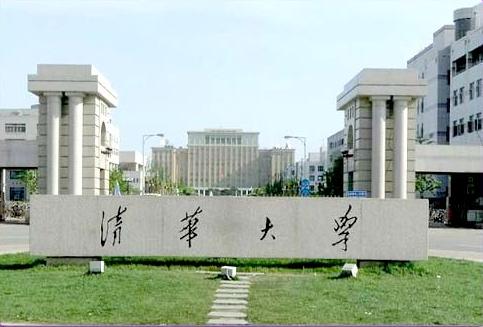
Tsinghua University's east gate
In China, more than thirty percent graduate with degrees in engineering or technology. In the United States, only five percent of university students graduate in these fields, while U.S. universities produce more psychologists.
That is why President Obama has encouraged American students to study science. Source: White House
What’s going to happen if American students do not start working hard to become engineers and scientists?
Tsinghua University
In 2040, the Chinese economy will reach $123 trillion, or nearly three times the economic output of the entire globe in 2000. It’s a fact that people with an education in engineering and science earn more and are more productive. China and India combined are turning out more than 600,000 engineers a year—ten times that of the United States. Source: Rocketry Planet
Lloyd Lofthouse is the award-winning author of The Concubine Saga. When you love a Chinese woman, you marry her family and culture too. This is the love story Sir Robert Hart did not want the world to discover.
To subscribe to “iLook China”, look for the “Subscribe” button at the top of the screen in the menu bar, click on it then follow directions.


 Posted by Lloyd Lofthouse


 iLook China