In the National Interest

March 1, 2010

In World War II, the Japanese bombed Pearl Harbor and woke the sleeping tiger, America.

Then in the 1960s, President John F. Kennedy, during the Cuban missile crises, brought the United States to the brink of nuclear Armageddon. He did this believing it was in the National Interest.

Last night (2/28/2010), I watched an episode on 60 Minutes about a Taiwanese man in the pay of China gathering information about the 6.5 billion-dollar arms sale to Taiwan. Does that make China evil? This morning, I had my answer.

From the dawn of rival civilizations, there have been spies.  It’s all about survival and the national interest. Robert Hart (19th century), who knew the Chinese better than any Westerner, wrote, After China picks its conquerors’ brains; it will be a super-power again. I don’t know what they will do when that times comes. They will decide to either get along with the world or seek revenge for what the world did to them.

In the 19th century, France, England, Germany, Russia, Japan, and the United States attacked China in a series of wars. The devastation visited on a peaceful China started with the Opium Wars and ended with World War II, Korea and Vietnam. Those wars woke the sleeping dragon.

America supports Taiwan—China’s Cuba. The difference is that China sees Taiwan as part of the mainland. What would America do if Hawaii separated from the union, and China supplied the islands with weapons to defend itself? Don’t be surprised if China responds the same way over Taiwan.

The China Americans learned about in school has changed. See Deng Xiaoping’s 20/20 Vision

______________

Lloyd Lofthouse is the award-winning author of the concubine saga, My Splendid Concubine & Our Hart. When you love a Chinese woman, you marry her family and culture too. 

If you want to subscribe to iLook China, there is a “Subscribe” button at the top of the screen in the menu bar. 


After Mao

February 22, 2010

Unlike Mao’s time, today’s Chinese leaders must answer to the seventy-million party members scattered throughout China. These people listen to the 1.3 billion Chinese that do not belong to the party. The result: if an elected official is not doing his or her job, that person usually isn’t reelected.

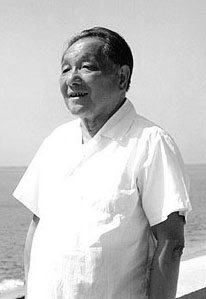
Deng Xiaoping

Other changes took place after Mao. Under Deng Xiaoping, the People’s Republic announced a policy of “socialism with Chinese characteristics.” John Gittings in The Changing Face of China quoted Deng Xiaoping as saying, “Planning and market forces are not the essential difference between socialism and capitalism. A planned economy is not the definition of socialism, because there is planning under capitalism; the market economy happens under socialism, too. Planning and market forces are both ways of controlling economic activity.”

Soon after Mao died in 1976, Deng Xiaoping’s Beijing Spring was introduced. This was a brief period lasting from 1977 into 1978. During that time, the public was allowed greater freedom to criticize the government, which wasn’t allowed under Mao.

An example of this may be seen in “The Awakening” (Su-Xing), a movie produced during this period starring Joan Chen (Chen-Chung) and Gau Fei. [ISBN: 978-7-88611-603-2]. There are no English subtitles so it helps to have someone that reads or speaks Mandarin beside you while watching the movie that can point out the subtle criticisms of the Party that appear in the film, which was considered controversial at that time.

There was also a new Beijing Spring between 1997 to November 1998 where the Chinese government relaxed some control over political expression and organization. It was during this time that China signed the International Covenant on Civil and Political Rights.

Learn about China’s Modern Dynasty

______________

Lloyd Lofthouse is the award-winning author of The Concubine Saga. When you love a Chinese woman, you marry her family and culture too. This is the love story Sir Robert Hart did not want the world to discover.

To subscribe to “iLook China”, look for the “Subscribe” button at the top of the screen in the menu bar, click on it then follow directions.


China’s Modern Dynasty

February 21, 2010

In 2012, the new rulers of China will “all” have been educated in the West.

After Mao died, Deng Xiaoping and his supporters “rebuilt” the government. The party instituted term limits, two five-year terms for any political position and an age limit of sixty-seven.

Mao

These changes were implemented to avoid having another modern emperor like Mao. Those who spoke out against Mao while he ruled China were usually killed, went to prison or fell out of favor. Deng Xiaoping’s son was dropped from a high rise and paralyzed for life—the message to Deng was to “shut up or else”.

A high-ranking, retired Communist who fought with Mao during World War II and the revolution told me that the seventy million party members (like America’s Democrats and Republicans) do not always agree on issues.

The difference is that the world hears little of what goes on behind the scenes in China. Doing business that way has little to do with the party. That type of behavior is classically Chinese—not to talk about the elephant in the room or to hang out your dirty laundry for everyone to see as the West does. Behaving like that goes against what “face” means in China.

______________

Lloyd Lofthouse is the award-winning author of the concubine saga, My Splendid Concubine & Our Hart. When you love a Chinese woman, you marry her family and culture too. 

If you want to subscribe to iLook China, there is a “Subscribe” button at the top of the screen in the menu bar.


Why China is Studying Singapore – Part 1/3

February 6, 2010

I have a friend who often says America has the best political system in the world and no other country compares. Then he turns around and criticizes the government when a Democrat is in office.

Let’s look at a few facts. America may be the richest nation on the earth with the most powerful and expensive military, but it is also a deeply debt ridden country with the largest prison population on the planet. Beyond that, there are almost a million street-gang members in our cities. Killings are so numerous that our national media doesn’t report them all. I’ve read that students physically assault an average of five-thousand public school teachers in their classrooms every year. If you want to learn more, read this example or visit Crazy Normal.

And let’s not talk about the drug problems in the US. What is freedom? What happens when we allow so much freedom, that many can’t enjoy it in safety?

Are these reasons enough to explain why China is studying Singapore instead of the United States economic system? When Deng Xiaoping opened China to a market economy, he wasn’t thinking about the United States. I will go into more detail in the next posts for this series.

Go to Part 2 of Why China is Studying Singapore

______________

Lloyd Lofthouse is the award-winning author of the concubine saga, My Splendid Concubine & Our Hart. When you love a Chinese woman, you marry her family and culture too. 

If you want to subscribe to iLook China, there is a “Subscribe” button at the top of the screen in the menu bar.


Deng Xiaoping’s 20/20 Vision

February 5, 2010

True, under Mao Zedong (1893 – 1976), China suffered but that isn’t the whole story. During Mao’s Great Leap Forward and the Cultural Revolution, thirty-seven million died—many from starvation. Mao’s form of communist socialism did not work.

On June 30, 1984, Deng Xiaoping said, “Given that China is still backward, what road can we take to develop the productive forces and raise the people’s standard of living? … Capitalism can only enrich less than 10 per cent of the Chinese population; it can never enrich the remaining more than 90 per cent. But if we adhere to socialism and apply the principle of distribution to each according to his work, there will not be excessive disparities in wealth. Consequently, no polarization will occur as our productive forces become developed over the next 20 to 30 years.”

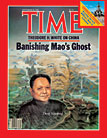
Deng Xiaoping on the cover of Time Magazine

Deng Xiaoping may have been right. Bruce Einhom writing for Business Week, Countries with the Biggest Gaps Between Rich and Poor, October 16, 2009, listed the top countries with the biggest gaps. America was number three on the list. China wasn’t on the list—yet.

What does this mean for America? (CBS/AP)  The Census Bureau reports that 12.5 percent of Americans, or 37.3 million people, were living in poverty in 2007, up from 36.5 million in 2006.

After 2000, the situation in America deteriorated quickly (with President George W. Bush in the White House)—all of the gains in middle-class economic security since WWII were erased within a few years.

PBS reported in “Middle Class Squeeze” (December 13, 2002), the shape of income distribution in America is changing and many are finding it increasingly difficult to afford housing while keeping up with necessities such as food, clothing, transportation, and health care.”

What does capitalism, Chinese style, look like? Under Deng Xiaoping’s economic policies, China became the world’s factory floor.

Prior to 1979, the year China opened its economy to world trade, it was rare to find anything made in China. Since then, exports from China have increased 10,000%, and this year China’s economy become the second largest in the world as Japan slipped to third place.

In the last decade, something happened in China that Mao thought he had destroyed. China grew a middle class. During a trip to China in 2008, we saw the Chinese middle class everywhere we went. Instead of the majority of tourists being foreigners, they are now Chinese.

A middle-class family in China usually owns an apartment, a car, eats out and takes vacations. National Geographic in the May 2008 magazine, said, “they owe their well-being to the government’s (Deng Xiaoping’s) economic policies…”

Current estimates show China’s growth will continue and grow between five and eight percent a year. China’s real GDP growth accelerated on a year-over year basis by a full percentage point, rising from 7.9% in the second quarter to 8.9% in the third quarter (reported Oct. 22, 2009).

Learn about China’s Expanding Middle Class

______________

Lloyd Lofthouse is the award-winning author of The Concubine Saga. When you love a Chinese woman, you marry her family and culture too. This is the love story Sir Robert Hart did not want the world to discover.

To subscribe to “iLook China”, look for the “Subscribe” button at the top of the screen in the menu bar, click on it then follow directions.