The Origins and Meaning of Taoism – Part 1/2

December 5, 2010

Jean Delumeau, that narrator of the video, is an honorary professor of the College de France. He says by the time Buddhism arrived in China in the first century AD, Confucianism and Taoism had been widespread for several centuries.

Taoism was the popular religion of China while Confucianism was the official state religion of the Han Dynasty. In fact, the bureaucracy practiced Confucianism at work and turned to Taoist spiritual practices after work.

Even though Taoism and Buddhism have fundamental differences, Taoism helped spread Buddhism. While Taoism seeks the salvation of the individual, Buddhism seeks an escape from the cycle of personal existence.

However, certain practices of Taoism and Buddhism are similar, which are meditation, fasting, and breathing techniques.

The word “Tao” means both the order and totality of the universe and the pathway or road that allows the individual to enter into the rhythm of the world through a negation of self.

Two opposing but complementary forces of reality are fused in the Tao — Yin, which is passive, cold and feminine and Yang, which is active, hot and masculine.

The moon and the sun are the manifestations of Yin and Yang and all change is a result of these two dynamic forces such as day and night, the seasons, and life and death.

These two principals alternate in the five phases of a cycle, which are represented by water, fire, wood, metal and earth, which serve to define the five cardinal points, which are north, south, east, west and the center.

A contemporary of Confucius, Lao Tzu’s teachings were compiled in the fifth century BC into a collection called the Tao Te Ching or Dao De Jing, which have had a great influence on Chinese thought and medicine.

One example says, “The wise man does not seek to be known as a wise man but of his own free will remains in obscurity. Those who seek much knowledge enrich themselves daily. Those who seek Tao become poorer each day. Eventually, they become so poor they are incapable of action. Without action, nothing can be achieved.”

Learn more of Yin Yang

______________

Lloyd Lofthouse is the award-winning author of the concubine saga, My Splendid Concubine & Our Hart. When you love a Chinese woman, you marry her family and culture too.

If you want to subscribe to iLook China, there is a “Subscribe” button at the top of the screen in the menu bar.


History’s Meaning of the Mandate of Heaven – Part 1/5

October 14, 2010

China was the last of the great civilizations to develop independently in the old world — a thousand years after the first civilization in Iraq.

However, the Chinese concept of civilization differed completely from that of the West. For the Chinese, the goal was a moral order on earth sustained by virtue, ritual and reverence of ancestors.

These ancient ideas permeated all aspects of Chinese life even to this day. 

Even the Communist revolution to the crushing of the so-called democracy movement in 1989, played out against these deeper forces, which have shaped China for thousands of years.

The discovery of the origins of Chinese history took place in 1899, when a Chinese scholar found a few (dragon) bones with engravings on them. 

His search for the source of the bones took him to the site of the ancient capital of the Shang Dynasty (1766 – 1122 B.C.).


Chinese civilization first arose on the banks of the unpredictable Yellow River, which has destroyed cities and killed millions.

Along the banks of this river, unlike Western civilizations, the source of political power did not lie in control of nature but in control of the past.

In the strange markings on the dragon bones, the Chinese scholar found the beginning of the I-Ching, the great Chinese book of wisdom.

Then there was Confucius.

The teachings of Confucius (551 – 470 B.C.) were the ideal of Chinese government for two thousand years, and Confucius was not concerned with God or the afterlife or heaven as those in the West were and still are today.

Instead, Confucius wanted to build a just and stable society. He believed that goodness was most important, and if people were taught goodness, they would regulate themselves.

For the rulers, to ignore this meant risking losing the Mandate of Heaven, which even the Communist Party that rules China today has discovered.

______________

Lloyd Lofthouse is the award-winning author of the concubine saga, My Splendid Concubine & Our Hart. When you love a Chinese woman, you marry her family and culture too. 

If you want to subscribe to iLook China, there is a “Subscribe” button at the top of the screen in the menu bar.


Confucius with Chow Yun Fat

August 6, 2010

When my wife and daughter made their annual summer pilgrimage to China, I asked them to bring back a DVD of the new Confucius with Chow Yun Fat. Unfortunately, the copy they brought would not play on any of the American DVD players we have at home. The world is divided into regions and each region has its own DVDs that won’t play in other regions.

Determined, I resorted to e-bay to find a DVD for the US and Canada.  It cost me about $10 plus postage. The above link will take you to Amazon where you may order one.

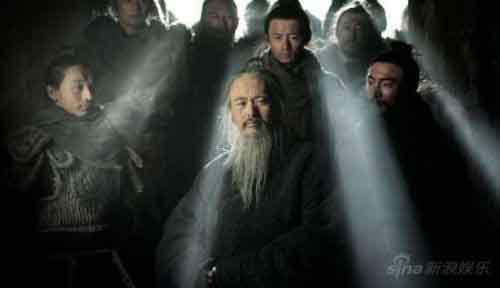
The movie’s visuals are stunning and Chow Yun Fat does an incredibly convincing job of playing Confucius, who, no matter how much he was abused by the rulers of his homeland, he still honored them.

If you don’t speak Mandarin and must rely on the English subtitles, be warned that most of the subtitles are mangled and do not stay on screen long enough.  The challenge is to read the subtitle while keeping an eye on the stunning visuals.

This movie is an epic equal to Cleopatra, Moses and Spartacus.  However, if you expect a potboiler, you won’t get one most of the time. Yet, the battle scenes were amazing no matter how brief they were.

It’s obvious that this movie was filmed for a Chinese/Asian audience and their tastes are not as shallow as what most Americans prefer. I’m sure the Chinese didn’t want to ruin the movie by letting Hollywood get hold of it.

Confucius with his students

The DVD I bought and watched had a photo of Confucius with a beautiful woman on the cover. They must have added her to the cover for that Hollywood sexy touch to appeal to an American audience. In the movie, she plays a minor role and is assassinated for wanting power in a violent world dominated by men busy killing each other.

From what I know of Confucius, the movie showed him close to who he must have been—an honorable man wanting to bring peace to a war-torn land and end the people’s suffering.  He spends more than a decade homeless wondering the land in search of someone who will listen besides the rag-tag band of students who stuck to him like glue.

If anything, we could learn something about dedication and loyalty from this band and their master.

At the bottom of the DVD box, it says, “His teachings were banned under Mao Zedong, who oversaw the destruction of his family home during the Cultural Revolution.”

Ironic, considering that Mao stayed in power his last decade because of what Confucius taught the Chinese about piety.

Discover more about The Life of Confucius

______________

Lloyd Lofthouse is the award-winning author of The Concubine Saga. When you love a Chinese woman, you marry her family and culture too. This is the love story Sir Robert Hart did not want the world to discover.

To subscribe to “iLook China”, look for the “Subscribe” button at the top of the screen in the menu bar, click on it then follow directions.


The Collective Will

May 19, 2010

In “China’s Private Party” by Richard McGregor, The Wall Street Journal, quickly sketches how those that hold power in China keep it. He mentions the Red Machine—an encrypted communication system—that stitches the few hundred who rule China together for making quick decisions.

Where McGregor gets it wrong is when he says that China’s government may not look like Communists any more, but once you strip away the wrapping, they still are. The truth is that Communism as the world knew it during the Cold War is gone and what replaced it in China hasn’t been defined yet.

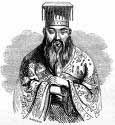
Confucius

Confucius said when the men (who rule) are there, good government will flourish, but when the men are gone, good government decays and becomes extinct. With the Red Telephone, China insures this government will always be ready to act. Confucius called for the people to show respect to the high ministers of state and the leaders of today’s China expect nothing less as long as the government continues to improve life in China.

These leaders are not Marxists, Leninists, Socialists or Communists. They are Chinese, who plan to stay in power. In a democracy like America, every few years the political climate changes like a stormy wind and these Chinese do not like uncertainties. They plan, set goals and want to be there to insure that what was set in motion is completed. It’s all about the collective harmony. Taoism plays a roll  too. It’s why the Chinese may say one thing and do something else.

The reason China is studying Singapore may clarify what I mean.

______________

Lloyd Lofthouse is the award-winning author of The Concubine Saga. When you love a Chinese woman, you marry her family and culture too. This is the love story Sir Robert Hart did not want the world to discover.

Subscribe to “iLook China”!
Sign up for an E-mail Subscription at the top of this page, or click on the “Following” tab in the WordPress toolbar at the top of the screen.

About iLook China


Honoring the Dead

May 13, 2010

Ancestor worship may well be the oldest, unorganized religion in China. Take Tomb Sweeping Day for example. The practice that honors family ancestors started during the Zhou Dynasty and has been around for more than 2,500 years.

The first emperor Qin Shi Huangdi had not unified China yet. China was divided into several nation states governed by hereditary rulers and worshiping ancestors was important in maintaining a link with the past.

Today, many Chinese homes and businesses have a shrine set up to honor the ancestors. This shrine may have the name of the ancestor carved into wood or rock or there is a photo. Food is often left on the table for the ancestors. 

Honoring the Ancestors

Ancestor respect is also an important part of Confucianism and there is still an ancestor hall for Confucius in Chufu that is maintained by a direct descendant. Next time you are in a Chinese or Southeast Asian restaurant, look around and see if you can spot a shrine to the ancestors.

Confucianism and ancestor worship is not exclusive to China. After all, China was a super power in Asia for more than two thousand years and had a large influence over other cultures in the region.

Learn more about Confucius from this five-part series about the sage’s life.

______________

Lloyd Lofthouse is the award-winning author of the concubine saga, My Splendid Concubine & Our Hart. When you love a Chinese woman, you marry her family and culture too. 

If you want to subscribe to iLook China, there is a “Subscribe” button at the top of the screen in the menu bar.