The Collective Culture versus Individualism – 1/5

September 1, 2010

I’ve noticed while taking part in virtual debates and from comments here that some Westerners from individualist cultures don’t understand what a collective culture is, and he or she appears to hate what they don’t understand.

It might surprise many in the West that China is not the only country with a collectivist culture.

Along with China, one list I saw had Argentina, Brazil, Vietnam, Egypt, Greece, India, Japan, Korea, Mexico, Scandinavia and Portugal on it.

For individualist cultures, there was Canada, Australia, England, France, Ireland, Italy, New Zealand and the United States.

In Chinese society, collectivism has a long tradition based on Confucianism, where being a community man or someone with a social personality is valued.

In a collective society such as China, each person is encouraged to conform to society, to do what is best for the group and to not openly express opinions or beliefs that go against it.

Group, family or rights for the common good are seen as more important than the rights of the individual. Laws exist to promote stability, order and obedience.

Working with others and cooperating is the norm.  Being uncooperative is often seen as shameful. Source: Psychology – Collectivist and Individualist Cultures

Discover Cultural Differences and China’s Changing Legal System or go to Collective Culture versus Individualism – Part 2

______________________________

Lloyd Lofthouse is the award-winning author of My Splendid Concubine [3rd edition]. When you love a Chinese woman, you marry her family and culture too. This is the lusty love story Sir Robert Hart did not want the world to discover.

#1 - Joanna Daneman review posted June 19 2014

Where to Buy

Subscribe to “iLook China”!
Sign up for an E-mail Subscription at the top of this page, or click on the “Following” tab in the WordPress toolbar at the top of the screen.

About iLook China

China’s Holistic Historical Timeline


Piety’s Flaw

August 3, 2010

I’ve heard that it was Confucianism that caused China to fall victim to Western Imperialism in the 19th century, and the reason Mao started the Cultural Revolution his last decade was to correct this imperfection.

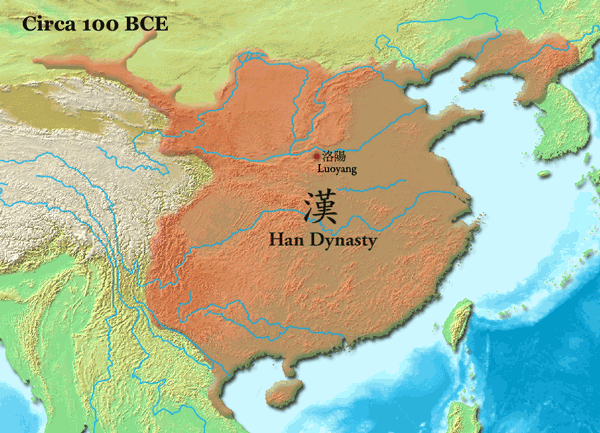
However, I believe that the collective culture created in China by Emperor Han Wudi (156-87 BCE), considered one of the most influential emperors in Chinese history, is the reason that China’s civilization survived for thousands of years without suffering the fate of Europe after the Roman Empire collapsed.

Han Dynasty 100 BC

The problem is not from Confucianism but a flaw in the way an element of Confucianism has been interpreted over the centuries.  In fact, this flaw is buried so deep in the Chinese psyche that Mao’s disastrous Great Leap Forward and the tragic Cultural Revolution were not stopped because of it. 

There were powerful individuals in the Communist Party who did not agree with what Mao was doing but did not speak out when they could have. Some of those individuals even suffered during the Cultural Revolution but still kept silent due to the power of piety.

It wasn’t until after Mao’s death that those same people acted and Deng Xiaoping came to power stopping the madness of the Cultural Revolution.

To criticize an elder in China, even when that individual is power hungry, senile or maybe a bit crazy, is considered similar to Christian heresy during the Spanish Inquisition. Piety means elders must be treated with respect as if they can do no wrong. There must be a way to find a balance.

See China’s Capitalist Revolution

_______________

Lloyd Lofthouse is the award-winning author of the concubine saga, My Splendid Concubine & Our Hart. When you love a Chinese woman, you marry her family and culture too. 

Sign up for an RSS Feed for iLook China


Democratic Confucianism

May 22, 2010

I heard from a reliable source that the Communist Party had been moving cautiously toward implementing a form of democracy  systematically just as they have  done to build the highly successful market economy that is driving China’s prosperity today.

Then in 2008, the last year of the G.W. Bush presidency, lack of government oversight and greed from Wall Street and American banks almost crashed the world economically and China’s leaders reeled in shock—cancelling their plans.

I read Moving China Toward Democracy: A Confucian Framework written by Kyle Baxter.  It is a thoughtful piece. If Baxter’s ideas will work is still to be determined.

What has been the cornerstone of most Chinese governments has been a form of Legalism, with its harsh punishments.

If Confucianism were to be the bedrock of  a democratic government in China, China’s critics in the West would have nothing to complain about. 

China has never really adopted Confucian principles for political rule. Since Confucianism values individual rights along with family values, this transition would pave the way for China to retain its cultural identity and join the world as a democratic partner.

Deng Xiaoping

Deng Xiaoping said it best, “It doesn’t matter if a cat is black or white, so long as it catches mice.”

See the Influence of Confucius

____________________________

Lloyd Lofthouse is the author of the award winning novels My Splendid Concubine and Our Hart. He also Blogs at The Soulful Veteran and Crazy Normal.

Sign up for an RSS Feed for iLook China


Honoring the Dead

May 13, 2010

Ancestor worship may well be the oldest, unorganized religion in China. Take Tomb Sweeping Day for example. The practice that honors family ancestors started during the Zhou Dynasty and has been around for more than 2,500 years.

The first emperor Qin Shi Huangdi had not unified China yet. China was divided into several nation states governed by hereditary rulers and worshiping ancestors was important in maintaining a link with the past.

Today, many Chinese homes and businesses have a shrine set up to honor the ancestors. This shrine may have the name of the ancestor carved into wood or rock or there is a photo. Food is often left on the table for the ancestors. 

Honoring the Ancestors

Ancestor respect is also an important part of Confucianism and there is still an ancestor hall for Confucius in Chufu that is maintained by a direct descendant. Next time you are in a Chinese or Southeast Asian restaurant, look around and see if you can spot a shrine to the ancestors.

Confucianism and ancestor worship is not exclusive to China. After all, China was a super power in Asia for more than two thousand years and had a large influence over other cultures in the region.

Learn more about Confucius from this five-part series about the sage’s life.

______________

Lloyd Lofthouse is the award-winning author of the concubine saga, My Splendid Concubine & Our Hart. When you love a Chinese woman, you marry her family and culture too. 

If you want to subscribe to iLook China, there is a “Subscribe” button at the top of the screen in the menu bar.


Blending the Law

April 21, 2010

The legal system in the United States comes primarily from English Common Law (influenced by Roman law and Greek teachings). English Common Law is a system based on the principle that the rulings made by the King’s courts were according to the common custom of the realm. Common law is grounded in precedent and local tradition stressing community and individualism.

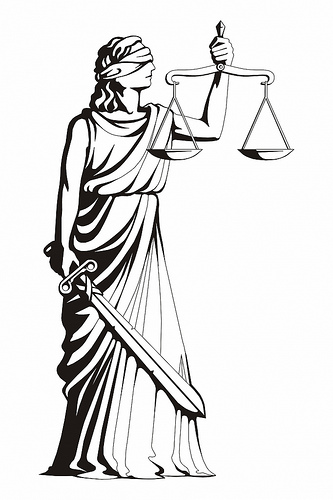
Is Justice Blind?

Legalism, the foundation of Chinese law, emphasizes the need for order above all other human concerns. The founder of the Legalistic school was Hsün Tzu (312–230 BC). He believed that humans are inherently evil and inclined toward criminal and selfish behavior. Since morality does not exist in nature and humans are part of nature, the only way to control behavior was through habit and harsh punishment. Without this, the result would be conflict and social disorder.

Even though both Confucianism and Legalism called for tradition and governmental control, the difference between the two is that Confucius (551–479 BC) advocated ruling benevolently by example. Both theories still play an important role in the cultural and legal development of China.

However, the legal system in the People’s Republic of China is currently undergoing gradual reform since international trade and globalization are influencing changes. What is evolving is a blending of English Common Law and Legalism.

Here is a good Blog to learn how to navigate through China’s legal system: http://www.chinalawblog.com/
See “China Law and Justice System” http://wp.me/pN4pY-hH

Sources used for this post: