China Protecting its Teeth in 1950 Korea– Part 1/9

February 22, 2011

While searching Google for a Monroe Doctrine link, I stumbled on PCMS Social Studies and a post that appeared January 20, 2011.

Quote: “The Monroe Doctrine was put in place on December 2, 1823 by (President) James Monroe….   He did not want European Countries coming back and taking over the United States….  I know that I would definitely not want someone telling me I have to change the way I believe.”

China’s reaction was the same in 1950 when the People’s Liberation Army entered the Korean War.

Because Korea sat precariously between China, Russia and Japan, Korea had always been at the mercy of its bigger neighbors. For centuries, those nations had fought each other in Korea.

As World War II was ending, in July 1945, Soviet leader Joseph Stalin used his troops in coordination with the US to force the Japanese out of Korea. The Soviet and US armies met at the 38th parallel and agreed to divide Korea along that line.

The Soviets would control the northern half of Korea and the US the south.

While Soviet Russia and America were dividing the spoils of war in Europe and Asia, China was involved in a bloody civil war between the Communist and Nationalist Parties that would last until 1949

Prior to Japan occupying Korea in 1900, Korea had been a tributary state of China for centuries. However, China was in no shape to protest what Russia and the US was doing in Korea.

Two years later, the super powers left Korea leaving behind a Communist state in the north and a capitalist republic in the south ruled by a Korean authoritarian dictator educated at America’s Princeton University.

On June 5, 1950 at 4:00 AM, the Korean War started when North Korea declared war and invaded South Korea by land and sea.

Since the US had deprived South Korea of weapons and ammunition in fear that the south might invade the north and start a war, the North Korean army met little resistance.

The US strategy of restraint had backfired. South Korea had no weapons to defend itself. In two days, Seoul, the capital of South Korea fell to the invading army.

North Korea counted on America doing nothing. However, the majority of Americans in the US was outraged and demanded action, which caused President Truman to send in the United States air force while the US Navy bombarded Korea from the sea.

On July 19, 1950, President Truman called on the United Nations to act quickly and stop the aggression of Communist North Korea.

In the beginning, the US army was weak and far from Korea mostly in Europe. The huge American army that won World War II in 1945 had been disbanded resulting in a much smaller force.

In early July, 1950, an American brigade entered Korea and fought North Korean troops thirty miles south of South Korea’s captured capital of Seoul. The first battle didn’t go well for the US.

Learn about The Lips Protecting China’s Teeth

______________

Lloyd Lofthouse is the award-winning author of the concubine saga, My Splendid Concubine & Our Hart. When you love a Chinese woman, you marry her family and culture too.

If you want to subscribe to iLook China, there is a “Subscribe” button at the top of the screen in the menu bar.


Running toward the Tang Dynasty (618 – 906 AD) – Part 1/4

September 24, 2010

If we were to compare Chinese civilization to an amusement ride, it would be a roller coaster.

As each dynasty ended, there was usually a period of chaos, war and anarchy among rival factions.

After the collapse of China’s last Dynasty, the Qing, between 1911 and 1949, chaos, anarchy, warlords, rebellion and World War II tore at the fabric of China. See The Roots of Madness

Then Communist China was born, which eventually led to China’s Capitalist Revolution.

The Xia Dynasty (about 2205 – 1766 BC) ended with the reign of a tyrannical emperor, who lived an extravagant life. When patriotic ministers attempted giving him good advice, he killed them. Then the people rose in rebellion.

The Shang Dynasty (1766 – 1122 BC) ended in similar circumstances when the last emperor lived a luxurious life and tortured both his ministers and people. Another rebellion led by the chief of the Zhou tribe brought down the Shang.

The Zhou Dynasty (1122 – 221 BC) was divided between the Eastern and Western Zhou Dynasties, which fell apart during the Spring and Autumn (770 – 475 BC) Period and the Warring States Period (476 – 221 BC) when the Zhou Emperor didn’t have the power to control the nobles, who fought amongst themselves again leading to chaos and anarchy.

The short Qin Dynasty (221 to 207 BC) unified all China ending the Warring States Period.

However, Qin Shi Huangdi, China’s first emperor, was brutal and soon after his death, the Qin Dynasty was swept aside to be replaced by the Han Dynasty.

The Han Dynasty (207 BC to 220 AD) was divided into the Western and Eastern Han. Near the end of the Han, the last two emperors were weak. The rule of law broke down again and life was hard.

The Han ended with another rebellion leading to the Three Kingdom’s Period (220 – 280 AD), which meant more chaos and anarchy before China would be unified again under one emperor.

With the end of the Three Kingdoms Period, the Jin Dynasty (265 – 420 AD) ruled until the final emperors were too weak to control the warlords, which led to chaos and anarchy.

The Jin Dynasty was followed by four successive southern dynasties (420 – 589 AD)  and five northern dynasties (386 – 581 AD) followed by the Sui Dynasty that lasted for 38 years when the last emperor of the Sui yielded the throne to the Emperor Gaozu of the Tang Dynasty.

The early Tang emperors built an empire that pushed China’s boundaries to their farthest existence and a culture whose achievements would profoundly influence all Asia.

A thriving economy with complex international ties created one of the richest, strongest and most sophisticated states in world history.

The western capital of Chan-an, which had been the first capital of the Zhou, Qin and Han Dynasties, had a population of a million inside the city walls.

Continued in the Tang Dynasty – Part 2

______________

Lloyd Lofthouse is the award-winning author of the concubine saga, My Splendid Concubine & Our Hart. When you love a Chinese woman, you marry her family and culture too. 

If you want to subscribe to iLook China, there is a “Subscribe” button at the top of the screen in the menu bar.


China’s Great Leap Forward (1958 to 1961) – Part 1 of 6

June 21, 2010

Before reading this series about Mao’s Great Leap Forward, I recommend you first read China, The Roots of Madness to understand what led to Mao’s era as the leader of Communist China (1949 – 1976). This link will take you to that post.  When you finish, return to China’s Great Leap Forward.

_____________________________

Mao’s era begins in October 1949 with victory celebrations in Beijing, as the country with the largest population in the world sees a Communist government come to power.

(when the advertisement appears, advance the video scroll bar to 2:00 minutes to avoid it)


Mao says, “The People’s Republic of China is founded today. China will be free of inequality, poverty and foreign domination.”  In 1950, most Chinese live as they have for centuries. The video shows what this life was like.  Before Mao, most lived in poverty and were in debt to landowners.

Hu Benxu, a peasant farmer in Sichuan says that in the past, there was justice for the rich but nothing for the poor.

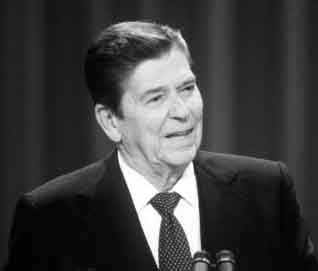
President Ronald Reagan

Chiang Kai-shek believed that improvements would spread through the country (sort of like President Reagan’s trickledown theory, which didn’t work) as foreign investments poured into China. But the opposite happened. As the country industrialized, the gap between the rich and the poor grew wider. The rich held on to money and wanted more. Protests about working condition in the factories were met with death from Chiang Kai-shek’s troops.

Meanwhile, Mao promised land reforms, and his troops treated the peasants with respect. When Mao won China, he said, “We Chinese should work hard. The country is poor. Our people are uneducated.  We must make China a modern industrialized state.”

However, there would be many mistakes and much suffering during the next 27 years. After two thousand years of an Imperial system of government, China was embarking on a journey of reinventing a country and a culture without any foreign influence.

Go to Part 2, China’s Great Leap Forward

______________

Lloyd Lofthouse is the award-winning author of the concubine saga, My Splendid Concubine & Our Hart. When you love a Chinese woman, you marry her family and culture too.

If you want to subscribe to iLook China, there is a “Subscribe” button at the top of the screen in the menu bar.


Red Dawn Remake

June 9, 2010

Cinematical reports that a remake of “Red Dawn”, a 1984 move about the US being invaded by the Soviet Union, is scheduled to be out later this year.  However, since the evil Communist Soviet Empire does not exist anymore, the remake needed another bad guy to invade the US, so they made Communist China the villain.

This resulted in Chinese newspaper headlines saying the “U.S. Reshoots Cold War Move to Demonize China.”

Judging from at least one comment on Cinematical, I’d say the Chinese have a reason to be upset.  Some person (who can’t spell or punctuate) called “Buzz” said, “Guys china is not our friend or allie.  They are still very bad people (gov’t) who want to dominate the world. Let them grip and complain. Who cares? Their newspapers are full of anyi American propaganda so why should we care what they think.” 

If “Buzz” didn’t grow up in Kentucky or Tennessee, he must be a Tibetan or Uyghur refugee.

Here are a few reasons why the Chinese might be sensitive when demonized in the West.

1. The Opium Wars (1839 and 1860) invaded by France and England
2. Taiping Rebellion (1851 to 1864) led by a Christian convert
3. Burning of the Summer Palace (1860) by a Western allied force
4. Dungan Revolt 1862 (a Muslim rebellion)
5. Yangzhou riot 1868
6. Tianjin Massacre 1870
7. Panthay Rebellion 1856 to 1873 (another Muslim rebellion)
8. Sino-French War (1884 -1885)
9. Sino-Japanese War (1894 – 1895)
10. The Boxer Rebellion followed by a Western invasion
11. The collapse of the Qing Dynasty followed by forty years of civil war and anarchy as warlords fought for control of China and the West did nothing to intervene.
12. World War II (1937 – 1945) invaded by Japan
13. The Korean and Vietnam wars, which to the Chinese were seen as threats to China considering the century that came before those two conflicts. Mao said that Vietnam was the lips to China’s teeth. What happens to the teeth when the lips are gone?

How many times has China invaded America, England, France or Japan with a military force? Has a Chinese Buddhist or any Chinese raised in Confucian tradition started a rebellion anywhere in the world?

See Christianity and Islam in China

___________________

Lloyd Lofthouse is the author of the award winning novels My Splendid Concubine and Our Hart. He also Blogs at The Soulful Veteran and Crazy Normal.

Sign up for an RSS Feed for iLook China


Four Equals One China—Communist China (Part 1 of 7)

May 15, 2010

The four Chinas are Communist China, Urban China, Rural China and Minority China. The Communist Party has more than 70 million members. Then there are the members of the Communist Youth League (another 70+ million), whom are not members of the Communist Party.

The members of these two groups are the ruling class. They have the best health care and probably make up a sizable portion of China’s middle class, which has been estimated at 200 to 400 million people living primarily in urban areas.

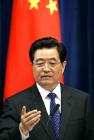
President Hu Jintao

Hu Jintao, was elected president of the PRC on March 15, 2003. According to the Chinese Constitution, he may only serve two five-year terms and has to stand for reelection after the first term. There is an article of impeachment in the Chinese constitution that was added after Mao.

Go to Four Equals One China: Part 2

Many in the west consider the president of China a dictator. By definition, that is wrong. See Dictatorship Defined

_______________

Lloyd Lofthouse is the award-winning author of My Splendid Concubine [3rd edition]. When you love a Chinese woman, you marry her family and culture too. This is the love story Sir Robert Hart did not want the world to discover.

Subscribe to “iLook China”!
Sign up for an E-mail Subscription at the top of this page, or click on the “Following” tab in the WordPress toolbar at the top of the screen.

About iLook China