Sinophobia and the Nation With the Soul of a Church

July 1, 2010

An old friend of mine once wrote in an e-mail that Communism was evil and if China didn’t do what America wanted, the US would spank them. That and his endless born-again preaching bruised about five decades of friendship. Now, we don’t communicate much.

The definition for Sinophobia is one who fears or dislikes China, its people or its culture—in other words, an ignorant, brainwashed bigot (my opinion).

http://www.youtube.com/watch?v=RnoHCk6yMKY

This morning, I finished reading  An Exceptional Obsession by John Lee, which was published in The American Interest. On page 42, Lee wrote, “Above all, Chinese leaders are anxious about having to deal with a society so different from their own, and by different we don’t mean a superficial contrast between communism and capitalism.  China’s is a communal culture; America’s is individualist. China is rooted in its land longer and more deeply than any society on earth. America is an immigrant society and an unprecedentedly mobile one at that. China has never institutionalized the rule of law; America is fundamentally based on it. China has never experienced deistic religions; America, as Chesterton once said is “a nation with the soul of a church.”

Lee’s comparison reminded me of the few shallow Communist haters and Sinophobic people I’ve run into on the Internet, who live in this nation with the soul of a church. Occasionally, one crawls out of the woodpile on a thousand legs.

Discover Power Corrupts

______________

Lloyd Lofthouse is the award-winning author of The Concubine Saga. When you love a Chinese woman, you marry her family and culture too. This is the love story Sir Robert Hart did not want the world to discover.

To subscribe to “iLook China”, look for the “Subscribe” button at the top of the screen in the menu bar, click on it then follow directions.


Taking the Spiritual for Granted

April 26, 2010

Most people that live in Western democracies grew up fearing and hating the word “Communist: during the Cold War. The media brainwashing that went on for decades to paint the word “communism’ as evil did a great job.

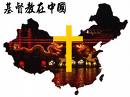
Christianity in China

A conservative, Republican, born-again Christian, evangelical friend of mine that has never visited China was proud to E-mail me and say that Christianity is the fastest growing religion in China. He also told me that ‘communism’ was evil.

Taking one word and using that word as a definition for evil is wrong. Mao did evil deeds during the twenty-seven years he ruled as China’s modern emperor. Stalin and Hitler also were responsible for horrible atrocities. Words are not evil. Using a word to describe evil is dangerous. It leads to stereotyping. If what my friend said was true, than my mother-in-law, the closet Christian, would be evil since she lived in a communist country.

See “An American Shadow Over the Philippineshttp://wp.me/pN4pY-6Z


One Party Advantage

April 4, 2010

The West’s loudest criticisms of China are a one party system, limited religious freedom and government censorship. Is it possible that these same things are also China’s strengths?

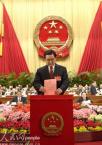
President of China, Hu Jintao

Clean water, air and plentiful, healthy food are precious. China’s one-party system ruled by scientists and engineers excels at solving these challenges. Instead of becoming embroiled in partisanship battles over political and religious differences, as in the United States, China is moving ahead to clean up their environment with no “Tea Bag People” or opposition claiming global warming is not caused by carbon emissions.

China has already become the leader in solar power and wind turbine technology. Now, in the last few years, China has emerged as an early leader in adopting “clean coal” technologies. The next industry China is poised to dominate is high-speed rail with plans to add more at home while considering a line from Beijing to London.

The motivation behind this sudden awareness to the dangers of pollution is because China’s government, with a cultural foundation in Confucianism, must meet the needs of the people or be swept from power. Even if a few complain and suffer, the needs of the many must come first.

Discover Hitting Endless Homeruns


______________

Lloyd Lofthouse is the award-winning author of the concubine saga, My Splendid Concubine & Our Hart. When you love a Chinese woman, you marry her family and culture too.

If you want to subscribe to iLook China, there is a “Subscribe” button at the top of the screen in the menu bar.


Older than the New Testament

March 20, 2010

A conservative friend once said that Communism was evil and that China needed a proper legal system. Since China already has a legal system, what did he mean?  I’ve known this individual for decades, and I’m sure he meant that China should have a legal system like the one in America or the U.K. After all, he claims scripture guides his life and the Christian Bible has been around for centuries proving it comes from God. There is no other choice.

The problem with that logic is Confucius walked the earth long before Christ, and the New Testament didn’t exist for centuries after Christ was gone. What Confucius taught has been around longer.

What about China’s legal system? The highest agency in China is the Supreme People’s Procuratorate.  This agency is responsible for both prosecution and investigation in the People’s Republic of China.  Similar institutions influence the office of the Procurator in the Socialist legal system. Its direct predecessor in China is the Supreme Court of the Republic of China, which in turn is descended from the Procuratorial Office of the late Qing Dynasty.

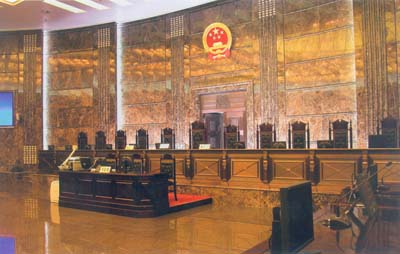
China's Supreme Court

The Chinese legal system may have been broken during Mao’s Cultural Revolution but not any longer.  It also appears that China’s legal system is an organic institution capable of change as seen in this piece from the Dui Hua Human Rights Journal.

This series of posts about the legal system in China started with Officer in Action http://wp.me/pN4pY-ho


About Tibet

February 16, 2010

How does Communist China treat its minorities compared to the way minorities have been treated in the Americas?

Yes, human rights violations did happen in Tibet, but most happened during the Cultural Revolution. Mao ruled China for twenty-seven years (1949 – 1976) but the Cultural Revolution started in the mid 1960s and ended in 1976 with his death, and everyone in China suffered during that decade.

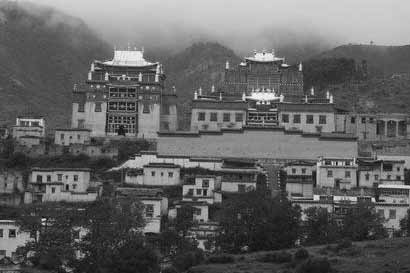
Since Mao considered Tibet to be part of China (and recorded, nonbiased evidence from primary sources prior to the rise of Communism supports that claim), those who suffered in Tibet were treated the same as the rest of China. Monasteries in Tibet were destroyed–but this was going on everywhere in China and after 1976 many of the major monasteries were rebuilt by China.

The next post shows what happened after Mao died—facts we seldom if ever hear. It is always good to have the facts to see who sins and who doesn’t.

Learn what happened After Mao and more about Tibet – Inside China

______________

Lloyd Lofthouse is the award-winning author of the concubine saga, My Splendid Concubine & Our Hart. When you love a Chinese woman, you marry her family and culture too.

If you want to subscribe to iLook China, there is a “Subscribe” button at the top of the screen in the menu bar.