A Road to the Hajj from China – Part 2/2

November 30, 2010

Another devout Chinese Muslim in Xian is proudly transcribing the Quran into Chinese using traditional Chinese brush calligraphy. He says it took him over a year to transcribe the entire Quran this way. Now he is working on a second copy.

He has also taught his son and his grandsons how to write with the Chinese brush wanting to pass down this tradition to the next generation.

His son says that every generation should try their best to transcribe the Quran with the Chinese brush, as it is also a good way to reinforce our faith.

The original copy of the Quran in this family is over four hundred years old, a priceless relic transcribed by the Chinese imams. There are only a few remaining copies left in the world.

Jia Wen Yi, a Hajj pilgrim, says the trip to Mecca is important to him and his wife, an elderly couple. They have done a lot of preparation for the hajj. Mr. Jia goes into detail about the planning.

Going on the hajj for Yi and his wife, Jia Wang Yi, has been a dream for over two decades as they saved to have enough money.

Mr. and Mrs. Jia will be part of a group of 250 pilgrims leaving for the hajj from the city of Xian. It was a matter of saving most of their lives until they could afford the trip.

Since these Muslims are considered a minority in China, they are not restricted by the one-child policy, as you would see in the video when the family and friends gather to say goodbye before Mr. and Mrs. Jia leave on the long journey to Mecca.

There is no direct flight from Xian to Mecca, so the pilgrims will take a train to Beijing where they will board a flight to Saudi Arabia.

Whenever pilgrims leave Xian to go on the hajj to Mecca, thousands of Chinese Muslims show up at the railway station to say goodbye. This is the first time Mr. and Mrs. Jia have left China. They have never been apart from their family before.

Return to A Road to the Hajj from China – Part 1 and/or discover The Kaifeng Jews

______________

Lloyd Lofthouse is the award-winning author of the concubine saga, My Splendid Concubine & Our Hart. When you love a Chinese woman, you marry her family and culture too.

If you want to subscribe to iLook China, there is a “Subscribe” button at the top of the screen in the menu bar.


Sun Tzu’s “The Art of War” – Part 10/10

August 24, 2010

On the third day of Gettysburg during Picket’s charge up another hill, only 5,000 survived of 12,000 troops.  Sun Tzu would have been horrified.

Sun Tzu says, “When troops flee, are insubordinate, collapse or are routed in battle, it is the fault of the general.”

Sun Tzu sees a commanding general as someone intelligent and cunning and never rash or arrogant, which is the opposite of the commander of the Chu army more than two thousand years ago.

Sun Tzu won the war against Chu, which had an army ten times larger than his. He did this through preparation, deception and indirect attacks.

After winning the war against Chu, Sun Tzu retires and writes The Art of War.

The first line of Sun Tzu’s rules of war says, “War is a matter of vital importance to the State. It is a matter of life and death, survival or ruin.

Continued in Conclusion to Sun Tzu’s The Art of War, return to Sun Tzu’s The Art of War (HQ)- Part 9 or start with Part 1

Lloyd Lofthouse is the award-winning author of My Splendid Concubine [3rd edition]. When you love a Chinese woman, you marry her family and culture too. This is the unique love story Sir Robert Hart did not want the world to discover.

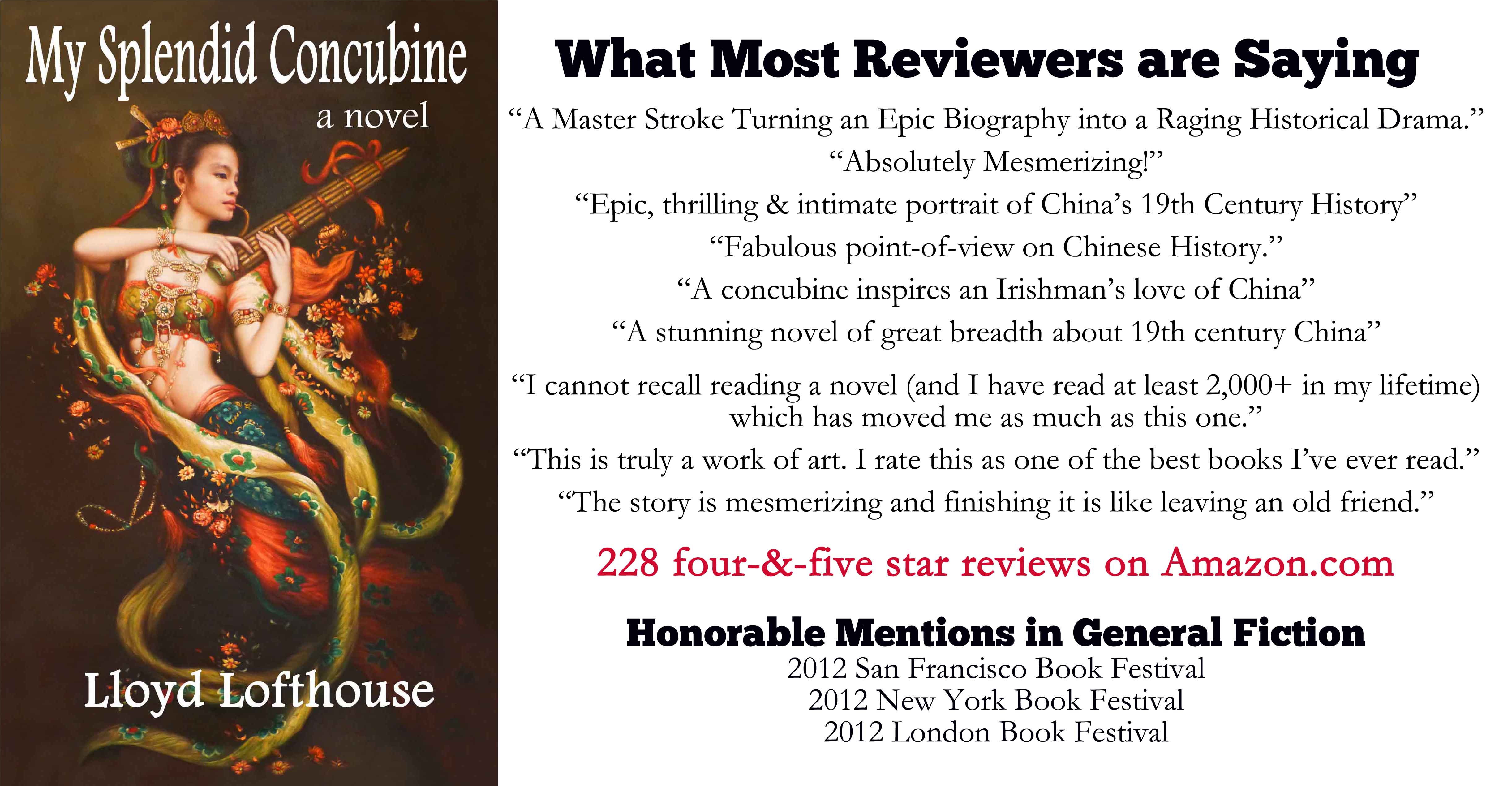
A1 on March 13 - 2016 Cover Image with BLurbs to promote novel

Where to Buy

Subscribe to “iLook China”!
Sign up for an E-mail Subscription at the top of this page, or click on the “Following” tab in the WordPress toolbar at the top of the screen.

About iLook China

China’s Holistic Historical Timeline


Sun Tzu’s “The Art of War” – Part 9/10

August 24, 2010

China’s Sun Tzu says if the orders are unclear, it is the fault of the commanding general.

General Lee told one of his generals to “Attack when you think it is practical.”  That general decides it isn’t practical and does nothing.

At the Battle Gettysburg, Lee did not give clear orders.

Robert E. Lee made a tactical mistake when he did not follow Sun Tzu’s rule to “Move only when you see an advantage and there is something to gain. Only fight if a position is critical.”

Sun Tzu says, “When the enemy occupies high ground, do not confront him.  If he attacks downhill. do not oppose him.”  Robert E. Lee didn’t listen and decides to attack the Union positions on the high ground.

General Longstreet disagrees.  He does not want to attack the high ground.  Instead, he wants to go around the Union Army toward the North’s capital, Washington D.C.

Sun Tzu says, “There are some armies that should not be fought and some ground that should not be contested.”

After two days of horrible losses, Robert E. Lee orders what’s left of his army to attack uphill a third time.  General Longstreet urges Lee not to do this. Lee ignores him.

Go to Sun Tzu’s “The Art of War” – Part 10 or return to Sun Tzu’s “The Art of War” – Part 8

Lloyd Lofthouse is the award-winning author of My Splendid Concubine [3rd edition]. When you love a Chinese woman, you marry her family and culture too. This is the unique love story Sir Robert Hart did not want the world to discover.

A1 on March 13 - 2016 Cover Image with BLurbs to promote novel

Where to Buy

Subscribe to “iLook China”!
Sign up for an E-mail Subscription at the top of this page, or click on the “Following” tab in the WordPress toolbar at the top of the screen.

About iLook China

China’s Holistic Historical Timeline


Sun Tzu’s “The Art of War” – Part 7/10

August 22, 2010

During the invasion of Normandy, the allies survived on death ground exactly as Sun Tzu predicted by fighting together and never giving up.

Sun Tzu meant when you put troops in a combat position where they must fight or die, there is no choice but to fight.

Another reason the Allies succeeded during D-day was another of Sun Tzu’s rules of war. He said, “It is essential for victory that generals are unconstrained by their leaders.”

The allied command structure gives total authority to General Eisenhower as supreme commander.

However, Germany under Hitler did not have the same command structure.

Hitler had set up a confusing system of overlapping authority so no one had total control over the military leaving Hitler the only one who made final decisions.

Hitler’s command structure is a perfect example of what Sun Tzu says about “no interference from the leader”.

The allies in France are bogged down in difficult terrain. The combat losses are horrible and little progress is made.

The solution is found in Sun Tzu’s rules of war. “Make your enemy prepare on his left and he will be weak on his right.”

The allies will follow this rule.

Go to Sun Tzu’s “The Art of War” – Part 8 or return to Sun Tzu’s “The Art of War” – Part 6

Lloyd Lofthouse is the award-winning author of My Splendid Concubine [3rd edition]. When you love a Chinese woman, you marry her family and culture too. This is the unique love story Sir Robert Hart did not want the world to discover.

A1 on March 13 - 2016 Cover Image with BLurbs to promote novel

Where to Buy

Subscribe to “iLook China”!
Sign up for an E-mail Subscription at the top of this page, or click on the “Following” tab in the WordPress toolbar at the top of the screen.

About iLook China

China’s Holistic Historical Timeline


Sun Tzu’s “The Art of War” – 5/10

August 21, 2010

It is about 500 BC in China and Sun Tzu’s hit-and-run campaign against the state of Chu is working.  The Chu prime minister is starting to lose support and the moral of his troops is dropping.

Throughout the countryside of Chu, there is fear of where Sun Tzu will strike next. When the larger Chu army threatens one of Sun Tzu’s allies, Sun Tzu uses another rule of war, “To move your enemy, entice him with something he is certain to take.”

Then, when his own forces are surrounded, Sun Tzu says, “Put the army in the face of death where there is no escape and they will not flee or be afraid – there is nothing they cannot achieve.” See The Long March

What happened to Sun Tzu in China when his small army was surrounded also happened on June 6, 1944 when allied troops in World War II invaded Europe during D-day.

Sun Tzu says, “All warfare is deception. If you can deceive your enemy before battle, you are more likely to win.”

That’s what General Eisenhower did before the invasion of Normandy. To succeed, the allies used deception to convince the Germans the attack would not take place in Normandy.

Go to Sun Tzu’s “The Art of War” – Part 6 or return to Sun Tzu’s The Art of War – Part 4

Lloyd Lofthouse is the award-winning author of My Splendid Concubine [3rd edition]. When you love a Chinese woman, you marry her family and culture too. This is the unique love story Sir Robert Hart did not want the world to discover.

A1 on March 13 - 2016 Cover Image with BLurbs to promote novel

Where to Buy

Subscribe to “iLook China”!
Sign up for an E-mail Subscription at the top of this page, or click on the “Following” tab in the WordPress toolbar at the top of the screen.

About iLook China

China’s Holistic Historical Timeline