Discussion with Troy Parfitt, the author of “Why China Will Not Rule the World” – Part 2/12

November 28, 2011

First Question [Lofthouse]: Since 1949, Taiwan and mainland China have followed significantly different paths. While Taiwan held onto the old culture, the mainland went through a painful metamorphosis to rise from the ashes of the Civil War (1926 – 1949) as if it were a phoenix to be reborn.

One example of these differences may be found in the written language. While Taiwan held onto the old style of writing Mandarin, which goes back thousands of years, Mao simplified the language and instead of writing vertically from bottom right in columns toward the top left, the written language on the mainland was simplified with fewer strokes and is written from the top in horizontal lines from left to right ending in the lower right corner as Western writing does.

In addition, Mao saw Confucianism as a weakness that led to China’s decline in the 19th century as the world’s wealthiest and most technologically advanced nation on the earth — a position it held for about two thousand years. To rid Communist China of this weakness, Mao declared war on Confucius.

However, piety, which is a result of Confucian ethics and morals since the Han Dynasty, remains strong in both cultures. Since you lived in Taiwan and taught ESL for ten years and then traveled as a tourist through mainland China, how would you describe the differences you observed between how piety is practiced in mainland China and Taiwan?

Answer [Parfitt]:

First, as the term pertains to Taiwan, there is no such thing as mainland China. There is China, and there is Taiwan. The word ‘mainland’ denotes a connection, but there isn’t one and never really has been. The Dutch, not the Chinese, were the first to establish controls over Taiwan. When the Dutch arrived, there were a few thousand Fujianese farming families living on the Western plains (they had fled China despite a Qing ban on emigration) and aboriginals living in the mountains. The Dutch were eventually sent packing by the Ming loyalist, Koxinga, who in turn was toppled by the Qing. The Qing asked the Dutch if they wanted Taiwan back. They didn’t, so, mainly to prevent the island from falling into other foreign hands, it was annexed in 1885. The Qing, remember, were Manchus, considered foreign rulers by the Han Chinese.

Even today, the Chinese commemorate their demise. The Manchus admitted they held no jurisdiction over half of Taiwan. The other half they ruled badly.

In 1895, Taiwan was ceded to Japan, and though the Japanese exploited it, living standards exceeded any province in China.

In Cairo, in 1943, Chiang Kai-shek argued that Taiwan had been stolen by the Japanese and ought to be returned.

Roosevelt, Churchill, and Stalin agreed, hence the mainland myth, perpetuated to this day by the Communists and the Nationalists. Approximately 90 percent of Taiwanese want nothing to do with China, and why would they?

In addition to retaining some of the finer aspects of traditional Chinese culture, such as complex characters, Taiwan has liberalized through democratization and represents a major step forward for Chinese civilization.

As for the Confucian concept of piety, it is a core cultural component, virtually identical in China, Taiwan, Hong Kong, Singapore, and Macau. This is unfortunate because Confucianism is dogma. “The plague of heterodox theories can be eliminated by fierce attack,” says the Analects of Confucius. Until people realize the Analects represents only stone-age logic and dictums posing as wisdom, they will remain slaves to tyranny and history.

In China, I was no mere tourist.

Response [Lofthouse]:

The history of Taiwan is interesting.

However, if history decides who rules a territory, the US would not exist, and Hawaii’s native population would still rule an independent country instead of being the 50th state.

Taiwan’s fate was decided by Chiang Kai-shek (a Han Chinese) when he ordered KMT troops to slaughter Taiwanese natives. He ruled Taiwan as a dictator before and after he lost China’s Civil War.

As for democratization, America’s Founding Fathers despised democracy and saw it as a path to mob rule.

Regarding Confucianism, — under Mao, it was seen as a weakness and a brutal war was waged on the philosophy during the Cultural Revolution.

Indeed, Confucianism is but one element of China’s culture, which is a blend of Face, Guanxi, Confucianism, Legalism, Taoism , and Buddhism, etc.

In addition, the Mandate of Heaven plays an important role that often cancels out the negative aspects of Confucianism.

Final Word [Parfitt]:

Taiwan’s history has been irrevocably altered by Chiang Kai-shek, but its fate regarding China has not been decided.

Face is a puerile concept, a license to behave however one pleases.

Guanxi is important in all societies. It only seems more prevalent in China because people discuss it.

Confucianism, Legalism, and Taoism are enlightened philosophies to those who’ve never read them. The essence of Confucianism is obedience. Legalism is Machiavellian. “A weak people means a strong state…” says The Book of Lord Shang. The Tao Te Ching urges rulers to eradicate knowledge and desire. The strains of despotism in these native ideologies speak to communism’s appeal.

Nowhere in Jonathan Spence’s Mao does it say Mao’s Cultural Revolution had to do with waging war on Confucianism. Spence notes Mao “never wrote a single comprehensive analysis of what he intended to achieve by the Cultural Revolution, or… how he expected it to proceed.”

Continued on November 29, 2011 in Discussion with Troy Parfitt, the author of “Why China Will Never Rule the World – Travels in the Two Chinas” – Part 3 or return to Part 1.

See Discovering Intellectual Dishonesty – Part 1

______________

Lloyd Lofthouse is the award-winning author of The Concubine Saga. When you love a Chinese woman, you marry her family and culture too. This is the love story Sir Robert Hart did not want the world to discover.

Subscribe to “iLook China”
Sign up for an E-mail Subscription at the top of this page.

About iLook China


Mao’s Great Leap Forward and the Cultural Revolution (Viewed as Single Page)

August 6, 2011

Before reading this post, I suggest first reading China, The Roots of Madness to understand what led to Mao’s era in China (1949 – 1976). This link will take you to that post. When you finish, return.

****

Mao’s era started October 1949 with victory celebrations in Beijing, as the country with the largest population saw a Communist government come to power.

Mao says, “The People’s Republic of China is founded today. China will be free of inequality, poverty and foreign domination.”

Before 1950, most Chinese lived as they had for centuries as part of a feudal system. Even after the collapse of the Qing Dynasty, warlords ruled much of China, and then China was torn by Civil War and an invasion by Japan during World War II.

For most Chinese, feudalism describes the “old society” that existed before “liberation” in 1949.

The following video shows what this life was like before Mao’s era.  It is estimated that about half the people in rural China lived in severe poverty and were in debt to landowners.


(When the advertisement appears, advance the video scroll bar to 2:00 minutes to avoid it.)

In the video, Hu Benxu, a peasant farmer from Sichuan says that in the past, there was justice for the rich but nothing for the poor.

Chiang Kai-shek believed that improvements would spread through the country (sort of like President Reagan’s trickledown theory, also known as voodoo economics or Reaganomics, which did not work in the US) as foreign investments poured into China.

However, the opposite happened. As the country industrialized, the gap between the rich and the poor widened because the rich held on to money and wanted more and protests about working condition in the factories were met with death from Chiang Kai-shek’s troops.

Meanwhile, at the same time, Mao promised land reforms, and his troops treated the peasants with respect.

When Mao won China, he said, “We Chinese should work hard. The country is poor. Our people are uneducated. We must make China a modern industrialized state.”

However, there would be many mistakes and much suffering during the next 27 years. After two thousand years of an Imperial system of government, China was embarking on a journey of reinventing a country and a culture without foreign influence.

Mao held more power than anyone since the emperors, and he wanted China to be a purer, fairer more progressive state than the Soviet Union, so the peasants were the first to benefit.

As Mao promised during China’s Civil War (1926-1949 – with a break during part of World War II), there were land reforms.

Luo Shifa, a party official in Sichuan, tells his story about what happened in 1950. Rural property owners were judged enemies of the people (by the people) and hundreds of thousands were executed.

Changes in urban areas were not as violent. The owners and managers of factories were needed to keep things running but all property was signed over to the state. Factory and business owners who resisted were executed.

Women were given new rights at work and in marriage and foot binding was abolished. Literacy was also important. Before 1949, illiteracy in Mainland China was 80% and life expectancy was 35. When Mao died, the average life expectancy had increased to 55 and today it is 76 (while literacy is now more than 90% and China has done more to reduce poverty than any country on earth).

To deal with disease, the Communists launched programs to improve health care that had never existed before. Millions were inoculated against the most common diseases.

The nation went on a cleaning spree. Posters said everyone had to help exterminate pests. Songs were sung, “Pest free areas are glorious. Let’s wipe out the flies, bugs, mosquitoes and rats.”

Sparrows were considered pests since they were accused of eating crops. Whoever killed the most sparrows in each village was rewarded.

However, exterminating sparrows led to insect populations exploding, which endangered crop yields.

Then the people were told to watch for capitalistic or counter revolutionary behavior and to denounce suspicious people.

In 1958, Mao’s boldest program was launched. He wanted to out-produce industrialized nations in manufacturing and crop yields. The land given to the peasants in 1949 was confiscated and people communes of 100 thousand or more were created.

Mao believed that more people working together meant larger projects. By the end of 1958, 700 million people had been placed into 26,578 communes.

Ironically, one of the key factors in food production in China was the weather and 1958 had particularly good weather for growing food.

Then in 1959, things started to go wrong.

The excellent growing weather of 1958 was followed by a very poor growing year in 1959. Some parts of China were hit by floods. In other growing areas, drought was a major problem. The harvest for 1959 was 170 million tons of grain – well below what China needed at the most basic level.

Soon, in parts of China, starvation occurred and millions died.

In addition, political decisions/beliefs took precedence over commonsense and communes faced the task of doing things which they were incapable of achieving.

Mao said, “Revolutionary enthusiasm will triumph over all obstacles.”

To achieve Mao’s goals, the Communist Party encouraged competition between communes. Instead, overproduction caused crops to rot in the fields and the communes hid the truth by faking records.

Huge construction projects began without proper planning leading to accidents and deaths, which were hidden by the project managers. No one wanted Mao to discover the lack of proper revolutionary enthusiasm.Some critics claim that Mao was aware of what was going on but others argue he had no idea of the extent of the problems until late 1959.

During this time, steel production was to double in one year. Instead of producing steel from industry, Mao wanted the peasants to build small furnaces.

Again, there was competition between teams of peasants, and forests were cut down to fuel the crude furnaces the mostly illiterate peasants built.

All over China, people were neglecting the fields and crops to produce steel because the people were told they had to listen to Mao. All metal was melted — including cooking woks, but the steel produced using these methods was useless.

While the peasants were producing this useless steel, the crops rotted in the fields. Then in 1960, there was a drought and food production fell more than 25% and millions died from the resulting famine (no one knows the exact number — estimates run from 10 million to 45 million or more).

Having failed, Mao publicly admitted he had been wrong and stepped aside to let someone else run the country.

The large communes were abandoned in 1960, and the peasants returned to their villages and were given land again.  At the time, Mao was still popular with the people but he still resigned as the Head of State.

However, fearing a return of capitalism and exploitation of the people, Mao’s supporters printed a book with his quotations and slogans.

The goal was to break the thinking and attitudes of old China. Using film, a propaganda campaign was launched so Mao could regain power. Then in 1966, the Cultural Revolution started.

By 1966, Mao’s Red Book of quotations was being used as a textbook in the schools.

Shao Ailing, a head teacher in Shanghai says, “The pupils began to realize that all the changes taking place in their families, in school, in Shanghai and China were because of Chairman Mao.”

Mao encouraged students to attack authority and the leadership of the Communist Party that did not agree with his beliefs.

This advice was coming from a man considered to be the “George Washington” of China, the man who had delivered on his promises to the peasants in 1950 and brought them medicine and land reforms—something the emperors of Imperial China and Chiang Kai-shek had never done, and Mao was still popular with the vast majority of the Chinese people.

Zhang Baoqing, an early Red Guard member in Beijing, says, “Chairman Mao started the Cultural Revolution (1966 – 1976) to keep up the momentum for change. We thought if we followed Mao, we could not go wrong.”

Mao motivated millions of students from speeches in Tiananmen Square. This time it wasn’t the rural peasants that suffered the most during the Great Leap Forward (1958 – 1960). This time he looked for support from China’s urban youth that did not remember or were not aware of Mao’s earlier mistakes.

Urban student anger focused on Mao’s rivals, President Liu Shaoqi and Deng Xiaoping. Even small children were taught to denounce Liu. Then anyone in power was denounced. The structure of the Communist Party collapsed. Schoolteachers were attacked and tortured by their students. More than a million were killed or driven to suicide.

The anarchy caused by Mao’s Cultural Revolution spread. Schools and hospitals closed. Offices and factories were in chaos. Qi Youyi, who was a factory worker in Beijing, describes how bad it was. Production stopped. No one knew when he or she might be denounced and arrested. Many workers committed suicide.

After two years (by 1968), the People’s Liberation Army (PLA) was called in to restore order and reestablish the Communist Party. Then to bring peace to the streets, millions of members of the teenage Red Guard were sent to the countryside to learn from the peasants.

However, the Cultural Revolution did not officially end until 1976 when Mao died.

After his death, Mao’s closest supporters, the Gang of Four, were arrested and Maoist revolutionary activities were abandoned. In an attempt to hold the country together, the Communist Party used propaganda and the PLA to maintain control.

Deng Xiaoping replaced ideological fervor with economic activity so the people would be motivated not by dreams of equality but by money. In the 1980s, the new message was “to get rich is glorious”.

This post first appeared as a six part series starting June 21, 2010 as China’s Great Leap Forward – Part 1.

_______________

Lloyd Lofthouse is the award-winning author of My Splendid Concubine [3rd edition]. When you love a Chinese woman, you marry her family and culture too. This is the love story Sir Robert Hart did not want the world to discover.

His third book is Crazy is Normal, a classroom exposé, a memoir. “Lofthouse presents us with grungy classrooms, kids who don’t want to be in school, and the consequences of growing up in a hardscrabble world. While some parents support his efforts, many sabotage them—and isolated administrators make the work of Lofthouse and his peers even more difficult.” – Bruce Reeves.

lloydlofthouse_crazyisnormal_web2_5

Subscribe to “iLook China”!
Sign up for an E-mail Subscription at the top of this page, or click on the “Following” tab in the WordPress toolbar at the top of the screen.

About iLook China

China’s Holistic Historical Timeline


Kissinger on NPR’s “Talk of the Nation” with Neal Conan and Ted Koppel – Part 2/3

July 10, 2011

During “Talk of the Nation” with Kissinger, Ted Koppel chimed in saying that after reading On China, he got a sense that Kissinger has developed great admiration for what the Chinese have accomplished.

Kissinger said that was correct, that he respected what the Chinese people have accomplished historically, which was the longest, unbroken record of self-government of any society in the world today, which includes the economic transformations that have taken place in the last 30 years.

Then Koppel led the conversation to 1969, Nixon, Soviet troops on China’s northern border at the time and the Vietnam War. Discover more of China’s motives during Mao’s time at The Lips Protecting China’s Teeth.

Later in the conversation, Koppel mentioned that Mao had attempted to contact the United States through American journalist Edgar Snow but was unsuccessful.

Kissinger replied, Mao did not want to deal with us through a communist channel. We did not want to deal with Edgar Snow.  At the time, there were (political) elements in both countries that believed that the relationship between the US and China would be irreconcilably hostile (impossible to overcome differences) and the challenge was to make contact without a public embarrassment of rejection for either side.

One caller asked, “Does it work against our best interests by pretending that leaders, like, in China represent the Chinese people?”

Kissinger replied, “The United States often deals with countries whose governments were not directly elected by the people.… I think we should tell China that we are, in principle, for self-determination of peoples.”

Continued on July 11, 2011 in Kissinger on NPR’s “Talk of the Nation” – Part 3 or Return to Part 1

______________

Lloyd Lofthouse is the award-winning author of the concubine saga, My Splendid Concubine & Our Hart. When you love a Chinese woman, you marry her family and culture too.

To subscribe to “iLook China”, look for the “Subscribe” button at the top of the screen in the menu bar, click on it then follow directions.


Kissinger on NPR’s “Talk of the Nation” with Neal Conan and Ted Koppel – Part 1/3

July 9, 2011

Recently, in Closed Minds and Culturally Blind Missionary Zeal, I mentioned Henry Kissinger’s book On China and quoted from the Preface, “American exceptionalism is missionary. It holds that the United States has an obligation to spread its values to every part of the world. China’s exceptionalism is cultural. China does not proselytize (preach); it does not claim that its contemporary institutions are relevant (superior) outside China.”

What Kissinger meant was that China does not believe it has a right to force its cultural beliefs and political system and values on the world while America does believe it has that right.

What do you think? Do you feel the US has the right to preach to other cultures and pressure them to be like America?

I’m still reading “On China”, and it will be some time before I finish because I’m reading several magazines and another book at the same time while writing two Blogs and getting ready to launch my next book, which will see “My Splendid Concubine” and “Our Hart” combined as The Concubine Saga.

However, this post is about Henry Kissinger appearing on NPR’s Talk of the Nation with Neal Conan and Ted Koppel on June 8, 2011. The focus was on China although the program strayed from that topic a few times.

The program ran about a half hour so I am going to share a condensed version.

After an introduction, Neal Conan asked, “In the long run, do you think the Chinese Communist Party can survive the political pressures created by the country’s economic successes?”

Kissinger said he believed China’s political system would have to adapt, which several of China’s leaders have already mentioned as a necessity.

When Conan challenged this answer, Kissinger replied, “But there a new administration coming in and right now, it is in a very defensive mode.”

Continued on July 10, 2011 in Kissinger on NPR’s “Talk of the Nation” – Part 2

______________

Lloyd Lofthouse is the award-winning author of the concubine saga, My Splendid Concubine & Our Hart. When you love a Chinese woman, you marry her family and culture too.

To subscribe to “iLook China”, look for the “Subscribe” button at the top of the screen in the menu bar, click on it then follow directions.


China’s Great Leap Forward (1958 to 1961) – Part 4 of 6

June 23, 2010

Steel production had to double in one year.  Instead of producing steel from industry, Mao wanted the peasants to build small furnaces. Again, there was competition between teams of peasants.  Forests were cut down to fuel the crude peasant furnaces.

All over China, people were neglecting their other jobs to produce steel because the people had to obey Mao. All metal was melted—including cooking woks. The steel produced was useless.

While the peasants were producing steel, the crops rotted in the fields. In 1960, there was a drought and food production fell more than 25%. Twenty million or more died from the resulting famine.

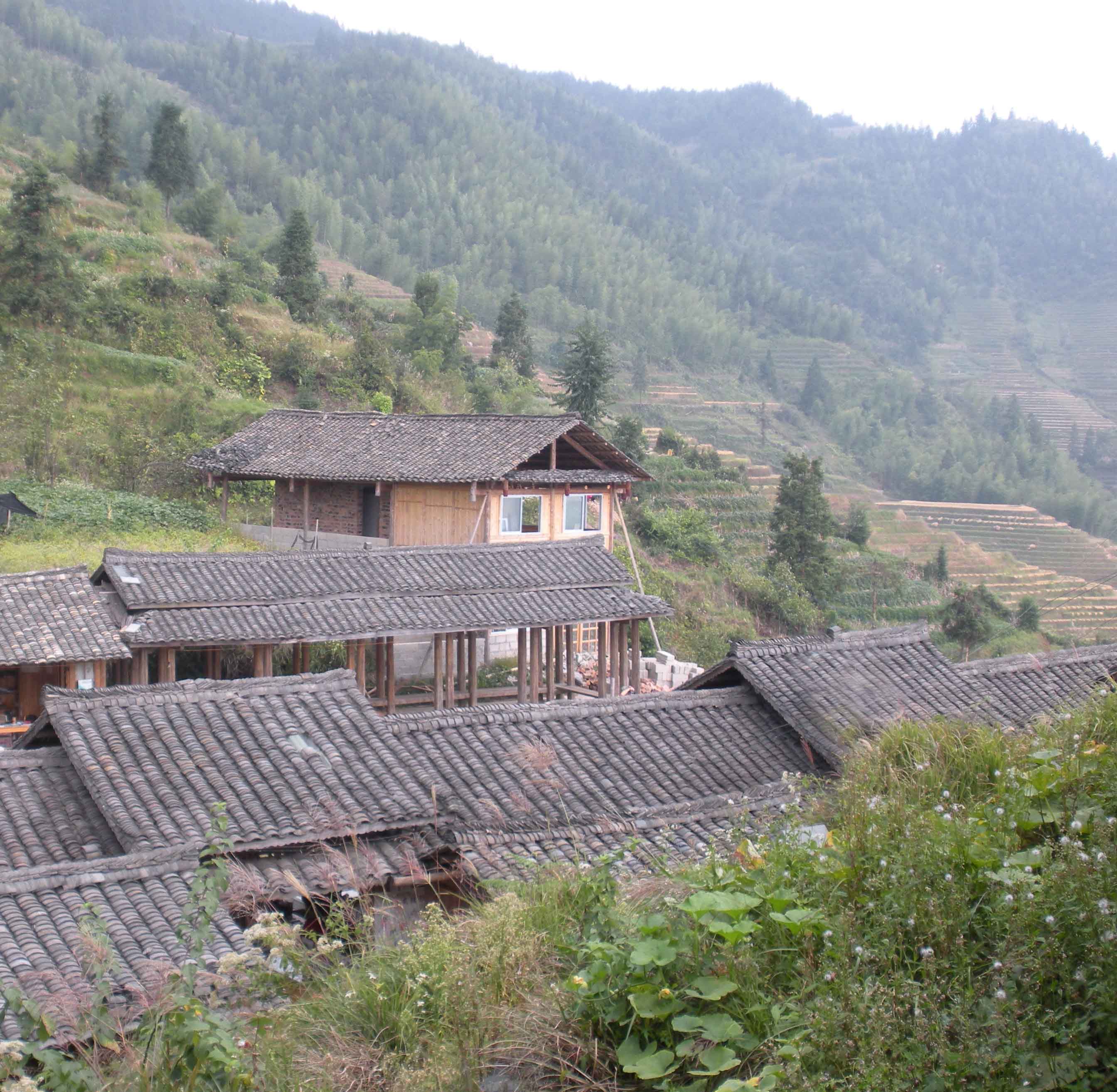
Village in Southeast China

Having failed, Mao stepped aside to let someone else run the nation. The large communes were abandoned. The peasants returned to their villages and were given land again.

Fearing the return of capitalism, Mao’s supporters printed a book with his slogans. Mao wanted to break the thinking and attitudes of old China. Using film, a propaganda campaign was launched so Mao could regain power. Then in 1966, he launched the Cultural Revolution.

Return to Part 3, China’s Great Leap Forward or go to Part 5

______________

Lloyd Lofthouse is the award-winning author of the concubine saga, My Splendid Concubine & Our Hart. When you love a Chinese woman, you marry her family and culture too.

If you want to subscribe to iLook China, there is a “Subscribe” button at the top of the screen in the menu bar.