The Democracy Club and the rest of the world – Part 2/2

April 24, 2012

In March 2012, I attended a lecture by Adam Johnson, the author of “The Orphan Master’s Son“. Johnson gave us a glimpse into the mysterious Hermit Kingdom of North Korea. Although many call North Korea’s government a dictatorship, it appears to be more of a monarchy since the leadership has passed from father to son twice.

“No one has written a literary novel in 60 years… No one has read a book that’s not propaganda for 60 years,” Johnson said of North Korea.

Johnson spent six years reading everything he could find on North Korea. In addition, he interviewed a number of people that once lived there or had visited. He also watched every YouTube video on North Korea he could find. Then he traveled there as sort of a tourist in 2007.  It wasn’t easy gaining permission.

While in North Korea, Johnson saw a country that was hungry for food, power and money. The trucks and cars he saw on the roads were coming out of the same factories that were manufacturing the same models in the 1950s with no changes.  In addition, appliances manufactured in North Korea were the same models that were made six decades ago.  North Korea is a country trapped in a time warp.

In an interview with Sheila Himmel of the Stanford Magazine, Johnson said there was daily loudspeaker propaganda. “If you’re caught tampering with your loudspeaker (everyone has one in their home and workplace), that’s something that could send you to a prison mine.”

Himmel wrote, “Johnson knew he had to visit North Korea to put flesh on the bones of his research. After being turned down twice for a visa as a visiting scholar, Johnson met a Korean War orphan whose NGO planted apple orchards in North Korea.  As the orchardist’s assistant, he got a tourist visa.

“I would walk the streets and people would not even look up at me. They were Afraid to,” Johnson said.

Johnson stayed in the Yanggak Island hotel, staffed by Chinese, “So we didn’t even get to meet a North Korean citizen at breakfast,” Johnson said.


More than an hour with Adam Johnson – Live from the library.

The hotel was located on an island and was only open two weeks a year for the Airirang festival celebrating the birth of Kim Il Sung, North Korea’s founding autocrat (emperor/king as far as I’m concerned). Even then, only two floors were occupied out of forty-nine and the only lights that were on were on those two floors. The other 47 floors were dark and abandoned.

While Johnson was in North Korea, he was told that the DPRK was the most democratic nation in the world. “They’d say to Johnson, ‘How many people turned out to your last election?’ About 60 percent. ‘We’re 100 percent. We’re more democratic!’ ”

However, being a democratic country, which North Korea isn’t (it’s also not a republic), may not be all that desirable. After all, America’s Founding Fathers created a republic in the United States, because they hated democracy believing it morphed into mob rule and eventually a dictatorship, and George Washington, in his farewell letter to the people as he left the presidency, warned Americans against multiple political parties competing with each other because that led to divisiveness and rancor.

Return to The Democracy Club and the rest of the world – Part 1

______________

Lloyd Lofthouse is the award-winning author of The Concubine Saga. When you love a Chinese woman, you marry her family and culture too. This is the love story Sir Robert Hart did not want the world to discover.

Subscribe to “iLook China”!
Sign up for an E-mail Subscription at the top of this page, or click on the “Following” tab in the WordPress toolbar at the top of the screen.

About iLook China


The Democracy Club and the rest of the world – Part 1/2

April 23, 2012

Recently an e-mail arrived from a friend, and she provided a link to a CNBC.com piece about India testing an intercontinental ballistic missile with a range of more than 3,100 miles.  The test was successful. This long range missile is capable of reaching deep into China and Europe.

My friend wrote, “This doesn’t thrill me. I think the international community should come down just as hard on India as on North Korea.” She was right, and the Hindustan Times reported, “North Korea violated international law by missile launch.”

So, why is North Korea’s failed missile launch different than India’s?

Nowhere in the CNBC piece was India criticized as North Korea was for its failed test of a long range ballistic missile.


This 10 minute video may “BLOW” your mind—pun intended!

Instead, CNBC reported, “India lost a brief Himalayan border war with its larger neighbor, China, in 1962 and has ever since strived to improve its defenses. In recent years the government has fretted over China’s enhanced military presence near the border.”

In addition, Srikanth Kondapalli, professor in Chinese studies at Delhi’s Jawaharlal Nehru University told Reuters, “India can now deter China, it can impose maximum possible punishment if China crosses the red line.”

It is obvious to me that there is a double standard in the world.

There is the Democracy Club and countries that feed the world’s democracies with oil and then there is everyone else.  India is a member of the democracy club and seldom if ever is criticized in the Western media even though the maternal mortality rate is 46.07 deaths per 1,000 live births (ranked #1 globally), life expectancy is 67 years at birth, 43.5% of the children at age five are underweight (the highest in the world), about 5 million children die (50 million each decade) from malnutrition and starvation annually, the literacy rate is 61% of the population, and 25% (more than 300 million people) live below the poverty line. Source: The CIA Factbook

Comparing India’s democracy to a non-democracy, such as China, reveals the double standard I’m talking about.

Before 1949, life in China was equal to or worse than India is today (life expectancy was 35 and 87% of the people lived in severe poverty).  However, according to the CIA Factbook, today, the most recently reported maternal mortality rate was 15.62 deaths for each 1,000 live births ( a third of India’s and ranked #111 globally), life expectancy was almost 75 years of age, and literacy was more than 92% while the population living below the poverty line was 13.4% (about half of India).


6,000 children starve to death in India EVERY DAY

Then there is the fact that India’s middle class is about 5% of the population (61 million), while it is estimated that China’s middle class is now more than 230 million people or 37% of the total urban population. With all of these facts for a comparison, there is no doubt that the quality of life in China’s authoritarian republic is far better than life is in India’s democracy where people are “free” to starve and be illiterate.

Moreover, nowhere in that CNBC piece does it mention that India also fought border wars with Pakistan and Nepal—India fought with Pakistan in 1947, 1965 and came close to war in 1990 all over disputed Kashmir.

In fact, soon after the conflict with China, India had a clash with Nepal over a paltry 75 square km in Kalapani.  Indian forces occupied the area in 1962, and the dispute with Nepal intensified in 1997.

Nowhere in the CNBC piece does it mention that India has 90 nuclear weapons while China has about 240.

Is India really serious about punishing China for future  alleged violations of a disputed border?

In addition, the American/Western media crucifies North Korea for having 10 nuclear warhead compared to America’s 8,500 and Russia’s 11,000.  Source: Huffington Post

Now, don’t get me wrong, North Korea’s government has earned its infamy, and I’ll spend more time with what that means in Part 2. Oh, lest I forget, North Korea has tested two nuclear bombs—one in 2006 and one in 2009. How many nuclear bombs has America tested? Watch the first video to discover that answer.

Continued on April 24, 2012 in The Democracy Club and the rest of the world  – Part 2

______________

Lloyd Lofthouse is the award-winning author of The Concubine Saga. When you love a Chinese woman, you marry her family and culture too. This is the love story Sir Robert Hart did not want the world to discover.

Subscribe to “iLook China”!
Sign up for an E-mail Subscription at the top of this page, or click on the “Following” tab in the WordPress toolbar at the top of the screen.

About iLook China


April 21, 2012

The air conditioning units we see on the outsides of buildings in China are much more energy efficient than the whole house units found mostly in the US. We live in the Bay Area near SF and our house has a whole house unit, which can be very expensive as it cools or heats the entire house while we spend most of our time in one room.
The units you see in China are ductless and while there may be one unit outside of the building, there will be a different ductless unit inside each room of the unit, which allows the residents to run only the one for the room they are in thus saving energy and keeping the electric bill/use down.


However, I agree with you that these units probably do warm the city by several degrees in the summer. Imagine, China has more than four times the number of people that the United States has with about the same amount of land to live on. If everyone in China had these ductless air conditioning units, I’m sure it does run up the heat at ground level. In the US, when a heat wave hits, the amount of energy demanded by all the whole house air conditioning units often causes brown outs/power losses as the electric grid crashes from the demand.


The man that installed the one ductless system we bought (for a separate granny bungalow on our property) said that it would use less than a third of the electricity demanded by our whole-house unit.


I wonder if that means in China, if everyone was using the ductless heating-cooling unit in one room of their home, the Chinese would be consuming the same among of electricity that Americans would consume under the same circumstances.


Most of the Chinese cities we have spent time in all had the same amount of energy you experienced in Hong Kong.

The Housewrighter's avatarThe Blissful Adventurer

If you are arriving here from FRESHLY PRESSED – A Huge thank you and Welcome. I would be so grateful if you would follow me as storytelling and travel are my livelihood and if we share this passion you will have a blast here.

Cheers and Thank You!

Hong Kong is easily the most dynamic city I have ever visited. Alive, moving, walking, running, and most of all eating and all of this with great vigor.

I was charged to do a Hong Kong post by another lovely blogger and so I decided it was long overdue to take my Blissful Adventurers on a tour.

I fell in love with the Hipstamatic iPhone app last year and I enjoy how this $3 investment really forced me to look at Hong Kong under the surface and explore subjects that on my Nikon D90 may have seemed plain and ordinary.

Hipstamatic forces…

View original post 339 more words


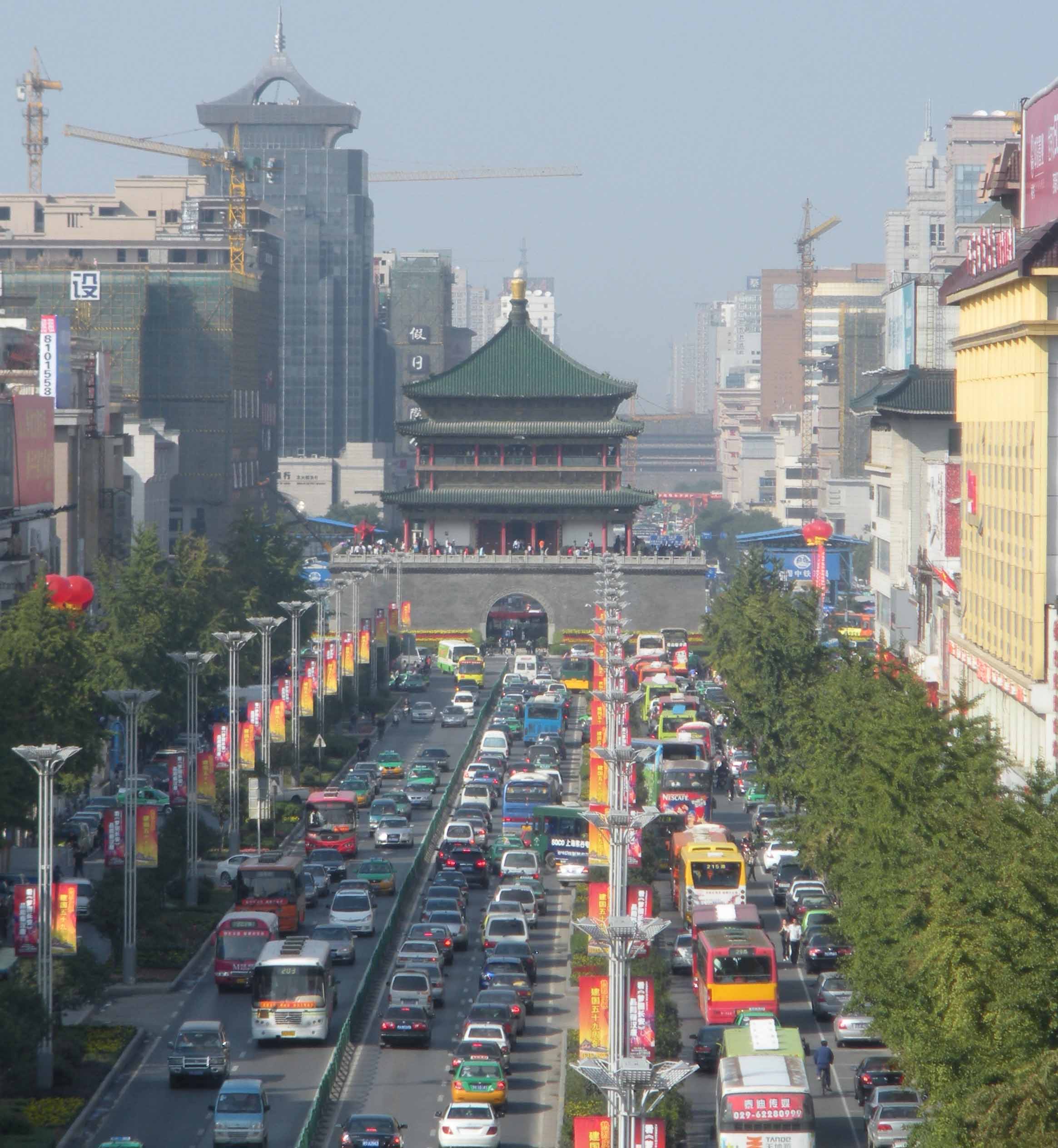
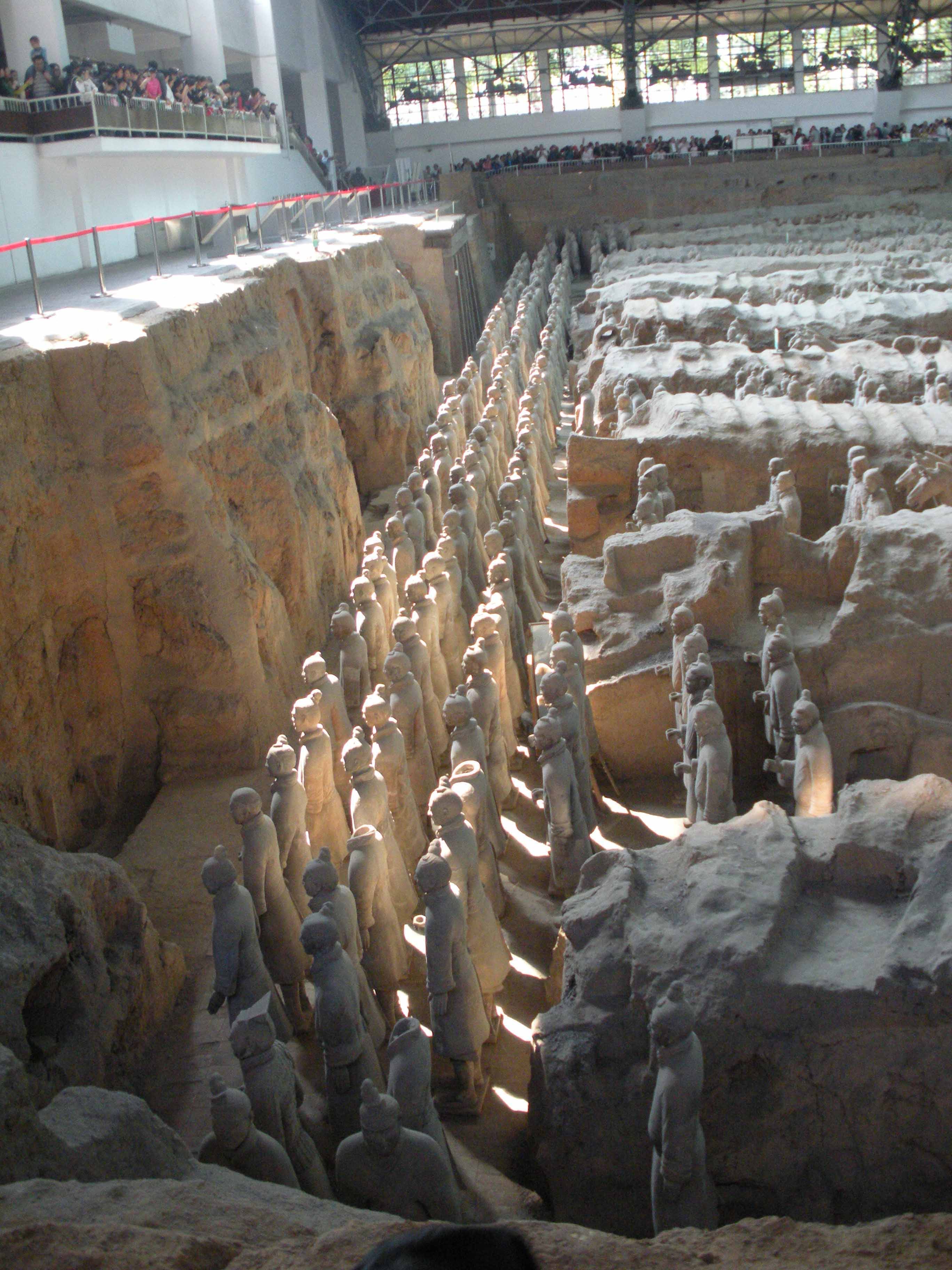
Visiting Xian – a city with more than 3,100 years of history

April 17, 2012

We are taking a quick trip to Xian (in pictures that is). Xian was China’s ancient capital for more than a thousand years before being moved to Beijing.

After landing in Xian in 2008, (our third visit to the city since 1999) we found a great driver. He was honest and knowledgeable. Here’s the cell phone number he had at the time (136-0916-251). If you visit Xian, I recommend you book him for the entire stay. He also introduced us to some experiences we’d never had on previous trips.

The Famous Terra Cotta warriors were created to guard China’s first emperor Qin Shi Huangdi (221-204 B.C.). Qin Shi Huangdi made Xian China’s first capital until Kublai Khan moved the capital to Beijing where he ruled his Khanbalik Empire, from 1264 to 1267.

Xian was known as Chang’an before the Ming Dynasty and is one of the four great ancient capitals of China having held that distinction under several of the most important dynasties in China’s history. In fact, Xian was a cultural center more than a thousand years before Jesus Christ was born.

______________

Lloyd Lofthouse is the award-winning author of The Concubine Saga. When you love a Chinese woman, you marry her family and culture too. This is the love story Sir Robert Hart did not want the world to discover.

Subscribe to “iLook China”
Sign up for an E-mail Subscription at the top of this page.

About iLook China

Note: This revised post first appeared February 19, 2010


The Power of e-bikes and Public Debate in China

April 16, 2012

If you have been led to believe that the Chinese people do not have a voice in China, think again. It may not be a voice expressing political opinions, but it is a voice.

One example of the power of those voices happened December 2009 and had to do with electric bikes. When new regulations threatened to restrict the use of e-bikes and ban them from public roads, opposition from the e-bike industry and bike riders stopped the regulations in their tracks.

Tim Snaith said, “I’m not surprised that Chinese riders are up in arms. A huge amount of the population rely on electric bikes on a daily basis in a way that UK riders don’t.”  Source: Bike Radar.com

Adrienne Mong of NBC News said, “The news triggered a heated debate that was played out all over the Chinese-language media and on the Internet. Eventually, the government backed down, and it’s been left up to industry groups to figure out new guidelines.” Source: Gr-r-r-r! Why I hate China’s e-bikes

When we visit China, we mostly walk (long distances), take taxis or use the subways, but I have admired the electric bikes that crowd China’s streets.

However, don’t count on us changing how we get around when in China, since many of the drivers in China drive crazy. The crowded urban streets behave more like an NFL game in the Super Bowl. I’ve often observed that red lights at intersection are ignored and crossing any street and sometimes even using sidewalks is risky and the only thing lower in the food chain than an electric bike are pedestrians risking lives as they cross streets even legally in a crosswalk.

That e-bike debate sounds similar to America where public debates often have an impact on government policy since the majority rules. Well, in theory the majority rules, since in America the majority is often ignored while we constantly hear from loud minorities such as the Tea Party or Occupy Movement, PETA, or the Million Woman March, which has only a few thousand members.

It also doesn’t help that about half of eligible voters in the U.S. seldom or never vote and the U.S. president is not elected by the popular vote but by a few hundred loyal party members (Republican and/or Democratic) in the Electoral College.

However, back in China, more than two years after the e-bike protest, Tea Leaf Nation reported on February 23, 2012 about a weibo Blog that was deleted by Sina Weibo, a popular Chinese microblogging platform, but what was deleted was soon restored thanks to widespread outrage and threats that the majority of Chinese would switch to Twitter and Facebook.

In addition, the Reuters Institute ran a piece about the power of the Chinese netizen and how microblogging is changing Chinese journalism. Zhou Kangliang, a Chinese journalist, concludes that “as Chinese online microblogging services grow and traditional journalism grows with them, it is learning from lessons and experience…”

In fact, The Washington Post reported, “In a country where most media are controlled by the state, information is heavily censored and free-flowing opinions are sharply constricted, Chinese have turned to a new platform to openly exchange unfettered news and views: microblogs, similar to Twitter.”

Xie Gengyun, a professor at Shanghai Jiaotong University, recently completed a report on microblogging and said weibo is the most popular choice for trustworthy information, ahead of newspapers, online forums and blogs.

______________

Lloyd Lofthouse is the award-winning author of The Concubine Saga. When you love a Chinese woman, you marry her family and culture too. This is the love story Sir Robert Hart did not want the world to discover.

Subscribe to “iLook China”
Sign up for an E-mail Subscription at the top of this page.

About iLook China

Note: This edited and revised post first appeared on April 29, 2010