TABOO IS THE NEW NORMAL

October 1, 2012

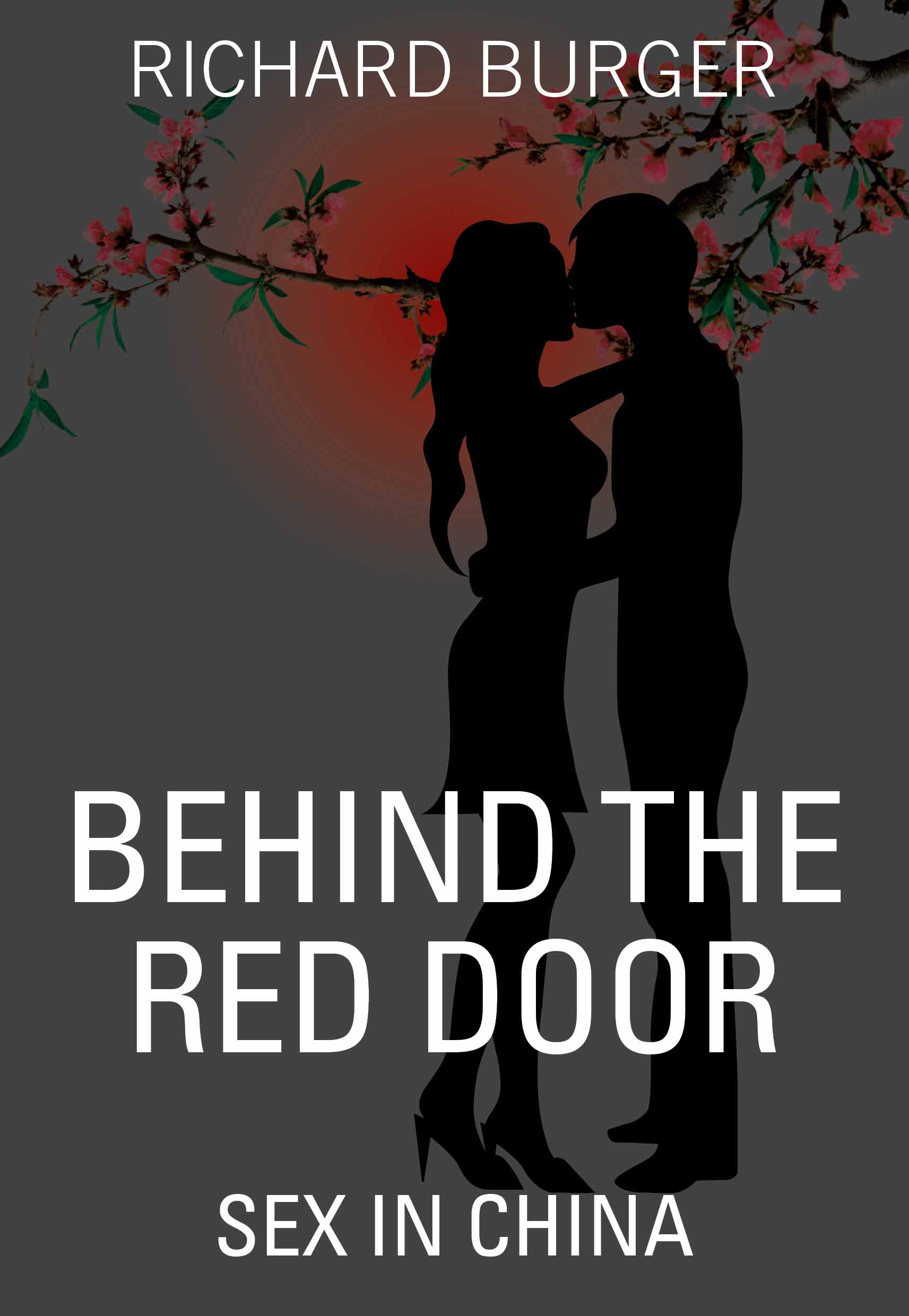
A review of “Behind the Red Door” by Richard Burger
Review by Tom Carter

Among the many misimpressions westerners tend to have of China, sex as some kind of taboo topic here seems to be the most common, if not clichéd.  Forgetting for a moment that, owing to a population of 1.3 billion, somebody must be doing it, what most of us don’t seem to know is that, at several points throughout the millennia, China has been a society of extreme sexual openness.

And now, according to author Richard Burger’s new book Behind the Red Door, the Chinese are once again on the verge of a sexual revolution.

Best known for his knives-out commentary on The Peking Duck, one of China’s longest-running expat blogs, Burger takes a similar approach to surveying the subject of sex among the Sinae, leaving no explicit ivory carving unexamined, no raunchy ancient poetry unrecited, and, ahem, no miniskirt unturned.

Opening (metaphorically and literally) with an introduction about hymen restoration surgery, Burger delves dàndàn-deep into the olden days of Daoism, those prurient practitioners of free love who encouraged multiple sex partners as the ultimate co-joining of Yin and Yang.  Promiscuity, along with prostitution, flourished during the Tang Dynasty – recognized as China’s cultural zenith – which Burger’s research surmises is no mere coincidence.
Enter the Yuan Dynasty, and its conservative customs of Confucianism, whereby sex became regarded only “for the purpose of producing heirs.”  As much as we love to hate him, Mao Zedong is credited as single-handedly wiping out all those nasty neo-Confucius doctrines, including eliminating foot binding, forbidding spousal abuse, allowing divorce, banning prostitution (except, of course, for Party parties), and encouraging women to work.  But in typical fashion, laws were taken too far; within 20 years, China under Mao became a wholly androgynous state.

We then transition from China’s red past into the pink-lit present, whence prostitution is just a karaoke bar away, yet possession of pornography is punishable by imprisonment – despite the fact that millions of single Chinese men (called bare branches) will never have wives or even girlfriends due to gross gender imbalance.

Burger laudably also tackles the sex trade from a female’s perspective, including an interview with a housewife-turned-hair-salon hostess who, ironically, finds greater success with foreigners than with her own sex-starved albeit ageist countrymen.

Western dating practices among hip, urban Chinese are duly contrasted with traditional courtship conventions, though, when it comes down to settling down, Burger points out that the Chinese are still generally resistant to the idea that marriage can be based on love.  This topic naturally segues into the all-but-acceptable custom of kept women (little third), as well as homowives, those tens of millions of straight women trapped in passionless unions with closeted gay men out of filial piety.

Behind the Red Door concludes by stressing that while the Chinese remain a sexually open society at heart, contradictive policies (enforced by dubious statistics) designed to discard human desire are written into law yet seldom enforced, simply because “sexual contentment is seen as an important pacifier to keep society stable and harmonious.”

____________________________

Travel Photographer Tom Carter traveled for 2 years across the 33 provinces of China to show the diversity of Chinese people in  China: Portrait of a People, the most comprehensive photography book on modern China published by a single author.

Also by Tom Carter Eating Smoke — a question and answer with author, Chris Thrall in addition to Harlequin Romance Invades China

If you want to subscribe to iLook China, there is a “Subscribe” button at the top of the screen in the menu bar.

Note: This guest post by Tom Carter first appeared in China in City Weekend Magazine. Reblogged with permission of Tom Carter. Behind the Red Door was published by Earnshaw Books


Crazy Normal

September 28, 2012

Lloyd Lofthouse's avatarCrazy Normal - the Classroom Exposé

In 1800, most Americans (94%) worked and lived on farms. After the Civil War, many left the farms to work in factories but the pay was low for men and even lower for women and children (a situation similar to what has been happening in China for the last few decades–this evolutionary transition happened in the US first. Now it is repeating itself in other countries.).

If life was so harsh in the cities and factories, these migrants could have stayed on the farms and I’m sure most would have if life had been better on the farm, but it wasn’t. For a migration of this size to take place means those people were desperate. That many people do not walk away from a good thing to be treated as if they were slaves.

Legally, children as young as age three worked in US factories (this is illegal in China…

View original post 672 more words


Sex is NOT Important

September 19, 2012

My wife, daughter and I saw “Chinglish“—a play by David Henry Hwan—on Sunday, September 16 at the Berkeley Rep Theater and we laughed-out-loud many times.

This is not a review of Hwan’s play as much as it is about how different cultures find common behaviors hard wired in our DNA to make connections.

Back to “Sex in NOT Important”, the title of this Post. Of course sex is important, but for thirty-two years, I kept telling myself it wasn’t. My reason for thinking this had nothing to do with sex but more to do with lust and how dangerous out-of-control lust might be.  For example, lust has led many a man and women into relationships that do not turn out well. Lust has led to priests/pastors to molest children. Lust is linked to rape. Lust has motivated a few teachers to have sexual affairs with students ruining lives.

Now, thanks to Hawn’s Chinglish, I have changed my mind about the importance of sex.

Before I continue the post, I want to thank Nina Egert, the author of Tracing Anza’s Trail: A Photographer’s Journey; A Place Where the Winds Blow: Men Women Plant New Roots at Oakland’s Original Rancho, and Noguchi’s California: Poetic Visions of a 19th Century Dharma Bum. Without an e-mail from Nina, I probably would have never heard of Chinglish.

After all, the Earth is still a big place and there is a lot going on 24/7.

To summarize Chinglish, this laugh-out-loud play was about Daniel, a former employee of Enron, who almost went to prison with the rest of the crooks. Daniel not only lost his high paying job with Enron but he’s broke due to the legal battle that kept him out of jail.

In a last desperate attempt at success, he goes to China to find customers for his American company (a business that’s been in his family since 1925), but Daniel does not speak a word of Mandarin. At the beginning of the play, he says, “If you are an American, it is safe to assume that you do not speak a single f*****g foreign language.”

That one line tells us how clueless most Americans are when it comes to other cultures.

Chinglish, through humor, teaches us a lesson about the minefield of misunderstanding and manipulation that happens when people of different cultures attempt to do business with each other.

Here’s the synopsis from the Website of the Broadway production of Chinglish: “An American businessman arrives in a bustling Chinese province looking to score a lucrative contract for his family’s sign-making firm. He soon discovers that the complexities of such a venture far outstrip the expected differences in language, customs and manners …”

However, there is another implied theme and that is why sex is important—something all cultures and races have in common that often transcends cultural differences. In the play, Daniel, an unhappily married man has an affair with an unhappily married mainland Chinese woman. Without spoiling the story, this affair provides the link that Daniel needs to succeed in China, and that link is Guanxi.

Early in the play, Daniel’s British interpreter, a man that has lived in China for years and speaks Mandarin fluently, tells him he must stay at least eight weeks to have a chance to develop Guanxi, a system of social networks and influential relationships that facilitate business and other dealings. The British interpreter says that for millennia China has survived without a Western legal system of laws, lawyers, courts and judges, and that Guanxi was crucial for China’s success as the longest surviving civilization and culture on the planet.

Hmm, is this a teachable moment? Do we learn something about the Western legal system compared to Guanxi?

Without understand how Guanxi works, Daniel struggles to cross the cultural divide but fails until he has the sexual affair with the wife of a Chinese judge. The sexual attraction and lust that led to the affair opens the door to the Guanxi network of his lover and her husband.

To discover what happens, you may want to see the play or wait for the movie, which I was told is in production and will stay faithful to the play. The last performance for Chinglish at the Berkeley Rep will be October 21, 2012.  Then it will appear at the South Coast Repertory January 25 – February 24, 2013 in Orange County, California before moving to Hong Kong March 1 – 6, 2013.

______________

Lloyd Lofthouse is the award-winning author of The Concubine Saga. When you love a Chinese woman, you marry her family and culture too. This is the love story Sir Robert Hart did not want the world to discover.

Subscribe to “iLook China”!
Sign up for an E-mail Subscription at the top of this page, or click on the “Following” tab in the WordPress toolbar at the top of the screen.

About iLook China


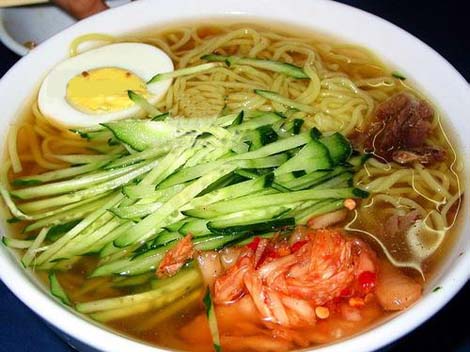
China’s Noodle Culture

September 18, 2012

China has a unique food culture. My wife loves noodles. I’ve followed her down narrow Shanghai streets to a famous won-ton and noodle shop on the corner of Chang-le and Shang-yang Road. The front is open and the ceiling low with each narrow table crowded with Chinese sitting on small chairs shoveling noodles in with chopsticks.

My wife orders a small bowl of noodles with peanut sauce for me and a bowl of blood soup and another bowl of noodles with spicy hot Sichuan peppercorn sauce for her.  As she eats, sweat beads her face but there is not one word of complaint—not one sign that she suffers. Instead, this seriously satisfied look spreads across her face as if she has entered a Chinese noodle heaven.

When we are visiting Nanjing Road in Shanghai between People Square and the Bund, we always stop at the same food shop where my wife orders steaming hot noodles with the same peppercorn sauce, and I order deep fried, fresh chou dofu (stinky tofu) with the same sauce that makes me sweat.

At celebration feasts, a wider variety of food will be served from whole fish, crab, a variety of vegetable dishes and tofu.

Discover China’s Invasion of Fat from the West

______________

Lloyd Lofthouse is the award-winning author of The Concubine Saga. When you love a Chinese woman, you marry her family and culture too. This is the love story Sir Robert Hart did not want the world to discover.

Subscribe to “iLook China”!
Sign up for an E-mail Subscription at the top of this page, or click on the “Following” tab in the WordPress toolbar at the top of the screen.

About iLook China


Confucian Harmony Today

September 11, 2012

In China, harmony plays an important role in everyday life. Cultural etiquette among Chinese revolves around harmony as Confucius taught. “Confucianism still plays an important role in Chinese society. It is a system of ethics and conduct, the obligations of people toward each other based on their relationships.” Source: Doing Business in China: Cultural Manners


The philosophy behind Feng Shui supports this concept since it is how to create harmony and balance in your living and working environment. Feng Shui came about when it was observed that people are affected by their surroundings with some places luckier, happier, healthier or more peaceful than others are.

Even the way the government in China does business is governed by the same concepts. As much as most Americans and Europeans seem incapable of understanding China, the Chinese often see foreigners as barbaric when they do not behave properly according to Chinese standards. Understanding is a two way street.

For example: Last weekend, I got up to wash dishes in the sink while my wife and daughter were still eating. My wife said when we have Chinese guests it is impolite to do that since it signals to the guests that it is time to leave. It is best to soak the dishes and leave them until the guests go.

Discover Honor Chinese Style.

______________

Lloyd Lofthouse is the award-winning author of The Concubine Saga. When you love a Chinese woman, you marry her family and culture too. This is the love story Sir Robert Hart did not want the world to discover.

Subscribe to “iLook China”!
Sign up for an E-mail Subscription at the top of this page, or click on the “Following” tab in the WordPress toolbar at the top of the screen.

About iLook China