In part 2, British and American power controlled the wheels of industry in Shanghai, Nanking, Hankow and Chunking. In the steaming south, peasants, working like beasts, plant rice and speak languages most Chinese do not understand.
At the turn of the century, a three-year-old child was the emperor and the throne sat empty. On October 10, 1911, a riot took place that couldn’t be controlled. Five weeks later, the Imperial government collapsed. The Qing Dynasty vanished over night and two-thousand years of Imperial tradition was gone. The Chinese called this time “Double Death”.
The British and Americans could not control what replaced the Qing Dynasty. Students without weapons rioted in the streets. Warlords, who controlled armies, divided China and the chaos grew worse. Life became so cheap, that death was like a bloody circus. However, while the Chinese people suffered and starved, the foreigners live in luxury and controlled China’s industry while being protected by the Western military.
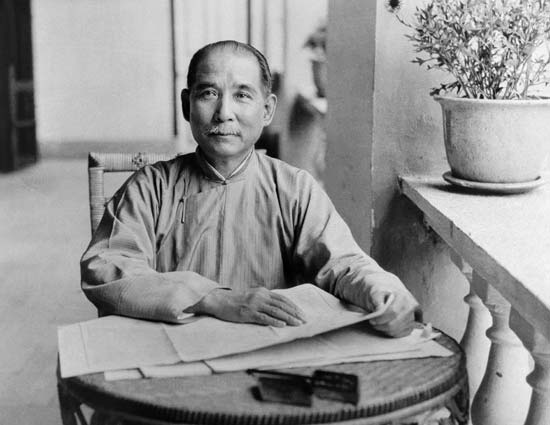
Sun Yat-sen
Chinese students demanded a revolt and Sun Yat-sen called on China to slay the dragon of Imperialism. He said China must start with nationalism, then democracy and finally socialism. The only country that offered help was Soviet Russia. This post was more accurate than Part 1.
Continued in Part 3, The Roots of Madness or return to Part 1, The Roots of Madness.
Discover A Millennia of History at a Silk Road Oasis
_______________
Lloyd Lofthouse is the award-winning author of My Splendid Concubine [3rd edition]. When you love a Chinese woman, you marry her family and culture too. This is the love story Sir Robert Hart did not want the world to discover.
His latest novel is the multiple-award winning Running with the Enemy.
Subscribe to “iLook China”!
Sign up for an E-mail Subscription at the top of this page, or click on the “Following” tab in the WordPress toolbar at the top of the screen.


 Posted by Lloyd Lofthouse
  iLook China