China: The Roots of Madness – Parts 7 & 8 of 8

June 12, 2010

In Part 7, it is 1948 and Mao attacks. His army leaves the caves and captures Manchuria. When Chiang Kai-shek’s northern army surrenders, modern American weapons and equipment fall into Mao’s hands. Mao demands total surrender, but Chiang’s army boards ships for Taiwan taking China’s wealth and historical treasures. In fear, western businessmen and missionaries flee China.

By 1967, when this documentary was produced, Mao had ruled China for 18 years. Protected by America, Chiang was still in Taiwan serving as president for life. He also had six-hundred thousand Kuomintang troops, and the island people lived under martial law.

Theodore H. White says America does not understand Communist China. America could not predict the “Great Leap Forward” or the purges that followed. He says the quality of life for the peasants had not improved. They still worked like beasts as they always had.
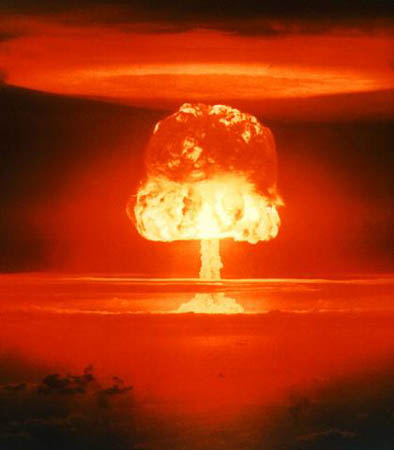
Part 7 ends with words of fear for the world’s future because China has nuclear weapons. There is no mention that America has enough nuclear weapons to destroy the earth a hundred times over. In Part 8, White concludes the documentary in about two minutes.

Return to Part 6, The Roots of Madness or start with The Roots of Madness-Part 1

View as Single Page

______________

Lloyd Lofthouse is the award-winning author of the concubine saga, My Splendid Concubine & Our Hart. When you love a Chinese woman, you marry her family and culture too.

If you want to subscribe to iLook China, there is a “Subscribe” button at the top of the screen in the menu bar.


China: The Roots of Madness – Part 6/8

June 11, 2010

In Part 6, Theodore H. White tells of an incident with Chiang Kai-shek’s troops when an officer tells peasants they were Mao’s men.  When White asks why lie, he’s told the peasants wouldn’t help if they knew the truth. In fact, regardless of the suffering from Mao’s Great Leap Forward and the Cultural Revolution, this loyalty never wavers.

Joseph Stilwell, the commanding US general in China, is not happy with Chiang since he is not fighting Japan. Chiang says he needs his troops to fight the Communists. In 1945, America invites representatives from Chiang’s government  to take part in Japan’s surrender on the battleship Missouri and ignores the Communists.

USS Missouri

An American ambassador urges Mao to join Chiang in a unified government. To bring this about, America offers Mao protection and there are face-to-face negotiations between Mao and Chiang.  Meanwhile, in secret, Chiang moves his troops to launch an assault in Manchuria.

America urges Chiang to win the people by implementing Sun Yat-sen’s promised reforms.  Instead, Chiang’s war causes run-away inflation. Essential good become too expensive. The people want peace, and Mao offers the peasants what they want—land.

Continued in Part 7 & 8, The Roots of Madness or return to Part 5, The Roots of Madness

View as Single Page

______________

Lloyd Lofthouse is the award-winning author of the concubine saga, My Splendid Concubine & Our Hart. When you love a Chinese woman, you marry her family and culture too.

If you want to subscribe to iLook China, there is a “Subscribe” button at the top of the screen in the menu bar.


China: The Roots of Madness – Part 4/8

June 10, 2010

In Part 4, Chiang Kai-shek’s army is not ready when Japan invades Manchuria. He doesn’t have tanks, the artillery is old and the Chinese are learning about airplanes.

Meanwhile, the Communists that Chiang thought he had destroyed are back. Mao knew the peasants lived in horrible poverty. He promised land reforms and by 1932 has millions of supporters.

The language describing Mao is not flattering. Yes, when Mao ruled China, he was a brutal dictator. However, Chiang Kai-shek was also a brutal dictator. But Chiang converted to Christian in 1929, and the West still refers to him as the president of China—not a dictator.

Instead of fighting Japan, Chiang’s army bombs villages that Mao controls killing tens of thousands of noncombatants. Mao takes his ninety thousand troops on the famous thousand-mile Long March. A year later, only a few thousand remain. Mao calls for unity to fight Japan.

One of Chiang’s generals, Zhang Xueliang, forces him to sit down with the Communists where Chiang Kai-shek agrees to fight Japan. As soon as Chiang returns to his capital, he breaks the agreement and throws Zhang in prison.

Continued in The Roots of Madness- Part 5 or return to Part 3

View as Single Page

______________

Lloyd Lofthouse is the award-winning author of the concubine saga, My Splendid Concubine & Our Hart. When you love a Chinese woman, you marry her family and culture too.

To subscribe to iLook China, look for the “Subscribe” button at the top of the screen in the menu bar, click on it then follow directions.


China: The Roots of Madness – Part 3/8

June 9, 2010

In Part 3, death claims Sun Yat-sen (1866 – 1925) after he has accepted support from Soviet Russia. Soon, General Chiang Kai-shek (1887 – 1975), with help from the Communists, consolidates power in southern China.

Chiang is known to Westerners as a fiery nationalist and revolutionary.  He mobilizes an army under Sun Yat-sen’s flag and marches north with a few divisions. Meanwhile, the warlords have gathered a half-a-million troops to stop him. Outnumbered, Chiang sends an advance group of nationalists and communists to call the peasants and workers to join his army.

Among those peasants and workers is Mao Tse-tung (1893 – 1976).  While moving north, Chiang’s army raids foreign concessions, burns foreign buildings and tears down foreign flags.  Leftist leaders of the Kuomintang start to distrust Chiang Kai-shek and some want to assassinate him but others disagree.

In Shanghai, Chiang Kai-shek, now a dictator, strikes first on April 12, 1927. His troops kill anyone suspected of being a Communist. In December, there is a Communist uprising in Canton. A battle rages for two days between the Communists and Kuomintang ending in the executions of most of the Communists, but Mao escapes and goes into hiding.

Continued in Part 4, The Roots of Madness or return to Part 2, The Roots of Madness.

View as Single Page

______________

Lloyd Lofthouse is the award-winning author of the concubine saga, My Splendid Concubine & Our Hart. When you love a Chinese woman, you marry her family and culture too.

If you want to subscribe to iLook China, there is a “Subscribe” button at the top of the screen in the menu bar.


2-28 Massacre in Taiwan

June 1, 2010

By accident, I stumbled on a Blog about the “2-28 Massacre” in Taiwan in 1947 when Kuomintang soldiers under orders from Cheng Kai-shek, an American ally, slaughtered about 30,000 Taiwanese citizens. It was the first time I’d heard of this incident. Source Blog: Patrick Cowsill

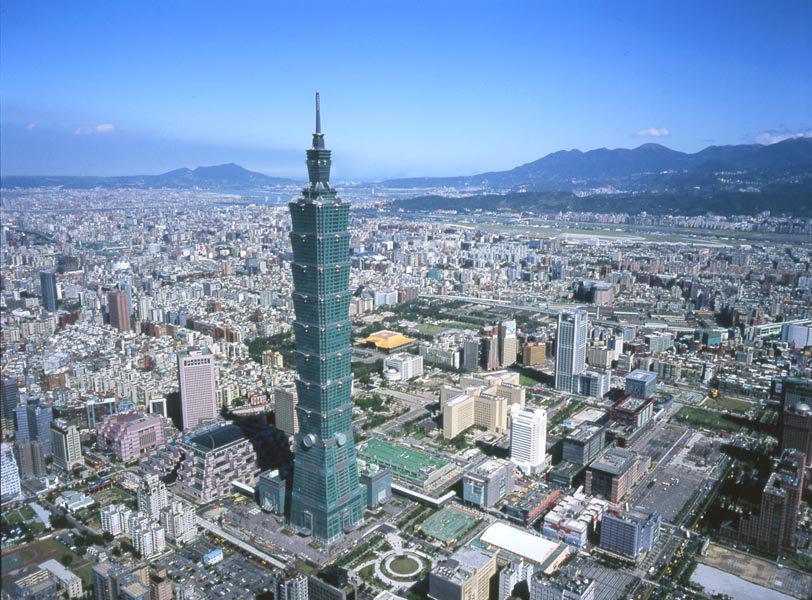
Taipei, Taiwan

When I typed into Google “Tiananmen Square protest”, 1 million 260 thousand (1,260,000) hits came back condemning the 1989 Massacre in Tiananmen Square. “Several hundred civilians have been shot dead by the Chinese army during a bloody military operation to crush a democratic protest in Peking’s (Beijing) Tiananmen Square. Source: BBC

Then I typed a similar question about the massacre in Taiwan by an American ally and 21,200 hits came back.

Here’s what the BBC had to say about the Taiwan incident, “The event was an uprising sparked by the beating of a female vendor by authorities for selling untaxed cigarettes. Between 18,000 and 28,000 people are said to have been killed in riots and a subsequent crackdown.” Source: BBC

Compare the language.  When it was about the Communists, it was a “bloody military operation to crush a democratic protest” but when the killings were committed by an American ally, it was “an uprising…sparked by the beating of a female vendor by authorities….”

Of course, we will always remember the man standing in front of the tanks in Tiananmen Square. Have you forgotten what happened in Taiwan yet?

______________________________

Lloyd Lofthouse is the award-winning author of My Splendid Concubine [3rd edition]. When you love a Chinese woman, you marry her family and culture too. This is the lusty love story Sir Robert Hart did not want the world to discover.

IMAGE with Blurbs and Awards to use on Twitter

Where to Buy

Subscribe to “iLook China”!
Sign up for an E-mail Subscription at the top of this page, or click on the “Following” tab in the WordPress toolbar at the top of the screen.

About iLook China

China’s Holistic Historical Timeline