The Tang Dynasty (618 – 906 AD) – Part 2/4

September 24, 2010

During the Sui (589-617) and Tang Dynasties, China went through a period of cultural and spiritual development.

The country’s ethnic groups along with Confucianism, Buddhism and Taoism coexisted peacefully with foreign religions such as Islam.

Literature and the arts developed more than before.

The Han Dynasty (206 BC to 219 AD) opened the Silk Road for trade, and the civilizations of Rome, Ancient Egypt, of the Euphrates and Tigris Rivers and India continued trade with the Tang Dynasty.

http://www.youtube.com/watch?v=acjINcNNOPI

According to Tang Dynasty records contact was maintained with more than 300 countries and regions across the known world, so the Silk Road was also known as the Envoy Road.

People from countries such as Japan, Korea, and India as well as Tehran came to China.

Many foreigners had positions in the central government of the Tang Dynasty, and they served both as civil officials and military officers.

The Tang Dynasty demonstrated respect for all foreign religions.  During this time, Christianity was introduced to China.

The Imperial family of the Tang Dynasty had been a military family in Northwest China for generations and they made Taoism the national religion.

Laozi, the founder of Taoism, advocated harmony between people and nature, which was reflected in the beliefs of the first rulers of the Tang Dynasty.

Continue with Tang Dynasty – Part 3 or return to The Tang Dynasty (618 – 906 AD) – Part 1

______________

Lloyd Lofthouse is the award-winning author of the concubine saga, My Splendid Concubine & Our Hart. When you love a Chinese woman, you marry her family and culture too. 

To subscribe to “iLook China”, look for the “Subscribe” button at the top of the screen in the menu bar, click on it then follow directions.


Invented in China—Printing

July 9, 2010

Six hundred years after paper was invented, the Chinese invented printing and the first printed work was Buddhist scripture during the Tang Dynasty (618 – 906). The most basic printing techniques are older. Engraving came later. The carving, printing technique originated during the Tang Dynasty

When we talk about paper and printing, it is to collect knowledge, preserve and share it.

Once there were paper books being printed to share Buddhist ideas, the religion spread through China into Korea and Japan. Over a thousand years printing techniques continued to improve until there were multi-colored printings.

Then during the Sung Dynasty, the printing board was invented, which used clay characters. One character was carved into a small block of clay. Then the clay was put in a kiln to heat into a solid block. This method was efficient for printing thousands of sheets. These blocks would be placed together to create sentences and paragraphs of Chinese characters.

Later, the characters were carved into wood. Over time, printing was developed into an art.  In fact, Ancient Chinese culture was preserved due to the invention of paper and these printing methods, which wouldn’t reach Europe until after 1300 AD, almost 800 years later.

Without the Chinese invention of printing, Christianity, Islam and Buddhism may not have spread to the extent that they have.

See With or Without Paper

_________________________

Lloyd Lofthouse is the award-winning author of the concubine saga, My Splendid Concubine & Our Hart. When you love a Chinese woman, you marry her family and culture too. 

To subscribe to “iLook China”, look for the “Subscribe” button at the top of the screen in the menu bar, click on it then follow directions.


The Eighteen Levels of Chinese Hell

June 27, 2010

Many Chinese believe heaven/paradise is out of reach of ordinary mortals. However, hell is a harsh reality and the souls of the dead must go.

Buddhists brought this concept of hell to China from India, and over time, this belief grew wings and picked up baggage as it spread. Taoism, Buddhism and traditional Chinese folk religions believe that the souls of the dead must experience several tests before reaching the gates of hell, where demons demand money to enter, which might explain why many Chinese burn paper money at funerals to make sure beloved family members have some for the journey.

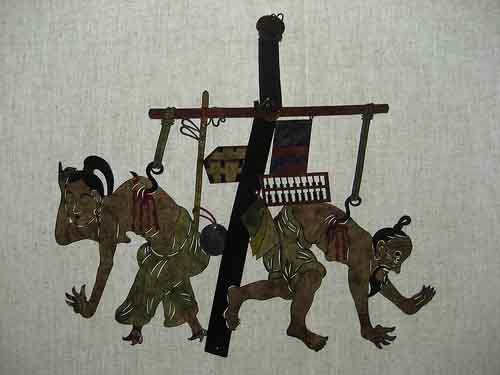
one of the eighteen levels to hell

There are eighteen levels on this journey—each one a test. For criminals, the souls are heavy and the trip long and painful. Chinese almanacs graphically illustrated the punishments. Good souls were light and made the journey quickly.

Today, these beliefs are probably more alive in rural China than urban areas where Mao’s Cultural Revolution had more of an impact driving out old beliefs.  Most Taiwanese and many in Hong Kong still hold to these beliefs.

If given a choice, which hell would you select—Chinese, Islamic or Christian?

Discover The Failure of Multiculturalism in the United States

_______________

Lloyd Lofthouse is the award-winning author of My Splendid Concubine [3rd edition]. When you love a Chinese woman, you marry her family and culture too. This is the love story Sir Robert Hart did not want the world to discover.

Subscribe to “iLook China”!
Sign up for an E-mail Subscription at the top of this page, or click on the “Following” tab in the WordPress toolbar at the top of the screen.

About iLook China


Buddhism in China

May 24, 2010

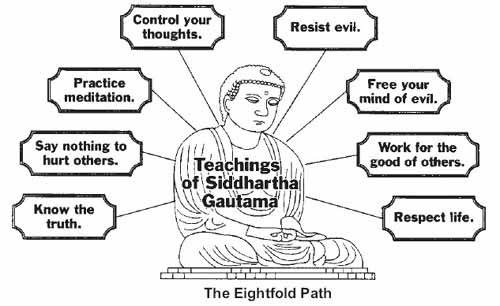
During the Han Dynasty in the first century B.C., trade with Central Asia introduced Buddhism to China.  Over the centuries, interest in Buddhism grew.  However, due to Confucianism and Taoism, the Chinese adapted Buddhist scripture to fit the Chinese culture creating the Mahayana sect, which spread to Korea and Japan.

Like most major religions, there are subdivisions within Buddhism but most may be classified into three. This is why Southeast Asian Buddhists differ from the Chinese.  The Theravada  form of Buddhism is found in Southeast Asia in countries like Burma, Thailand, Cambodia and Laos.

Tibetan Buddhism incorporates other beliefs, and there are four principal schools or types of Tibetan Buddhism. The Dalai Lama is the spiritual leader of one of the four, the Yellow Hat sect.

Buddhism in China reached its high point during the Tang Dynasty, 618 to 907. However, in 845 AD, the Tang emperor suppressed Buddhism and destroyed thousands of monasteries, temples and shrines.

Soon after Mao and the Communists won China, Buddhism flourished for a time but was repressed during the Cultural Revolution along with all other religions. Many monasteries and Buddhist texts were destroyed. After Mao, many of the major monasteries were rebuilt. Today, Buddhists represent the largest religious group in China between 100 to 200 million. Source: PEW Forum

Discover The First of all Virtues

_______________

Lloyd Lofthouse is the award-winning author of My Splendid Concubine [3rd edition]. When you love a Chinese woman, you marry her family and culture too. This is the love story Sir Robert Hart did not want the world to discover.

His third book is Crazy is Normal, a classroom exposé, a memoir. “Lofthouse presents us with grungy classrooms, kids who don’t want to be in school, and the consequences of growing up in a hardscrabble world. While some parents support his efforts, many sabotage them—and isolated administrators make the work of Lofthouse and his peers even more difficult.” – Bruce Reeves.

lloydlofthouse_crazyisnormal_web2_5

Subscribe to “iLook China”!
Sign up for an E-mail Subscription at the top of this page, or click on the “Following” tab in the WordPress toolbar at the top of the screen.

About iLook China

China’s Holistic Historical Timeline


The Millennium Cult

April 23, 2010

Religions, as Christians, Jews and Muslims practice them, have never played a “major” role in Chinese Culture and Politics. Even today, more than 800 million Chinese say they do not belong to any religion and the largest religion in China is Buddhism (about 10% of the population of China).  Even during Imperial times, most members of government did not belong to organized religions. The same is true today with the Communist government.

China’s struggle with pagan cults (like the White Lotus Society) reaches back almost a thousand years. The White Lotus Society appealed to poor Han Chinese peasants and more so to women, who found peace in worshiping the Eternal Mother. It was believed that this Eternal Mother would gather all her children at the millennium into one family.

The Eternal Mother

White Lotus Societies started out seeking tranquilly through a combination of Buddhism with some elements of Daoism (Taoism) and other native Chinese religions. Even in the 12th century, the Yuan Dynasty was distrustful of the Yellow Lotus Society, which didn’t fit comfortably with Confucianism and the five Great Relationships.

See A Visit from the Falun Gong

_________________________

Lloyd Lofthouse is the award winning author of the concubine saga, My Splendid Concubine & Our Hart. When you love a Chinese woman, you marry her family and culture too. 

Sign up for an RSS Feed for iLook China