What happens to the alleged culprits of Food Fraud in China? Part 2 of 2

December 23, 2015

If you read Part One of this two part series, you are probably thinking it isn’t safe to eat in China so you will stick to American food.

However, Wall Street Journal.com reported, “Struggles with food safety are not a specifically Chinese problem. Many countries, including the U.S. and Japan, have gone through similar growing pains in the food industry, says Wu Ming, a professor at Beijing University’s school of public health.”

Professor Ming is correct. Down to Earth.org reports, “Every day in the US about 200,000 people become sick, 900 are hospitalized and 14 die (that’s more than 5,000 annually) due to food borne illnesses (and few if any people are punished for these deaths). According to the Center for Disease Control (CDC), about one quarter of the American population suffers from food poisoning each year.”

It’s just business as usual and those food deaths are collateral damage on the way to making profits.

New U.S. Laws for food safety cover all food except meat, poultry and some egg products and there are other exceptions too. In fact, the CDC.gov reports, “Every year, about 48 million of us, roughly one in six people in the United States, get sick from eating contaminated food—it could be you, your spouse, your kids, your parents, or other loved ones.”

And if you believe China is not doing anything about food safety, think again. I Googled “arrests in China for food safety”.

The first hit for 2014 from Food Safety News reported, “Chinese Police Arrest More Than 100 People for Selling Contaminated Pork.”

In 2013, The Guardian reported, “China arrests 900 in fake meat scandal.”

In addition, the U.S. is no saint. Sustainable Business Forum.com says, “Unlike the U.S., China arrests Food Safety Violators.”

Helena Bottemiller of Food Safety News.com recently reported, “Current statutes (in the U.S.) do not provide sufficient criminal sanctions for those who knowingly violate our food safety laws,” said Leahy, who has become an outspoken advocate of food safety reform. “Knowingly distributing adulterated food is merely a misdemeanor right now, and the Sentencing Commission has found that it generally does not result in jail time.”

In conclusion, if you are in the food industry in China and want to take short cuts regarding food safety to boost profits while possibly killing people along the way, the United States is a safer place to commit murder while making a profit, because in China, you might go to prison and even be executed.

Return to or Start with Part 1

______________________________

Lloyd Lofthouse is the award-winning author of My Splendid Concubine [3rd edition]. When you love a Chinese woman, you marry her family and culture too. This is the lusty love story Sir Robert Hart did not want the world to discover.

IMAGE with Blurbs and Awards to use on Twitter

Where to Buy

Subscribe to “iLook China”!
Sign up for an E-mail Subscription at the top of this page, or click on the “Following” tab in the WordPress toolbar at the top of the screen.

About iLook China

China’s Holistic Historical Timeline


What happens to the alleged culprits of Food Fraud in China? Part 1 of 2

December 22, 2015

In 2011, Wall Street Journal.com reported, “Ink, dye, bleach and toxic chemicals … have been found recently in food products in China, reigniting fears over food safety despite repeated government pledges to crack down on tainted eats.”

Sounds bad, but don’t judge China before reading this entire two-part series to discover that China is not alone in the struggle to make food safer to eat.

It isn’t as if China’s government is not trying to improve food safety. In 2011, Al-Jazeera’s Melissa Chang reported from Beijing about China’s government vowing to improve food safety laws. In fact, according to Melissa Chang, more than 2,000 people across the country were arrested for failing to meet food safety standards.

The Wall Street Journal said, “One of the biggest issues is the drive to make a buck at any cost, says Lester Ross, a Beijing-based attorney with U.S. law firm Wilmer Hale. Some companies see that by using additives, they can cut overhead costs or boost profit margins, and they merely aren’t thinking about the affects the additives will have on consumers, Mr. Ross says.”

Melissa Chang demonstrated how a chemical sauce to turn meats such as pork into beef can change any meat that isn’t beef into beef so the enterprising capitalist can charge more and increase profits.

Is that capitalism at work?

Since living in China means awareness of such trickery, “Many Chinese,” Chang says, “pay a premium to know exactly where the food they eat comes from.”

Chang then talked about an organic food cooperative in the suburbs of Beijing, which was established by families to buy directly from organic farmers and the project was successful.

However, Chang said, “Even the best intentions (may) go awry.” Organic in China doesn’t mean the food would qualify as organic outside of China since so much of the air and water is polluted there.  It is a challenge to grow quality produce.  Achieving better standards will take years.”

What about food safety in the U.S.? Continued on December 23, 2015, in Part 2

______________________________

Lloyd Lofthouse is the award-winning author of My Splendid Concubine [3rd edition]. When you love a Chinese woman, you marry her family and culture too. This is the lusty love story Sir Robert Hart did not want the world to discover.

#1 - Joanna Daneman review posted June 19 2014

Where to Buy

Subscribe to “iLook China”!
Sign up for an E-mail Subscription at the top of this page, or click on the “Following” tab in the WordPress toolbar at the top of the screen.

About iLook China

China’s Holistic Historical Timeline


In praise of concubines: Interview with Lloyd Lofthouse

December 20, 2015

“There is much to work with in this substantial novel, a solidly conceived, intensely intimate and troubled love story set against an equally fraught and dramatic historical backdrop.”


What did it take to turn the lights on in China: Part 2 of 2

December 16, 2015

To understand what China has accomplished since 1979 when it was ranked seventh among the world’s electricity producers instead of first, it helps to discover the time it took for America’s electrical grid to be built.

In America, Thomas Edison designed and built the first direct current (DC) power plant in 1882.

Then the first alternating current (AC) power plant opened in 1885 and transmitted power 200 miles from the plant.

By 1927, forty-five years later, the first power grid was established in Pennsylvania.

However, it wasn’t until 1933 that Congress passed legislation establishing the Tennessee Valley Authority.

Then in 1935, FDR issued an executive order to create the Rural Electrification Administration (REA) to bring electricity to millions of rural Americans.

It took six years after the REA was launched in 1941 to help 800 rural electric cooperatives to string 350,000 miles of power lines.

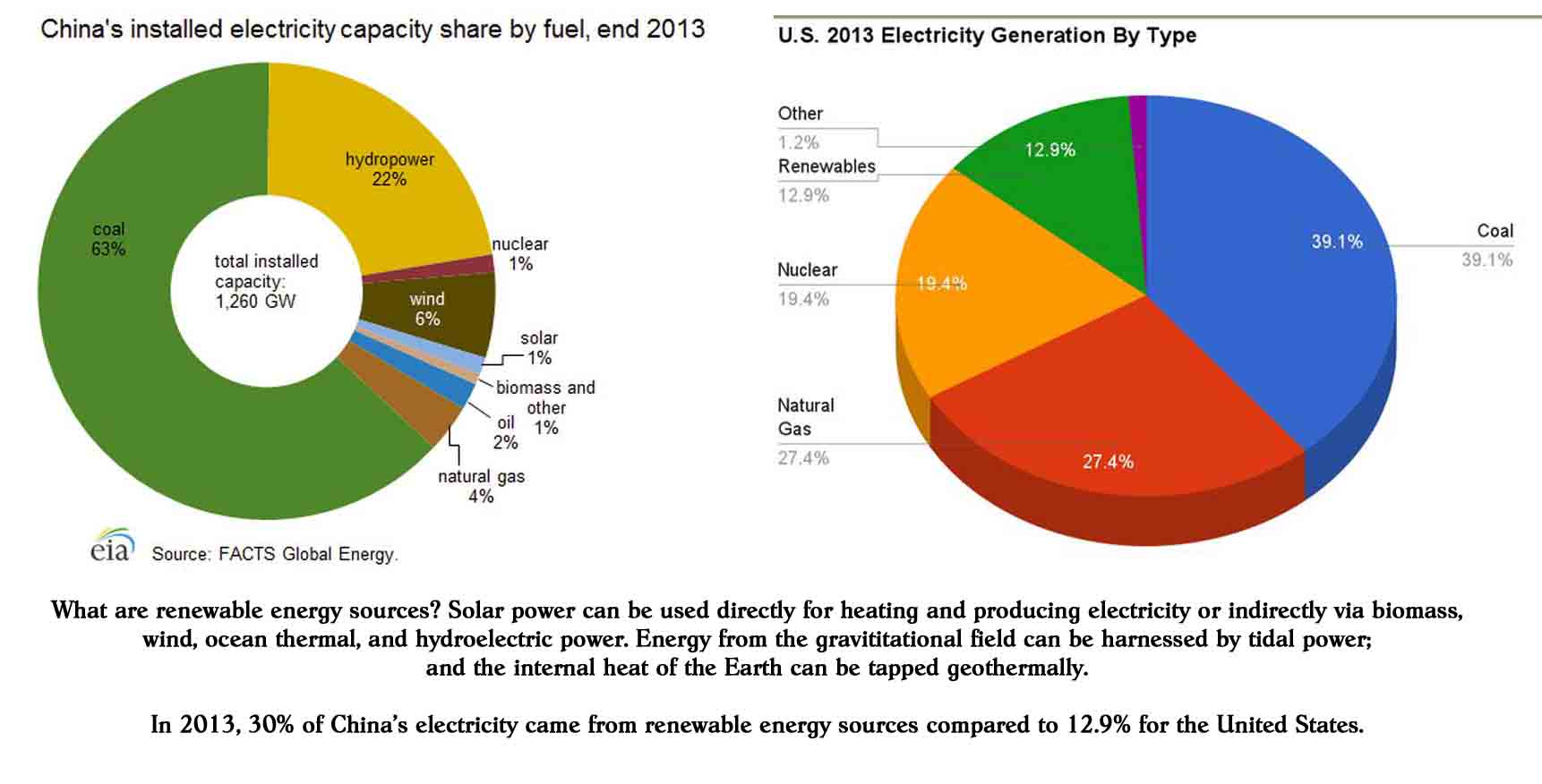
What took the U.S. 130 years to build starting in 1885, China did in the last 50 years. The biggest difference between modern China and America is the size of the population to supply electricity to. America has a population of more than 321.9 million, but China has about 1.38 billion people—a daunting task.

China vs US for electricity Production

In addition, just in case you think electricity was invented in the U.S. by Benjamin Franklin, think again. The English scientist William Gilbert (1544 – 1603) is called the father of modern electric power. Then Italian physicist Alessandro Volta (1745 – 1827) discovered that particular chemical reactions could produce electricity. There were others who contributed, of course, and some were Americans. – Who Discovered Electricity

Return to or start with Part 1

______________________________

Lloyd Lofthouse is the award-winning author of My Splendid Concubine [3rd edition]. When you love a Chinese woman, you marry her family and culture too. This is the lusty love story Sir Robert Hart did not want the world to discover.

IMAGE with Blurbs and Awards to use on Twitter

Where to Buy

Subscribe to “iLook China”!
Sign up for an E-mail Subscription at the top of this page, or click on the “Following” tab in the WordPress toolbar at the top of the screen.

About iLook China

China’s Holistic Historical Timeline


What did it take to turn the lights on in China: Part 1 of 2

December 15, 2015

Access to electricity is the key to developing a modern country with the potential to grow a large, consumer driven middle class.  Poverty reduction is also linked to access of electricity, because without electricity people live in the middle ages.

In fact, to reduce poverty,  over the last 50 years China has introduced electricity access to 100% of it’s people.  – World Bank.org

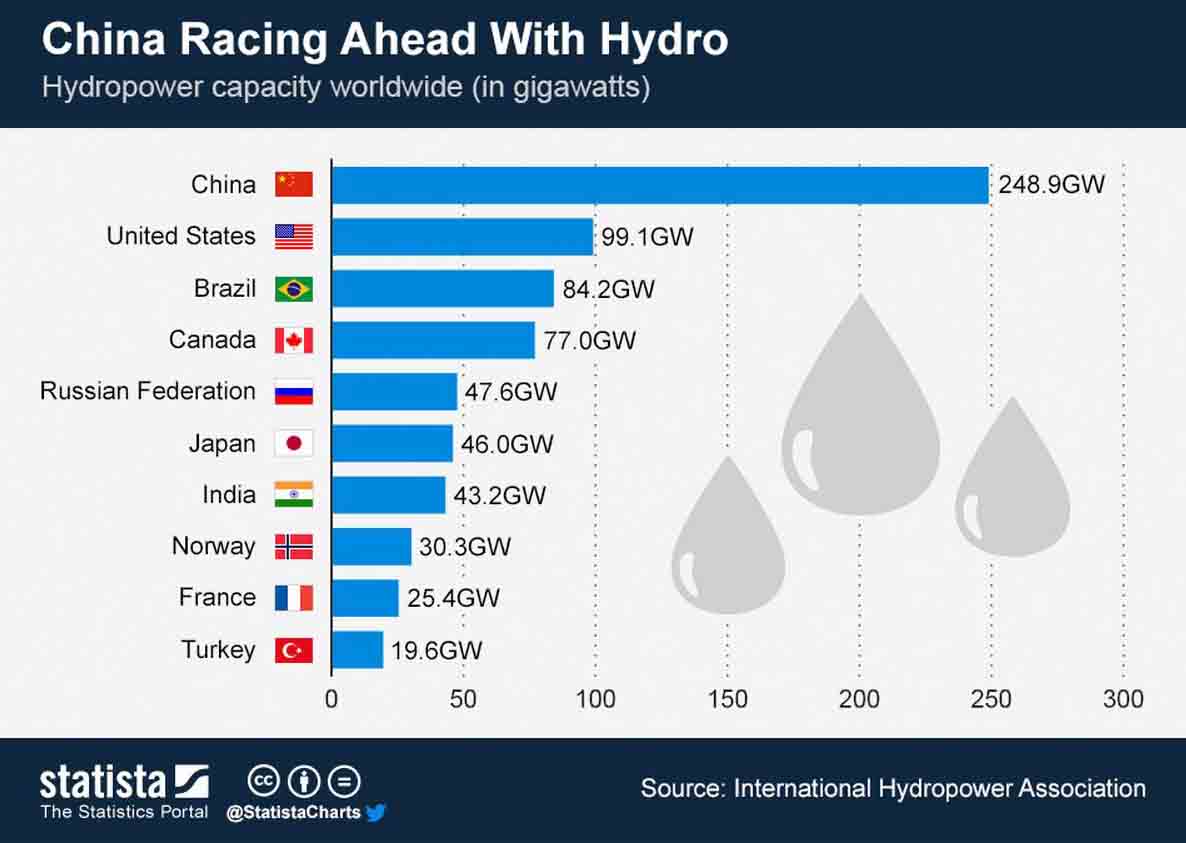
In 1949 when the People’s Republic (PRC) was founded, there were only 33 small hydropower stations in rural China, with a total installed capacity of 3.63 megawatts, and total electricity consumption in rural areas was 20 million kilowatts. Today, there are thousands of hydro-power stations, and the PRC has more than any country on the earth.

China Racing Ahead with Hydro Power

Of the world’s 65 operational hydropower stations with an installed capacity of at least 2,000 MW, China operates 20 (more than 30%).

In 1979, China’s Xinhua state run news agency reported a serious electric power shortage. The agency said China produced about 150,000 million kilowatts of electricity a year and ranked about seventh among the world’s electric energy producers. In fact, China’s output was about one-eighth that of the U.S. back then.  – History of China’s electricity use

In a previous post, China’s Goals to Go Green, we discovered that China now produces more electricity than the U.S., but the U.S. still produces 17.0 metric tons of CO2 emissions for each person in the United States compared to 6.7 metric tons for each person in China.

Imagine what the CO2 pollution would be like in China if the Chinese eventually match the U.S. per capita. – CO2 emissions World Bank data

Part 2 continued on December 16, 2015

______________________________

Lloyd Lofthouse is the award-winning author of My Splendid Concubine [3rd edition]. When you love a Chinese woman, you marry her family and culture too. This is the lusty love story Sir Robert Hart did not want the world to discover.

#1 - Joanna Daneman review posted June 19 2014

Where to Buy

Subscribe to “iLook China”!
Sign up for an E-mail Subscription at the top of this page, or click on the “Following” tab in the WordPress toolbar at the top of the screen.

About iLook China

China’s Holistic Historical Timeline