Why China is Studying Singapore – Part 2/3

February 6, 2010

Let’s look at Singapore—known as the Switzerland of Southeast Asia where a student might be caned for talking back to a teacher. For sure, he will be fined and caned for spitting gum on a sidewalk.  But not in America where we are free to do what we want even if that means defacing or stealing someone else’s property.

Singapore City View

I’ve heard and read more than once that Singapore was the economic model that China was watching closely—not America with its chaotic market system that expands and collapses like a popped balloon. 

This sounds like the China we often hear about in the Western media or out of the mouth of an American politician. “…is a socially engineered, nose-to-the-grindstone, workaholic rat race, where the self-perpetuating ruling party enforces draconian laws … squashes press freedom, and offers a debatable level of financial transparency—”

That description was not about China. It was for Singapore, a city-state that has a government-enforced savings plan and an average unemployment rate of about three percent.

Return to Part 1 of The Reasons Why China is Studying Singapore or go to Part 3

______________

Lloyd Lofthouse is the award-winning author of the concubine saga, My Splendid Concubine & Our Hart. When you love a Chinese woman, you marry her family and culture too. 

If you want to subscribe to iLook China, there is a “Subscribe” button at the top of the screen in the menu bar.


Why China is Studying Singapore – Part 1/3

February 6, 2010

I have a friend who often says America has the best political system in the world and no other country compares. Then he turns around and criticizes the government when a Democrat is in office.

Let’s look at a few facts. America may be the richest nation on the earth with the most powerful and expensive military, but it is also a deeply debt ridden country with the largest prison population on the planet. Beyond that, there are almost a million street-gang members in our cities. Killings are so numerous that our national media doesn’t report them all. I’ve read that students physically assault an average of five-thousand public school teachers in their classrooms every year. If you want to learn more, read this example or visit Crazy Normal.

And let’s not talk about the drug problems in the US. What is freedom? What happens when we allow so much freedom, that many can’t enjoy it in safety?

Are these reasons enough to explain why China is studying Singapore instead of the United States economic system? When Deng Xiaoping opened China to a market economy, he wasn’t thinking about the United States. I will go into more detail in the next posts for this series.

Go to Part 2 of Why China is Studying Singapore

______________

Lloyd Lofthouse is the award-winning author of the concubine saga, My Splendid Concubine & Our Hart. When you love a Chinese woman, you marry her family and culture too. 

If you want to subscribe to iLook China, there is a “Subscribe” button at the top of the screen in the menu bar.


Deng Xiaoping’s 20/20 Vision

February 5, 2010

True, under Mao Zedong (1893 – 1976), China suffered but that isn’t the whole story. During Mao’s Great Leap Forward and the Cultural Revolution, thirty-seven million died—many from starvation. Mao’s form of communist socialism did not work.

On June 30, 1984, Deng Xiaoping said, “Given that China is still backward, what road can we take to develop the productive forces and raise the people’s standard of living? … Capitalism can only enrich less than 10 per cent of the Chinese population; it can never enrich the remaining more than 90 per cent. But if we adhere to socialism and apply the principle of distribution to each according to his work, there will not be excessive disparities in wealth. Consequently, no polarization will occur as our productive forces become developed over the next 20 to 30 years.”
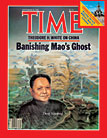
Deng Xiaoping on the cover of Time Magazine

Deng Xiaoping may have been right. Bruce Einhom writing for Business Week, Countries with the Biggest Gaps Between Rich and Poor, October 16, 2009, listed the top countries with the biggest gaps. America was number three on the list. China wasn’t on the list—yet.

What does this mean for America? (CBS/AP)  The Census Bureau reports that 12.5 percent of Americans, or 37.3 million people, were living in poverty in 2007, up from 36.5 million in 2006.

After 2000, the situation in America deteriorated quickly (with President George W. Bush in the White House)—all of the gains in middle-class economic security since WWII were erased within a few years.

PBS reported in “Middle Class Squeeze” (December 13, 2002), the shape of income distribution in America is changing and many are finding it increasingly difficult to afford housing while keeping up with necessities such as food, clothing, transportation, and health care.”

What does capitalism, Chinese style, look like? Under Deng Xiaoping’s economic policies, China became the world’s factory floor.

Prior to 1979, the year China opened its economy to world trade, it was rare to find anything made in China. Since then, exports from China have increased 10,000%, and this year China’s economy become the second largest in the world as Japan slipped to third place.

In the last decade, something happened in China that Mao thought he had destroyed. China grew a middle class. During a trip to China in 2008, we saw the Chinese middle class everywhere we went. Instead of the majority of tourists being foreigners, they are now Chinese.

A middle-class family in China usually owns an apartment, a car, eats out and takes vacations. National Geographic in the May 2008 magazine, said, “they owe their well-being to the government’s (Deng Xiaoping’s) economic policies…”

Current estimates show China’s growth will continue and grow between five and eight percent a year. China’s real GDP growth accelerated on a year-over year basis by a full percentage point, rising from 7.9% in the second quarter to 8.9% in the third quarter (reported Oct. 22, 2009).

Learn about China’s Expanding Middle Class

______________

Lloyd Lofthouse is the award-winning author of The Concubine Saga. When you love a Chinese woman, you marry her family and culture too. This is the love story Sir Robert Hart did not want the world to discover.

To subscribe to “iLook China”, look for the “Subscribe” button at the top of the screen in the menu bar, click on it then follow directions.


Honor Chinese Style – Part 3

February 5, 2010

In 1935, Lin Yutang wrote, “Face cannot be translated or defined. It is like honor and is not honor. It cannot be purchased with money, and gives a man or a woman a material pride. It is hollow and is what men fight for and what many women die for.

“It is invisible and yet by definition exits by being shown to the public. It exists in the ether and yet can be heard, and sounds eminently respectable and solid. It is amenable, not to reason but to social convention.

“It protracts lawsuits, breaks up family fortunes, causes murders and suicides, and yet it often makes man out of a renegade who has been insulted by his fellow townsmen, and it is prized above all earthy possession.

“It is more powerful than fate and favor, and more respected than the constitution. It often decides a military victory or defeat, and can demolish a whole government ministry. It is that hollow thing which men in China live by.” (Lin Yutang, My Country and My People, Halcyon House, New York, NY, 1938, page 200)

Chinese like Yue Fei and Guan Yu were honorable men and gained much face because of their beliefs and behavior.

When anyone in China reacts to anything, politically or personally, honor plays a big role. It doesn’t matter if one is a member of the Communist Party, a farmer or a factory worker or one of the wealthiest members of the new capitalist elite.

Most Chinese measure what is important in life by a different standard than the rest of the world.

Discover Honor Chinese Style – Part 1

______________

Lloyd Lofthouse is the award-winning author of The Concubine Saga. When you love a Chinese woman, you marry her family and culture too. This is the love story Sir Robert Hart did not want the world to discover.

Subscribe to “iLook China”!
Sign up for an E-mail Subscription at the top of this page, or click on the “Following” tab in the WordPress toolbar at the top of the screen.

About iLook China


Honor, Chinese Style – Part 2

February 4, 2010

Although the Communist Chinese government has made it illegal to spit on those statues for public health reasons, hundreds defy that law on a daily basis, and continue to insult those traitors while honoring Yue Fei.

There is another moral hero from China’s history. During the Three Kingdoms era (220-265 A.D.) after the fall of the Han Dynasty, there was a long period of civil war. Out of this era came the story of Guan Yu, who was another model for loyalty and righteousness. Guan Yu lived almost eighteen hundred years ago, yet it is easy to find carvings and statues of him in China today. I have bought several hand carved from wood.

It doesn’t matter if one is a member of the Communist Party, because role models like Yue Fei and Guan Yu still play an important part in how ‘most’ Chinese behave and what they believe. Anyone in China holding a position of power is measured against men like Yue Fei and Guan Yu.

To help gain a better understanding of what honor means to the Chinese, here’s a link to a piece published in the Los Angeles Times.

See Honor Chinese Style – Part 1

Lloyd Lofthouse is the author of the award winning My Splendid Concubine and writes The Soulful Veteran and Crazy Normal.